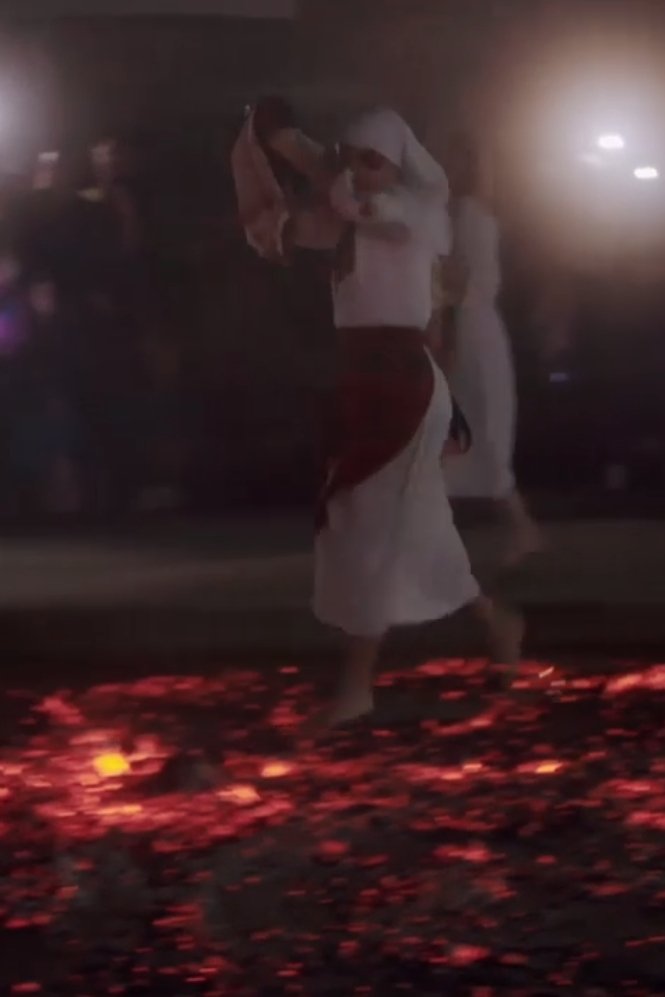
A short film about traditional crafts and culture that can still be found in the Wallachian mountains today.
Social & External
Commentary (voice)
What motivates people to organize communal living themselves? What ideals are behind it, how do they finance themselves, and how does life in a community work? Based on six self-managed residential buildings in Austria from the past 40 years, the documentary film "Der Stoff, aus dem Träume sind" (The Stuff Dreams Are Made Of) sets out to find answers. Filmmakers Lotte Schreiber and Michael Rieper tell these six stories by staying very close to the protagonists.
With the construction of the Indian planned city of Chandigarh, the Swiss and French architect Le Corbusier completed his life's work 70 years ago. Chandigarh is a controversial synthesis of the arts, a bold utopia of modernity. The film accompanies four cultural workers who live in the planned city and reflects on Le Corbusier's legacy, utopian urban ideas and the cultural differences between East and West in an atmospherically dense narrative.
Best known for designing National Historic Landmarks such as St. Louis’ iconic Gateway Arch and the General Motors Technical Center, Saarinen also designed New York’s TWA Flight Center at John F. Kennedy International Airport, Yale University’s Ingalls Rink and Morse and Ezra Stiles Colleges, Virginia’s Dulles Airport, and modernist pedestal furniture like the Tulip chair.
La Sagrada Familia – although still under construction in Barcelona – is a cathedral without any flaws. Almost 100 years after his death, experts are convinced that Gaudi was a mathematical genius and that each embellishing ornament of the Sagrada Familia actually serves an architectural purpose.
The Richardson Olmsted Campus, a former psychiatric center and National Historic Landmark, is seeing new life as it undergoes restoration and adaptation to a modern use.
Viva El Vedado presents the history of the Havana neighborhood of El Vedado from the last quarter of the 19th century through the Cuban Revolution and highlights its varied and outstanding architecture. Known as a cultural center of Havana, Vedado is particularly notable for its unique collection of Cuban architecture of the 20th century. The film’s goal is to introduce its audiences to the neighborhood’s remarkable architecture, its vibrant life, and the need for preserving Vedado as part of Havana’s heritage. It is a glimpse beyond tourist fantasies and stereotypes, a rare view of one of Havana’s most important neighborhoods.
In 1967, de Andrade was invited by the Italian company Olivetti to produce a documentary on the new Brazilian capital city of Brasília. Constructed during the latter half of the 1950s and founded in 1960, the city was part of an effort to populate Brazil’s vast interior region and was to be the embodiment of democratic urban planning, free from the class divisions and inequalities that characterize so many metropolises. Unsurprisingly, Brasília, Contradições de uma Cidade Nova (Brasília, Contradictions of a New City, 1968) revealed Brasília to be utopic only for the wealthy, replicating the same social problems present in every Brazilian city. (Senses of Cinema)
Phillis Wheatley Elementary School was a significant landmark in the Tremé neighborhood of New Orleans, serving as an important educational institution for African-American students for nearly half a century. The school was known for its innovative modern design that was unique to the region, reflecting the area’s cultural and historical roots. However, the school sustained significant damage during Hurricane Katrina and its aftermath in 2005. Despite the damage, the school’s unique design caught the attention of DOCOMOMO Louisiana, an organization dedicated to preserving modern architecture. They advocated for the restoration of the school through adaptive reuse, citing its historical significance and architectural importance. The organization produced this short film, “A Plea for Modernism,” narrated by actor Wendell Pierce, to raise awareness of the school’s cultural and historical value and promote its restoration.
The Matica slovenská (a mostly government-sponsored cultural, academic, and archival institution) employed Karol Plicka (1894-1987) as its ethnographer, who was able to make documentary shorts from about 1926. He obtained funding from the President’s Office in 1928 to produce an hour-long documentary about village life, Through Mountains and Valleys (Po horách, po dolách). It was awarded a Gold Medal at the International Exposition of Photographic Art in Florence and received an Honorable Mention at the International Venice Film Festival in 1932.
Karel Plicka was also cinematographer of this short movie. Editor in charge was Alexander Hackenschmied. There is an extraordinary emotional charge, every shot is working on its own, such as photographs, paintings and poetic complement intertitles in this short. From the perspective of nature and the perspective is shifting to the people and their habits, work and clothes. Peculiar documentary shots underscore Ruthenians (men, women and children) who are interested in looking into the camera and the curious "eye" showing off their habits.
The architectural plans for Berlin from 1938 are used as an example to illustrate the fascist claim to power and its aesthetic effect. The basis for this was the "General Building Inspection" under the direction of Albert Speer, whose enormous projects are illustrated by planning models and archive photographs.
We all come from houses in which we live, dream, love and die. This long-term documentary project explores the significance of architecture in our everyday lives and takes its audience on a journey to the most impressive places designed by Swiss architect Peter Zumthor.
The Finnish architect Alvar Aalto (1898–1976) is one of the great figures of modern architecture, ranked alongside Gropius, Le Corbusier and Mies van der Rohe. This film analyses Aalto’s uniquely successful resolution of the demands and possibilities created by new technology and construction materials with the need to make his buildings sympathetic both to their users and to their natural surroundings. His inventive use of timber in particular represents both a reference to the forest landscape of Finland and a building material that is ‘warm’ and extremely adaptable. Filmed in Finland, Italy, Germany and the USA, this documentary shows how the Finnish natural environment and art traditions were essential elements in Aalto’s pioneering harmonization of technology and nature.
Googie architecture was one of the most visually exuberant and culturally formative design movements of the mid-20th century, yet it remains widely misunderstood. Defined by bold angles, sweeping rooflines, neon signage, and a sense of space-age optimism, Googie transformed everyday buildings into roadside spectacle. Coffee shops, bowling alleys, car washes, banks, and churches were designed not just for function, but to captivate motorists cruising by. Rooted in Los Angeles, the movement drew inspiration from visionary architects such as Frank Lloyd Wright and John Lautner, while firms like Armet & Davis brought futuristic flair to the commercial landscape. Though many original structures have been lost, preservationists now champion Googie as a serious architectural expression—one that captured the aspirations of postwar America and reshaped the visual identity of the modern city.
Known for his bold, abstract and stark white buildings, American architect Richard Meier now takes on the challenge of building the Jubilee Church in Rome. Holding the location in high regard, Meier praises the vibrant visual layout of the city and tells us, "Rome is a city of architecture; it's a city of walls and columns and spaces and places and defined places and wherever you look there's architecture" (Richard Meier). Staying true to his signature design style, Meier has created a structure resembling grand soaring sails which appear steady and peaceful as they stand in striking opposition to the city's landscape. Three curved walls separate three distinct spaces: the main sanctuary, the weekday chapel and the baptistry, each with its own entrance. As a contrast he shows us his favorite churches in Rome by his famous colleagues from earlier times.
In 1919 an art school opened in Germany that would change the world forever. It was called the Bauhaus. A century later, its radical thinking still shapes our lives today. Bauhaus 100 is the story of Walter Gropius, architect and founder of the Bauhaus, and the teachers and students he gathered to form this influential school. Traumatised by his experiences during the Great War, and determined that technology should never again be used for destruction, Gropius decided to reinvent the way art and design were taught. At the Bauhaus, all the disciplines would come together to create the buildings of the future, and define a new way of living in the modern world.
A visual montage portrait of our contemporary world dominated by globalized technology and violence.
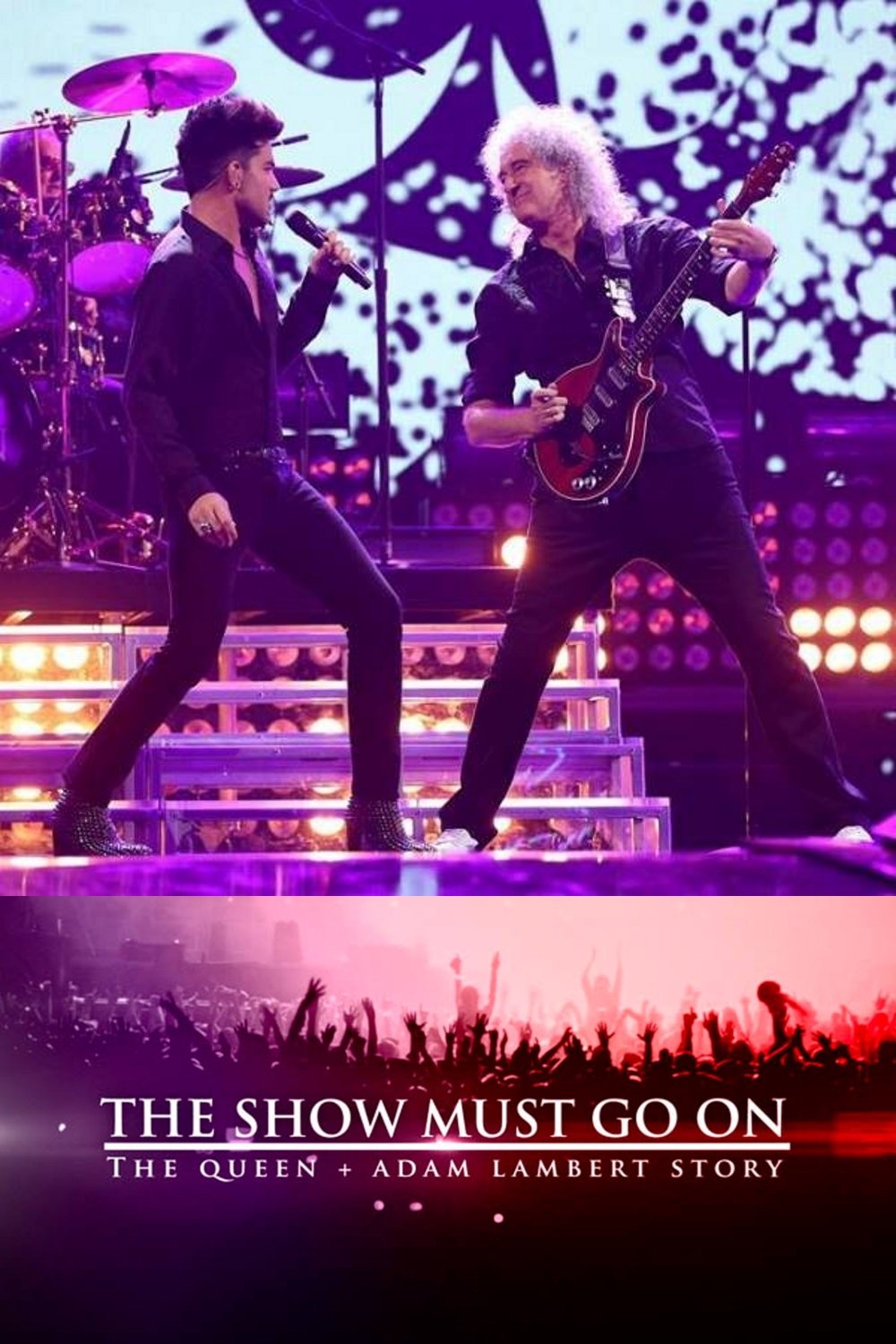
A documentary chronicling Queen and Lambert's incredible journey since they first shared the stage together on "American Idol" in 2009.
A documentary about how a dominant cultural and demographic institution both sustains their traditional activities and adapts to the digital revolution.
Short film to a song of love lost and rediscovered, a woman sees and undergoes surreal transformations. Her lover's face melts off, she dons a dress from the shadow of a bell and becomes a dandelion, ants crawl out of a hand and become Frenchmen riding bicycles. Not to mention the turtles with faces on their backs that collide to form a ballerina, or the bizarre baseball game.
Nine filmmakers each profile a young girl from a different part of the world to weave a global tapestry of youth in the 21st century.
Amber Heard and Nicole Kidman discuss their characters Mera and Atlanna.
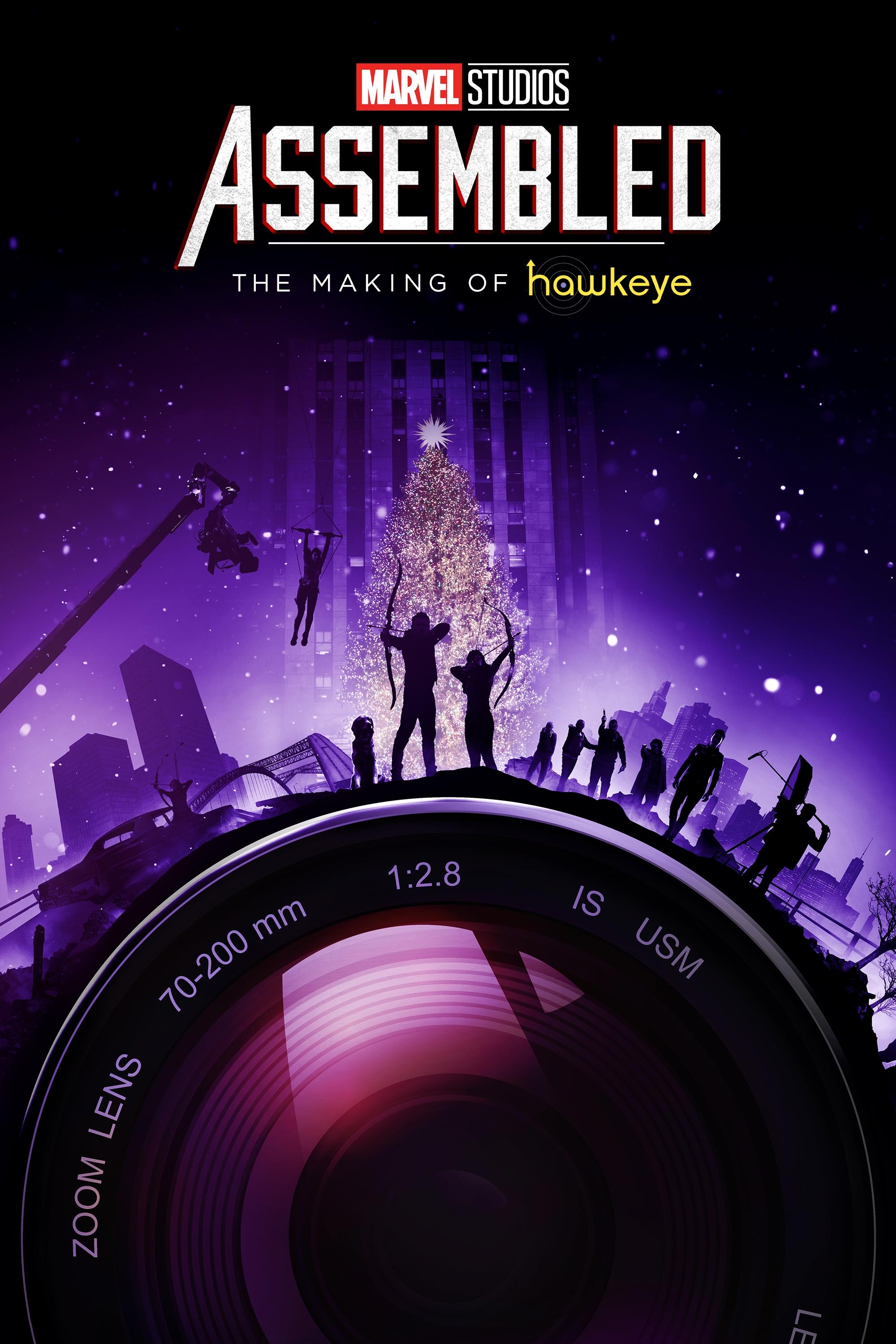
Join the likes of Jeremy Renner, Hailee Steinfeld, Florence Pugh, and Vincent D’Onofrio as they reveal how Marvel Studios’ “Hawkeye” was conceived and created. Witness firsthand what it took to pull off the show’s pulse-pounding action set pieces, and discover how iconic characters from the pages of Marvel Comics such as Kate Bishop were adapted and brought to life for the six-episode series.
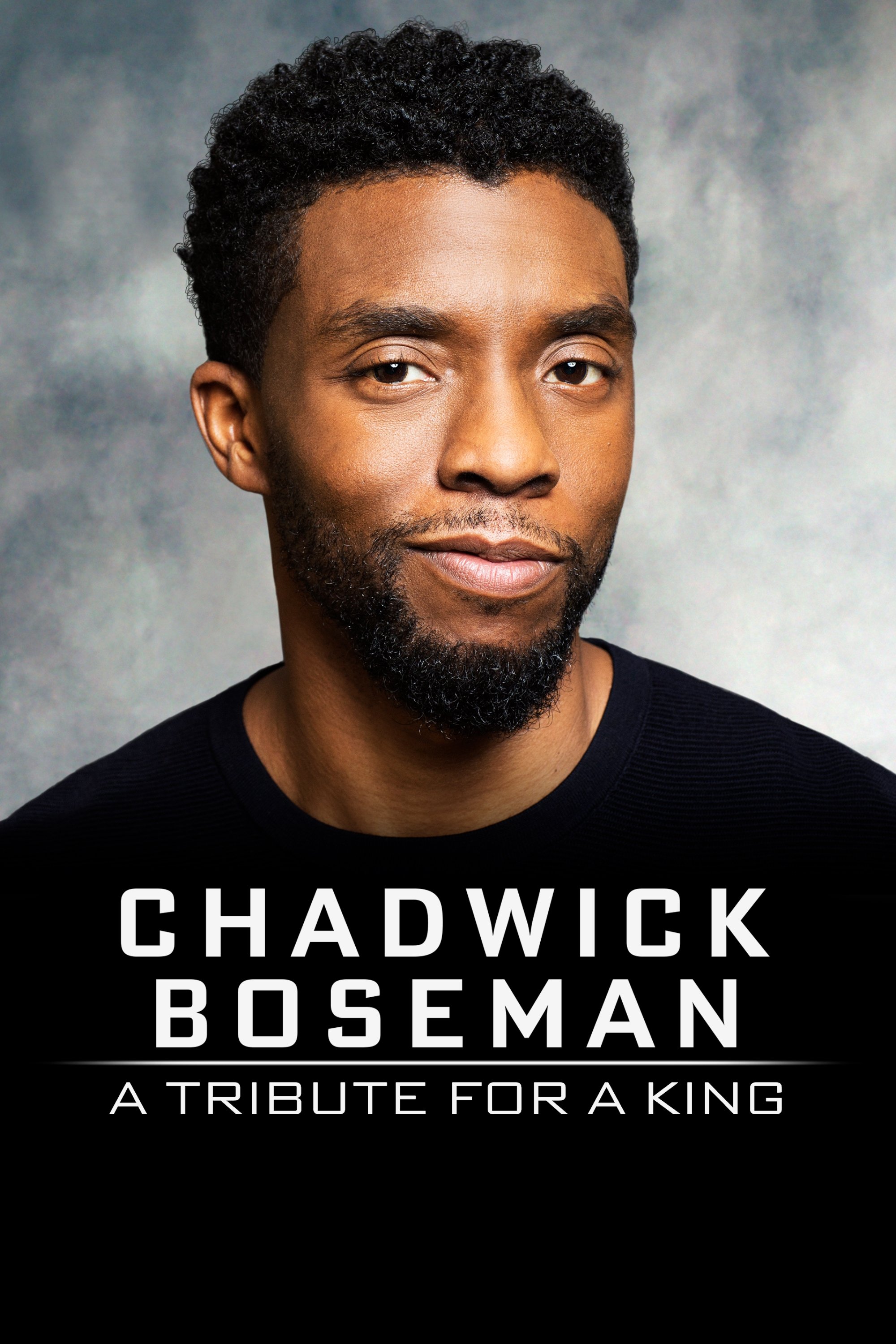
A tribute to Chadwick Boseman, celebrating his life and legacy.
When Sid accidentally destroys Manny's heirloom Christmas rock and ends up on Santa's naughty list, he leads a hilarious quest to the North Pole to make things right and ends up making things much worse. Now it's up to Manny and his prehistoric posse to band together and save Christmas for the entire world!
A detailing of the rise to prominence and global sporting superstardom of six supremely talented young Manchester United football players (David Beckham, Nicky Butt, Ryan Giggs, Paul Scholes, Phil and Gary Neville). The film covers the period 1992-1999, culminating in Manchester United's European Cup triumph.
Long-lost footage from Elvis Presley's legendary Las Vegas residency in the 1970s woven together with rare 16mm footage from Elvis on Tour, and 8mm from the Graceland archive, plus recordings of Elvis telling "his side of the story" rediscovered during Baz Luhrmann's research for his 2022 film, Elvis.
A documentary about the making of season five of the acclaimed AMC series Breaking Bad.
Daniel Craig candidly reflects on his 15 year adventure as James Bond. Including never-before-seen archival footage from Casino Royale to the upcoming 25th film No Time To Die, Craig shares his personal memories in conversation with 007 producers, Michael G Wilson and Barbara Broccoli.
SEDUCED AND ABANDONED combines acting legend Alec Baldwin with director James Toback as they lead us on a troublesome and often hilarious journey of raising financing for their next feature film. Moving from director to financier to star actor, the two players provide us with a unique look behind the curtain at the world's biggest and most glamourous film festival, shining a light on the bitter-sweet relationship filmmakers have with Cannes and the film business. Featuring insights from directors Martin Scorsese, 'Bernando Bertolucci' and Roman Polanski; actors Ryan Gosling and Jessica Chastain and a host of film distribution luminaries.
Those who knew iconic funnyman John Candy best share his story, in their own words, through never-before-seen archival footage, imagery, and interviews.
Artists in LA discover the work of forgotten Polish sculptor Stanislav Szukalski, a mad genius whose true story unfolds chapter by astounding chapter.
Faced with a holiday cheer crisis, the North Pole knows there's only one person who can save the day: Santa's great friend Mariah Carey. The Queen of Christmas creates a fabulous and star-studded spectacular to make the whole world merry!
A compilation of over 30 years of private home movie footage shot by Lithuanian-American avant-garde director Jonas Mekas, assembled by Mekas "purely by chance", without concern for chronological order.
A documentary that explores the downloading revolution; the kids that created it, the bands and the businesses that were affected by it, and its impact on the world at large.
In the Realms of the Unreal is a documentary about the reclusive Chicago-based artist Henry Darger. Henry Darger was so reclusive that when he died his neighbors were surprised to find a 15,145-page manuscript along with hundreds of paintings depicting The Story of the Vivian Girls, in What is Known as the Realms of the Unreal, of the Glodeco-Angelinnian War Storm, Cased by the Child Slave Rebellion.