Social & External
Himself
Narrator
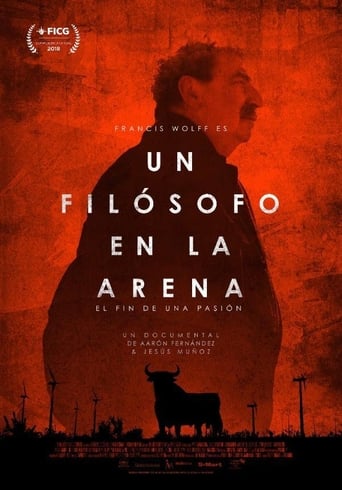
After his retirement, french philosopher and bullfighting enthusiast Francis Wolff decides to embark on a journey to France, Spain and Mexico joined by two mexican filmmakers who hardly know anything about bullfighting, a culture whose days seem to be numbered. During their road trip, they encounter numerous personalities with whom they reflect on mankind’s relationship with animals and nature, but most importantly on our relationship with death and the meaning of the ultimate journey: life itself.
Before orchestrating the greatest bullfighting seasons as an impresario, Simon Casas was a bullfighter—and thus began his journey.
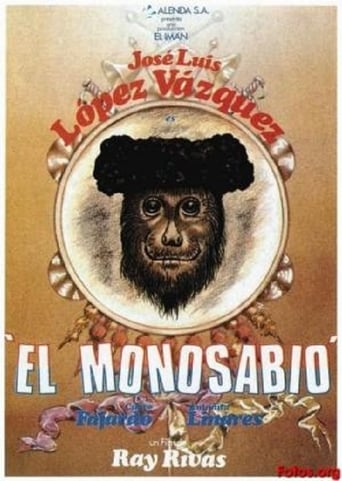
Juanito, a peaceful fan of bullfighting, has become picador's assistant to see from the same arena the show in which he brags he is one of the protagonists. Furthermore, he believes he has discovered in a neighbor a potential figure of bullfighting sphere.
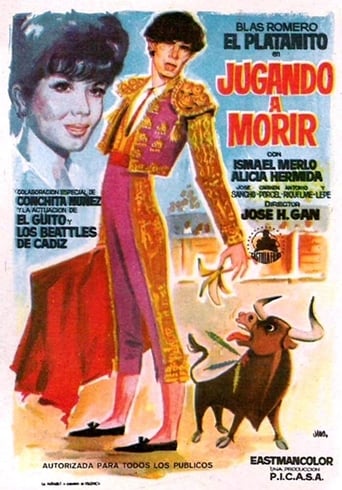
Blas Romero "El Platanito" is a bullfighter who begins to take its first steps in Merida. After a long journey, one day he is lucky enough, his performance is showed on TV and that brings him to top of the charts. From now on, his problems will be centered with the dilemma of having to give up their dreams of making serious classical bullfighting, or jump to a false bullfighting, between slapstick and temerity, which will give offer him numerous well-paid contracts.
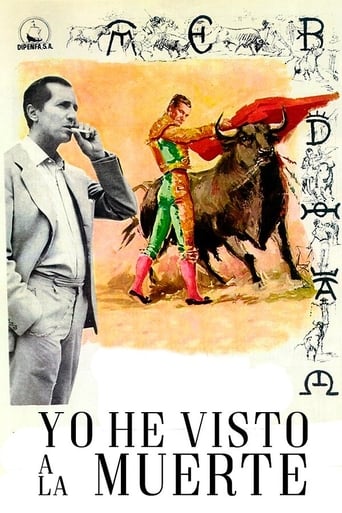
Four real episodes told by their protagonists: Antonio Mejías "Bienvenida" tells the serious goring he suffered in the Plaza de Las Ventas and his recovery process. Álvaro Domecq Romero evokes the last days of the life of the mare "Splendid", the noble animal that was brave and sensitive companion of his father. Andrés Vázquez tells how the times of the "capeas" were in little villages. With him were many unknown kids, who found an anonymous and obscure death. Finally, Luis Miguel "Dominguín", who was with Manolete, in Linares, the afternoon in which he met his death, evokes that tragic afternoon and glosses the bullfighter's human virtues. The four protagonists have seen the death in one way or another and the four tell the indelible impression that remained on them.
Bruce Brown's The Endless Summer is one of the first and most influential surf movies of all time. The film documents American surfers Mike Hynson and Robert August as they travel the world during California’s winter (which, back in 1965 was off-season for surfing) in search of the perfect wave and ultimately, an endless summer.
An exploration —manipulated and staged— of life in Las Hurdes, in the province of Cáceres, in Extremadura, Spain, as it was in 1932. Insalubrity, misery and lack of opportunities provoke the emigration of young people and the solitude of those who remain in the desolation of one of the poorest and least developed Spanish regions at that time.
Megacities is a documentary about the slums of five different metropolitan cities.
Warsaw's Central Railway Station. 'Someone has fallen asleep, someone's waiting for somebody else. Maybe they'll come, maybe they won't. The film is about people looking for something.
A detailed chronicle of the famous 1969 tour of the United States by the British rock band The Rolling Stones, which culminated with the disastrous and tragic concert held on December 6 at the Altamont Speedway Free Festival, an event of historical significance, as it marked the end of an era: the generation of peace and love suddenly became the generation of disillusionment.
Primary is a documentary film about the primary elections between John F. Kennedy and Hubert Humphrey in 1960. Primary is the first documentary to use light equipment in order to follow their subjects in a more intimate filmmaking style. This unconventional way of filming created a new look for documentary films where the camera’s lens was right in the middle of what ever drama was occurring. Preserved by the Academy Film Archive in partnership with The Film Foundation in 1998.
In this wildly entertaining vision of one of the twentieth century’s greatest artists, Bob Dylan is surrounded by teen fans, gets into heated philosophical jousts with journalists, and kicks back with fellow musicians Joan Baez, Donovan, and Alan Price.
One Dude's Quest to Save Democracy. A FilmBuff Presentation.
In this film from late in his career, Kramer returns to Hanoi after nearly 25 years to re-envision the city’s struggle through an uncertain and daunting past, present, and future. The Vietnamese characters in the film are diverse: Kramer’s former guide from an earlier visit in 1969; a tight-rope walker in the national circus; a man who took photos of B-52s and another who lost his fingers shooting them down.
The documentary presents the biography of filmmaker Leon Hirszman, director of Cinema Novo, who made 11 short films and five feature films between 1962 and 1986. A review of the trajectory of Leon Hirszman through his work and archive images.
The adventures of Hergé, or how Georges Remi created The Adventures of Tintin. Interviews, archive footage and animation clips tell the story of Tintin, which is the history of the 20th century.
The Revolution also put an end to the colonial wars in Guinea Bissau, Mozambique and Angola. Vasconcelos recounts the absurdity of this bitter conflict. - Cinema du réel
Led Zeppelin: The Untold Story reveals an often overlooked side of the saga. Using early performance footage, seldom seen interviews and previously unpublished photographs, as well as contributions from colleagues, friends, and associates who worked alongside the future members of Led Zeppelin, The Untold Story is finally made public.
A cinematic poem with an impressive soundtrack that complements and completes the cinematic sketches of the folk culture of the Slovak nation previously made by ethno-photographer and director Karel Plicka. With its perfectly constructed dramaturgy, the documentary follows the beauty of the natural cycle of the seasons and shows peasant life in an isolated village in the Carpathian mountains of Slovakia from the end of winter through spring and summer to the traditional harvesting methods of autumn. This creates a tribute to traditional culture and the secular connection between man and nature. The aesthetically extraordinary visual representation of folklore comes to life through the editing technique influenced by the Soviet avant-garde and is complemented by poetic intertitles by the Slovak poet Ján Smrek.