Social & External
Documentary film with play scenes about the rise and fall of the short-lived Bavarian Soviet Republic in 1919 from the perspective of various well-known poets and writers who experienced the events as contemporary witnesses.
Michael Moore's view on how the Bush administration allegedly used the tragic events on 9/11 to push forward its agenda for unjust wars in Afghanistan and Iraq.
A documentary on Al Gore's campaign to make the issue of global warming a recognized problem worldwide.
An exploration —manipulated and staged— of life in Las Hurdes, in the province of Cáceres, in Extremadura, Spain, as it was in 1932. Insalubrity, misery and lack of opportunities provoke the emigration of young people and the solitude of those who remain in the desolation of one of the poorest and least developed Spanish regions at that time.
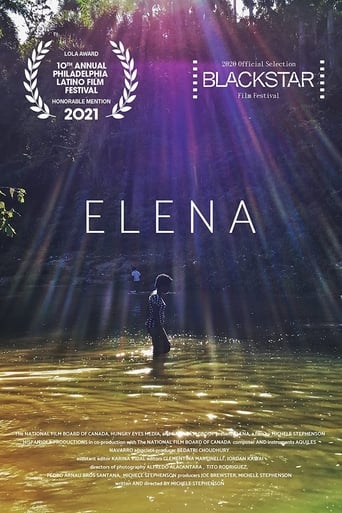
In 1937, tens of thousands of Haitians and Dominicans of Haitian descent were exterminated by the Dominican army, on the basis of anti-black racism. Fast-forward to 2013, the Dominican Republic's Supreme Court stripped the citizenship of anyone with Haitian parents, retroactive to 1929, rendering more than 200,000 people stateless. Elena, the young protagonist of the film, and her family stand to lose their legal residency in the Dominican Republic if they don't manage to get their documents in time. Negotiating a mountain of opaque bureaucratic processes and a racist, hostile society around, Elena becomes the face of the struggle to remain in a country built on the labor of her father and forefathers.
Who are the people behind the international anti-Covid-vaccine movement and why are they doing it? This journey inside the astonishing world of the anti-vaxxers finds out.
In the 1920s, former coal miner Harry Hoxsey claimed to have an herbal cure for cancer. Although scoffed at and ultimately banned by the medical establishment, by the 1950s, Hoxsey's formula had been used to treat thousands of patients, who testified to its efficacy. Was Hoxsey's recipe the work of a snake-oil charlatan or a legitimate treatment? Ken Ausubel directs this keen look into the forces that shape the policies of organized medicine.
Thirty years after the release of his film JFK (1991), filmmaker Oliver Stone reviews recently declassified evidence related to the assassination of President John F. Kennedy, which took place in Dallas on November 22, 1963.
16-year-old Bella and Vipulan are part of a generation convinced its very future is in danger. Between climate change and the 6th mass extinction of wildlife, their world could well be inhabitable 50 years from now. They have sounded the alarm over and over, but nothing has really changed. So they’ve decided to tackle the root of the problem: our relationship with the living world. Over the course of an extraordinary journey, they come to realize just how deeply humans are tied to all other living species. And that by saving them… we’re also saving ourselves. Humans thought they could distance themselves from nature, but humans are part and parcel of nature. For man is, after all, an Animal.
The third installment in Dan Přibáň's series of travel documentaries describes the author's journey with his friends across South America in vehicles that are often notorious but cult in their own way. The charming dynamics of the group on screen are further enhanced by the high-quality craftsmanship.
"Bias" challenges us to confront our hidden biases and understand what we risk when we follow our gut. Through exposing her own biases, award-winning documentary filmmaker Robin Hauser highlights the nature of implicit bias, the grip it holds on our social and professional lives, and what it will take to induce change.
Fox Rich, indomitable matriarch and modern-day abolitionist, strives to keep her family together while fighting for the release of her incarcerated husband. An intimate, epic, and unconventional love story, filmed over two decades.
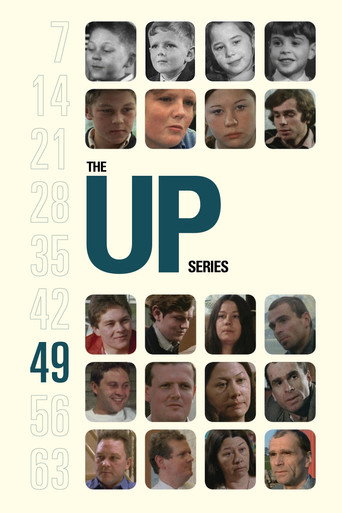
49 Up is the seventh film in a series of landmark documentaries that began 42 years ago when UK-based Granada's World in Action team, inspired by the Jesuit maxim "Give me the child until he is seven and I will give you the man," interviewed a diverse group of seven-year-old children from all over England, asking them about their lives and their dreams for the future. Michael Apted, a researcher for the original film, has returned to interview the "children" every seven years since, at ages 14, 21, 28, 35, 42 and now again at age 49.In this latest chapter, more life-changing decisions are revealed, more shocking announcements made and more of the original group take part than ever before, speaking out on a variety of subjects including love, marriage, career, class and prejudice.
Salhia Brakhlia has filmed the set and behind the scenes of Franceinfo's breakfast show during a year. How to inform at the time of social media and fake news ? How careful are journalist with those news ? How do they connect to politicians during an presidential election campaign ? This unique immersion gives us a part of the answer.
The murder of Dutch filmmaker Theo van Gogh by an Islamic extremist in 2004, followed by the publishing of twelve satirical cartoons depicting the prophet Mohammed that was commissioned for the Danish newspaper Jyllands-Posten, provides the incendiary framework for Daniel Leconte's provocative documentary, It's Hard Being Loved by Jerks.
Guy Debord's analysis of a consumer society.
A conflicted gay man struggles to teach his younger self about the challenges of adult life. Searching for answers inside stories from his past, he must confront his nature and the man he will become. Documentary meets musical feature in this experimental coming of age drama about power and masculinity in modern day Australia.
At the beginning of the 80s, the antinuclear movement was in full expansion internationally and also in the Basque Country. In addition to the three plants that were about to be built on the coast (Lemoiz, Ea-Ispaster and Deba), a fourth was planned to be built in Arguedas. To protest against this, mobilizations were organized in Tudela. Gladys del Estal Ferreño traveled to Tudela, but did not return. In that peaceful demonstration, she was killed by the gunshot of a Civil Guard. This documentary, following the Gladys incident, tries to make a portrait of a social movement that attracted the majority of Basque society at that time.
Shot in various villages throughout Yugoslavia, this is a disturbing document of a time when people were stabbing each other with knives without any real reason. Murderers, people who witness these murders and the families of victims all talk about the senseless violence and the human condition.