Social & External
Unknown Role
Frantz Fanon alone embodies all the issues of French colonial history. Martinican resistance fighter, he enlisted, like millions of colonial soldiers, in the Free Army out of loyalty to France and the idea of freedom that it embodies for him. A writer, he participated in the bubbling life of Saint-Germain with Césaire, Senghor and Sartre, debating tirelessly on the destiny of colonized peoples. As a doctor, he revolutionized the practice of psychiatry, seeking in the relations of domination of colonial societies the foundations of the pathologies of his patients in Blida. Activist, he brings together through his action and his history of him, the anger of peoples crushed by centuries of colonial oppression. But beyond this exceptional journey which makes sensitive the permanence of French colonialism in the Lesser Antilles at the gates of the Algerian desert, he leaves an incomparable body of work which has made him today one of the most studied French authors across the Atlantic.
In the aftermath of the fire that struck Notre-Dame de Paris in 2019, the cathedral is in danger of collapsing. A race against time begins for a hundred men and women who will face danger, the unknown, and toxic lead dust for a year to save this world heritage site. Architects, stonemasons, carpenters, crane operators, scaffolders, rope access technicians, archaeologists: this unique project brings together rare skills. With rare enthusiasm and cohesion, they will achieve numerous technical and human feats. This film recounts the spectacular and moving adventure of these builders fighting to save Notre Dame.
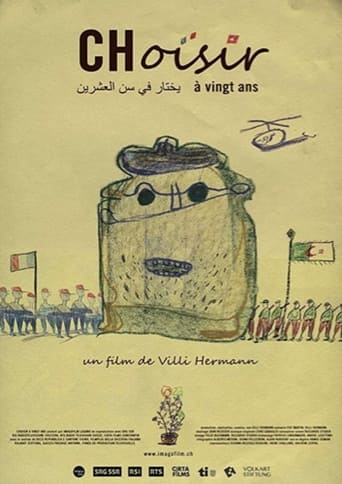
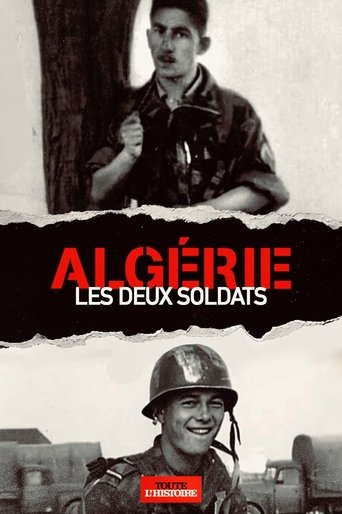
Between 1954-1962, one hundred to three hundred young French people refused to participate in the Algerian war. These rebels, soldiers or conscripts were non-violent or anti-colonialists. Some took refuge in Switzerland where Swiss citizens came to their aid, while in France they were condemned as traitors to the country. In 1962, a few months after Independence, Villi Hermann went to a region devastated by war near the Algerian-Moroccan border, to help rebuild a school. In 2016 he returned to Algeria and reunited with his former students. He also met French refractories, now living in France or Switzerland.
This documentary explores the perspectives of three Venezuelan artists from three different generations on what it means to be an artist in Venezuela.
A musical, and also a reflection on watching, on trying to escape an anthropocentric gaze and also on watching itself in cinema. Featuring mares and horses: Triana, Víctor K, Bambi Sailor, San Special Solano, Buck Red Skin, Onkaia, Cool Boy, the donkey Agostino, the mule Guapa. And also Alfredo Lagos, Raül Refree, María Marín, Pepe Habichuela, Virgina García del Pino, María García Ruiz, Pilar Monsell, María Pérez Sanz.
A couple of artists travels through the Mexico desert to present their puppet show.
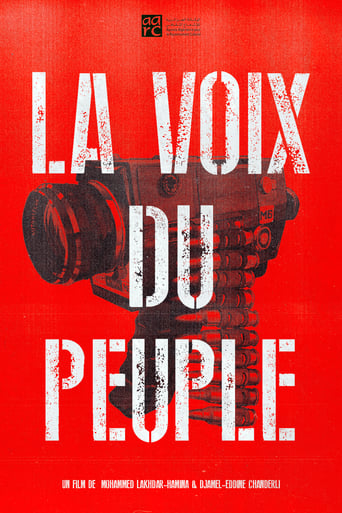
“La Voix du Peuple,” composed of archival photographs by René Vauthier and others, exposes the root causes of the armed conflict of the Algerian resistance. Participating in a war of real images against French colonial propaganda, these images aimed to show the images that the occupier had censored or distorted, by showing the extortions of the French occupation army: torture, arrests and arbitrary executions, napalm bombings, roundabout fires, erasing entire villages from the map, etc. This is what the French media described as a “pacification campaign”.
Performance and conversation with husband-and-wife poets Donald Hall and Jane Kenyon at a New Jersey festival, in their Wilmot (N.H.) hometown and their Eagle Pond farmhouse.
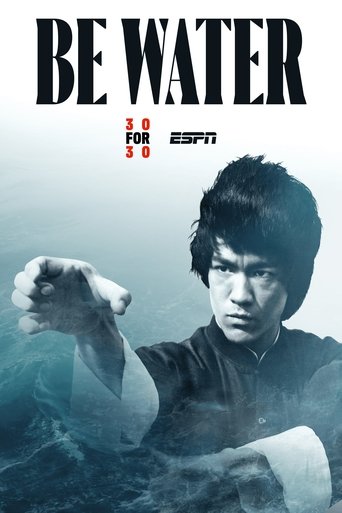
In 1971, after being rejected by Hollywood, Bruce Lee returned to his parents’ homeland of Hong Kong to complete four iconic films. Charting his struggles between two worlds, this portrait explores questions of identity and representation through the use of rare archival footage, interviews with loved ones and Bruce’s own writings.
In 1967, Visconti came to Algiers for the filming of The Stranger with Mastroianni and Anna Karina. Camus, during his lifetime, had always refused to allow one of his novels to be brought to the screen. His family made another decision. The filming of the film was experienced in Algiers, like a posthumous return of the writer to Algiers. During filming, a young filmmaker specializing in documentaries Gérard Patris attempts a report on the impact of the filming of The Stranger on the Algerians. Interspersed with sequences from the shooting of Visconti's film, he films Poncet, Maisonseul, Bénisti and Sénac, friends of Camus, in full discussions to situate Camus and his work in a sociological and historical context. “The idea is for us to show people, others, ourselves as if they could all be Meursault, or at least the witnesses concerned to his drama.”
In 1940, the German artist Charlotte Salomon (1917-43) undertook an extraordinary artistic adventure, during which she combined painting, text and music: in only eighteen months, she painted more than a thousand paintings. In 1943, she was arrested by the Nazis and sent to the Auschwitz extermination camp.
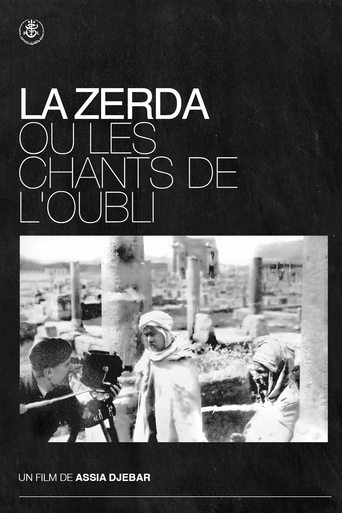
“La Zerda and the songs of oblivion” (1982) is one of only two films made by the Algerian novelist Assia Djebar, with “La Nouba des femmes du mont Chenoua” (1977). Powerful poetic essay based on archives, in which Assia Djebar – in collaboration with the poet Malek Alloula and the composer Ahmed Essyad – deconstructs the French colonial propaganda of the Pathé-Gaumont newsreels from 1912 to 1942, to reveal the signs of revolt among the subjugated North African population. Through the reassembly of these propaganda images, Djebar recovers the history of the Zerda ceremonies, suggesting that the power and mysticism of this tradition were obliterated and erased by the predatory voyeurism of the colonial gaze. This very gaze is thus subverted and a hidden tradition of resistance and struggle is revealed, against any exoticizing and orientalist temptation.
Quest for Beauty is a film documentary on the life and prolific art career of William Schickel who was a prominent 20th century Catholic artist. Schickel had a very prolific art career spanning sixty-plus years; he produced a large body of mostly commissioned work in painting, sculpture, stained glass, and architectural design. He is most well-known for his renovation of the Abbey of Gethsemani in Kentucky, where he worked personally with Thomas Merton. His works can be found in numerous private collections and museums, including the Vatican Museum. The film explores his Quest for Beauty and the challenges he faced, and his vision for the Church and his heart for unity in the Body of Christ.
Resistance fighter under the occupation, committed to the FLN during the Algerian war, member of the Medvedkine group after May 1968 and defender of Breton autonomy, René Vautier was a committed filmmaker, author of an anti-colonialist work in which he denounces the repression, torture and racism. In 1983, René Vautier discovered, by the light of a flashlight, his films cut up and scattered at Fort du Conquet. Police also came to check the damage.
On the 45th anniversary of GrETUA – the Experimental Theatre Group of the University of Aveiro – photography and its subjects narrate a journey through the memories of generations upon generations who helped shape this space of learning and creation. "There is no birthday party, this is all a photograph" reflects on memory through the emotional language of these encounters.
British surrealist Leonora Carrington was a key part of the surrealist movement during its heyday in Paris and yet, until recently, remained a virtual unknown in the country of her birth. This film explores her dramatic evolution from British debutante to artist in exile, living out her days in Mexico City, and takes us on a journey into her darkly strange and cinematic world.
In Portugal, during the night of April 24-25, 1974, a peaceful uprising put an end to the last government of the Estado Novo, the authoritarian regime established in 1933 by dictator António de Oliveira Salazar (1889-1970), paving the way for full democracy: a chronicle of the Carnation Revolution.
The first French anti-colonialist film, derived from an assignment in which the director was to document educational activities by the French League of Schooling in West Africa. Vautier later filmed what he actually saw: “a lack of teachers and doctors, the crimes committed by the French Army in the name of France, the instrumentalization of the colonized peoples.” For his role in the film, Vautier was imprisoned for several months. The film was banned from public screening for more than 40 years.