The story of computers: from electronic tape and punched cards, to austere-looking robots.
Social & External
Self - Commentator
Film sponsored by Western Electric (AT&T's equipment manufacturing division), the builder of the United States Air Force's White Alice Communications System in Alaska. Introduces the people and geography of the new state as well as the Western Electric radio-relay system, which links far-flung military sites, alert stations, and missile-warning facilities. Ralph Caplan praised the film's "intrinsically dramatic and highly photogenic" portrayal of communications equipment.
Hackers Wanted explores the origins and nature of hackers and hacking by following the adventures of Adrian Lamo, and contrasting his story with that of controversial figures throughout history.
The story of the birth of the Hungarian home computer scene back in the '80s behind the Iron Curtain. Smuggled in C64s, cracked games, swappers, diskmags, hacked phone lines to American BBS servers, demoscene, copy parties.
A story about the world's best Cyber spies. Their training in Israel's military, and their impact on the world we live in.
On June 11th, 1997, Philippe Kahn created the first camera phone solution to share pictures instantly on public networks. The impetus for this invention was the birth of Kahn's daughter, when he jerry-rigged a mobile phone with a digital camera and sent photos in real time. In 2016 Time Magazine included Kahn's first camera phone photo in their list of the 100 most influential photos of all time.
Familiar radio voice Ben Grauer leads the viewer on a behind the scenes tour of the National Broadcasting Company studios -- both radio and television -- in Rockefeller Center and Hollywood. The original 25-minute film previewed by network execs and affiliates in the fall of 1948 was cut down to 20 minutes before its first broadcast, reportedly to excise high-profile stars and programs such as Amos 'n' Andy, Jack Benny, and Edgar Bergen that had since left NBC for other networks.
What is Bitcoin? With the advent of Bitcoin, the world's first digital currency, for the first time in history money is no longer controlled by banks or governments, but by the people who use it. But where did this currency come from? How does it work? And is it truly the way forward, or just a flash in the pan? Magic Money answers these questions and more as it explores the mysterious origins of Bitcoin, its role in society, and how it could shape the future.
In a few years, technology will merge with our bodies in ways that today seem unimaginable, and will redefine the limits of what is a human being. There are already people who, driven by the desire to experiment, have crossed the biological limits by introducing electronic devices that provide them with capabilities that go beyond what is "normal." They are the first hybrids, and they face the reaction of society, which goes from malignancy to enthusiasm. Today they are only a small minority, and many people consider them as disrupted experimenters, but in the near future we may recognize them as pioneers.
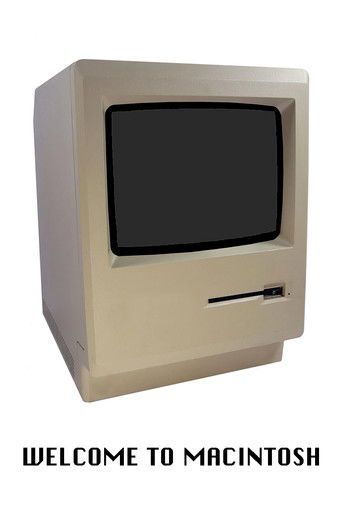
"Welcome to Macintosh" is a documentary that mixes history, criticism and an unapologetic revelry of all things Apple. Whether a long time Mac fanatic or new to computers, Welcome to Macintosh explores the many ways Apple Computer (now Apple, Inc.) has changed the world, from the early days of the Apple-I to the latest the company has to offer.
A team of scientists search for the lost island of Testerep in front of the Belgian coast, venturing into artificial landscapes and virtual realities.
Host Grant Jeffrey discusses how technology and government activities are changing the way our information is handled. How is this shaping our lives?
Focusing on the vulnerability of digital data, Digital Amnesia ponders the sustainability of modern artifacts that have no material state. Notable archivists share their perspectives on the Digital Age and whether it poses great promise or threat to the longevity of digital information and our collective memory.
With the most tech startups and venture capital per capita in the world, Israel has long been hailed as The Startup Nation. WIRED’s feature-length documentary looks beyond Tel Aviv’s vibrant, liberal tech epicenter to the wider Holy Land region – the Palestinian territories, where a parallel Startup Nation story is emerging in East Jerusalem, Nazareth, Ramallah and other parts of the West Bank, as well as in the Israeli cybersecurity hub of Be’er Sheva. And we will learn how the fertile innovation ecosystem of Silicon Wadi has evolved as a result of its unique political, geographical and cultural situation and explore the future challenges – and solutions – these nations are facing.
William Shatner presents a light-hearted look at how the "Star Trek" TV series have influenced and inspired today's technologies, including: cell phones, medical imaging, computers and software, SETI, MP3 players and iPods, virtual reality, and spaceship propulsion.
The Chinese company Huawei wants to expand 5G worldwide and is well advanced in the development of the technology. With the help of 5G, entire communities can function wirelessly, self-driving cars become possible and advanced medical care can be performed remotely in real time. However, many are worried that Huawei is incorporating backdoors that allow vast amounts of data to be collected and then used by China for espionage.
The Cost Of Convenience examines how internet platforms are impacting our mental health, restructuring our communities, threatening our democracy, and violating our human rights.
In the first decades of the 20th century, when life was being transformed by scientific innovations, researchers made a thrilling new claim: they could tell whether someone was lying by using a machine. Popularly known as the “lie detector,” the device transformed police work, seized headlines and was extolled in movies, TV and comics as an infallible crime-fighting tool. Husbands and wives tested each other’s fidelity. Corporations routinely tested employees’ honesty and government workers were tested for loyalty and “morals.” But the promise of the polygraph turned dark, and the lie detector too often became an apparatus of fear and intimidation. Written and directed by Rob Rapley and executive produced by Cameo George, The Lie Detector is a tale of good intentions, twisted morals and unintended consequences.
Once upon a time there was a large Finnish company called Nokia that manufactured the world’s best and most innovative mobile phones. Nokia’s annual budget was larger than that of the Government of Finland and their phones spread everywhere and changed the whole culture of communication. But then something changed. Film portrays the rise and fall of Nokia and the Finnish mobile phone industry. Nokia engineers, designers and managers tell their story about the creation, success and downfall of the Finnish mobile phone.
Do any areas of our lives escape surveillance any more? Citizens of the 21st Century are the focus of prying eyes, whether they agree to it or not.
Over the past few years, technology has improved our lives in so many ways. Now, some people, called trans-humanists, are taking the next logical step - they are fusing their bodies with digital implants to increase their abilities and expand their senses - they are becoming, in effect, real life cyborgs. How is life going to change for us all if some people have supernatural powers?