"Do any areas of our lives escape surveillance any more?"
Do any areas of our lives escape surveillance any more? Citizens of the 21st Century are the focus of prying eyes, whether they agree to it or not.
Social & External
The life and career of the hailed Hollywood movie star and underappreciated genius inventor, Hedy Lamarr.
Warsaw's Central Railway Station. 'Someone has fallen asleep, someone's waiting for somebody else. Maybe they'll come, maybe they won't. The film is about people looking for something.
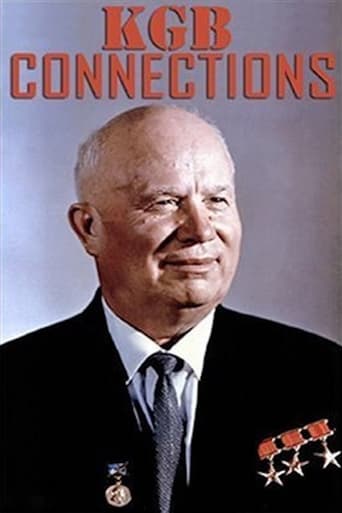
Documentary - This 1982 film explains the KGB infiltration of America. Who they are, what they are doing, and how well they have infiltrated North America. - Harold Brown, Nikita Khrushchev, V.I. Lenin
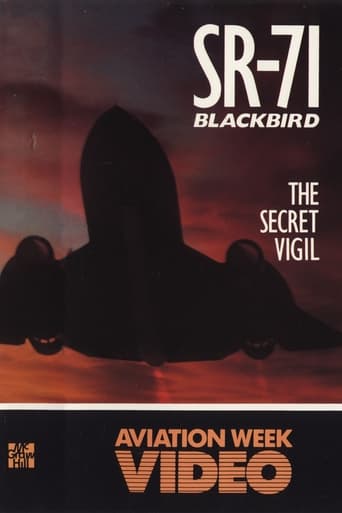
Few aircraft have attracted more attention than the ominous black supersonic jet that for years has ranged the world on reconnaissance missions. This is the definitive tribute to an extraordinary peacekeeper, the SR-71 Blackbird. The History. The Technology. The Missions. The Pilots. And compelling, gripping footage of the Blackbird itself, on its "rocket ride" through the world's airspace.
Takes us to locations all around the US and shows us the heavy toll that modern technology is having on humans and the earth. The visual tone poem contains neither dialogue nor a vocalized narration: its tone is set by the juxtaposition of images and the exceptional music by Philip Glass.
How does a machine learn to read the world? Testimonies and screen recordings introduce the experience of online micro-workers from the Global South: their job is to teach the AI of self-driving cars to navigate the streets of the Global North.
This documentary-drama hybrid explores the dangerous human impact of social networking, with tech experts sounding the alarm on their own creations.
On June 11th, 1997, Philippe Kahn created the first camera phone solution to share pictures instantly on public networks. The impetus for this invention was the birth of Kahn's daughter, when he jerry-rigged a mobile phone with a digital camera and sent photos in real time. In 2016 Time Magazine included Kahn's first camera phone photo in their list of the 100 most influential photos of all time.
Conservation biologist Tim Shields sees urgency in the field and finds that traditional conservation practices are lacking when it comes to saving desert tortoise populations from ravens. He goes rogue, employing an arsenal of lasers, exploding model turtles, drones and desert rovers as a means of protecting the tortoise's dwindling numbers.
In 1943, Noor Inayat Khan was recruited as a covert operative into Winston Churchill's Special Operations Executive. With an American mother and Indian Muslim father, she was an extremely unusual British agent. After her network collapsed, Khan became the only surviving radio operator linking the British to the French Resistance in Paris, coordinating the airdrop of weapons and agents, and the rescue of downed Allied fliers.
They call themselves Fancy Bear, Cozy Bear or Voodoo Bear. Elite units of the Russian secret services are hidden behind these code names. They are among the most dangerous hackers in the world. The bears were already in the computer of then-Chancellor Angela Merkel in 2015, interfered in the US election campaign in 2016 and are currently influencing the war in Ukraine. The makers of the successful YouTube channel “Simplicissimus” in co-production with funk and SWR are back and show the destructive potential of state hacking with this documentary. With the help of leading German hackers, cyberspace experts and a lot of humor, they delicately demystify the Russian bears: Who are the people behind them? How do they operate? And what makes them so incredibly dangerous?
NOTHING TO HIDE is an independent documentary dealing with surveillance and its acceptance by the general public through the "I have nothing to hide" argument. The documentary was produced and directed by a pair of Berlin-based journalists, Mihaela Gladovic and Marc Meillassoux. It was crowdfunded by over 400 backers. NOTHING TO HIDE questions the growing, puzzling and passive public acceptance of massive corporate and governmental incursions into individual and group privacy and rights. After the emotion initially triggered by the Snowden revelations, it seems that the general public has finally accepted to live in a monitored digital world.
In the first decades of the 20th century, when life was being transformed by scientific innovations, researchers made a thrilling new claim: they could tell whether someone was lying by using a machine. Popularly known as the “lie detector,” the device transformed police work, seized headlines and was extolled in movies, TV and comics as an infallible crime-fighting tool. Husbands and wives tested each other’s fidelity. Corporations routinely tested employees’ honesty and government workers were tested for loyalty and “morals.” But the promise of the polygraph turned dark, and the lie detector too often became an apparatus of fear and intimidation. Written and directed by Rob Rapley and executive produced by Cameo George, The Lie Detector is a tale of good intentions, twisted morals and unintended consequences.
LIKE is an IndieFlix Original documentary that explores the impact of social media on our lives and the effects of technology on the brain. The goal of the film is to inspire us to self-regulate. Social media is a tool and social platforms are a place to connect, share, and care … but is that what's really happening?
The incredible story of Bill Gaede, an Argentinian engineer, programmer… and Cold War spy.
This short 19-minute documentary is an intimate and moving exploration of the profound and far-reaching impact of surveillance on Muslim American individuals and communities. Premiering at the 2017 Tribeca Film Festival, WATCHED is told through the personal experience of two women, both coming of age in New York. The film charts the devastating toll of surveillance and reveals the scars it leaves behind.
William Shatner presents a light-hearted look at how the "Star Trek" TV series have influenced and inspired today's technologies, including: cell phones, medical imaging, computers and software, SETI, MP3 players and iPods, virtual reality, and spaceship propulsion.
This short documentary follows the fortunes of iconic car manufacturer Lotus. Once famous for its championship-winning race cars and iconic sports cars, Lotus has struggled to remain in profit. A new investor and managing director set out to build the first new Lotus road cars in over a decade: their final petrol-powered car Emira and their first pure electric British hypercar, the 2000bhp Evija.
Richard Doty is a former Air Force Intelligence operative whose job at Kirtland AFB in New Mexico involved creating and disseminating disinformation about the existence of extraterrestrial spacecraft to UFO researchers. In the late 1970s and early 1980s, Kirtland AFB was home to a wide range of highly classified technology experiments involving lasers, stealth aircraft, and nuclear weapons. Strange phenomena in the skies above the base piqued the interest of amateur and professional UFO investigators. Doty’s job was to recruit UFO researchers to be informants to the Air Force about goings-on in the UFO community and to spread military disinformation about UFOs among their peers. To accomplish this, Doty supplied fake documents to UFO investigators purporting to tell the “truth” about government involvement with extraterrestrials.
Focusing on the vulnerability of digital data, Digital Amnesia ponders the sustainability of modern artifacts that have no material state. Notable archivists share their perspectives on the Digital Age and whether it poses great promise or threat to the longevity of digital information and our collective memory.