Social & External
Unknown Role
Amid the civil-military dictatorship implanted with the 1964 coup, Sergio Muniz had the idea of making a documentary about the action of the Death Squad. At the time, the press still had some freedom to disseminate the work of these death squads formed by police officers of various ranks, and that he acted on the outskirts of cities like Sao Paulo and Rio de Janeiro. The victims of police repression (as today) were men, poor and black, and this condition is supposed criminals.
Journalist Dermi Azevedo has never stopped fighting for human rights and now, three decades after the end of the military dictatorship in Brazil, he's witnessing the return of those same practices.
In a fascinating geopolitical drama, Danish filmmaker Mik-Meyer closely follows Ravalomanana as he attempts to return from exile in South Africa to Madagascar, under the threat of arrest and bodily harm.
Images of Argentinian companies and factories in the first light of day, seen from the inside of a car, while the director reads out documents in voiceover that reveals the collusion of the same concerns in the military dictatorship’s terror.
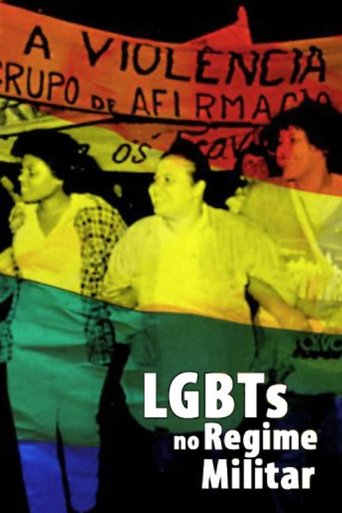
In 1980, the first march of gays, lesbians and transvestites took place in Brazil in protest against the constant police operations that took place in São Paulo, which aimed to repress these groups. Based on Renan Quinalha's doctoral thesis, “Against morality and good customs: the sexual politics of the Brazilian dictatorship (1964-1988)”, carried out by the Institute of International Relations, a series of four 5 minute videos about the birth of the LGBT movement during the Military Regime.
Four siblings, whose father disappeared during Brazilian Military Dictatorship, report their childhood during the regime.
A documentary on the rise and fall of Project Cybersyn, an attempt at a computer-managed centralized economy undertaken in Chile during the presidency of Salvador Allende.
Documentary about Field Marshal P. Phibunsongkram (Plaek Khittasangka), a story about dreams that influence the lives of Thai people in many aspects. Until the peak of power with things you may not have known before!
A group of young politicians campaigning against an authoritarian constitution speak up, spark hope and ignite a once-in-a-generation movement in this energetic exploration of the recent elections in Thailand.
When Mariana connects the Military Dictatorship's violent legacy as the structure behind Brazilian families, she embarks on an introspective journey to deconstruct her family life growing up in Brazil.
Poetic images emerge from everyday life, interweaving with narratives that recall traces of events from the last civic-ecclesiastical-military dictatorship in the city of La Plata.
Planned by Britain’s MI6 and then executed by America’s C.I.A., the coup d’état which follows will destroy Iran’s last democracy, and relations between Iran and the West until the present day. Most shocking of all, the truth about Her Majesty’s role will be hidden from the Queen herself, and even the all-powerful Shah who will be used by Britain and American to replace Iran’s last democratic Prime Minister. The coup will lead to political upheaval all over the Middle East for decades to come, eventually resulting in the Islamic Revolution of 1979 which will end the reign of the Shah, and British and American influence in Iran, inspiring countless other Islamist revolutions around the world.
A documentary film about the 1960, 1971, 1980, and 1997 military interventions and coups d'etat in Turkey.
It follows Chilean writer Antonio Skármeta as he celebrates the end of the autocrats. Cheerful farewell rituals accompany others facing political persecution on their way to fly home.
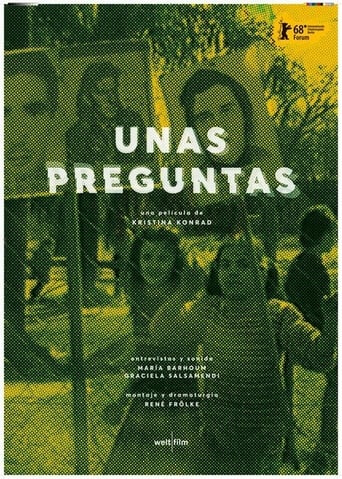
In 1986, the Uruguayan Parliament passed a law granting amnesty for all crimes and human rights violations committed by the military and police during the dictatorship (1973-85). This law of impunity prevented the clarification demanded by the relatives of those who had disappeared and been murdered by the former regime. A public initiative arose calling for a referendum in which the law be subject to the vote of the people. Unas preguntas uses U-matic footage, mostly of interviews recorded on the streets of Uruguay between 1987 and 1989, to present a time capsule of the period.