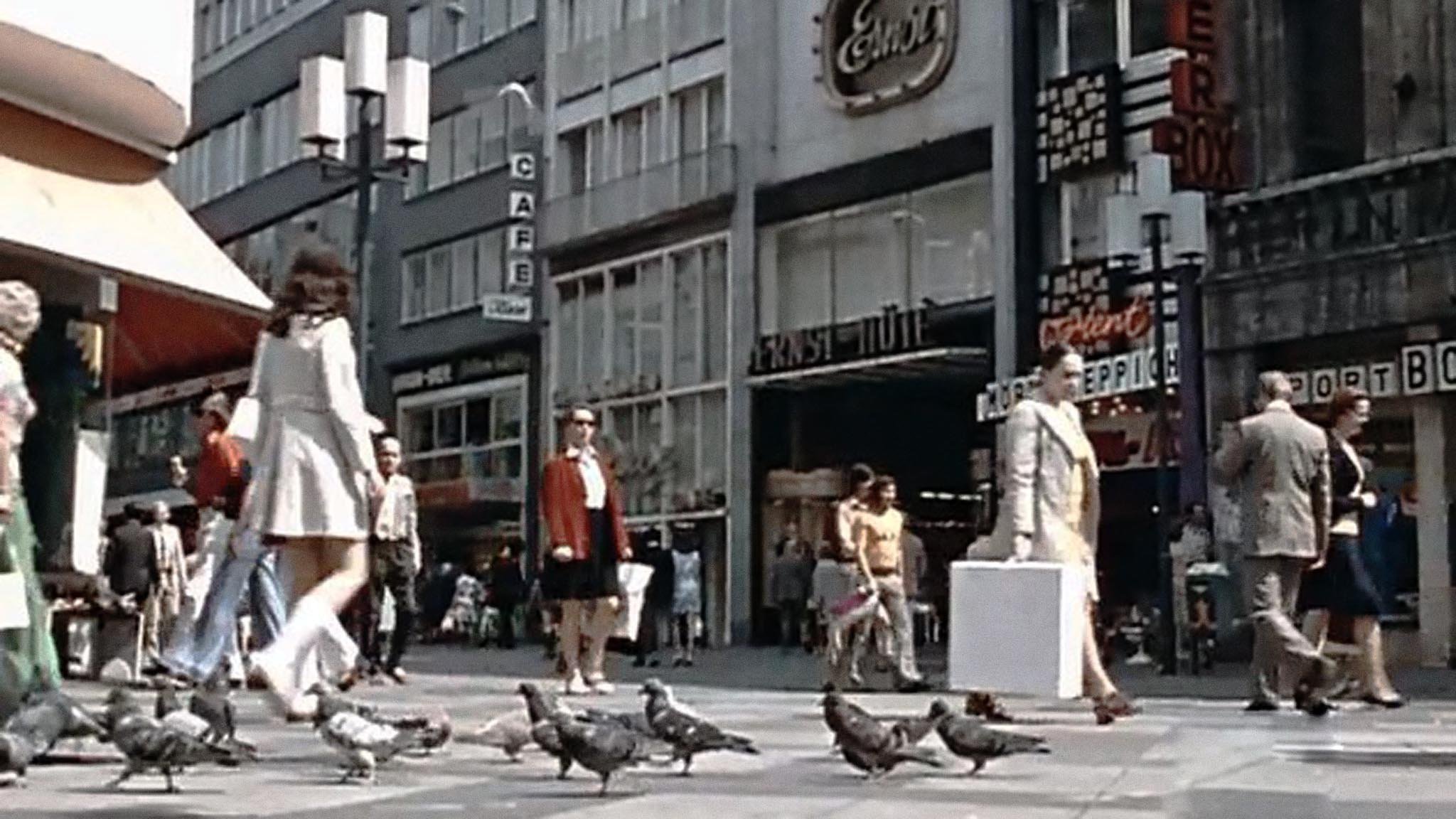
This film focuses on the approaches that several cities have taken to one problem. Through various examples, it examines the implications and options for a pedestrian-oriented city core. Ninth in Régnier's ten-film Urba 2,000 series.

Social & External
Author and activist Jane Jacobs talks about the problems and virtues of North American cities.
A short documentary on the River Ouse, following it downstream from Lewes to Newhaven, meditating on the surrounding area.
The human side of town planning, as exemplified in Baltimore, Maryland. The Coldspring Project concerned a proposed housing development for lower and upper income levels on a three hundred-acre site adjoining a wildlife sanctuary. The film records the differences aired in meetings of various interest groups that tried to modify the plan according to their views, and the compromise reached, based on plans drawn up by Montréal architect Moshe Safdie.
Architect Stanley King involves the local Vancouver community in urban design.
This feature documentary zooms in on the city of Sapporo, on the Island of Hokkaïdo in southern Japan. In contrast to the unplanned sprawl of neighbouring industrialized cities, Sapporo appears to be one of the best-planned large cities in the world, combining growth and technology with town planning and the preservation of green spaces.
Canada is facing a housing crisis, and cooperative housing might be a part of the solution.
Shows a campaign launched in Halifax in 1967 to probe the core of poverty in that city--low incomes, ill health and inadequate housing affect more than twelve thousand people in the central area. The project combines the efforts of local agencies with those of government agencies to alleviate these conditions.
Legault is an aging man who lived in a rural cabin, now a suburban cabin, as developments have popped up around him.
This short documentary examines the complex range of issues affecting urban transport in developing countries. After examining cost and available technology, as well as the different needs of the industrialized middle class and the urban poor, the film proposes some surprising solutions.

In this documentary, Marie-Claire Rubinstein reveals to us, through the testimonies of the inhabitants who live there, the architectural achievements of the French urban planner Fernand Pouillon in Algiers. In particular the vast complexes of hundreds of social housing units, including the most famous Diar E Saâd (1953), Diar El Mahçoul (1954) and Climat de France (1957). The historical context, during the war of independence is related by the historian Benjamin Stora and Nadir Boumaza. This documentary also evokes the personality of Fernand Pouillon in a post-colonial context.
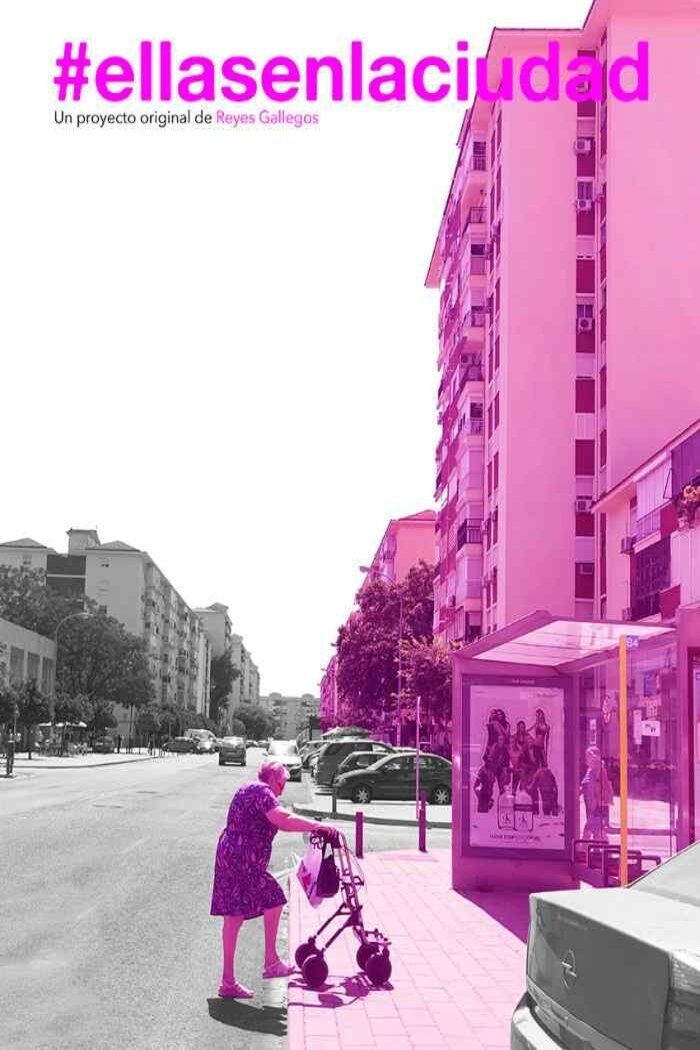
"Ellas en la ciudad" (Them in the City) focuses on the first settlers of the neighborhoods on the outskirts of Seville. Through their stories, we discover that they have been the backbone of a city that has turned its back on them.
Writer and urban activist Jane Jacobs fights to save historic New York City during the ruthless redevelopment era of urban planner Robert Moses in the 1960s.
Great Britain was the first country to plan the establishment of 'new towns' to house the overflow from rapidly expanding industrial centres. Today these towns number over one hundred. This film examines the operation of two of them.

This documentary presents a before-and-after picture of people in a large-scale public housing project in Toronto. Due to a housing shortage, they were forced to live in squalid, dingy flats and ramshackle dwellings on a crowded street in Regent Park North; now they have access to new, modern housing developments designed to offer them privacy, light and space.
"This film is one of the first French Unit productions of the “Société Nouvelle/Challenge for Change” program. When an old area of Montréal is to be demolished to make way for a new low-income housing development, is there anything the residents can do to protect their own interests? The film documents such a situation in the Little Burgundy district of Montréal and shows how the residents organized themselves into a committee that successfully influenced the city’s housing policy." - Anthology Film Archives
This short documentary features a portrait of Ottawa in the mid-20th century, as the nascent Canadian capital grew with force but without direction. Street congestion, air pollution, and rail traffic were all the negative results of a city that had grown without being properly planned. French architect and urban designer Jacques Gréber stepped in to create a far-sighted plan for the future development of Ottawa. With tracks moved, factories relocated, and neighbourhoods redesigned as separate communities, Ottawa became the capital city of true beauty and dignity we know today.
Join the enchanting journey as a city awakens, its components harmonizing in a grand symphony of self-expression, where every brick, tree, and whisper shapes its own destiny.
The film Together we cycle investigates the critical events that has led to the revival of the Dutch cycling culture. For most people, cycling in the Netherlands, seems a natural phenomenon. However, until the 1970s the development of mobility in the Netherlands followed trents across the globe. The bicycle had had its day, and the future belonged to the car. The only thing that had to be done was to adapt cities to the influx of cars. Then Dutch society took a different turn. Against all odds people kept on cycling. The question why this happened in the Netherlands, has not an easy answer. There are many factors, events and circumstances that worked together, both socially and policy-wise. In Together we cycle, key players tell the story of the bumpy road which led to the current state. Where cycling is an obvious choice for most citizens.

The documentary offers an overview of the district of Cidade Tiradentes and its inhabitants. It starts by the acquisition of land by the public authorities from the 1970s onwards, to the occupation of what is today one of the largest housing projects in Latin America.
Caracas has been changing since the nineteenth century this is a story that tries to explain why the Venezuelan capital is complex, chaotic and fertile. In light of these new evidences, community experiments, social awareness and organization of people, seem to be the necessary ingredients to rescue a metropolis that is not yet completely lost.