For the 75th anniversary of the liberation of Auschwitz, CNN’s Wolf Blitzer looks back through the eyes of those who were imprisoned there.
Social & External
Unknown Role
Examines documents and traces of the atrocities that took place at the Auschwitz concentration camp. Years after the end of the war, expert analysis of the remnants of these documents has helped shed light on the stories of prisoners.

An intimate profile of Hédi Fried, a Swedish writer, therapist and her little sister Livia Fränkel, both Holocaust survivors. While Hédi is very active among other survivors and in opinion-making, Livia chooses to forget.

In 1947, four German judges who served on the bench during the Nazi regime face a military tribunal to answer charges of crimes against humanity. Chief Justice Haywood hears evidence and testimony not only from lead defendant Ernst Janning and his defense attorney Hans Rolfe, but also from the widow of a Nazi general, an idealistic U.S. Army captain and reluctant witness Irene Wallner.
Filmmaker Alain Resnais documents the atrocities behind the walls of Hitler's concentration camps.
The true story of how businessman Oskar Schindler saved over a thousand Jewish lives from the Nazis while they worked as slaves in his factory during World War II.
In the most personal and unflinching film of his career, historian Simon Schama confronts the enormity of the Holocaust and the catastrophe experienced by its victims. In a journey that ends with his first visit to Auschwitz, Simon travels across the Continent to explore how the Holocaust was far more than a Nazi obsession that played out in gas chambers, but a European-wide crime of complicity. From bullets in the Lithuanian lands of his ancestors to bureaucracy in the Netherlands, he reveals how deep-rooted prejudice was weaponised to turn people against their Jewish neighbours. As a moving interview with a survivor reveals, the story of how ‘evil comes step by step’ remains powerfully relevant today.
A documentary chronicling the adolescent years of Elie Wiesel and the history of his sufferings. Eliezer was fifteen when Fascism brutally altered his life forever. Fifty years later, he returns to Sighetu Marmatiei, the town where he was born, to walk the painful road of remembrance - but is it possible to speak of the unspeakable? Or does Auschwitz lie beyond the capacity of any human language - the place where words and stories run out?
Lithuania, 1941, during World War II. Hundreds of thousands of texts on Jewish culture, stolen by the Germans, are gathered in Vilnius to be classified, either to be stored or to be destroyed. A group of Jewish scholars and writers, commissioned by the invaders to carry out the sorting operations, but reluctant to collaborate and determined to save their legacy, hide many books in the ghetto where they are confined. This is the epic story of the Paper Brigade.
A documentary-essay which shows Costică Axinte's stunning collection of pictures depicting a Romanian small town in the thirties and forties. The narration, composed mostly from excerpts taken from the diary of a Jewish doctor from the same era, tells the rising of the antisemitism and eventually a harrowing depiction of the Romanian Holocaust.
A portrait of the legendary Swedish journalist and writer Cordelia Edvardson (1929-2012). She was only fourteen when she alone was brought to the concentration camp of Theresienstadt and later to the camp of Auschwitz.
This Emmy Award-winning documentary traces the rise of Nazism in general and the career of Adolf Eichmann in particular by documenting the small incremental steps the Nazis took to introduce their ideology of anti-semitism in Germany and Nazi-occupied Europe during World War II.
The true, harrowing story of a young Jewish girl who, with her family and their friends, is forced into hiding in an attic in Nazi-occupied Amsterdam.
Holocaust survivors describe their experiences being interred at the Natzweiler-Struthof concentration camp.
In 1943, Max Fronenberg spent one year digging a secret underground tunnel to escape out of a prison camp in Warsaw, Poland during the Holocaust while saving fifteen other prisoners in the process and forced to leave behind the love of his life, Rena, in the prison.
In 1961, history was on trial... in a trial that made history. Just 15 years after the end of WWII, the Holocaust had been largely forgotten. That changed with the capture of Adolf Eichmann, a former Nazi officer hiding in Argentina. Through rarely-seen archival footage, The Eichmann Trial documents one of the most shocking trials ever recorded, and the birth of Holocaust awareness and education.
What would your family reminiscences about dad sound like if he had been an early supporter of Hitler’s, a leader of the notorious SA and the Third Reich’s minister in charge of Slovakia, including its Final Solution? Executed as a war criminal in 1947, Hanns Ludin left behind a grieving widow and six young children, the youngest of whom became a filmmaker. It's a fascinating, maddening, sometimes even humorous look at what the director calls "a typical German story." (Film Forum)
The film traces two families, one of which is Jewish, who preserved the images for decades but hadn’t brought them to light. 80 years after their creation, the son of the photographer finds the forgotten negatives and launches an investigation. With a team of researchers, archivists, and animators who use near-forensic precision to reconstruct locations and contexts, they trace the circumstances of those tragic days and the lives captured in each frame.
At the Wannsee Conference on January 20, 1942, senior Nazi officials meet to determine the manner in which the so-called "Final Solution to the Jewish Question" can be best implemented.
This short-form documentary focuses on the true story of Alfons Heck, who as an impressionable 10-year-old boy became a high-ranking member of the Hitler youth movement during World War II. The story is told in his own words. This film originally aired as part of the "America Undercover" series on HBO.
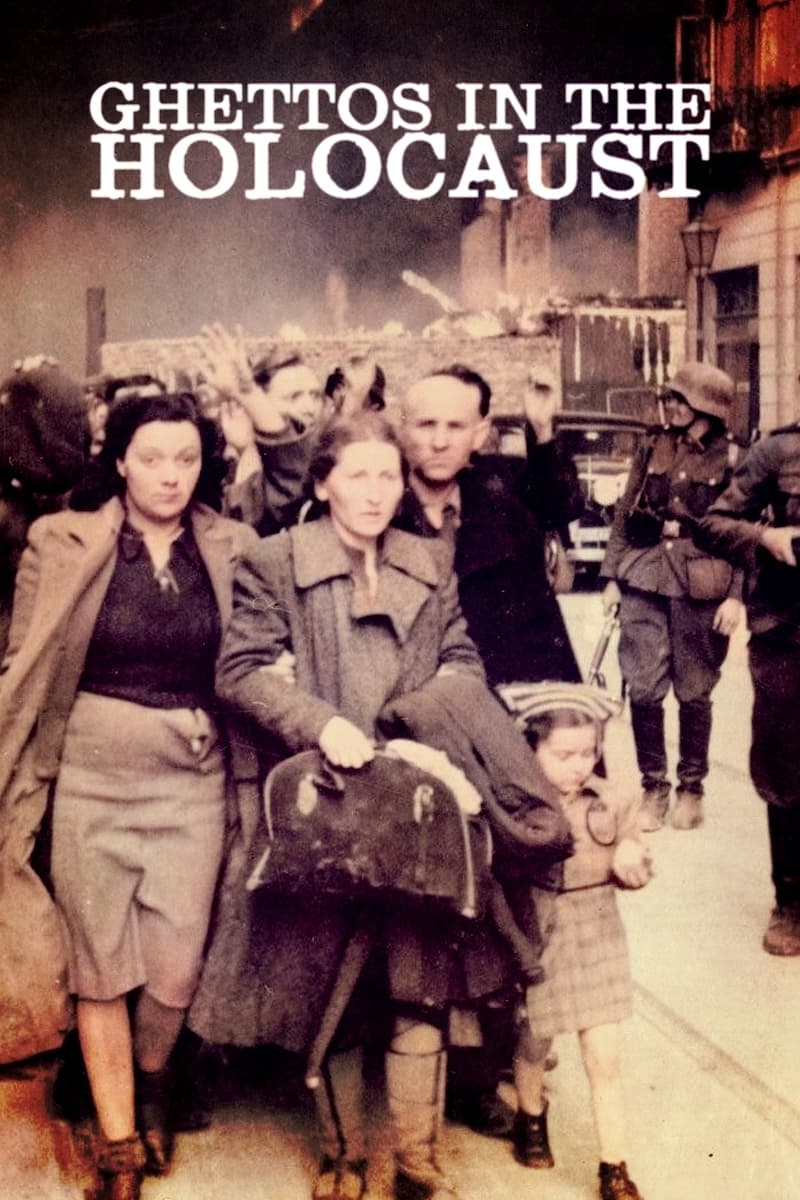
The history of the Warsaw Ghetto (1940-43) as seen from both sides of the wall, its legacy and its memory: new light on a tragic era of division, destruction and mass murder thanks to the testimony of survivors and the discovery of a ten-minute film shot by Polish amateur filmmaker Alfons Ziółkowski in 1941.