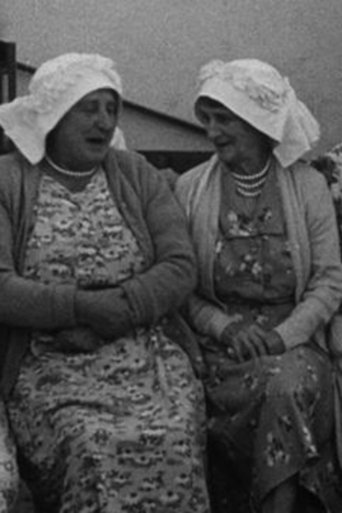
This captivating early film - by an unknown filmmaker - offers a glimpse of glorious Blackpool and the many delights it offers holidaymakers.
Social & External
The world seen through the eyes of children. The action takes place in Karosta, the former military port of Liepaja city – however, it is not that important, as the film could take place anywhere. We observe children playing on the beach, revealing the core of Pakalnina’s work: perceiving and transmitting emotions.
Private Diary documents photographer Pedro Usabiaga working with a variety of amateur models. The audience sees how the relationships between the photographer and the subjects changes during their time together, as well as how the individual photographs begin to take shape. Pedro Usabiaga is a well-established Basque photographer whose chief concerns are figurative photography and whose passion in photographing the Spanish male. In this hour long conversation with the artist we are given entry into that process of selecting models (none of the models he uses for this book to be titled 'Private Diary' are professional, but instead are randomly chosen as Usabiaga observes athletes in action) and then allowed to follow Usabiaga and his crew as they photograph these men in natural settings and natural light.
One of the highest achievements of the new wave of Kirghiz cinema, which emerged in the mid-1960s. This story of a boy building sandcastles on the shores of the Issyk-Kul Lake becomes a documentary parable on the tensions between an artist and society.
A woman narrates the thoughts of a world traveler, meditations on time and memory expressed in words and images from places as far-flung as Japan, Guinea-Bissau, Iceland, and San Francisco.
When Tomoko finds some messages for a 'Mr Smith' on a lost mobile phone, she finds herself on an 'Alice in Wonderland' journey through Tokyo's boulevards and back alleys. From the tyranny of symmetry in soaring office blocks - to buildings that look like space-ships, this creative documentary shows us the city's soul.
Travel films have an established format with their own conventions, history and baggage. It is a medium that has all too often sought to control, define and dictate perceptions of ”other” places. Comprised of footage shot while travelling on group excursions across Russia in 2019, An Uncountable Number of Threads is an attempt to draw out the ethical restrictions of a travelogue, while questioning how (and why) to make one. At times there is an awkward tourist-gaze, aware of its outsider position. But as a self-reflexive work that considers its own creation, it ultimately unravels, as the artist rationalises themselves out of a particular way of working, inviting the viewer into their uncertainty.
An experimental film following a trip made by three friends in which the contrast between the agitated city of São Paulo, Brazil and the calmness of the beach leads the flow. No script. No story. Just vibes.
The film is a cinematic interpretation of the travel book “Armenia” by Russian poet Andrei Bely.
Botanical gardens in Bombay plus the highly decorative Jain Temple in Calcutta.
The film follows morning events at Bacvice beach. At dawn, before sunrise, the beach becomes a place of an unusual clash. From nearby clubs and cafes, numerous groups of young people cross the beach on their way home. At the same time, older people start coming. They walk, come, pass by and go.
The reception ebbs and flows as the unfamiliar landscape whirls by the window of a plane or train or car. Communication is delayed, fragmented, interrupted. Memories of a distant country.
To popularize the idea of automobile travel, Ford Motor Company produced Ford Educational Weekly, a film magazine distributed free to theaters. One 1916 series featured "Visits to American Cities." In this episode, Los Angeles is featured at the very beginning of the boom created by oil, movies and aircraft. On the occasion of its centennial in 1953, Ford donated its film to the National Archives and Records Service; this copy derives from a fine grain master printed from the Archive's preservation negative. Music by Frederick Hodges.
Life is what we don't want it to be.
Riding Giants is story about big wave surfers who have become heroes and legends in their sport. Directed by the skateboard guru Stacy Peralta.
Early film of a crowded street scene in an unidentified Indian city.
Bruce Brown's The Endless Summer is one of the first and most influential surf movies of all time. The film documents American surfers Mike Hynson and Robert August as they travel the world during California’s winter (which, back in 1965 was off-season for surfing) in search of the perfect wave and ultimately, an endless summer.
A 40-day, 40-night road trip to the Trinity Site—where the first atomic bomb was detonated in the summer of 1945—covering many other atomic destinations and driving deep into the natural and social history of the American southwest.
For fixed-gear cyclists, Los Angeles is a city that has it all. From the neon glow of Hollywood to the sun-drenched boardwalk of Venice Beach, fixed-gear has evolved into a vibrant street culture that is uniquely L.A. From director David Rowe (Fast Friday) comes a new documentary feature that explores a side of L.A. few outsiders have seen. From races through rush-hour traffic to midnight loft parties, To Live & Ride in L.A. is a fast paced-trip through the busy streets and back-alleys of one of the world's largest cities. To Live & Ride in L.A. features talented local riders tearing up the streets with first-time visitor Keo Curry (Fast Friday, Macaframa) - one of the living legends of the sport. Bike to hidden spots off the map, race a midnight alley-cat, keep pace with the riders from Wolfpack, and hang with the local crews, graffiti artists and other L.A. personalities burning up the fixed-gear scene.
Documentary about the photo session for the photobook "Castella", filmed in Portugal.