Social & External
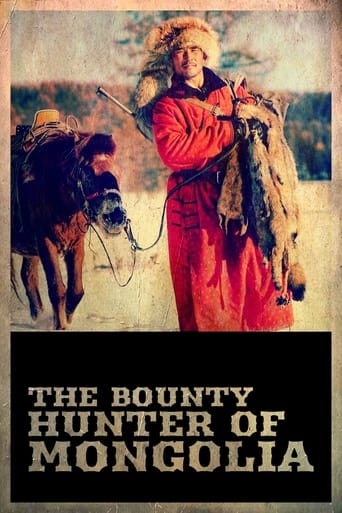
In the Darhat valley in northern Mongolia, the horses of nomadic tribes are stolen by bandits who then sell them to Russian slaughterhouses. Shukhert, a brave horseman, relentlessly pursues them through the Mongolian taiga, bordering Siberia.
Regnum Fest is a documentary that examines reenactors dedicated to preserving the traditions of the Hungarian conquest and the Árpád era, showcasing various groups that recreate life from the 10th to the 13th centuries. The leaders of these groups share insights into their work in historical reenactment and armed combat, both on foot and horseback.
Greek Sarakatsani community members, a former group of nomadic animal breeders, share personal experiences and discuss the concept of identity in today's world. A tribute to collective memory through an experiential journey that sets out from the past, progresses into the present, and contemplates the future.
In recent years, the number of people living in a bus or camper has increased significantly. But for this growing group, there are fewer and fewer places where you can legally park. The Kardinge car park in Groningen, a popular refuge for people staying in their campers, is also under pressure. Does the Netherlands actually have room for nomads and what drives people to want to live off the beaten track? Filmmaker Tom Tieman temporarily goes into hiding at the Kardinge car park and meets the current residents. Read more
Those who do not know the Sahara think there is only sand in the desert. But in the desert there are children who play and draw and make movies, and who would like to not have to think about the war. In the desert there's a European colony, an occupied country called Western Sahara, where there are thousands of Sahrawi refugees living a hard life in exile. "Little Sahara" tells their story, the story of a supportive, resilient people who try to thrive and grow in the Hamada, where everything has a hard time growing.
In their vehicle, Laurie, Kristy and Linda live alone on the American roads. Like thousands of modern American nomads who can no longer afford to pay for their housing. With no money to spare, these three sixty-year old women are fleeing, in their own way, a part of their history that has left a deep mark on them. Driving away, they try to regain some form of peace. But as the miles and seasons pass, despite their impressive temerity and resilience, their quest for a better future is challenged by unexpected events that hit a country in crisis. Will they nevertheless manage, at the end of the road, to find the serenity they are looking for, in order to become someone again?
We get to meet Aslanbek—a teenage shepherd in the mountains of Kyrgyzstan. “Aslanbek” is a story exploring the dynamics of relationship between humans and animals, what we can learn from the mountains, and about dreams. In short, it's a story about our forgotten values.
In the Issyk-Kul region of Kyrgyzstan, tradition is king. Polo's still played with a freshly killed goat and the men still marry their women the old-fashioned way: by abducting them off the street and forcing them to be their wife. Bride kidnapping is a supposedly ancient custom that's made a major comeback since the fall of Communism and now accounts for nearly half of all marriages in some parts.
The young director, Gael Metroz, takes the road alone, camera in hand, in the footsteps of Nicolas Bouvier. He discovers that the East is no longer the almost carefree land of the Fifties recounted in l'Usage du Monde: Iran in crises, Pakistan shaken by tribal violence's, Taliban, civil war in Sri Lanka. This world, Bouvier had the usage, seem to have disappeared under the veil of time. Disappointed the director leaves the main road traced by the famous Topolino and continues on the small path with the nomads. In creating his own route, Gael Metroz reveals the writer's philosophy of travel.
At the non-places of this world lie the struggles of nobodies, to improve, overcome and survive. Their struggles suffocate them, they forget to live. They dislocate them, bring them together and pull them apart. Father and son share simple dreams and a lifetime on the road. Along an unromantic Silk Route they try to make some come true. Searching for a more livable future they break apart. As working class heroes they accept their fate. The film examines the added value of honesty in our actions.
Hajar is a 55-years-old Bahktiari woman from Iran who is betrayed by her family and forced to abandon her nomadic lifestyle. Climate change, urbanization and social issues have drastically diminished the traditional migratory activities of the Bakhtiari tribe from Southwestern Iran.
A 20-minute documentary film about the Kyrgyz people living by the Narym River.
One of the highest achievements of the new wave of Kirghiz cinema, which emerged in the mid-1960s. This story of a boy building sandcastles on the shores of the Issyk-Kul Lake becomes a documentary parable on the tensions between an artist and society.
The film shows the life of women in a tent camp on the edge of the Sahara. An old nomad woman and her daughter from the city argue about happiness - where do you find happiness, in the desert or city. Women and men in open dispute about love, suffering and passion. In an amazing way, something of the self-confidence, independence and courage of these daughters of the sand becomes palpable.
Two friends travel across Uzbekistan and Kyrgyzstan on the search for Eagle Hunters.
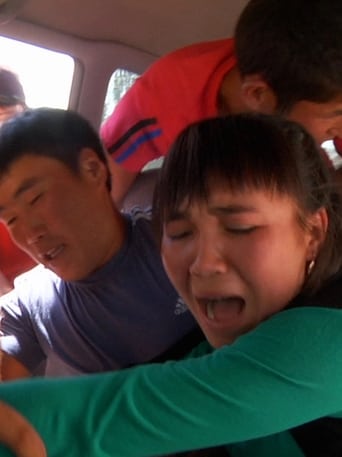
The plot of the movie brings two people together - an immigrant filmmaker from Belarus and a 10 years old girl from the village in the south of Kyrgyzstan.
You will discover a mysterious world where monuments of the great civilizations of the past intertwined with the corners of unspoiled nature, you will conquer the highest peaks and fantastic caves, you will dive into the refreshing coolness of emerald lakes and living fairy tale medieval east. The roar of wind and the murmur of flowing mountain streams complement the playing of the Kyrgyz music, taking you in the wonderful world - Kyrgyzstan. Travel Documentary hosted by Vitaliy Podstrechniy and Yulia Podstrechnaya
A gold prospector in Alaska struggles to survive the elements and win the heart of a dance hall girl.
While the Civil War rages on between the Union and the Confederacy, three men – a quiet loner, a ruthless hitman, and a Mexican bandit – comb the American Southwest in search of a strongbox containing $200,000 in stolen gold.
A woman on the run from the mob is reluctantly accepted in a small Colorado community in exchange for labor, but when a search visits the town, she learns that their support has a price.
Bounty hunters seek shelter from a raging blizzard and get caught up in a plot of betrayal and deception.
A woman narrates the thoughts of a world traveler, meditations on time and memory expressed in words and images from places as far-flung as Japan, Guinea-Bissau, Iceland, and San Francisco.
The story follows the adventures of Bilbo Baggins, a diminutive creative who resides in a place called Middle-Earth before he is compelled to go on a quest to find a treasure buried deep in the heart of the Lonely Mountain.
When housewife Trina wins the lottery, her comfortable life with her dentist husband John slowly deteriorates, in part by her own increasing paranoia and partly by the machinations of villainous acquaintance Marcus.
This pioneering documentary film depicts the lives of the indigenous Inuit people of Canada's northern Quebec region. Although the production contains some fictional elements, it vividly shows how its resourceful subjects survive in such a harsh climate, revealing how they construct their igloo homes and find food by hunting and fishing. The film also captures the beautiful, if unforgiving, frozen landscape of the Great White North, far removed from conventional civilization.
Johan and his family are Mennonites from the north of Mexico. Against the law of God and Man, Johan falls in love with another woman.
The little nomad girl, Nansal, finds a baby dog in the Mongolian veld, who becomes her best friend - against all rejections of her parents. A story about a Mongolian family of nomads - their traditional way of life and the rising call of the City.
On her b-day, settler's daughter Apanatschi receives her father's secret gold mine but greedy neighboring prospectors resort to murder and kidnapping in order to get the gold, forcing the girl and her brother to seek Winnetou's protection.
Hired by a Spanish baron, Hong Kong treasure hunter Jackie, a.k.a. "Asian Hawk" and his entourage seek WWII Nazi gold buried in the Sahara Desert.
In the center of the story is the life of the indigenous people of the village Bakhtia at the river Yenisei in the Siberian Taiga. The camera follows the protagonists in the village over a period of a year. The natives, whose daily routines have barely changed over the last centuries, keep living their lives according to their own cultural traditions.
As the denizens of a Tibetan village prepare for their arduous annual trek to exchange salt for grain, the community's allegiances are split between aging chieftain Tinle (Thilen Lhondup) and rebellious young Karma (Gurgon Kyap). Tinle tries to maintain his clout and preserve obedience to ancient customs when Karma challenges the old man's power.
A scientific expedition happens to discover that gold exists on Tarzan's escarpment. The villainous Medford and Vandermeer kidnap Jane and Boy to extort from Tarzan the location of the gold.
"Behind every strong man is a strong woman!", Mumine shouts as her husband is arrested. She has 4 children, she's in her mid-30s, and she's the wife of a Crimean Tatar political prisoner. Muslim Crimean Tatars have been oppressed for a long time. They were deported under Stalin, allowed to return under Gorbachev, and since the occupation of Crimea in 2014 under Putin, they are being persecuted again. "Return" is a portrait of Mumine and Maye, two strong women struggling with the consequences of oppression. Their traditional understanding of their role as women does not stand in the way of their dedication. They possess strength, beauty and dignity. Only in their most intimate moments, they are overwhelmed by desperate helplessness.
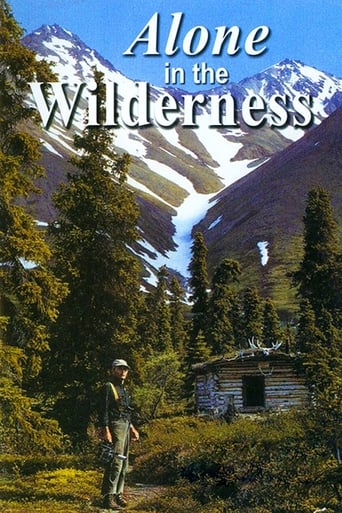
Dick Proenneke retired at age 50 in 1967 and decided to build his own cabin in the wilderness at the base of the Aleutian Peninsula, in what is now Lake Clark National Park. Using color footage he shot himself, Proenneke traces how he came to this remote area, selected a homestead site and built his log cabin completely by himself. The documentary covers his first year in-country, showing his day-to-day activities and the passing of the seasons as he sought to scratch out a living alone in the wilderness.
A team of Chilean miners are trapped underground for months and hold out for a miraculous rescue.
A teacher, in search of inspiration, travels to the most remote school in the world, where he ends up realizing how important his job is and appreciating the value of yak dung.
A young Kyrgyz immigrant tries to eke out a living in Moscow after abandoning her newborn and fleeing the hospital.