Social & External
Equal parts film, conversation, and social experiment, this interactive documentary uses footage shot by activists in the crowd of the Maribor uprisings, a 2012 to 2013 Slovenian protest, to pull you into the fray, where you must collectively decide what happens next.
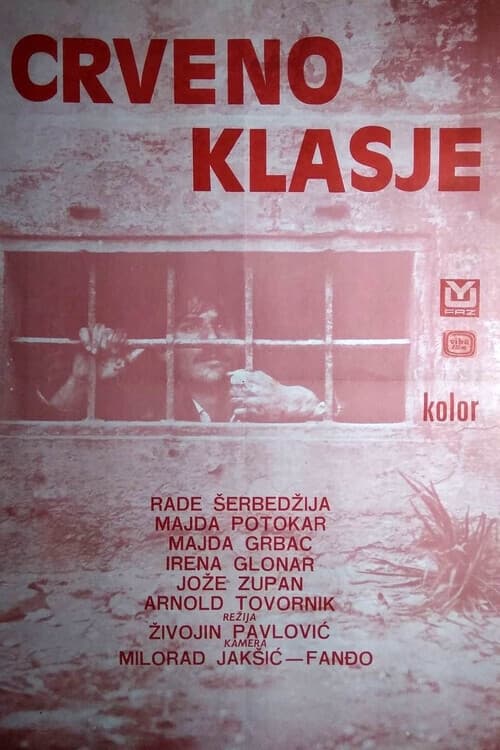
A post-WW2 story about the village largely involved in wine-making business. The peasants who claimed possessions of lands, woods, and churches after communist party seized the power hold a party where a member of so-called reactionary forces (kulaks, clergy and Axis collaborators) tries to break in and stop it.
The reconstruction of creation of an influential avantguarde movement called "Novo Mesto Spring" that arrived on Slovenian cultural scene during 1920s. Within this movement worked significant local artists such as composer Mario Kogoj, painter Rihard Jakopic, poet Danijel Bohoric and many others.
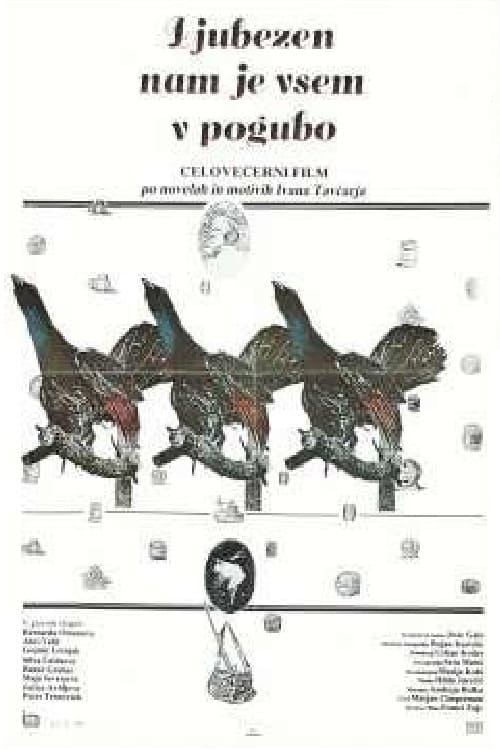
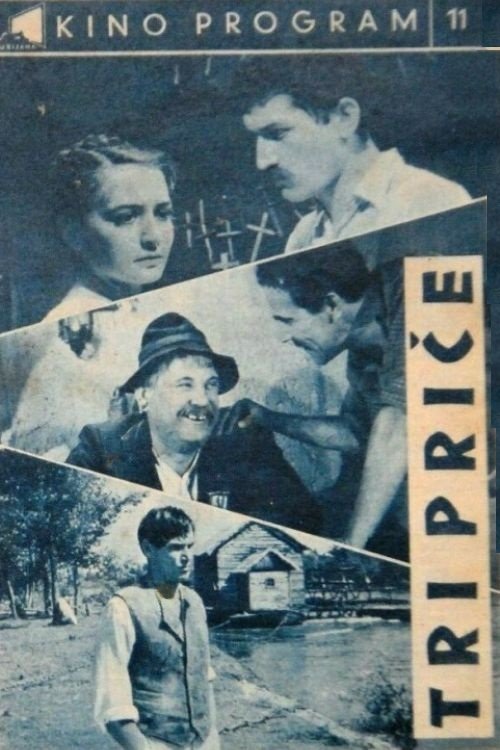
At the end of the last century hunters who hunted wild roosters, while waiting for prey to show up, were killing time with storytelling. The first story is about Jernac that had a fight with Tomas because of Rezika. Another story tells about Tincek, limp foundling, who spent his youth with the Komar family, where he fell in love with their Lencka. The third is the story of a rich Miholac whose attention was grabbed by poor Polonca, a romance that was opposed by his father. The central theme of all stories is love that eventually everybody die of.
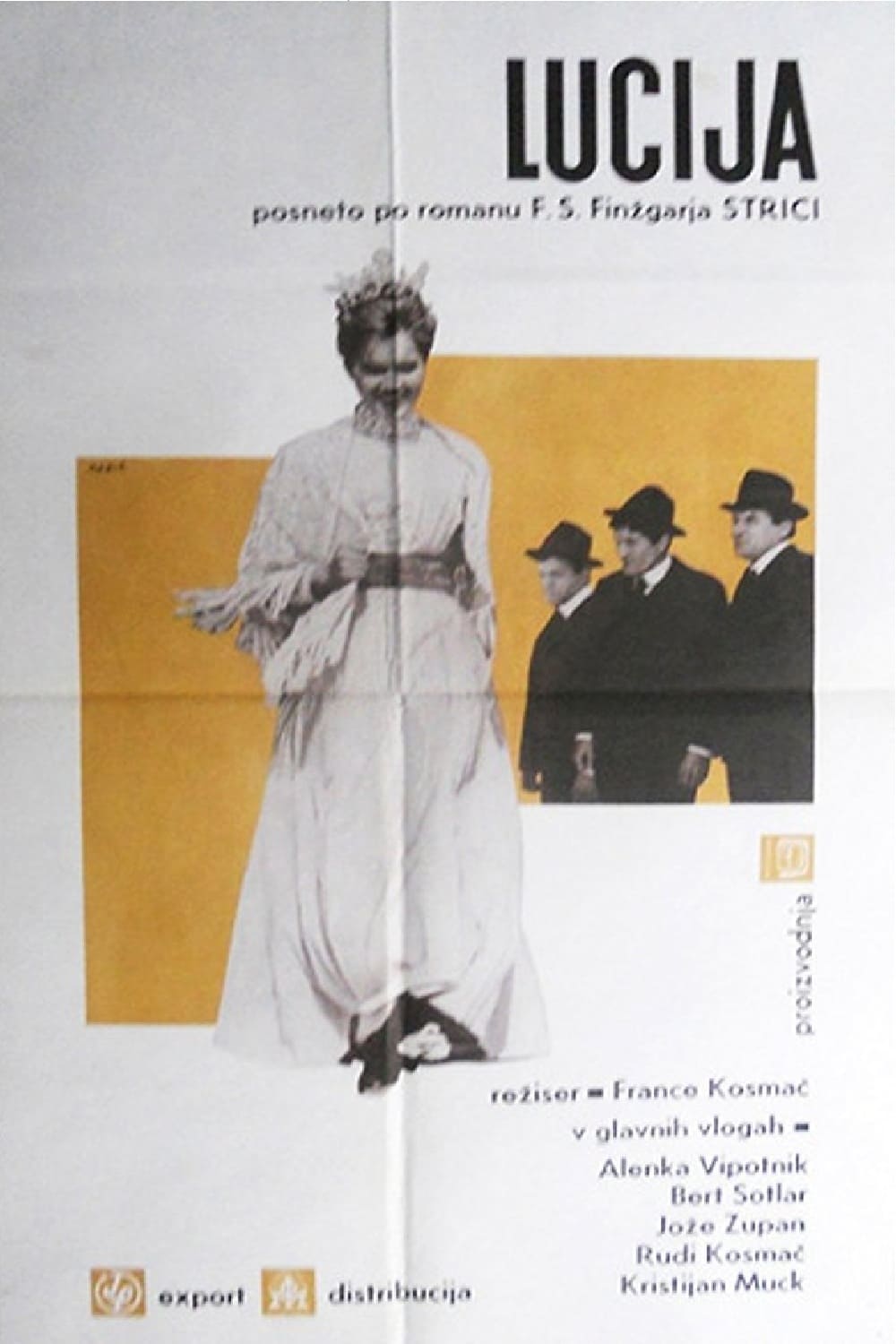
A melodramatic story of Lucia, who serves as a charwoman on the Podlogar family's rich farm, and makes a fuss among householder's sons, as she becomes pregnant with one of them. A decision on whether one should be forced into marriage with the pregnant charwoman and her child, ends tragically. Will Lucia be able to sustain psychological pressure, contempt and pity of the Podlogar brothers?
Mikko Virtanen feels like a Swedish soul trapped in a Finnish body. Full of disgust for everything Finnish, he sees Sweden as heaven. Upon meeting a suicidal Swedish psychologist Mikael Anderson, he seizes an opportunity for an identity switch. Raspberry Boat Refugee is a comedy about cultural differences in the Nordic countries, their nationalism and, not least, prejudices about our neighbours. It also proves how futile it is to try to escape oneself.
Documentary showing buildings made by great architect Joze Plecnik in Prague, Wien, Ljubljana...
When Peter comes back from the war, he finds his father changed and alone. Their former maid, Leni, has also left and soon Peter's grandfather also dies. His father begins writing his memoirs of his Partisan years. Peter blames his father for his mother's death, but the final blow comes when he catches his father together with his (Peter's) former girlfriend. He moves in with his brother and accuses Leni of having had an affair with his father. Peter decides to kill his father but cannot carry out the plan. His father tells him in a fit of rage that he isn't his son at all. Feeling desperate and down, he goes to Leni's place for comfort, and finds her dead on the floor. The police arrest Peter for the murder of Leni. Will Peter have to serve a jail sentence on his road to maturity and will political connections have a bearing on the final verdict of the trial? Peter doesn't even know whom he can trust anymore.
Bevant is a freak who wanted to remain faithful to himself, and therefore, in contrast to most, he remained a farmer.
The story is told through different points of view. A woman loves everything green, her husband loves his car, a magician knows the secrets of the stars, a professor knows everything about sound and a cyclist solves a difficult problem. A surreal travel through time and space.
Tatjana in Motherland is a partly animated documentary essay about Slovenia and its men. It is a “documentary-tale” of how Slovenian society has been disintegrating in an invisible way. The story will unveil a Slovenian Oedipus archetype of the possessive martyr mother type and her relationship with her son, in which she through emotional manipulation, by constantly creating feelings of guilt, burdens her son to such a degree, that he remains dependent on her for the rest of his life. In order to put this relationship to its best use, all Slovenian governing structures have elevated mother figure on the level of a saint and have assigned to it the cultish role. The result of the Slovenian maternal cult is a typical Slovene male, who is pathologically obsessed with his mother.

An elderly woman pays visit to her mother who resides in nursing home. Few days later she receives a telegram that the mother died, but it turns out that the address it was sent to was wrong. However the guilt of neglect starts to torment the mourning daughter nonetheless.
A TV journalist making a documentary in a factory finds out that the workers have been on strike and tries to analyze the strike in his film, but is thwarted by the TV company. His failure at his job is interwoven with his failed marriage.
A furious, iconoclastic attack on power and the media in a modern France where Islamophobia has become mainstream and inequality is growing from the suburbs to the boulevards.
When Dane returns from the army, Vera awaits him at the station, ready to live together with him. Yet beneath the veil of enthusiasm lies anxiety for their future. The couple sets off for the mountain village where Vera's parents live, but find life in the harsh alpine conditions too difficult. They decide to move down into the valley, where they meet a discontented couple whose marriage has been marred by an affair. Vera and Dane also encounter difficulties in their relationship, but the tragic example of the other couple helps them realize that their home lies in the place of their birth - beneath the free skies in the mountains.
Peter, whose father was a member of the Home Guard collaboration forces and a political emigrant, returns from Argentina to Slovenia, his father’s homeland. In Slovenia, Peter makes the acquaintance of an architect, but their friendship is fraught with ideological conflicts.
Based on the novel by Josip Jurcic and set in rural Yugoslavia in the 1840's. The tenth brother of a family returns to the family home to take revenge on his father who had abandoned him as a child.
A coming-of-age story set in Slovenian town during WW2.
A story set in a Slovenian village during Italian occupation. Stefuc, a man who has been widowed twice and has four daughters, wants to get married for the third time with Zana, who's already engaged and pregnant with Ludvik. Stefuc tries to separate them away, but realizes that he'll have to marry Hedvika, a nice looking girl who has just returned from Milan. In the meantime, Italian fascist authorities decide to eradicate five Slovenian songs with the help of local traitors.
Under the warm rays of the sun, the protagonists become living still lifes, resting on benches, chairs, and deckchairs. In the quiet embrace of nature, they wait, reflect, and remember. This cinematic group portrait delves into the legacy and creative spirit of Vilko Filač, the Slovenian master of film photography, celebrating the enduring mark he left on the world of cinema.