Social & External
The Cost Of Convenience examines how internet platforms are impacting our mental health, restructuring our communities, threatening our democracy, and violating our human rights.
In the first decades of the 20th century, when life was being transformed by scientific innovations, researchers made a thrilling new claim: they could tell whether someone was lying by using a machine. Popularly known as the “lie detector,” the device transformed police work, seized headlines and was extolled in movies, TV and comics as an infallible crime-fighting tool. Husbands and wives tested each other’s fidelity. Corporations routinely tested employees’ honesty and government workers were tested for loyalty and “morals.” But the promise of the polygraph turned dark, and the lie detector too often became an apparatus of fear and intimidation. Written and directed by Rob Rapley and executive produced by Cameo George, The Lie Detector is a tale of good intentions, twisted morals and unintended consequences.
Follows speedrunners, past and present, collaboratively digging for secrets and working to uncover mind-blowing shortcuts and glitches which are used to streamline their runs in top game franchises.
End of line railroad operations. Abandonment and sale of equipment, operations under the LNE Railway, Lehigh Valley, Conrail and Norfolk Southern.
Once upon a time there was a large Finnish company called Nokia that manufactured the world’s best and most innovative mobile phones. Nokia’s annual budget was larger than that of the Government of Finland and their phones spread everywhere and changed the whole culture of communication. But then something changed. Film portrays the rise and fall of Nokia and the Finnish mobile phone industry. Nokia engineers, designers and managers tell their story about the creation, success and downfall of the Finnish mobile phone.
An art dealer on a special mission is pulled into dangerous intrigue while railway detective Cheval tries to help and pursues criminals on the Istanbul Express.
Film sponsored by Western Electric (AT&T's equipment manufacturing division), the builder of the United States Air Force's White Alice Communications System in Alaska. Introduces the people and geography of the new state as well as the Western Electric radio-relay system, which links far-flung military sites, alert stations, and missile-warning facilities. Ralph Caplan praised the film's "intrinsically dramatic and highly photogenic" portrayal of communications equipment.
A story about prizewinning agriculturist, whose dream is to find his soul mate who would agree to marry him and live in the countryside. In one of his trips to symposium, he's about to share the compartment on a train with nice-looking but hardly approachable girl.
Commemorate the 40th anniversary of one of the largest freight carriers in the nation! Look back at the creation, evolution and current operating status of this storied railroad.
Forced to take the intercontinental trip to Los Angeles by train, and determined to chronicle his adventure, disillusioned journalist Tom Langdon finds himself westbound with a variety of characters. While all passengers on the Christmas train appear to be headed for the same destination, Tom has no idea that the rugged locomotives taking him across America will instead detour straight into his heart.
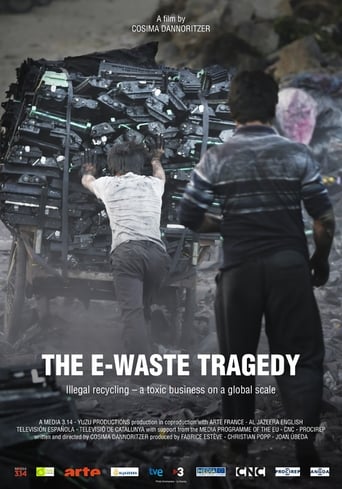
Takes us to locations all around the US and shows us the heavy toll that modern technology is having on humans and the earth. The visual tone poem contains neither dialogue nor a vocalized narration: its tone is set by the juxtaposition of images and the exceptional music by Philip Glass.
Host Grant Jeffrey discusses how technology and government activities are changing the way our information is handled. How is this shaping our lives?
A journey along the Inlandsbanan, from Mora to Gällivare, in the last summer of 1991 when the passenger traffic is to be shut down. A decision and its consequences. A film about the view of Norrland in these EC times.
A short documentary about the construction of the parisian subway in the 50s.
In a few years, technology will merge with our bodies in ways that today seem unimaginable, and will redefine the limits of what is a human being. There are already people who, driven by the desire to experiment, have crossed the biological limits by introducing electronic devices that provide them with capabilities that go beyond what is "normal." They are the first hybrids, and they face the reaction of society, which goes from malignancy to enthusiasm. Today they are only a small minority, and many people consider them as disrupted experimenters, but in the near future we may recognize them as pioneers.
On June 11th, 1997, Philippe Kahn created the first camera phone solution to share pictures instantly on public networks. The impetus for this invention was the birth of Kahn's daughter, when he jerry-rigged a mobile phone with a digital camera and sent photos in real time. In 2016 Time Magazine included Kahn's first camera phone photo in their list of the 100 most influential photos of all time.
This short documentary follows the fortunes of iconic car manufacturer Lotus. Once famous for its championship-winning race cars and iconic sports cars, Lotus has struggled to remain in profit. A new investor and managing director set out to build the first new Lotus road cars in over a decade: their final petrol-powered car Emira and their first pure electric British hypercar, the 2000bhp Evija.