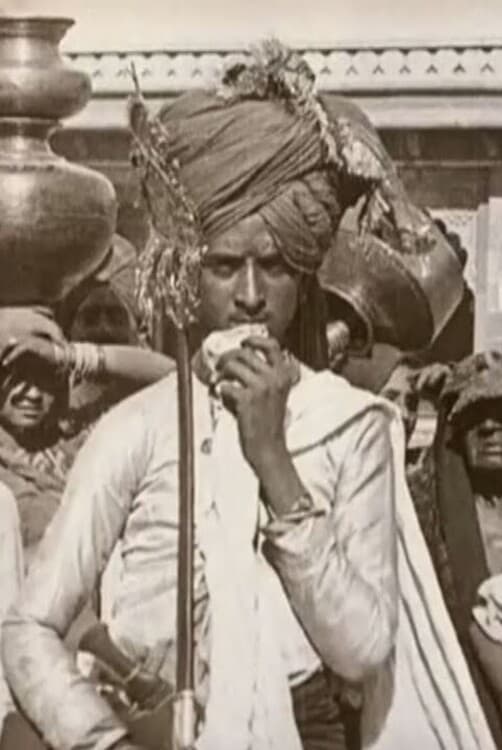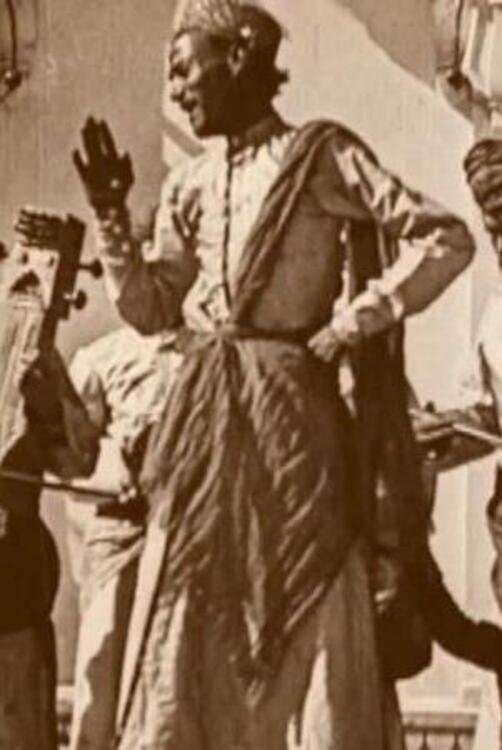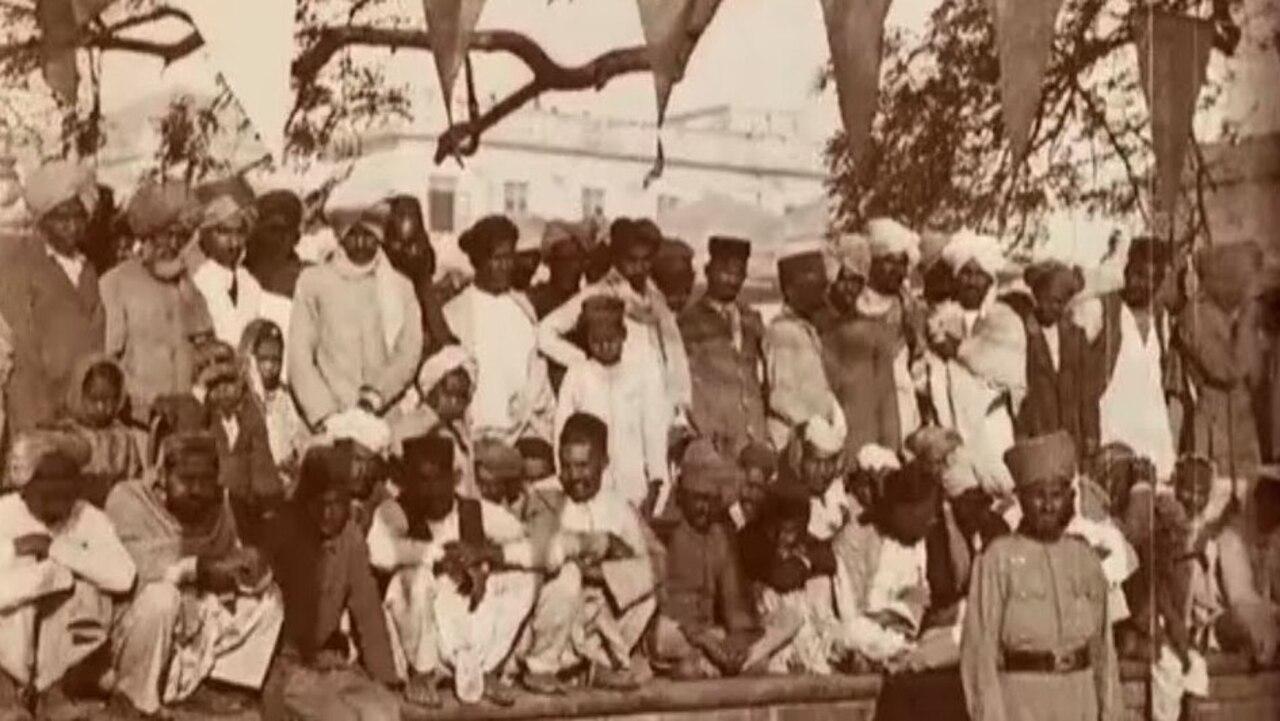
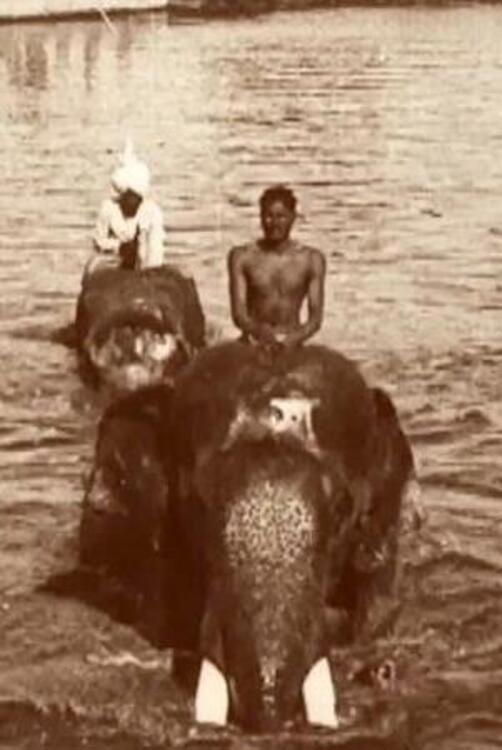
The future Edward VIII enjoys a stately procession and visits the Taj Mahal before meeting senior Indian royalty.
Social & External
Unknown Role
Commissioned by the journal Présence Africaine, this short documentary examines how African art is devalued and alienated through colonial and museum contexts. Beginning with the question of why African works are confined to ethnographic displays while Greek or Egyptian art is celebrated, the film became a landmark of anti-colonial cinema and was banned in France for eight years.
A film about rice cultivation that depicts the most beautiful rice field landscape in Japanese cinema history and the most realistic depiction of modern rice farmers.
Japan is a country of steep mountains surrounding wide flat plains where people have lived for thousands of years. On the largest plain lies the country's largest freshwater lake, Lake Biwa, which is not at all far from Japan's ancient, capital city of Kyoto. The slopes that stretch down towards the lake have been terraced. Here rice seedlings need shallow water in which to grow, and the neat, meticulously constructed paddy fields provide just this. Some of them have been cultivated continuously for thousands of years. Alongside them stand patches of woodland where, for centuries, the people have found their fuel and their food. This is a land that has been touched by people, yet the people tread lightly upon it. It's a land that has been ruled for centuries by the demands of the rice, yet it's still dominated by the rhythmic cycle of the seasons. Here is a landscape that the Japanese people hold so close to their hearts that they have a special word for it: Satoyama.
The documentary “The Leopard Rocks” accompanies Neelam, a female leopard, as she fights for the lives of her offspring, and provides a fascinating insight into the lives and adventures of one of the world's most interesting big cat species in a unique, unusual environment.

A chronicle of the violence that occurred in much of the African continent throughout the 1960s. As many African countries were transitioning from colonial rule to other forms of government, violent political upheavals were frequent. Revolutions in Zanzibar and Kenya in which thousands were killed are shown, the violence not only political; there is also extensive footage of hunters and poachers slaughtering different types of wild animals.

Hundreds of thousands of Indian men and women – indigenous inhabitants and landless farmers – demand their right to existence by making a 400 kilometre protest march from Gwalior to Delhi. How can one fight for one’s rights without using violence? With such an important contemporary question, the film spreads far beyond the borders of India. It shows the multiple facets of this imposing protest march and focuses as well on the daily realities of these proud people.
Rumer Godden the 88 year old author is taken back to India, where she lived from 1908-1945 to revisit her unconventional life there and to share with her daughter the experiences which inform all her writing.
This Traveltalk series short visits Papua and Kalabahai.
After the Indian Ocean Tsunami of 2004, widowed women struggled to receive aid due to their social status. Following the story of Mrs. Manjula along with many other women from Tamil Nadu, the challenges faced by millions of widows across the country are illuminated. From being ostracized to denied basic rights and economic opportunities, widows in India endure a cycle of discrimination and marginalization. “Kalangarai” meaning "lighthouse" in Tamil, is an organization dedicated to empowering women through initiatives such as self-help groups and educational programs. Throughout the film, "Lighthouse" illustrates the emotional journeys and resilience of these women, as well as the active change that Kalangarai strives to achieve. This documentary urges global awareness and support for widowed women’s rights, as the women’s struggles depict the intersectionality of gender, poverty, and social injustice.
Since the rise to power of Hindu nationalists in 2014, India has been gradually moving away from democracy towards a regime where ethnic identity prevails. This transition is driven by Hindutva, a Hindu supremacist ideology embodied by Narendra Modi. For the past 10 years, Prime Minister Modi has relentlessly pursued his fascist policy based on Hindu supremacy. This ideology of hatred towards other religions in the country, particularly Islam, has also spread globally. Those who follow this belief want India to be only for Hindus, treating people of other religions, like Muslims or Sikhs as second-class citizens. Attacks against Christians have surged by 400% since Modi's election, accompanied by discriminatory laws targeting Muslims and widespread lynching incidents. Hindutva's influence permeates all levels of Indian society. This documentary thus unveils a darker side of India, far from its portrayal as the world's largest democracy and Gandhi's dream of peace among communities.
The thousand-year-old tradition of pottery in the Indian subcontinent is now under threat. With the market being flooded with plastic in the evolution of civilization, today this Pal community is becoming displaced.
This early travelogue film, made in a Kenyan train station, captures an impromptu musical performance. Some passengers eagerly join in while others sleep—blissfully unaware of the performance taking place around them.
A young woman researches the hidden story of Indian soldiers who came to fight in France and Belgium during the World War I. The presence of these 140,000 soldiers in Europe is a virtually unknown fact of history.
Two rare 6-week-old clouded leopard cubs are given to a filmmaker, giving him the opportunity of a lifetime to examine the secret lives of big cats.
Ancient Explorer, Amish Shah travels to the west coast of India in search of an ancient submerged city. With a passion for the truth, he stumbles into a cover up and in this film, he goes public with what he found.
This excellent feature-length documentary - the story of the imperialist colonization of Africa - is a film about death. Its most shocking sequences derive from the captured French film archives in Algeria containing - unbelievably - masses of French-shot documentary footage of their tortures, massacres and executions of Algerians. The real death of children, passers-by, resistance fighters, one after the other, becomes unbearable. Rather than be blatant propaganda, the film convinces entirely by its visual evidence, constituting an object lesson for revolutionary cinema.
In Portugal, during the night of April 24-25, 1974, a peaceful uprising put an end to the last government of the Estado Novo, the authoritarian regime established in 1933 by dictator António de Oliveira Salazar (1889-1970), paving the way for full democracy: a chronicle of the Carnation Revolution.
Prejudices, ignorance, and racism still leave their mark on the everyday life of black Germans, respectively Europeans, until today. How do Afro-Germans deal with their history? Which colonial-racist patterns still shape our society today? With insights into various historic epochs, it is made clear that THE history of the Black people does not exist. And neither exists THE history of white people.
Journey across India, a breath taking land shaped by a myriad of cultures, customs and traditions. Come face to face with the Bengal Tiger and explore the work of this majestic creature with stunning clarity. Soar over blue-hazed Himalayan peaks and sweep down towards the thundering Indian Ocean as we celebrate the power and beauty of India's greatest ambassador - the mighty Bengal Tiger.
A woman narrates the thoughts of a world traveler, meditations on time and memory expressed in words and images from places as far-flung as Japan, Guinea-Bissau, Iceland, and San Francisco.