This educational film from 1970 traces the inheritance of traits such as sex, eye color, height, and weight, showing the role of chromosomes and genes in determining their development.
Social & External
Is our life predetermined from birth? Does our genes determine our personality and behavior? Is there a criminal gene? This documentary follows the well-known Danish journalist, author, and neurobiologist Lone Frank, who explores her own self with the help of her genetic map and her family history.
Earth teems with a staggering variety of animals, including 9,000 kinds of birds, 28,000 types of fish, and more than 350,000 species of beetles. What explains this explosion of living creatures—1.4 million different species discovered so far, with perhaps another 50 million to go? The source of life's endless forms was a profound mystery until Charles Darwin brought forth his revolutionary idea of natural selection. But Darwin's radical insights raised as many questions as they answered. What actually drives evolution and turns one species into another? To what degree do different animals rely on the same genetic toolkit? And how did we evolve?
A well-preserved mammoth carcass is found in the remote New Siberian Islands in the Arctic Ocean, opening up the possibility of a world-changing “Jurassic Park” moment in genetics.
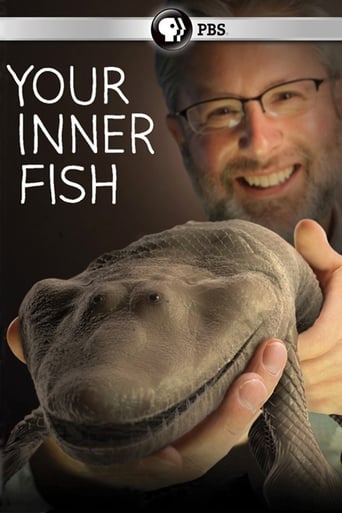
How did your body become the complicated, quirky, amazing machine it is today? Anatomist Neil Shubin uncovers the answers in this 3-part science series that looks at human evolution. Using fossils, embryos and genes, he reveals how our bodies are the legacy of ancient fish, reptiles and primates — the ancestors you never knew were in your family tree.
Spared by cancer, diabetes and possibly Alzheimer’s, men and women of small stature are intriguing scientists that are trying to postpone age-related illnesses. What mechanisms protect these small Ecuadorian from certain illnesses? From Quito to Los Angeles, via Tel-Aviv, the film follows the revolutionary research, step-by-step, that is attempting to understand and prevent diseases such as cancer. And outlines ways to live in good health… for as long as possible.
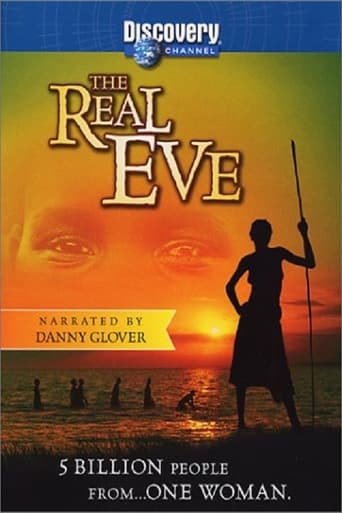
The made-for-cable documentary film The Real Eve is predicated on the theory that the human race can be traced to a common ancestor. The mitochondrial DNA of one prehistoric woman, who lived in Africa, has according to this theory been passed down from generation to generation over a span of 150,000 years, supplying the "chemical energy" to all humankind.
Lucie was born with a protruding ear that she got from her mother. In this documentary she tries to find answers in her fathers' features.
A dangerous idea has threatened the American Dream from the beginning - the belief that some groups and individuals are inherently superior to others and more deserving of fundamental rights. Such biological determinism provided an excuse for some of America's most shameful history. And now it's back. This documentary reveals how biologically determined politics has disenfranchised women and people of color, provided a rationale for state sanctioned crimes committed against America's most vulnerable citizens, and now gains new traction under the Trump administration.
The 1977 discovery of RNA splicing by Dr. Phillip A. Sharp, Kentucky farm boy turned Nobel-prize winning scientist, set the stage for a revolution in molecular biology, enabling research into a new class of medicines predicated on recombinant DNA techniques ranging from the development of synthetic insulin and human growth hormone to the COVID-19 vaccine.
Introduction to DNA by Frank Baxter and Bell Labs.
After a woman's at-home DNA test reveals multiple half-siblings, she discovers a shocking scheme involving donor sperm and a popular fertility doctor.
If we compare ourselves with our genetically closest living relatives, the chimpanzees, we have few physical advantages. We are far weaker, cannot move nearly as fast, and do not have the same climbing capabilities. Instead, humans excel in areas such as architecture, religion, science, language, writing, art, culture, and ideas. These achievements are due to our larger brain that contain billions of neurons. It was the rapid growth of our brain, originating about 2 million years ago, that allowed us to be the predominant species of the world. What caused this rapid growth of our cerebral cortex? Researchers worldwide have asked this question for many years, but now there finally seems to be an answer.
Many geneticists and archaeologists have long surmised that human life began in Africa. Dr. Spencer Wells, one of a group of scientists studying the origin of human life, offers evidence and theories to support such a thesis in this PBS special. He claims that Africa was populated by only a few thousand people that some deserted their homeland in a conquest that has resulted in global domination.
The documentary tells two very different human fates in the 1920s Soviet Union. Nikolai Vavilov was a botanical genius, Trofim Lyssenko was an agronomist who made great promises and fake inventions. Each of them tried to solve the country's nutritional problem, but only one succeeded.
The documentary depicts the birth of eugenics - a pseudo-science created in the 19th century that propounded the theory of perfecting the human race. According to the views of eugenicists, only healthy and creative individuals should reproduce. The film shows how these controversial ideas influenced the intellectual and political elite of the West in the 20th century, including the dictator of the Third Reich, Adolf Hitler. Eugenics is a pseudoscience created in the 19th century and treating the improvement of the human race. According to eugenicists, only healthy and creative individuals could procreate, and the procreation of the sick or disabled and racially unworthy (prostitutes, the poor, beggars) should be forbidden. The author of the film posits that modern genetics, the killing of unborn children and euthanasia have their roots in this infamous pseudoscience.
This animated film was made by RIKEN Omics Science Center for the "Beyond DNA" exhibition at the National Science Museum of Japan. The filmmakers attempt to illustrate how molecular machines interact with each other according to the central dogma, with an anime look. This approach helps people (especially kids) to identify these molecules more easily, and to understand how they function in the body. There are two versions of the film: one with English narration and text, and another in Japanese.
Twitch follows 18-year-old Kristen Powers as she undergoes genetic testing for the disease that killed her mother. Huntington’s Disease (HD), a neurodegenerative brain disorder, destroys an individual’s ability to walk, talk, think, and reason, eventually leading to death. The film will chronicle the emotional, social and medical journey through this important test, as well as the impact it has on an individual’s future. Twitch explores the science with major Huntington’s Disease experts and activists who will provide deeper insight into the complexities and hopes buried in the disease. Huntington’s has great stigma surrounding it; solving its mystery could potentially lead to the cures of not only HD but also several other neurological illnesses such as Parkinson’s, Alzheimers and ALS. This documentary will highlight the pressures people, especially young adults, face when given the chance to be handed their medical fate.
10,000 years ago, the European forests were inhabited by huge cattle with protruding horns: the aurochs. Then man began to domesticate them and created the cow. By crossing species, he adapted the animals over time so that they increasingly met his needs and desires. Industrial livestock farming was born. From then on, beef cattle and dairy cows such as the Holstein cow were bred. Milk production tripled within a few decades. Today, the cow of the future is produced by artificial insemination. By selecting a few breeding bulls that are considered to be top bulls, rapid genetic progress is ensured.
In a television first, Fat Family Tree sets out to prove that unlocking the secrets of a fat family’s genes can help provide the answer to their lifelong weight problems. Presented by Dr Dawn Harper (Embarrassing Bodies), Fat Family Tree uses cutting edge genetics to decode the genes of an overweight family for whom all other attempts to shed the pounds have not worked. Discovering how the family’s genes have put them at risk of excessive weight gain is the first step to devising a diet to help them beat their genes. Based on the latest science, the programme’s “gene-busting” diet also promises fail safe diet tips that could help all of us lose weight.
The life and career of an actor, artist, and icon. His own journey through his own camera.
A documentary that explores the downloading revolution; the kids that created it, the bands and the businesses that were affected by it, and its impact on the world at large.
Daniel Craig candidly reflects on his 15 year adventure as James Bond. Including never-before-seen archival footage from Casino Royale to the upcoming 25th film No Time To Die, Craig shares his personal memories in conversation with 007 producers, Michael G Wilson and Barbara Broccoli.
Explore the evolution of Buzz Lightyear from toy to human in the making of Pixar’s Lightyear. Dive into the origin and cultural impact of everyone’s favorite Space Ranger, the art of designing a new “human Buzz,” and the challenges faced by the Lightyear crew along the way.
The life of Mr. Spock, as well as that of Leonard Nimoy, the actor who played him for almost fifty years, written and directed by his son: Adam.
A documentary focused on plastic pollution in the world's oceans.
JB Smoove and Martin Starr host a celebration of 20 years of "Spider-Man" movies, from the Sam Raimi trilogy to Marc Webb's movies and the trio from Jon Watts.
Join director Clint Eastwood and his creative team, along with Bradley Cooper and Sienna Miller, as they overcome enormous creative and logistic obstacles to make a film that brings the truth of Navy SEAL Chris Kyle's story to the screen.
Filmmakers discuss the legacy of Alfred Hitchcock and the book “Hitchcock/Truffaut” (“Le cinéma selon Hitchcock”), written by François Truffaut and published in 1966.
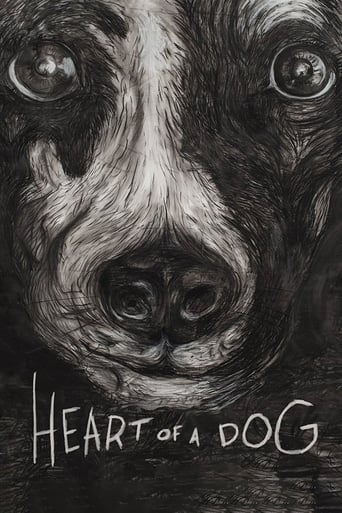
Lyrical and powerfully personal essay film that reflects on the deaths of her husband Lou Reed, her mother, her beloved dog, and such diverse subjects as family memories, surveillance, and Buddhist teachings.
Follow the evolution of the 'Halloween' movies over the past twenty-five years. It examines why the films are so popular and revisits many of the original locations used in the films - seeing the effects on the local community. For the first time, cast, crew, critics and fans join together in the ultimate 'Halloween' retrospective.
The extraordinary story of the planet’s most famous contemporary scientist, told in his own words and by those closest to him. Made with unique access to Hawking’s private life, this is an intimate and moving journey into Stephen's world, both past and present.
Over seven decades, actor and activist George Takei journeyed from a World War II internment camp to the helm of the Starship Enterprise, and then to the daily news feeds of five million Facebook fans. Join George and his husband, Brad, on a wacky and profound trek for life, liberty, and love.
In this concert film, 'Hannah Montana' star Miley Cyrus performs a slew of hit songs, including 'Just Like You' and 'Life's What You Make It.'
A documentary about how a dominant cultural and demographic institution both sustains their traditional activities and adapts to the digital revolution.
A documentary highlighting the Soviet Union's legendary and enigmatic hockey training culture and world-dominating team through the eyes of the team's Captain Slava Fetisov, following his shift from hockey star and celebrated national hero to political enemy.
Faced with a holiday cheer crisis, the North Pole knows there's only one person who can save the day: Santa's great friend Mariah Carey. The Queen of Christmas creates a fabulous and star-studded spectacular to make the whole world merry!
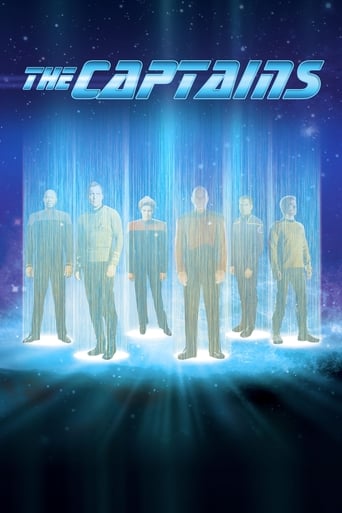
The Captains is a feature-length documentary film written and directed by William Shatner. The film follows Shatner as he interviews the other actors who have portrayed starship captains in the Star Trek franchise.
Film adaptation of French economist Thomas Piketty's ground-breaking global bestseller of the same name: an eye-opening journey through wealth and power.
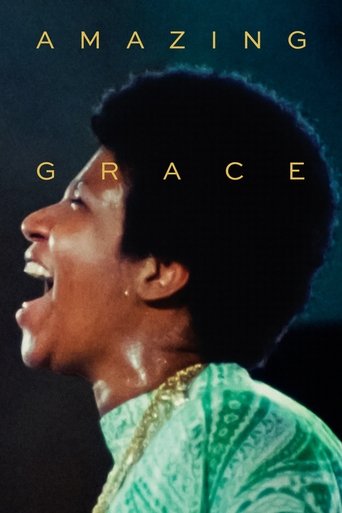
Told through performances, TV interviews, home movies, family photographs, private letters and unpublished memoirs, the film reveals the essence of an extraordinary woman who rose from humble beginnings in New York City to become a glamorous international superstar and one of the greatest artists of all time.