Social & External
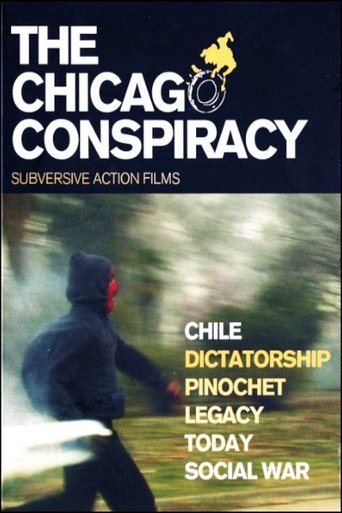
This documentary addresses the legacy of the military dictatorship in Chile by sharing the story of young fighters killed by the Pinochet regime as a backdrop to the history of the military dictatorship and the ongoing social conflict in that area. The larger story unfolds in three shorter parts, which explore the student movement, the history of the towns that became centers of armed resistance against the dictatorship, and the indigenous Mapuche conflict.
A photograph of an unknown Mapuche great-grandmother is the starting point of this documentary essay. Through the analysis of said picture, conversations with family members, a trip to southern Chile cities, and an actress who re-enacts the photo, we see the existing prejudice against indigenous people.
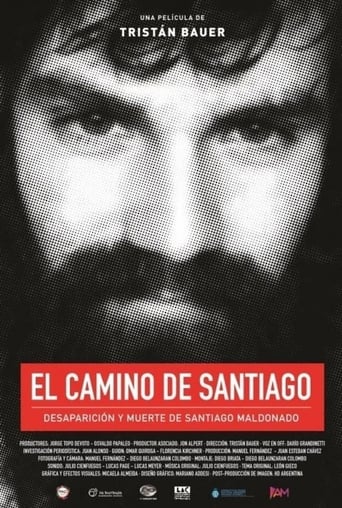
Santiago Maldonado disappeared in the midst of repression against a Mapuche community that claimed to Luciano Benetton for his land. His body was found 78 days later. The need for truth and justice continues
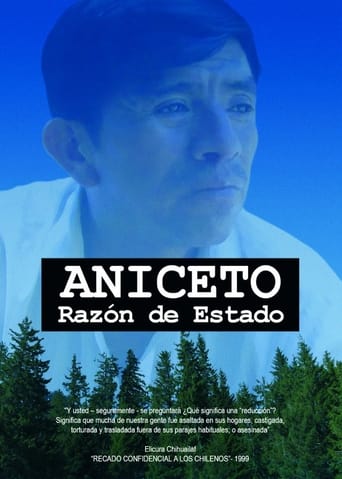
In the Araucanía Region, an area marked by historical relations between Mapuche and non-Mapuche people, the shooting of a police officer results in the death of a young Mapuche man. On the other hand, a community member who has been sentenced to 10 years in prison has been on a hunger strike for over one hundred days. In the background, we have the experience of Aniceto Norin, a Longko who has spent five years in prison for the crime of "Terrorist Threat," whose account allows us to understand his thoughts and the impact of assuming his role and his Mapuche identity.
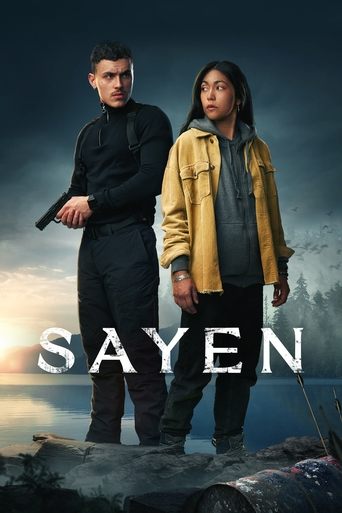
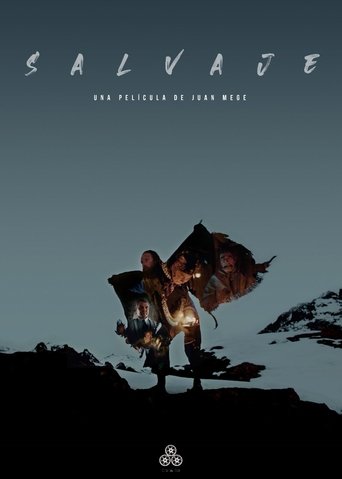
Sayen is hunting down the men who murdered her grandmother. Using her training and knowledge of nature, she is able to turn the tables on them, learning of a conspiracy from a corporation that threatens her people's ancestral lands.
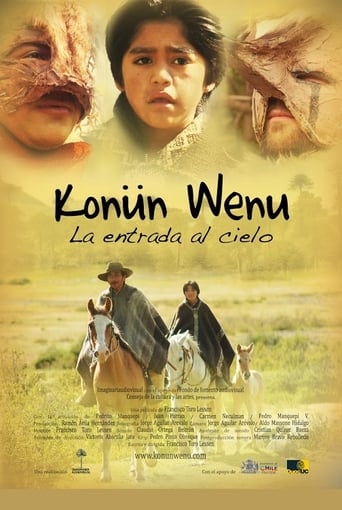
Akun, a Pehuenche boy lives with his grandparents in the middle of the mountains in Alto Biobío. One day Akun is lost in the forest and decides to go in search of Konün Wenu to see his mother who died a few years ago.
Folil, "root" in mapunzungun, is an invitation to question the relationship of humanity with nature; the way we think about it and inhabit it. Two young Mapuche people from the communities of Pukura and Traitraico, in southern Chile, face the difficulty of protecting the forest in order to continue collecting wild mushrooms, their food and medicine. The territory itself and the affected Mapuche communities are making the world aware of their problems, where the language of nature faces the paradoxes of development.
Filmed at his Maine studio nestled in New England’s scenic landscapes, legendary artist Alex Katz reflects on his relationship to light and the sensations that his painting evokes.
“A Significant Name” tells the story of Banban’s Chinese name. Born in Texas to Taiwanese immigrant parents, Banban was given an identifiable female American name - now their dead name - as a way to assimilate into western culture. But as their sense of who they are evolves, so does their name.
Three paranormal investigators enter what is said to be the most haunted location in the Midwest. Over the last 100 years, the property has housed thousands of deaths, murder, suicide, and countless acts of foul play.
From South London spivs to the upper reaches of the 1960s society, this extraordinary true story reveals who stole the World Cup trophy in the lead-up to England's triumph in 1966.
Documentary about the film pioneer Guido Seeber.
After a ten year sabbatical, legendary Grime filmmaker; Roony 'Risky Roadz' Keefe, makes a return to the world of documentary to uncover the business infrastructure of the fast emerging music scene in Birmingham, and, how that is being taken to a global platform.
The order comes in the summer of 1941 from propaganda minister Joseph Goebbels himself: The best animators are summoned to Berlin. Their task: Producing feature-length cartoons in ‘Disney-Quality’ with the newly founded ‘Deutsche Zeichenfilm GmbH’. To get trained, the Disney movie “Snow White” is re-traced frame by frame. After the final victory, one new feature-length production of quality shall be released every year from 1947 onwards. – that is the plan. Only in 1943, the first production is completed: “Armer Hansi” a 17-minute-long colour movie, realized with the effortful Multiplane-technology. The second film by the ‘Deutsche Zeichenfilm’ is only completed in 1946 – by DEFA. In the territories occupied by Germany, cartoons are produced as well, sometimes harmless ones, sometimes propagandistic ones. With excerpts from animated movies, life-action film documents, and witness reports by contemporaries, this documentary draws a picture of the cartoon production in the third Reich.