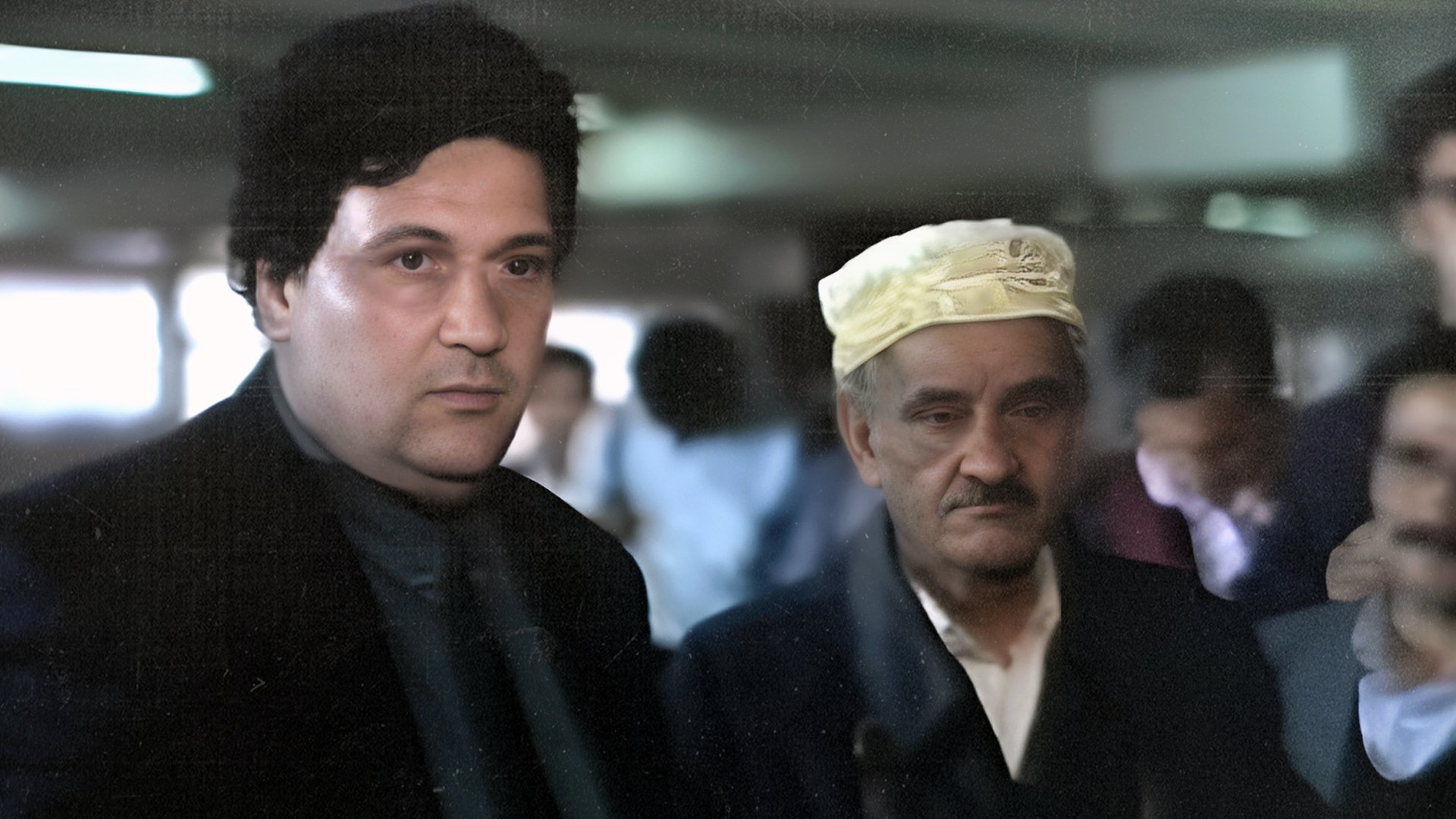
27 years after 1962, Antoine returns to Algiers...
Social & External
Unknown Role
Halim, a young man with intellectual disability, who's living with his single mother that struggles to take care of him
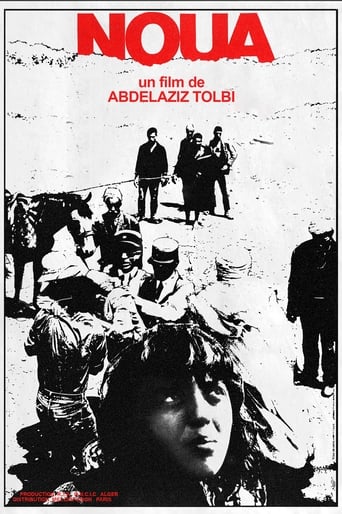
In a village on the edge of the Sahara, Rima, a 19-year-old orphan, dreams of learning, of discovering, of living free while the men of the salt mine go on strike. The authorities react by sending the army, Rima decides to help the strikers by trapping the soldiers. Co-produced with the Office des Actualités Algériens and shot in the region of Téhouda, 50 kilometers from Biskra, this Franco-Algerian film is fully part of the cinematographic heritage of both shores of the Mediterranean. Bertuccelli adopts the technique of cinema verite, with non-professional actors from the village itself, giving the film a striking documentary texture and a rare force of authenticity. Carried by the moving interpretation of Leila Shenna in the role of Rima, the actor Krikèche and lulled by the music of Taos Amrouche, the film questions female emancipation, social resistance and the relationship with the territory.
At a dangerous time in Algeria, 'Douar de Femmes' is a story of ordinary women who manage to defend themselves in extraordinary situations. The film focuses on a small village that has been attacked more often by terrorists from the surrounding mountains. While the men work, the women learn how to handle machine guns and explore the area. “Fear has armed us,” says the young woman Sabrina. But despite that fear, people get married, children come and keep watch.
Omar, better known as Omar the Strawberry, is an old-fashioned bandit. Forced to flee to Algeria, he makes a living out of petty crime, accompanied by his famous sidekick Roger. After decades of ruling the French criminal underworld, they must come to terms with their new life together, which until now has been one of debauchery and violence.
In Algiers in 1993, while the civil war is starting, Mrs Osmane's tenants have to endure her bad temper. Her husband left her and the fear to lose her respectability haunt her. The former member of the Resistance during the Independence War persists in controlling the slightest moves of the households rather than struggle against her own frustrations. Learning her daughter is in love, the possibility of finding herself alone will push her to the limit: The symbolical Mrs Osmane "harem" is about to collapse.
Ikach, is a farce in two acts in popular Arabic, written by André Sarrouy and adapted and directed by himself. A critique of marriage in colonial Algeria at a time when women were little taken into account. Cunning of women and stupidity of husbands, on an original soundtrack composed by Mohamed Iguerbouchène.
In the 1970s, groups of young Europeans ventured into the Sahara Desert with the intention of crossing it and experiencing “an adventure”. Unprepared, reckless and ignorant of the terrain they were crossing, they faced extreme situations with unexpected consequences. From the passion of these young people for adventure, the most famous rally in the world was born. “End of the Journey, Sahara” tells the story of one of these adventures.
This film retraces the combat journey of Krim Belkacem, one of the leading figures of the Algerian War. When he left the Dellys barracks in October 1945, the day after the Second World War, Krim Belkacem was 23 years old. He is a man revolted by the May massacres in Sétif, Guelma, Kherrata and several other localities in the ravaged country. But it is also and above all a young Algerian who questions the future of Algeria. On March 21, 1947, Krim at the age of 25, he dug up his "Sten" submachine gun, he took action against the boss of his douar who was none other than his cousin. He goes into hiding with six companions. He meshes this entire part of Algeria with a dense and dense network with the sole objective of taking action which will lead to the outbreak of the armed struggle on November 1, 1954.
60 years ago, in the Algerian desert, an atomic bomb, equivalent to three or even four times Hiroshima, exploded. Named the “Blue Gerboise”, it was the first atomic bomb tested by France, and of hitherto unrivaled power. This 70 kiloton plutonium bomb was launched in the early morning, in the Reggane region, in southern Algeria, during the French colonial era. If this test allowed France to become the 4th nuclear power in the world, it had catastrophic repercussions. France had, at the time, certified that the radiation was well below the standard safety threshold. However, in 2013, declassified files revealed that the level of radioactivity had been much higher than announced, and had been recorded from West Africa to the south of Spain.
An Algerian social satire that tells the story of Boujemaa, who marries a second wife in addition to his first wife, who is ill and with whom he has a son and a daughter. Living all under the same roof, the new wife imposes her authority in the house. The lives of the family members are then turned upside down.
Abderrahim is a mechanic and singer in his spare time. One day, he receives a car to repair, driven by a very beautiful girl. It's love at first sight. They want to get married and start a family, but the girl's parents do not view this love favorably. They decide to marry their daughter to another man. Subsequently, Abderrahim became a famous singer. The loss of her love leaves the young girl in a state of silence from which only Abderrahim can break her.
Paratrooper commander Colonel Mathieu, a former French Resistance fighter during World War II, is sent to Algeria to reinforce efforts to squelch the uprisings of the Algerian War. There he faces Ali la Pointe, a former petty criminal who, as the leader of the Algerian Front de Liberation Nationale, directs terror strategies against the colonial French government occupation. As each side resorts to ever-increasing brutality, no violent act is too unthinkable.
A group of Trappist monks reside in the monastery of Tibhirine in Algeria, where they live in harmony with the largely muslim population. When a bloody conflict between Algeria's army and Muslim Jihadi insurgents disrupts the peace, they are forced to consider fleeing the monastery and deserting the villagers they have ministered to. In the face of deadly violence the monks wrestle with their faith and their convictions, eventually deciding to stay and help their neighbours keep the army and the insurgents at bay.
"Gerboise bleue", the first French atomic test carried out on February 13, 1960 in the Algerian Sahara, is the starting point of France's nuclear power. These are powerful radioactive aerial shots carried out in areas belonging to the French army. Underground tests will follow, even after the independence of Algeria. From 1960 to 1978, 30,000 people were exposed in the Sahara. The French army was recognized recognized nine irradiations. No complaint against the army or the Atomic Energy Commission has resulted. Three requests for a commission of inquiry were rejected by the National Defense Commission. For the first time, the last survivors bear witness to their fight for the recognition of their illnesses, and revealed to themselves in what conditions the shootings took place. The director goes to the zero point of "Gerboise Bleue", forbidden access for 47 years by the Algerian authorities
A meticulous chronicle of the evolution of the Algerian national movement from 1939 until the outbreak of the revolution on November 1, 1954, the film unequivocally demonstrates that the "Algerian War" is not an accident of history, but a slow process of suffering and warlike revolts, uninterrupted, from the start of colonization in 1830, until this "Red All Saints' Day" of November 1, 1954. At its center, Ahmed gradually awakens to political awareness against colonization, under the gaze of his son, a symbol of the new Algeria, and that of Miloud, half-mad haranguer, half-prophet, incarnation of Popular memory of the revolt, the liberation of Algeria and its people.
In the midst of the Algerian liberation war, two characters, a meddah (traditional storyteller) and a guerrab (water distributor), having become aware of their subhuman condition in their own country, join the National Liberation Army (ALN) to fight against inhumane colonialism. They will climb the ranks to become political commissioners before falling on the field of honor, the first in a skirmish and the other in Barberousse prison (Serkadji) where he will be guillotined.
Henia will give anything to mend her broken past and find her mother, from whom she has been separated since the conflict between Morocco and Algeria during the Black Demonstration of 1975. After being given an opportunity to assist an elderly blind man, she accepts the offer and eventually finds herself agreeing to marry him. For Henia, this is a chance to get the necessary papers for her return to Algeria. For the old man, it’s a chance to start over. For his son, it is a disgrace.
Despite his lack of political convictions, photojournalist Bruno Forestier is roped into a paramilitary group waging a shadow war in Geneva against the Algerian independence movement.
A famous, ruthless writer takes a handsome young worker, with aspirations of becoming a tightrope artist, as his lover and protege, but suffers tragic consequences when he later discards him for another youth.
After leaving France in search of a better life in America, a television producer returns with a group of burlesque dancers to take the Paris club scene by storm.
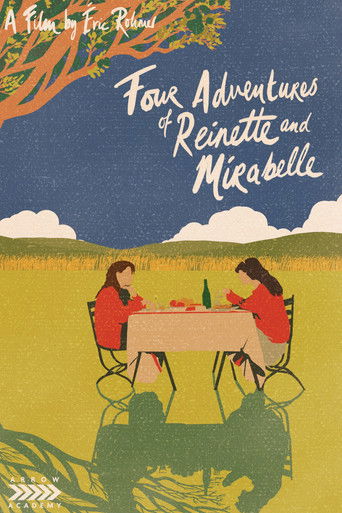
Two young girls meet, Reinette from the countryside and Mirabelle from Paris, and decide to take a flat together in Paris where they attend University. Four successive stories about their daily lives illustrate the very different views, characters and relation to the world of these two friends.
Selma, a psychoanalyst, deals with a cast of colorful new patients after returning home to Tunisia to open a practice.
A widowed professor living in Paris develops a special relationship with a younger French woman.
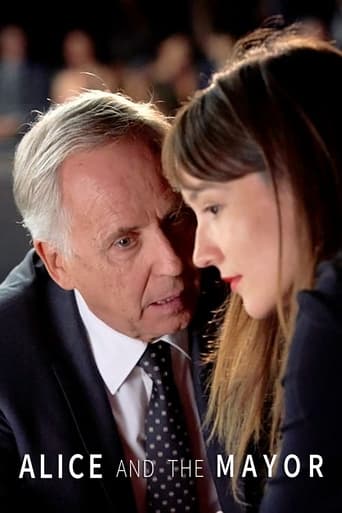
The mayor of Lyon, Paul Théraneau, is in a delicate position. After 30 years in politics, he is running out of ideas and is faced with a feeling of existential emptiness. To overcome this, Paul hires a young and brilliant philosopher, Alice Heimann. Then follows a dialogue between two diametrically opposed personalities who will turn their certainties upside down.
Stéphanie, a police officer working for Internal Affairs, is assigned to a case involving a young man severely wounded during a tense and chaotic demonstration in Paris. While she finds no evidence of illegitimate police violence, the case takes a personal turn when she discovers the victim is from her hometown.
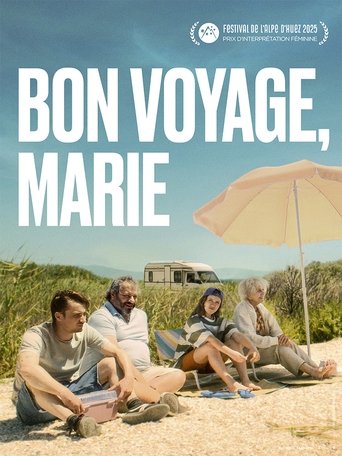
An unexpected road trip brings a dysfunctional family together for one last journey with their elder, sparking moments of connection, joy, and reconciliation.
When 43-year-old hairdresser Suze Trappet finds out that she's seriously ill, she decides to go looking for a child she was forced to abandon when she was only 15. On her madcap bureaucratic quest she crosses paths with JB, a 50-year-old man in the middle of a burnout, and Mr. Blin, a blind archivist prone to overenthusiasm. The unlikely trio set off on a hilarious and poignant helterskelter journey across the city in search of Suze's long-lost child.
Although he's now eighty years old, Claude Lherminier is still as imposing as he ever was. But his bouts of forgetfulness and confusion are becoming increasingly frequent. Even so, he stubbornly refuses to admit that anything is wrong. Carole, his oldest daughter, wages a daily and taxing battle to ensure that he's not left on his own. Claude suddenly decides on a whim to go to Florida. What lies behind this sudden trip?
From the Atlantic to the Black Sea, Mathias and Philippe, two old friends, embark on a bicycle journey that Mathias’s son made before his tragic death. The two men ride through the ordeals with tenderness, humor and emotion.
Alphonse Tram is unwittingly involved in several murders despite having no memory of committing the crimes. His confusion lead him to confess to his neighbour, Inspector Morvandieu. Alphonse and Morvandieu become the axis around which murders occur.
A group of suburban teenagers try to support each other through the difficult task of becoming adults.
A wheelchair-bound singer and her best friend embark on a roadtrip to Memphis.
A single father, Étienne, is preparing for his daughter Rosa to leave home, but his life is upended when he sees his long-lost wife, Valérie, on TV, forcing a confrontation with the past.
In the fifties, young Alice leaves her natal Swiss mountains for the sunny and vibrant shores of Beirut. She falls madly in love with Joseph, a quirky astrophysicist intent on sending the first Lebanese national into space. Alice quickly fits in among his relatives, but after years of bliss, the civil war threatens their Garden of Eden.
A newlywed couple cancels their honeymoon and returns to the snowy Midwest to make the funeral arrangements for their best man, who died unexpectedly after their ceremony.
The municipality of a small Breton village has decided to welcome a family of Ukrainian refugees. To their surprise, they receive Fayad family – coming from Syria. They thwart all the clichés that the French expected: they are friendly, refined, educated… So much so that, in this small, humming village, it is no longer clear which side the barbarians are on…
A student on a trip to France is tricked into smuggling secrets across the Iron Curtain by a sexy spy.
Aymeric runs into Florence, a former coworker, one evening in Saint-Claude in the Haut-Jura. She is six months pregnant and single. When she gives birth to Jim, Aymeric is there. They spend happy years together until Christophe, Jim's biological father, shows up... It could be the start of a melodrama, it's also the start of an odyssey into fatherhood.
Chocolat the clown, the first black stage performer in France, goes from anonymity to fame after forming an unprecedented duo with fellow performer Footit in the very popular in Belle Epoque Paris. But easy money, gambling, and discrimination take their toll on their friendship and Chocolat's career.