In the midst of a catastrophic steel industry collapse, a remarkable grassroots community effort leads to a national healthcare program that helps more than 200 million children...and counting.
Social & External
Protestor
Unconditional: A Journey of Selfless Love explores the love, care, and sacrifices family caregivers give to their loved ones and the many loving choices they have to make. Learn what it means to be committed and loyal to someone no matter the circumstances as highlighted through four caregivers and their journeys.
A documentary in which 5 men describe their experiences with gender dysphoria as they wrestled with feelings of inadequacy as men, and their ultimate pursuit to find peace in their natural bodies.
How a patient-centered philosophy can improve outcomes and enrich the lives of patients.
One billion people on our planet—one in six—live in shantytowns, slums or squats. Slums: Cities of Tomorrow challenges conventional thinking to propose that slums are in fact the solution, not the problem, to urban overcrowding caused by the massive migration of people to cities. (Lynne Fernie, HotDocs)
Explores the lives of Sara, Gigi and Giovanna, three Latino transvestites who for years have lived on the streets of Manhattan supporting their drug addictions through prostitution. They made their temporary home inside broken garbage trucks that the Sanitation Department keeps next to the salt deposits used in the winter to melt the snow. The three friends share the place known as "The Salt Mines".
Award-winning documentary maker Bryan Bruce investigates New Zealand's housing crisis and what might be done to solve it. Bruce consults with recognised world experts (in Canada, Ireland and Germany) to discuss their global research – this time on foreign capital and housing affordability and the effect of immigration on house prices. Bruce also looks at some of the many possible solutions (available particularly in Germany) that would provide families with stability of tenure that don’t involve private ownership.
This revealing portrait of Cuba follows the lives of Fidel Castro and three Cuban families affected by his policies over the last four decades.
Focuses on the state of the Quebec health system in the early 1970s. This film reveals the harsh reality of emergency rooms. There, medical teams, facing a serious shortage of staff, are facing a real invasion of patients. The technical means, often insufficient, make the task even more difficult.
J and Jacky are good friends who attend the same school. J is from a single-parent family, and will be taken care by Jacky’s family whenever his mother has to return to Mainland to renew her visa; such kind of story is not an isolated case. These families have been uprooted for a “better future” in Hong Kong, but is this “future” that the children really long to have? A Chinese saying: “How does one understand the joy of fish, if one is not a fish?” Will the adults really understand what the children want?
A look at the rampant HIV epidemic rate in Swaziland.
The documentary that answers the question: is having month-long double paid vacations, no fear of homelessness, and universal health care the nightmare we've been warned about? The answer may surprise you.
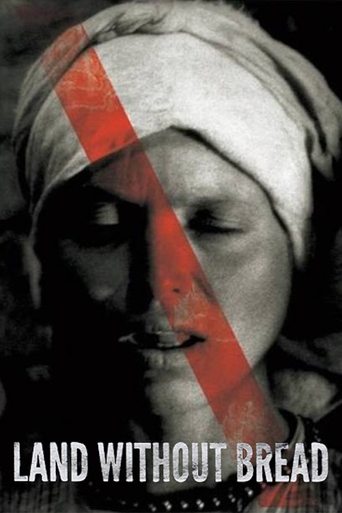
An exploration —manipulated and staged— of life in Las Hurdes, in the province of Cáceres, in Extremadura, Spain, as it was in 1932. Insalubrity, misery and lack of opportunities provoke the emigration of young people and the solitude of those who remain in the desolation of one of the poorest and least developed Spanish regions at that time.
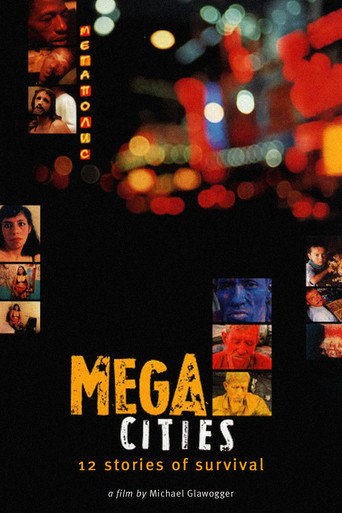
Megacities is a documentary about the slums of five different metropolitan cities.
DEBT is the story of a frantic pursuit: the search for the responsible for the televised cry of hunger of Barbara Flores, an eight-year-old Argentinean girl. Buenos Aires, Washington, the IMF, the World Bank and Davos; corruption and the international bureaucratic lack of interest.
During World War I, African-Americans worked on the railroad near Corbin, Kentucky. When whites returned from the war, there was conflict. Whites sought their former jobs and positions in the community. In 1919, a race riot occurred. Whites put the African-Americans on railroad cars and ran them out of town. In Trouble Behind, members of the Corbin community speak out on the issue. The filmmakers also interview former members of the Corbin, which at the time of filming had only one black family. Some Corbin residents express confusion as to why African-Americans don't move back. Others openly use racial epithets. Some young adults seem troubled by the racism, past and present. Others don't.
A silent film depicting the ship-breaking yards of Chittagong, Bangladesh, a final destination for ships too old to ply the oceans. Every year, hundreds of ships are sent to these yards. And every year, thousands of people come to these yards in search of jobs. Risking their lives to save themselves from hunger, they breathe in asbestos dust and toxic waste. The ship has to die and man has to help it die, as if man and vessel were united in common bondage. The Last Rites bears testament to the resilience of the human spirit.
Short documentary about the marginalized youth in Canyelles, Barcelona.
The capture of Naples, the first great European city to be liberated, revealed the magnitude of the tasks involved in re-creating the means of livelihood and the machinery of government in a devastated, starving and disease-ridden city.
This documentary shows how the Berliner workers lived in 1930. The director Slatan Dudow shows through images: a) the workers leaving the factory; b) the raise of the rents; c) the "unpleasant" guest, meaning the justice officer that brings the eviction notice; d) the fight of classes of the houses of capitalists and working classes; e) the parks of the working class; f) the houses of the working class, origin of the tuberculosis and the victims; g) the playground of the working class; h) the swimming pool for the working class, ironically called the "Baltic Sea" of the working class; i) the effects of humidity of basement where a family lives, with one member deaf; j) one working class family having dinner while the capitalist baths his dog; k) the eviction notice received from an unemployed family and their eviction.