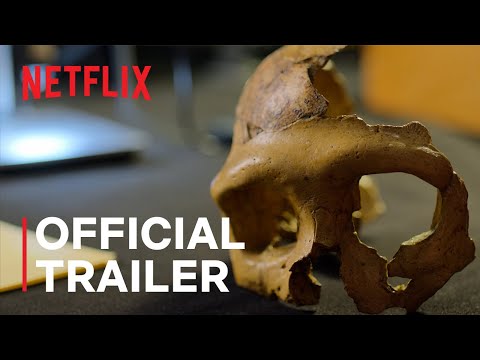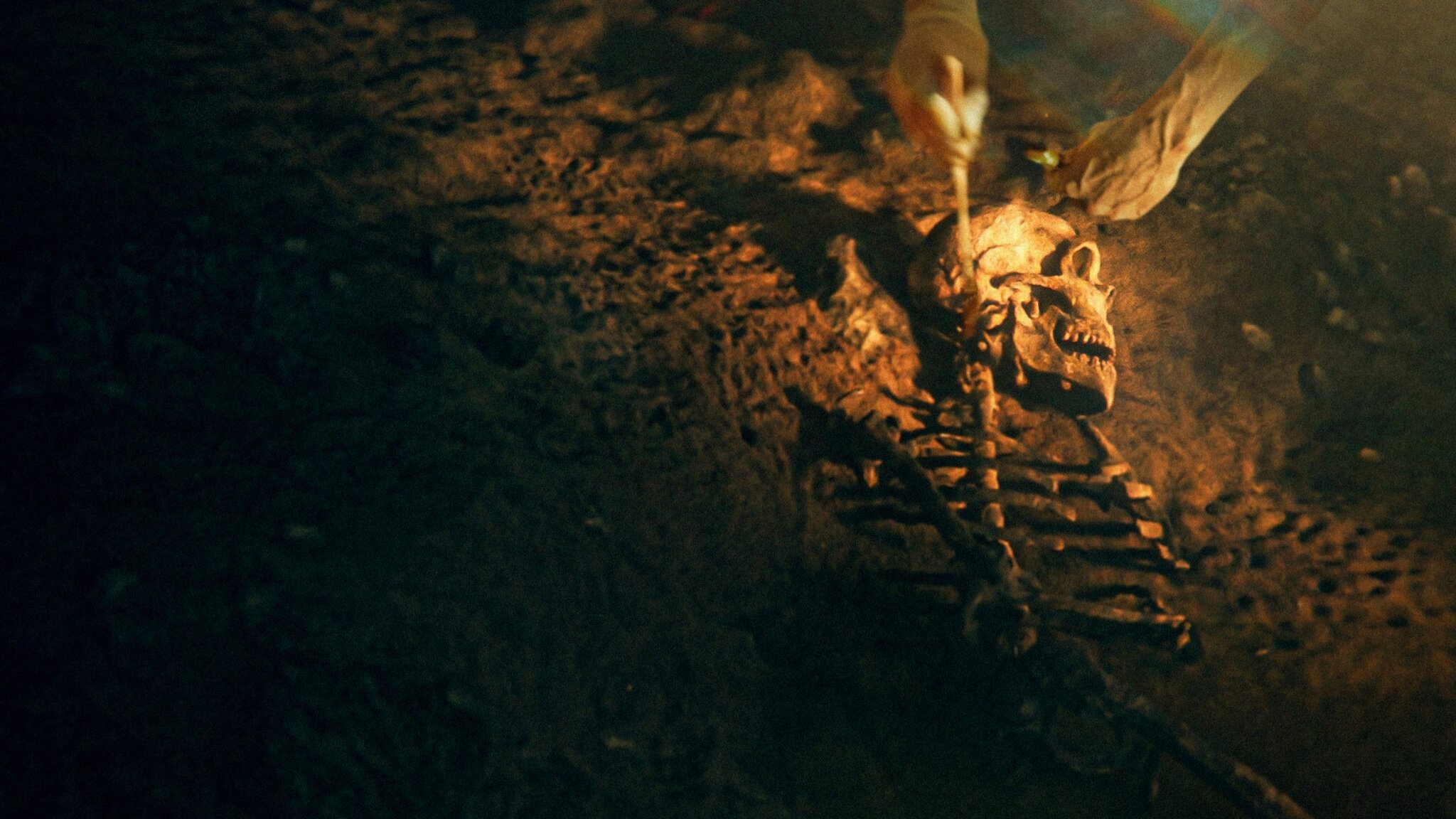

This documentary delves into the mysteries surrounding the Neanderthals and what their fossil record tells us about their lives and disappearance.
Stream
Social & External
Narrator (voice)
Older Neanderthal Man
Older Neanderthal Woman
Younger Neanderthal Man
Younger Neanderthal Woman
Neanderthal Child
It's considered the discovery of the century in Japan -- the unearthing of a complete fossilized skeleton of an 8-meter long dinosaur. It was dubbed Mukawaryu based on the name of the town in Hokkaido where it was uncovered. The find opened up a new world of dinosaur research in Japan. But it also created another mystery because this land dinosaur was discovered in a location that, eons ago, would have been in the ocean. How did the fossil get there? The amazing answer is revealed in this documentary, using CGI to re-create how dinosaurs lived 72 million years ago.
Through interviews with people on the street and songs recorded to memorialize JFK in the mid-1960s, the film explores the impact of the November 22, 1963 assassination on issues in today’s world, from lingering conspiracy theories to the proliferation of gun violence, homelessness, and the scourge of K-2.
The Dangers of the Fly is an educational film made by Ernesto Gunche and Eduardo Martínez de la Pera, also responsible for Gaucho Nobility (1915), the biggest blockbuster of Argentinean silent cinema. De la Pera was a talented photographer, always willing to try new gadgets and techniques. This film experiments with microphotography in the style of Jean Comandon's films for Pathé and it is part of a series which included a film about mosquitoes and paludism and another one about cancer, which are considered lost. Flies were a popular subject of silent films and there are more than a dozen titles featuring them in the teens and early twenties.
In one of those wonderful coincidences of history, lumière, the French word for “light,” was also the last name of brothers Auguste and Louis, whose brilliant invention, the cinematograph, helped to inaugurate the most beloved art form of the last 130 years. Institute Lumière director Thierry Frémaux uses Lumière, Le Cinema! to guide the viewer through over a hundred shorts—some famous, some forgotten, some never before seen—directed by Lumière and company. In the process, Frémaux illuminates how the brothers employed the camera as a creative instrument as they (and their operators) mastered framing, staging, and subject selection for quotidian and exotic microdocumentaries as well as the first ever fictional motion pictures. The result is not only a glorious re(telling) of the genesis of cinema but a profound meditation on the beautiful world captured—and the mysterious world imagined—by the Lumières.
In 1900, the eyes of the whole world are on Paris. The World's Fair welcomed 50 million amazed visitors, and the city celebrated itself in a glamorous era. This period went down in history as the "Belle Époque." Elaborately restored and colorized historical photographs bring to life the exciting life in Paris between the end of the 19th century and the beginning of World War I in 1914. Bicycles, cars, airplanes, moving pictures, newly founded film studios, revolutionary composers and painters, avant-garde ballet performances, fashion houses, summer resorts on the Atlantic coast – life was intoxicating. People celebrate in the variety shows, cabarets, and revue theaters of Paris. Moulin Rouge, Folies Bergères, Bal Tabarin—in Paris, the nights are long and life is too short to sleep through. It is a dance on the volcano, given the political developments in the world.
Located in former West Berlin, Tempelhof Airport reflects the dramatic history of the 20th century. Once a Nazi showpiece, it later became a symbol of freedom during the Berlin Airlift and the Cold War. In 1978, East German citizen Constanze Glien unexpectedly arrived here after her flight was hijacked, changing the course of her life.
David Attenborough and scientist Johan Rockström examine Earth's biodiversity collapse and how this crisis can still be averted.
From the acclaimed director of American Movie, the documentary follows former Los Angeles police officer turned independent reporter Michael Ruppert. He recounts his career as a radical thinker and spells out his apocalyptic vision of the future, spanning the crises in economics, energy, environment and more.
September 3rd, 1939. Britain and France declare war on Nazi Germany, only two days after the Wehrmacht invades Poland. This day, the sad date when the fate of the world changed forever, the Phoney War began: eight months of uncertainty, preparations, evacuations and skirmishes.
About 4 000 years ago, Assyrian merchants established a commercial settlement in the ancient city of Kaneš, within Central Anatolia. They came from Aššur, north of Mesopotamia. We have come to understand their history through their writings on clay tablets that have stood the test of time: more than 22 500 cuneiform tablets have been unearthed from the archaeological site of Kültepe. How did these Mesopotamian clay tablets arrived in Anatolia and what do they tell us? The voice of Tarām-Kūbi, an Assyrian woman who corresponded with her brother and her husband in Kaneš, takes us back in time.
Nova and National Geographic present exclusive access to an astounding discovery of ancient fossil human ancestors.
Debunking the mythology surrounding the 16th century French prophet, Nostradamus.
Archival footage, animation and music are used to look back at the eight anti-war protesters who were put on trial following the 1968 Democratic National Convention.
Director Claude Lanzmann spent 11 years on this sprawling documentary about the Holocaust, conducting his own interviews and refusing to use a single frame of archival footage. Dividing Holocaust witnesses into three categories – survivors, bystanders, and perpetrators – Lanzmann presents testimonies from survivors of the Chelmno concentration camp, an Auschwitz escapee, and witnesses of the Warsaw Ghetto Uprising, as well as a chilling report of gas chambers from an SS officer at Treblinka.
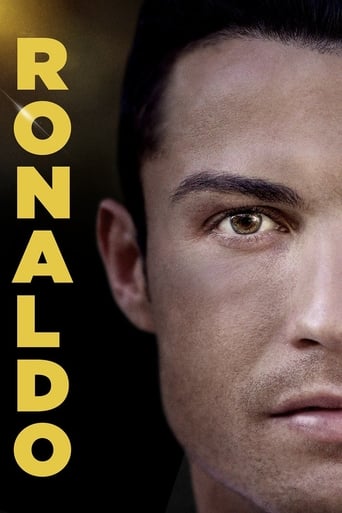
Filmed over 14 months with unprecedented access into the inner circle of the man and the sport, this is the first official and fully authorised film of one of the most celebrated figures in football. For the first time ever, the world gets vividly candid and un-paralleled, behind-closed-doors access to the footballer, father, family-man and friend in this moving & fascinating documentary. Through in-depth conversations, state of the art football footage and never before seen archival footage, the film gives an astonishing insight into the sporting and personal life of triple Ballon D'Or winner Cristiano Ronaldo at the peak of his career. From the makers of ‘Senna’ and ‘Amy’, Ronaldo takes audiences on an intimate and revealing journey of what it’s like to live as an iconic athlete in the eye of the storm.
A woman’s Holocaust memoir takes the world by storm, but a fallout with her publisher-turned-detective reveals her story as an audacious deception created to hide a darker truth.
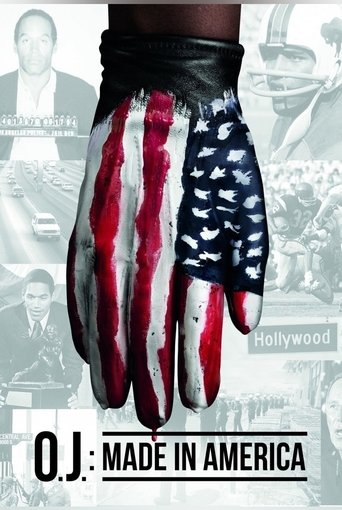
A chronicle of the rise and fall of O.J. Simpson, whose high-profile murder trial exposed the extent of American racial tensions, revealing a fractured and divided nation.
A documentary examining possible historical and modern conspiracies surrounding Christianity, the 9/11 terrorist attacks, and the Federal Reserve bank.
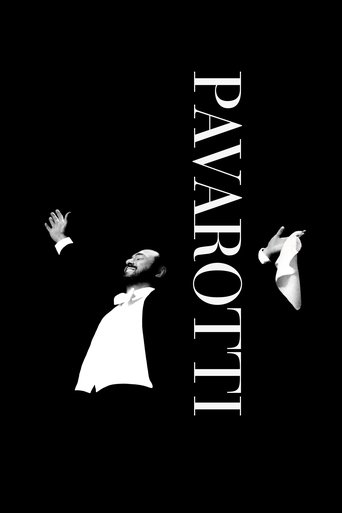
Featuring never-before-seen footage, concert performances and intimate interviews, filmmaker Ron Howard examines the life and career of famed opera tenor Luciano Pavarotti.
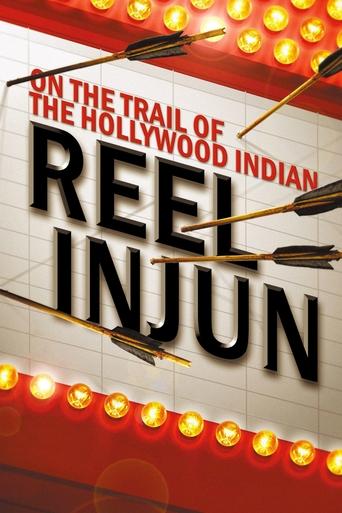
The evolution of the depiction of the various Native American peoples in cinema, from the silent era to the present day: how their image on the screen has changed the way to understand their history and culture.
A behind-the-scenes documentary about the Clinton for President campaign, focusing on the adventures of spin doctors James Carville and George Stephanopoulos.
Using original footage and interviews, this documentary tells the nail-biting story of Apollo 13 and the struggle to bring its astronauts safely home.
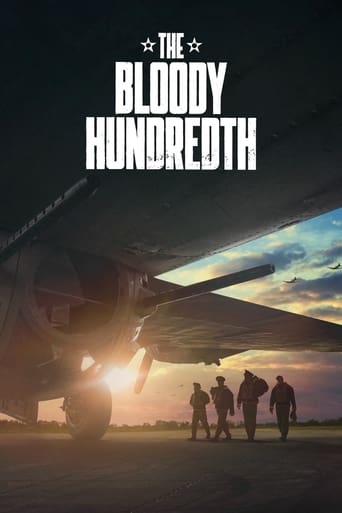
Meet the real-life airmen who inspired Masters of the Air as they share the harrowing and transformative events of the 100th Bomb Group.
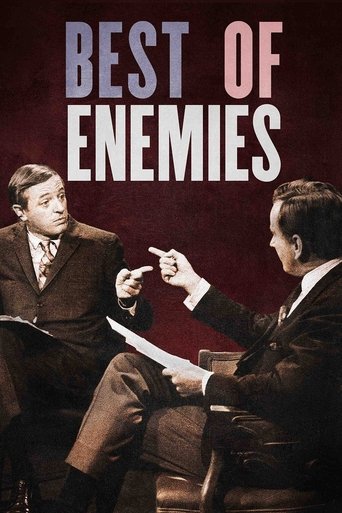
A documentary about the legendary series of nationally televised debates in 1968 between two great public intellectuals, the liberal Gore Vidal and the conservative William F. Buckley Jr. Intended as commentary on the issues of their day, these vitriolic and explosive encounters came to define the modern era of public discourse in the media, marking the big bang moment of our contemporary media landscape when spectacle trumped content and argument replaced substance. Best of Enemies delves into the entangled biographies of these two great thinkers, and luxuriates in the language and the theater of their debates, begging the question, "What has television done to the way we discuss politics in our democracy today?"
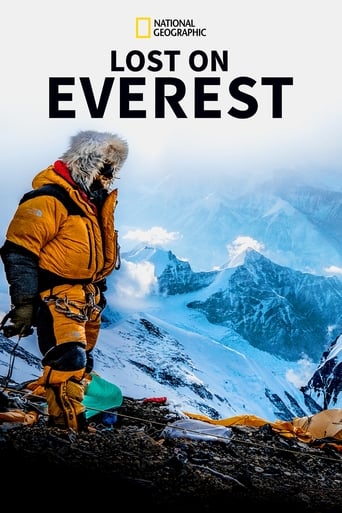
Reaching 29,029 feet, Mount Everest has long captivated mountaineers of all stripes. But a peak that draws athletes and mountaineers to new heights isn’t without danger — or a dark side. Perhaps the peak’s greatest mystery is the missing body of Andrew “Sandy” Irvine who disappeared alongside George Leigh Mallory in 1924 just 800 vertical feet from the summit. In Lost on Everest, we follow along as a team of elite climbers with new intel on the location of his missing body set out to solve what may be mountaineering’s great mystery. Along with the body, the team hopes to find Irvine’s camera and the footage that could rewrite history.
Explore how one man's relentless drive and invention of the atomic bomb changed the nature of war forever, led to the deaths of hundreds of thousands of people and unleashed mass hysteria.
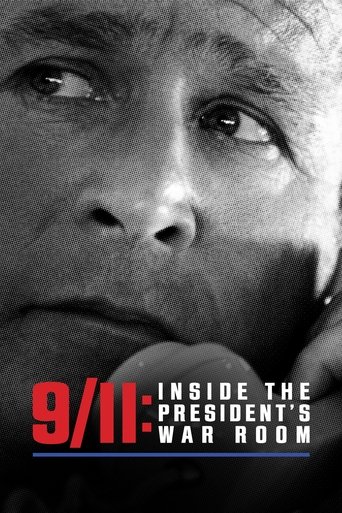
Experience the events of September 11, 2001 through the eyes of President Bush and his closest advisors as they personally detail the crucial hours and key decisions from that historic day.
She was once as famous as Jackie O—and then she tried to take down a President. Martha Mitchell was the unlikeliest of whistleblowers: a Republican wife who was discredited by Nixon to keep her quiet. Until now.
Ndola, Northern Rhodesia (currently Zambia), September 18, 1961. Swedish economist and diplomat Dag Hammarskjöld, Secretary General of the UN, dies mysteriously in a plane crash. Decades later, Danish journalist and filmmaker Mads Brügger and Swedish researcher Göran Björkdahl investigate the case in search of definitive closure.
Black holes stand at the limit of what we can know. To explore that edge of knowledge, the Event Horizon Telescope links observatories across the world to simulate an earth-sized instrument. With this tool the team pursues the first-ever picture of a black hole, resulting in an image seen by billions of people in April 2019. Meanwhile, Hawking and his team attack the black hole paradox at the heart of theoretical physics—Do predictive laws still function, even in these massive distortions of space and time? Weaving them together is a third strand, philosophical and exploratory using expressive animation. “Edge” is about practicing science at the highest level, a film where observation, theory, and philosophy combine to grasp these most mysterious objects.
A disturbing collection of 1940s and 1950s United States government-issued propaganda films designed to reassure Americans that the atomic bomb was not a threat to their safety.
Director Peter Joseph examines examples of economic subjugation and offers solutions based on alignment with nature.
The vivid and inspiring story of British film icon Michael Caine's personal journey through 1960s swinging London.
A documentary about the development and spread of the virtual currency called Bitcoin.