Social & External
Fouinard
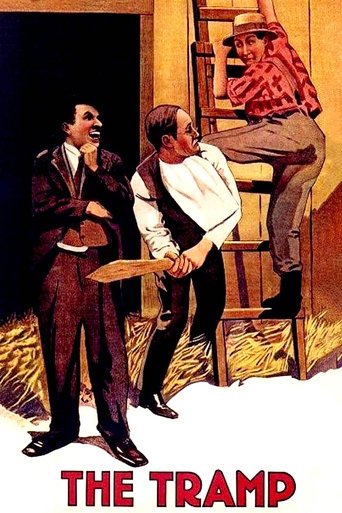
A tramp falls in love with a beautiful blind flower girl. His on-and-off friendship with a wealthy man allows him to be the girl's benefactor and suitor.
During America’s Civil War, Union spies steal engineer Johnny Gray's beloved locomotive, 'The General'—with Johnnie's lady love aboard an attached boxcar—and he single-handedly must do all in his power to both get The General back and to rescue Annabelle.
A gold prospector in Alaska struggles to survive the elements and win the heart of a dance hall girl.
After amusements working in a restaurant, a waiter uses his lunch break to go roller skating.
A pawnbroker's assistant deals with his grumpy boss, his annoying co-worker and some eccentric customers as he flirts with the pawnbroker's daughter, until a perfidious crook with bad intentions arrives at the pawnshop.
Le mogli e le arance is characterized by a wonderful sereneness. It is the kind of quietude which many of us connect immediately with the south. Everything seems to be in its perfect place, and time is just passing. In the setting of a sanatorium a nobleman is practicing idleness and slow-motion mind games. Does it sound boring? Yes, it does. But it is not, the uneventfulness is definitively enthralling. The film director tries to narrate time, time itself, as such, for its own sake: a rare experiment.
Anita and Marion realize that an abandoned baby they sneaked into an orphanage was kidnapped from a millionaire. For the reward, they proceed to break into the institution at night, dressed as men to beat curfew, to get the kid out again. This film survives only in very fragmentary form.
A bumbling tramp desires to build a home with a young woman, yet is thwarted time and time again by his lack of experience and habit of being in the wrong place at the wrong time..
An erotic horror film about a boy who sleeps naked on a hot summer night and suddenly discovers that he's not alone.
The film consists of a series of tightly interlinked vignettes, the most sustained of which details the story of a man and a woman who are passionately in love. Their attempts to consummate their passion are constantly thwarted, by their families, by the Church and bourgeois society in general.
The opening shows a colored nursemaid in the park with baby carriage, and seated on a bench receives the attention of several smart colored men who admire her greatly and endeavor to make her acquaintance. But the dusky belle is coy and declines to make the acquaintance of any of them, until one more fortunate than the rest is invited to a seat on the bench with her, and a most pronounced flirtation takes place between the lady and her beau. (Selig catalog)
Aspiring filmmakers Mel Funn, Marty Eggs and Dom Bell go to a financially troubled studio with an idea for a silent movie. In an effort to make the movie more marketable, they attempt to recruit a number of big name stars to appear, while the studio's creditors attempt to thwart them.
Anna works at a bookstore. Lucas is suddenly very interested in books. A romantic comedy in which Chaplin meets the Nouvelle Vague.
Christian prepares a surprise dinner for his girlfriend, but he ends up being the one surprised.
One of the two earliest horror films ever made. This film is presumed lost. In this black comedy scene, the bottom falls out of a coffin, the corpse tumble out, and is jolted back to life. Short sequences like this, as well as street scenes and dancing geisha girls were the main subjects of early Nippon cinema, pioneered by Shiro Asano and Shibata Tsunekichi from 1897 onwards. In creating dramatic, scenes, film-makers naturally chose the most striking or bizarre. Another undocumented film, recalled by cameraman Shiro Asano.
A naive young man joins the Army in order to become a pilot.
A tramp cares for a boy after he's abandoned as a newborn by his mother. Later the mother has a change of heart and aches to be reunited with her son.
A series of family entanglements develop around the changing will of Roger Bernhuses de Sars (Karl Mantzius), who wants his heritage to go to his illegitimate daughter Blenda (Greta Almroth). But love and fate also plays their cards. One of the most surprising films of Sjöström, close to Stroheim and some of the silent comedies of Lubitsch. Belonging to the golden age of Swedish film, this comedy offers one of the earliest explorations of the relationship between masters and servants on the screen, later developed by French masters like Renoir and Guitry. After acting in the diptych of Thomas Graal, Sjöström shows that he also dominates the “light genre” as director.
The main phases in the lives of a young couple, from when they meet and fall in love, until they have seven children, intimately linked to photographic art.
As a practical joke, an actor impersonates the screen monster he made famous. A lost film.