Shows the complete process of sense perception, from physical or chemical stimulus, to its conversion into a nerve impulse, its transmission to the brain and its perception there.
Social & External
For a few years now, scientists have known about the existence of another brain within our bodies. This second brain, or "brain down below" is none other than our stomach. The stomach's intelligence is a new avenue of research that is fascinating research teams the world over.
Documentary footage from various sources, set to music. Showing the whole of human life, from birth to death and beyond.
Gil Hedley, Ph.D., former massage therapist and Rolfer, dissects a cadaver in order to teach bodyworkers and other interested students about the fascia of the viscera and cranium.
Gil Hedley, Ph.D., former massage therapist and Rolfer, dissects a cadaver in order to teach bodyworkers and other interested students about the fascia of the viscera.
Dr. Yang Jwing-Ming explains, demonstrates, and discusses the Eight Pieces of Brocade (jian shen ba duan jin), a qigong practice for health and wellbeing. The Eight Pieces of Brocade is a sequence of eight movements intended to build qi, promote blood circulation, assist the immune system, strengthen the internal organs, and energize the body. Dr. Yang teaches both sitting and standing variations of the practice.
Take a fascinating journey inside the bizarre world of a living human being with this compelling documentary from National Geographic, where microscopic cameras and other state-of-the-art technologies reveal perspectives that will blow your mind. Tracking the body of a female from infancy to old age, viewers will observe the digestion of a meal, the development of the cardiac system and other mesmerizing aspects of the body's inner workings.
Through our subject Adam, we reveal the incredible changes and forces that take all humankind from Cradle to Grave.
A quotation from Aristophanes, "The desire and pursuit of the whole is called love," precedes views of a man and a woman's bodies, often in extreme close up. Off-screen, a voice recites fragments of oracular literature and purple prose. We see an eye, an ear, a mouth, a tongue, bits of hair, a hand, the tips of fingers, toes. Occasionally, the frame includes a larger scape of a body: a chest, a back, a breast. Usually the camera is stationery; sometimes, it moves across a body, remaining in close up. They hold hands for one moment. The bodies are without clothes; no genitalia are visible.
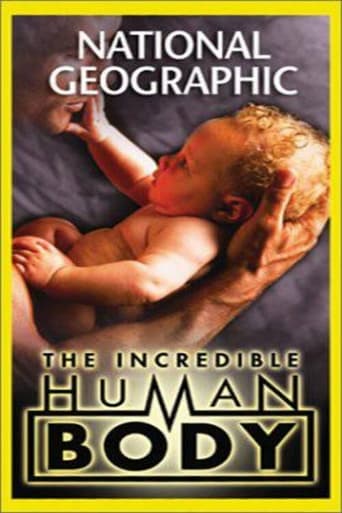
Cutting-edge medical technology and riveting, life-or-death personal dramas combine in this unprecedented, emotionally compelling exploration of The Incredible Human Body.
Why are you more likely to have a heart attack at eight o'clock in the morning or crash your car on the motorway at two o'clock in the afternoon? Can taking your medication at the right time of day really save your life? And have you ever wondered why teenagers will not get out of bed in the morning? The answers to these questions lie in the secret world of the biological clock.
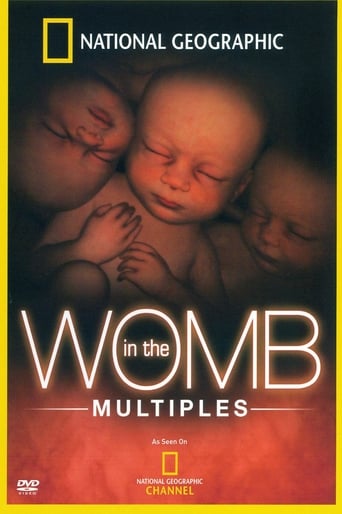
Advanced technology, groundbreaking scientific discoveries about the beginnings of life, and computer animation all combine to detail how multiple siblings develop in the womb as the filmmakers at National Geographic explore the fetal growth of twins, triplets, and quadruplets. Detailed pictures of these different groupings in various stages of fetal development bring the earliest stages of life to the screen as never before.
After getting caught in a fight, Vahid needs to sell one of his kidneys to avoid a prison sentence of many years. While waiting for the liberating call from a buyer, a wish for a better life starts to grow within him.
A documentary that shows a body in social and family isolation, but the distance is not caused by the coronavirus, but by being a transvestite. Renata Carvalho is a character of herself, her voice tells us the historicity/transcestrality of her body and the structural transphobia.
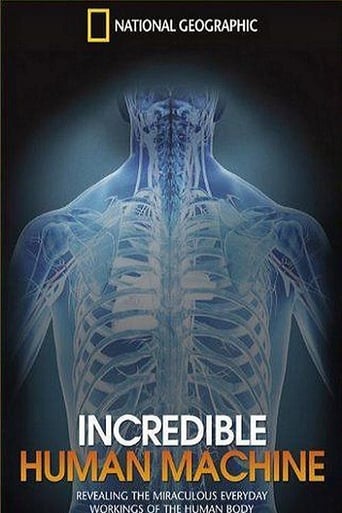
National Geographic: Incredible Human Machine takes viewers on a two-hour journey through an ordinary, and extraordinary, day-in-the-life of the human machine. With stunning high-definition footage, radical scientific advances and powerful firsthand accounts, Incredible Human Machine plunges deep into the routine marvels of the human body. Through 10,000 blinks of an eye, 20,000 breaths of air and 100,000 beats of the heart, see the amazing and surprising, even phenomenal inner workings of our bodies on a typical day. And explore striking feats of medical advancement, from glimpses of an open-brain surgery to real-time measurement of rocker Steven Tyler's vocal chords.
A tribute to the human body.
Wilhelm Emter demonstrates individual muscles and muscle groups of the shoulder region, chest region, torso and abdominal region and the arm in practice on his extremely trained body.
We admire beauty; we recoil from bodies that are marred, disfigured, different. Didier Cros’ moving, intimate film forces us to question what underlies our notions of beauty as we join a talented photographer taking stunning portraits of several people with profound visible scars which have dictated certain elements of their lives but have not come to define their humanity. The subjects' perceptions of themselves are dynamic, unexpected, and even heartwarming. This is an unforgettable journey to be shared with the world.
Beginning at the industrial revolution of the ‘great north’, Jenn Nkiru draws lines between peoples, cities, countries, buildings, movements, bodies and spaces(s) using a mixture of archive materials and new footage. There is little stillness as we are pushed and pulled through Black histories and communities across the city of Manchester and beyond. Nkiru has termed this filmmaking process “cosmic archeology”, and it is grounded in Afro-surrealism, experimental film and the Black arts movement.
Sainte-Marie-aux-Mines, in rural Alsace. A vocational high school. A class of year 12 ASSP (Assistance, Care and Service to Person) pupils experience contemporary dancing based on improvised contacts for the first time.