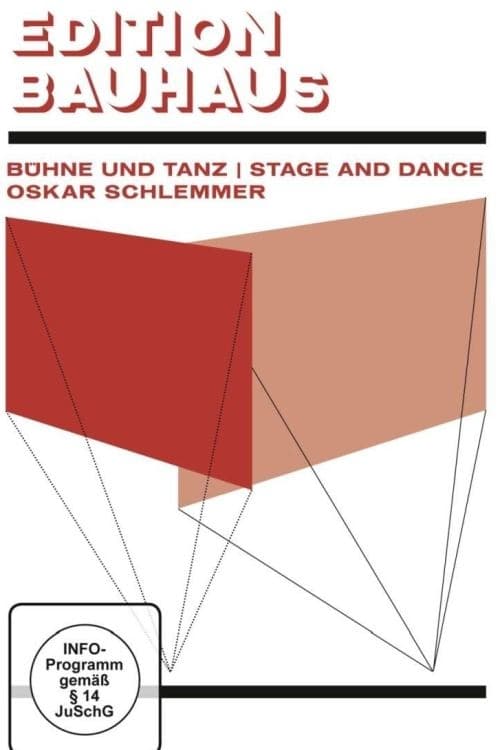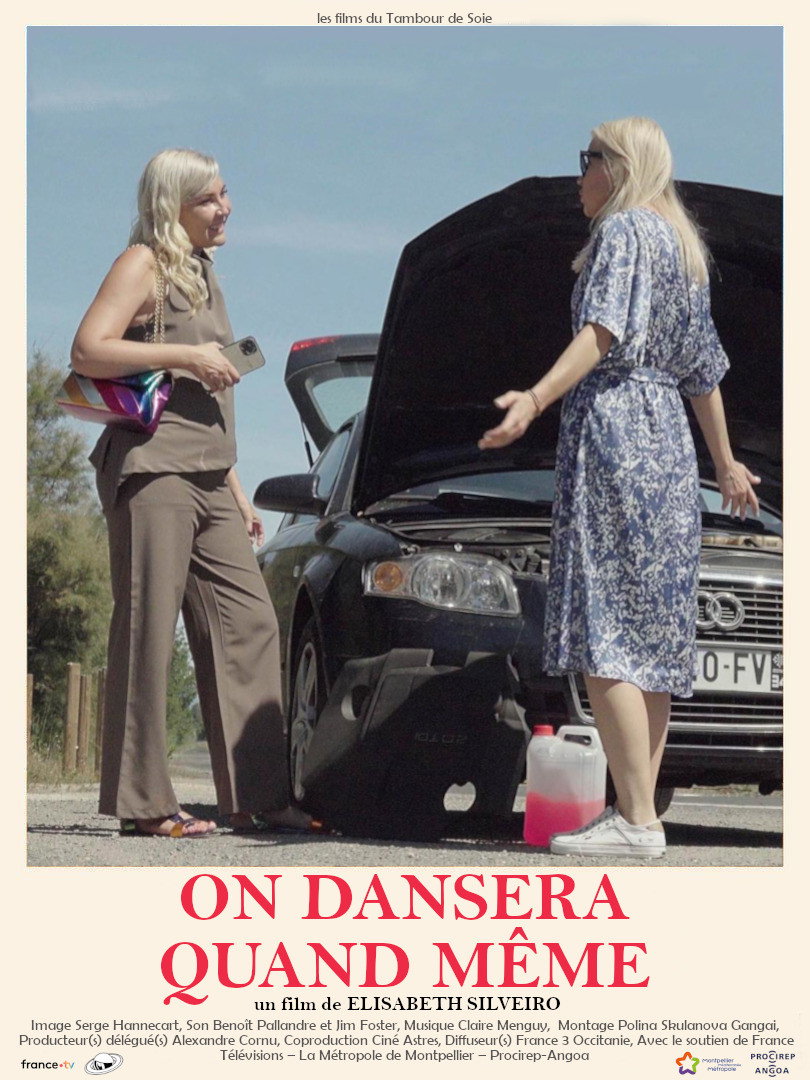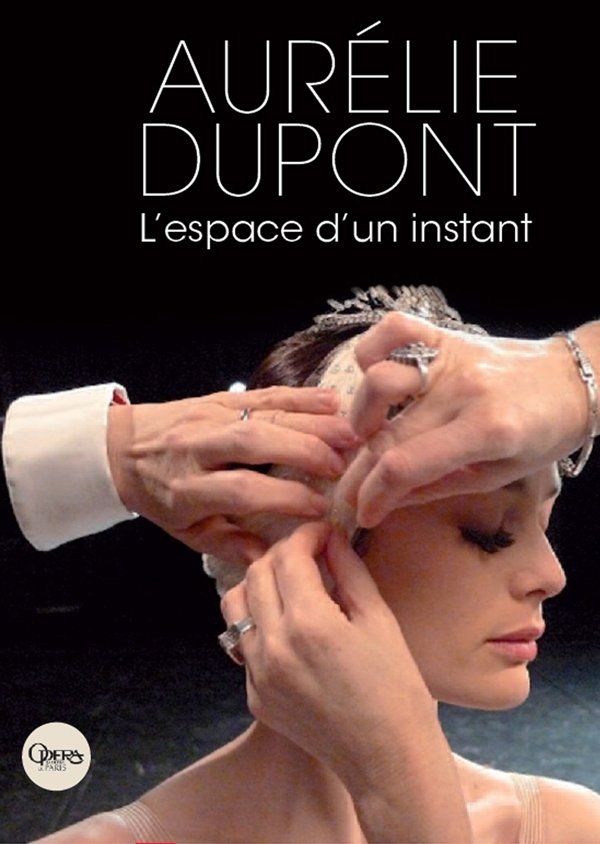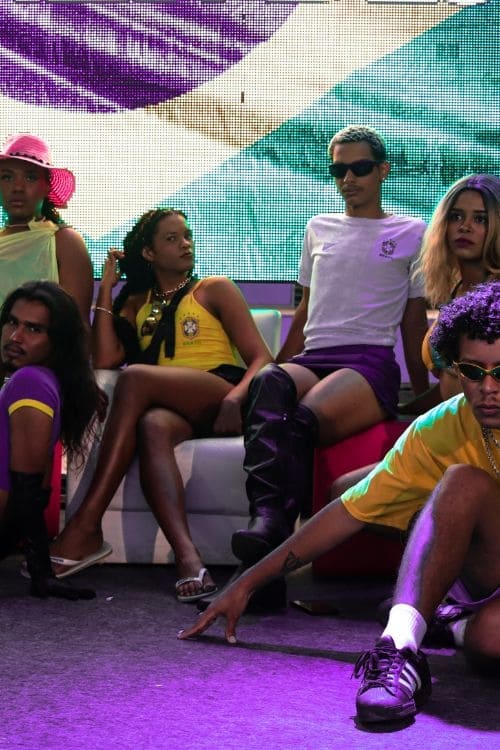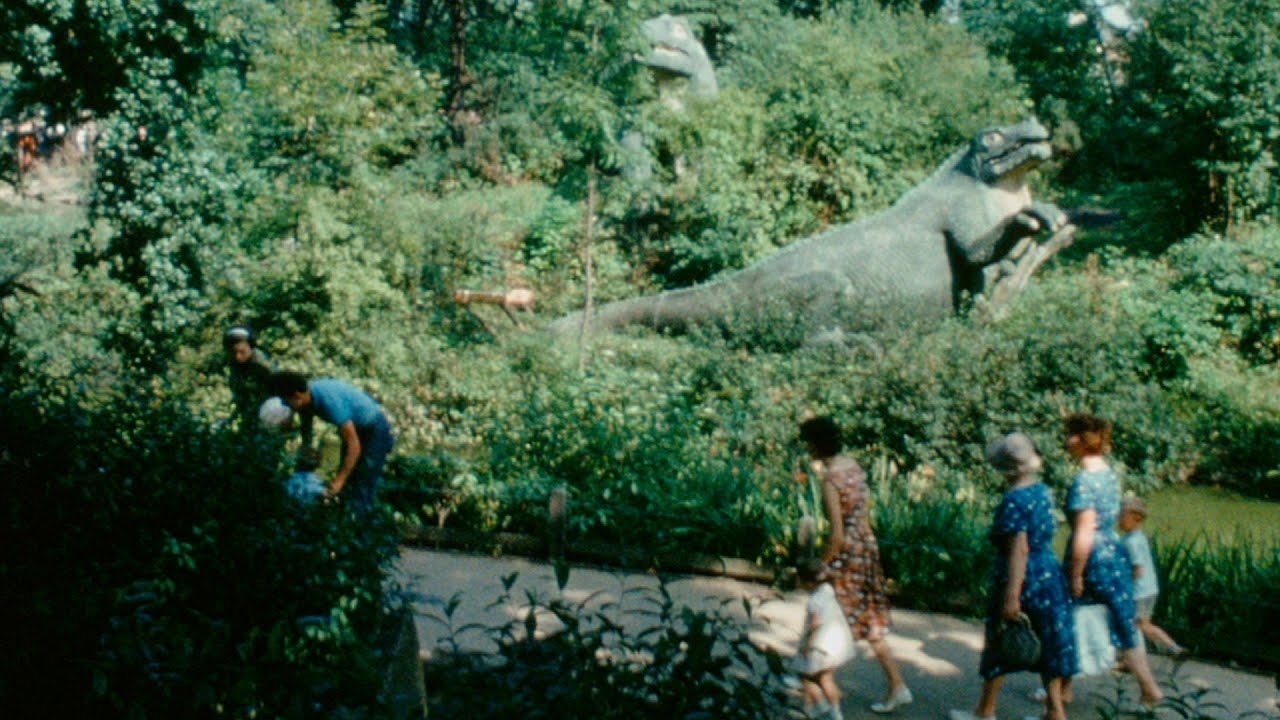
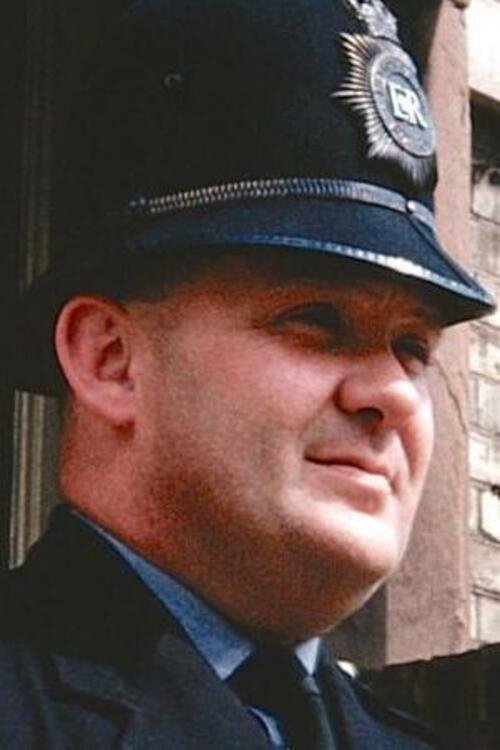
Film about the town of Penge featuring local personalities, housing, shopping, traffic and the Penge formation dancers.
Social & External

One year in the life of a Turkish teacher, teaching the Turkish language to Kurdish children in a remote village in Turkey. The children can't speak Turkish, the teacher can't speak Kurdish and is forced to become an exile in his own country. On the Way to School is a film about a Turkish teacher who is alone in a village as an authority of the state, and about his interaction with the Kurdish children who have to learn Turkish. The film witnesses the communication problem emphasizing the loneliness of a teacher in a different community and culture; and the changes brought up by his presence into this different community during one year. The film chronicles one school year, starting from September 2007 until the departure of the teacher for summer holiday in June 2008. During this period, they begin to know and understand each other mutually and slowly.
Gripping, heartbreaking, and ultimately hopeful, Waiting for Superman is an impassioned indictment of the American school system from An Inconvenient Truth director Davis Guggenheim.
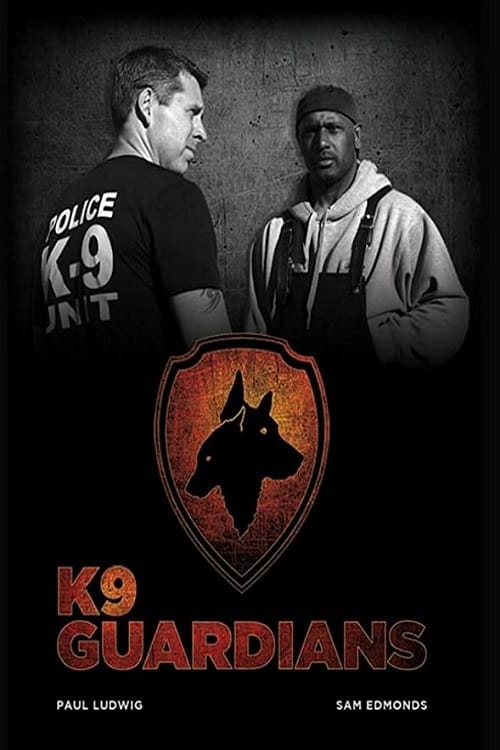
Paul Ludwig, a K9 police officer and handler himself, was nearly killed when a K9 failed on the street. Sam Edmonds, a decoy//trainer hybrid has been taking bites on the arms and legs while learning from the best of the best over the last 10 years. They joined together to start training and producing some of the toughest K9's in the world while shedding light on an unsettling situation: most working dogs are extremely ill-prepared and under-trained for the reality of our world today. A situation that has led to canine and officer deaths in the past. They talk to several other K9 trainers and officers, hear their stories, meet their partners, and follow their dogs through the training process and back into the streets to protect our communities.
This intimate ethnographic study of Voudoun dances and rituals was shot by Maya Deren during her years in Haiti (1947-1951); she never edited the footage, so this “finished” version was made by Teiji Ito and Cherel Ito after Deren’s death.
Elementary Genocide is a documentary executive produced by award winning journalist/filmmaker Rahiem Shabazz. The documentary appeals to a wide general viewership by addressing the social, cultural, political and personal ramifications of how the federal government allots money to each state, to build prions based on the failure rate of 4th and 5th graders. In America, where half of the 4th grade is reading below grade level and more African-American males are in jail than are in college, Elementary Genocide serves as a striking reminder of a flawed system in need of repair.
World renowned journalist, and award-winning filmmaker Rahiem Shabazz presents the third installment of his docu-series Elementary Genocide: Academic Holocaust. The first two documentaries in the series; The School To Prison Pipeline and Elementary Genocide 2: The Board Of Education vs. The Board of Incarceration received critical acclaim and launched Shabazz as a political pundit and academic ambassador for the African American community. Elementary Genocide: Academic Holocaust adds more statistical proof of the scholastic inequalities faced by Original people around the country. The documentary revisits the importance of education and its impact on self-image, family structure, financial freedom, and the collective future of African/indigenous people in America and abroad.
Documentary in which Darcey Bussell profiles Hollywood dancer Fred Astaire, marking 30 years since his death.
Documentary about Dario Argento, "Profondo Rosso" shop in Rome, and most important works throughout his career.
BYE (AJÖ), a new dance film, is choreographed and directed by acclaimed Swedish choreographer Mats Ek. " About a woman (Sylvie Guillem) who takes leave of a certain stage in her life. It is a conversation that she has with herself that leads to new experiences.
A brief history of the emergence and artistic innovations of tango in 19th-century Argentina and Europe. The film offers a mosaic of tango melodies, art works, dance performances, historical footage, photographs of Buenos Aires at the turn of the 20th century, and texts by Celedonio Flores and Enrique Santos Discépolo.
Hospital staff are reporting more violence and anti-social behaviour than ever before. In 2015, 8 staff were assaulted every hour – a new record high. At The Queen Elizabeth Hospital in Birmingham – one of the UK’s biggest hospitals – they think they have the answer. Here a private security force of 46 uniformed guards, and a sophisticated CCTV system, keep staff and patients safe. A colourful mixture of characters ranging from ex-soldiers, to bouncers, to former elite sportsmen, it’s the security team’s job to keep the hospital running smoothly. With more than 2 million visitors they have to deal with all aspects of crime and anti-social behaviour. All against a back drop of life changing and life saving procedures.
While most of Ken Russell's documentaries for the BBC's Monitor arts strand focused on a single creative figure, he would also occasionally make more wide-ranging surveys of the state of a particular art. The Light Fantastic (BBC, tx. 18/12/1960) was written and presented by Ron Hitchins, a Cockney barrow boy who has long been interested in a great many dance forms, and who has recently taken up Spanish dancing. Hitchins participates in some of the dance sequences, but his main contribution is an enthusiastic commentary that helps personalise what could have been simply a disparate collection of dance footage. He's not shy about expressing likes and dislikes, being none too keen on ballroom dancing (too choreographed), rock'n'roll (too monotonous) and Morris dancing (just doesn't like it), though anything genuinely spontaneous gets a thumbs up, even if it's a room full of people dressed in black swaying to the sound of a gong.
How do humans and animals see each other? Dominique Loreau captures astonishing exchanges of “views” between people and animals who coexist in the city, in farms, slaughterhouses, zoos, museums, or in a dance rehearsal room. In The Eyes Of A Beast questions the permeable boundary between man and animal.
The Thanet coast featuring boat rides, horses and family outings.
The first woman to appear in front of an Edison motion picture camera and possibly the first woman to appear in a motion picture within the United States. In the film, Carmencita is recorded going through a routine she had been performing at Koster & Bial's in New York since February 1890.
A semi-dramatized documentary about the first Slovak grammar school in Revúca.
The earliest surviving motion-picture film, and believed to be one of the very first moving images ever created, was shot by Louis Aimé Augustin Le Prince using the LPCCP Type-1 MkII single-lens camera. It was taken on paper-based photographic film in the garden of Oakwood Grange, the Whitley family house in Roundhay, Leeds, West Riding of Yorkshire (UK), on 14 October 1888. The film shows Adolphe Le Prince (Le Prince’s son), Mrs. Sarah Whitley (Le Prince’s mother-in-law), Joseph Whitley, and Miss Harriet Hartley walking around in circles, laughing to themselves, and staying within the area framed by the camera. Roundhay Garden Scene is often associated with a recording speed of around 12 frames per second and runs for about 2 to 3 seconds.
Young scholars get busy for Newcastle-on-Tyne's 'Education Week' in the tour of Tyneside classrooms.