What makes a body human? This science-fiction fable shot in China foreshows the rise of AI. Time behaves fluidly as we travel into the near future in the company of an unusual pair: Blue and her friend, a mannequin named Lucy.
Social & External
With the rapid advancements in artificial intelligence, the line between humans and machines continues to blur, and everything is evolving at an astonishing pace as this technology offers tantalizing promises. However, some researchers, including 2024 Nobel Prize in Physics laureate Geoffrey Hinton, warn about its exponential power. A deep dive into the dizzying complexities of AI.
The ancient Chinese game of Go has long been considered a grand challenge for artificial intelligence. Yet in 2016, Google's DeepMind team announced that they would be taking on Lee Sedol, the world's most elite Go champion. AlphaGo chronicles the team as it prepares to test the limits of its rapidly-evolving AI technology. The film pits man against machine, and reveals as much about the workings of the human mind as it does the future of AI.
Director Adam Bhala Lough sets out to better understand the technology and people at the center of the AI boom. His quest sends him on a path towards the father of AI, OpenAI CEO, Sam Altman. When he isn’t able to sit down with Altman himself, Adam travels to India to create an AI version of him to interview instead.
In 1772, Englishwoman Mary Delany wrote to her niece: “I have found a new way of imitating flowers.” The imitation in question was the art form called decoupage, based on cut-outs and reshuffling of pictures. The charm and botanical precision of these works attracts attention of even today’s artists, among others by an anonymous programmer who is trying to invent a way of capturing the flowers’ vivacity in pictures. With this aim in mind, she has created an algorithm, which would combine science and beauty, similarly to Delaney’s efforts, whose illustrations it is meant to animate.
The search for René Descartes’ daughter Francine leads an internet user into the depths of an AI’s mental space. This intelligence generates limitless images from words given by humans, until it starts working by itself. An alternative, fleshless new world, containing all the world's memory, emerges.
This documentary-drama hybrid explores the dangerous human impact of social networking, with tech experts sounding the alarm on their own creations.
Exploring the fallout of MIT Media Lab researcher Joy Buolamwini's startling discovery that facial recognition does not see dark-skinned faces accurately, and her journey to push for the first-ever legislation in the U.S. to govern against bias in the algorithms that impact us all.
Magical, autonomous, all-powerful… Artificial intelligences feed our dreams as well as our nightmares. But while tech giants promise the advent of a new humanity, the reality of their production remains totally hidden. While data centers are concreting landscapes and drying up rivers, millions of workers around the world are preparing the billions of data that will feed the voracious algorithms of Big Tech, at the cost of their mental and emotional health. They are hidden in the belly of AI. Could they be the collateral damage of the ideology of “Longtermism” that has been brewing in Silicon Valley for several years?
The race for supremacy in the age of artificial intelligence is on: between the USA, China and Europe. Between big tech companies and start-ups. Who will win the competition? Will Europe be left behind? And who will determine a technology that will shape the future of humanity?
Conflict between man and machine has been a science fiction staple for over a century. From 2001: A Space Odyssey to The Terminator the perceived threat posed by super-intelligent robots has been exploited by Hollywood for decades. But do advances in Artificial Intelligence mean we are now facing a future in which that threat could become a reality?
Stephen Hawking has warned that the creation of powerful artificial intelligence will be “either the best, or the worst thing, ever to happen to humanity”. Inspired by Brian Christian’s study The Most Human Human: What Artificial Intelligence Teaches Us About Being Alive, the filmmakers set out on an international investigation highlighting the effects of AI - scenes from our daily lives destructive and constructive.
In a laboratory, a child is the object of a mysterious experiment. Aided by a robotic prosthesis – or is it the other way round? – the child receives sense data from our world. What does an AI need to feed on to push the limits of human abilities?
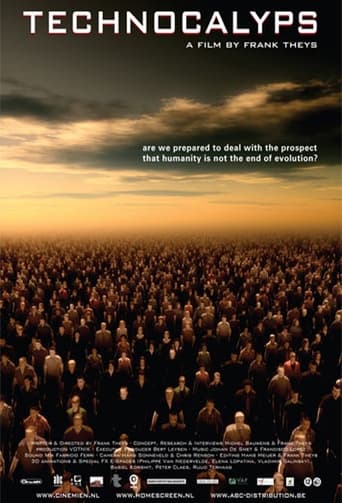
Are we prepared for dealing with the prospect that humanity is not the end of evolution? Technocalyps is an intriguing three-part documentary on the notion of transhumanism by Belgian visual artist and filmmaker Frank Theys. The latest findings in genetics, robotics, artificial intelligence, bionics and nanotechnology appear in the media every day, but with no analysis of their common aim: that of exceeding human limitations. The director conducts his enquiry into the scientific, ethical and metaphysical dimensions of technological development.
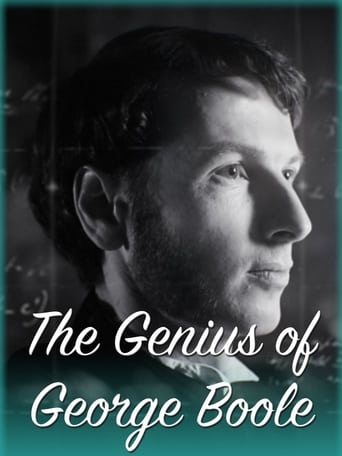
Narrated by Oscar-winning actor Jeremy Irons, The Genius of George Boole assembles academics and industry leaders from across the globe to explore the life and importance of one of the world’s greatest unsung heroes.
Chronicles the extraordinary life of visionary scientist Demis Hassabis and his relentless quest to solve the enigma of artificial general intelligence.
Werner Herzog's exploration of the Internet and the connected world.
Exploring provocative viewpoints from engineers, factory workers, journalists, philosophers and Asimov himself, The Truth About Killer Robots is a cautionary tale about a world automating beyond control.
This Is A.I. follows the history, development and future of artificial intelligence in different aspects of our lives. Interviewed experts give their opinion on the various ways this 'smarter' future is going to impact us.
Garry Kasparov is possibly the greatest chess player who has ever lived. In 1997, he played a match against the greatest chess computer: IBM's Deep Blue. He lost. This film depicts the drama that happened away from the chess board from Kasparov's perspective. It explores the psychological aspects of the game and the paranoia surrounding IBM's ultimate chess machine.