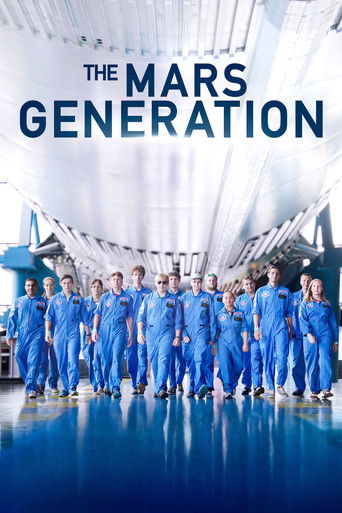
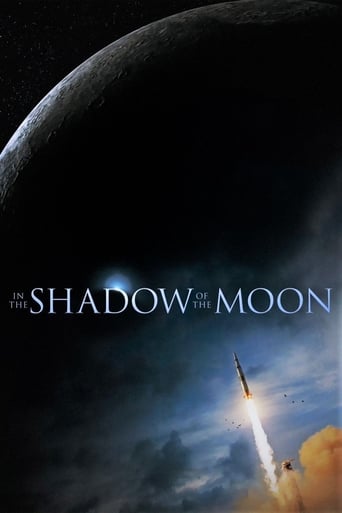
Documentary about humankind’s first walk on the moon with Apollo 11, NASA’s first test mission of Orion for beyond low-space orbit, and Mars 1, the upcoming first manned mission to the red planet.
Social & External
CERN and the University of California-Santa Barbara are collaborating in the search for the elusive substance that physicists and astronomers believe holds the universe together -- dark matter. Where is this search now in the realm of particle physics and what comes next?
A large iron meteorite is found by two enthusiasts. But who owns it? A subtle film about property rights that develops into a philosophical and slightly absurd story.
The 1960s was an extraordinary time for the United States. Unburdened by post-war reparations, Americans were preoccupied with other developments like NASA, the game-changing space programme that put Neil Armstrong on the moon. Yet it was astronauts like Eugene Cernan who paved the uneven, perilous path to lunar exploration. A test pilot who lived to court danger, he was recruited along with 14 other men in a secretive process that saw them become the closest of friends and adversaries. In this intensely competitive environment, Cernan was one of only three men who was sent twice to the moon, with his second trip also being NASA’s final lunar mission. As he looks back at what he loved and lost during the eight years in Houston, an incomparably eventful life emerges into view. Director Mark Craig crafts a quietly epic biography that combines the rare insight of the surviving former astronauts with archival footage and otherworldly moonscapes.
The film features amazing scenes of places never before seen gathered by key space missions that culminated with groundbreaking discoveries in 2015. It features a spectacular flight though the great cliffs on comet 67P, a close look at the fascinating bright "lights" on Ceres, and the first ever close ups of dwarf binary planet Pluto/Charon and its moons.
A documentary of insect life in meadows and ponds, using incredible close-ups, slow motion, and time-lapse photography. It includes bees collecting nectar, ladybugs eating mites, snails mating, spiders wrapping their catch, a scarab beetle relentlessly pushing its ball of dung uphill, endless lines of caterpillars, an underwater spider creating an air bubble to live in, and a mosquito hatching.
European Space Agency astronaut Alexander Gerst and his NASA colleague Reid Wiseman are launched into space from the Baikonur Cosmodrome in Kazakhstan. Gerst and Wiseman spend six months in humanity's outpost in space and film many of their activities.
With rising sea levels, land reclamation runs rampant in Singapore. Labrador Park is one such waterfront facing this change, and both the ecosystem and frequent fishermen have often been overlooked. This documentary seeks to explore the park's development from a scientific, economic and sociological perspective, produced in collaboration with SOTA and NUS.
Documentary about space colonization: a voyage across our planet, into the stars and beyond.
It was November 12, 2014, at 5:03pm. Humanity had just accomplished a feat that will forever mark its history. Philae, the miniature laboratory integrated into the Rosetta probe, landed softly on comet 67P Chourioumov-Guérassimenko, better known as Tchouri. The culmination of a project decided twenty-one years earlier, in 1993, by the European Space Agency - the first to display the immense ambition of landing on one of these bodies made of ice and dust, archives of the solar system's infancy. To achieve this, it took years of preparation, a decade-long flight, six billion kilometers flown, thousands of scientists and engineers involved... Astrophysicist Anny-Chantal Levasseur-Regourd sums it all up: "From this mission, we hope - and can reasonably expect - to understand the origin of the solar system and how life appeared on Earth.
A short documentary about Fritz Lang's film 'Frau im Mond', and its relation to the science and history of real space travel.
In one single, epic camera move we journey from Earth's surface to the outermost reaches of the universe on a grand tour of the cosmos, to explore newborn stars, distant planets, black holes and beyond.
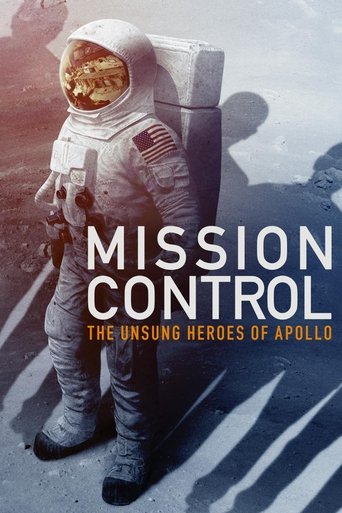
Archival material from the original NASA film footage – much of it seen for the first time – plus interviews with the surviving astronauts, including Jim Lovell, Dave Scott, John Young, Gene Cernan, Mike Collins, Buzz Aldrin, Alan Bean, Edgar Mitchell, Charlie Duke and Harrison Schmitt.
In this two-part Channel 4 series, Professor Richard Dawkins challenges what he describes as 'a process of non-thinking called faith'. He describes his astonishment that, at the start of the 21st century, religious faith is gaining ground in the face of rational, scientific truth. Science, based on scepticism, investigation and evidence, must continuously test its own concepts and claims. Faith, by definition, defies evidence: it is untested and unshakeable, and is therefore in direct contradiction with science. In addition, though religions preach morality, peace and hope, in fact, says Dawkins, they bring intolerance, violence and destruction. The growth of extreme fundamentalism in so many religions across the world not only endangers humanity but, he argues, is in conflict with the trend over thousands of years of history for humanity to progress to become more enlightened and more tolerant.
National Geographic and NASA are sending you into space - live! For the first time ever, board the International Space Station and take a complete orbit of Earth in real time.
The New Horizons team examines the latest findings and imagery from Pluto and the fringes of our solar system revealing a world unlike any other we've seen before.
Some 220 miles above Earth lies the International Space Station, a one-of-a-kind outer space laboratory that 16 nations came together to build. Get a behind-the-scenes look at the making of this extraordinary structure in this spectacular IMAX film. Viewers will blast off from Florida's Kennedy Space Center and the Baikonur Cosmodrome in Russia for this incredible journey -- IMAX's first-ever space film. Tom Cruise narrates.
An epic journey around Mars — built from real satellite and rover data — revealing the red planet as you’ve never seen it before.
Did Mars ever have life on it? To answer this question, Europe and Russia have launched a unique and ambitious 2-stage project: ExoMars 2016-2018. This documentary is a thrilling look behind the scenes of a magnificent human and scientific adventure. We will uncover the most fascinating aspects of this mission and the search for signs of life on Mars.
Comets pose one of the greatest threats to life on Earth - a threat that can only be countered if we find out more about them. In 2005, in an audacious bid to do just that, NASA scientists launched a space probe to collide with a comet in the emptiness of deep space. This film follows the amazing story of mission Deep Impact, from its inception through to the final nail-biting moments when the probe and comet Tempel 1 met head-on.
For over three decades, NASA and an international team of scientists and engineers pushed the limits of technology, innovation, and perseverance to build and launch the James Webb Space Telescope, the most powerful space observatory ever created. Cosmic Dawn brings audiences behind the scenes with the Webb film crew, and never-before-heard testimonies revealing the real story of how this telescope overcame all odds.