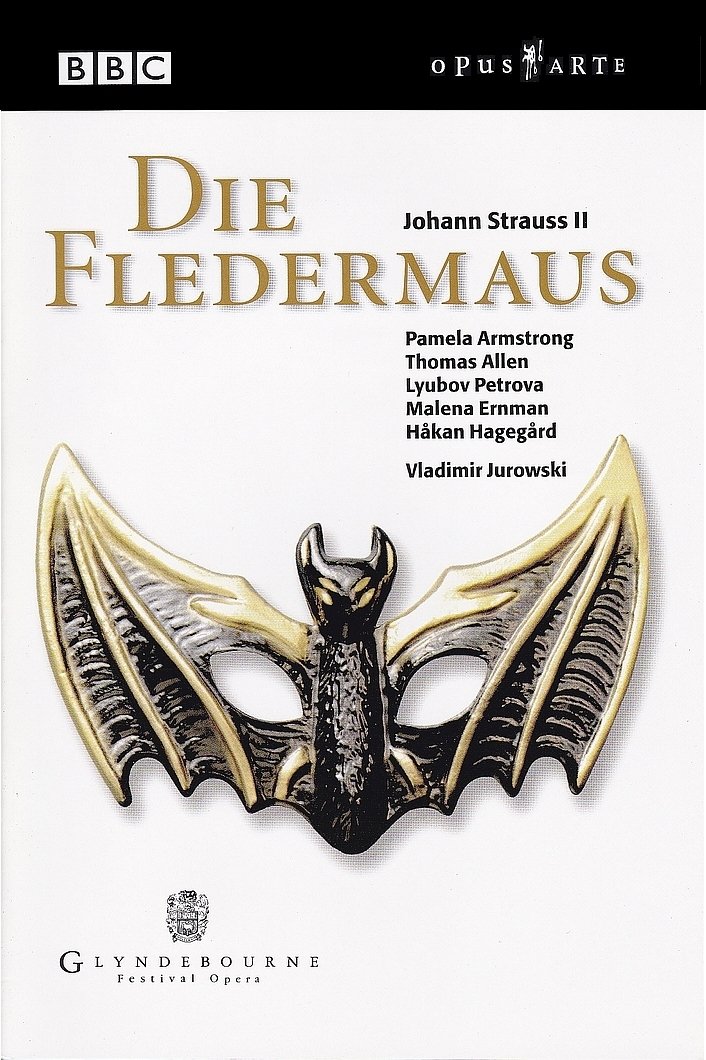
As revenge for being humiliated at a masquerade ball Dr. Falke plays a trick on Gabriel von Eisenstein.
Social & External
Rosalinda
Eisenstein
Alfred
Adéle
Ida
Blind
Dr Falke
Frank
Frosch
Prins Orlofsky
Ivan
Engelsk lord
Toreador
Officers Ferrando and Guglielmo are certain that their lovers Dorabella and Fiordiligi are faithful to them, but the cynical Don Alfonso challenges them to a bet that the women will be unfaithful given the chance. The officers thus pretend to go off to war, and return in disguise as Albanian strangers, to woo Dorabella and Fiordiligi incognito. The ladies are initially frosty, but soon warm to their new suitors, spurred on by their maid Despina. Performed at the La Scala Theatre in Milan.
The painter Lili Elbe was the first person to have gender confirmation surgery in the 1930s. The homonymous opera is a glimpse into the life of Lili Elbe and her wife Gerda Wegener (also a famous painter) through Lili's transition at a time when such surgery was still completely uncharted territory.
Kent Nagano superbly masters the challenges presented by this score, shapes the dynamics with subtle intensity, and casts the score in a mellow glow. As Marfa, the spurned lover of Ivan Khovansky‘s son Andrei, Doris Soffel unfolds such a rich palette of sonorities, from the pathos of the lower ranges to shaded discant heights, that “one is tempted to speak of a Russian mezzo”. The final chorus, which Mussorgsky did not compose, is played in the orchestrally transparent version of Igor Stravinsky – the third great Russian composer who contributed to making “Khovanshchina“ a timeless, gripping stage work. With his stripped-down sets and historicising costumes, director Dmitri Tcherniakov, one of the new voices of contemporary Russian theatre, builds a bridge to the political present. A lesson in history and music!
At first glance, the title of Shostakovich’s opera seems to speak for itself: Katherina, neglected and unhappy in her marriage, commits the most heinous crime just like the Shakespearian Lady Macbeth. But Nikolai Leskov’s short novel, which portrays Katherina as a monster, was only the starting point for Shostakovich to elicit understanding for an oppressed woman whose pursuit for self-determination is suppressed by society. Through combining satiric, grotesque and tragic elements in his music, Shostakovich succeeds in striking the balance between repulsion at Katherina’s immoral acts and sympathy for her. Violence, eroticism and the paralysing boredom of Russian society in the 19th century are the founding elements of this composition. The choir and orchestra of the Maggio Musicale Fiorentino conducted by James Conlon accompany tremendous soloists such as Jeanne-Michèle Charbonnet, Vladimir Vaneev and Vsevolod Grivnov in the original language in this live recording.
A tribute to marriage coming from a bachelor is a tad suspicious. But for Beethoven the idealization of the woman-bride was heartfelt and sincere. It has always been a unique opera starring a courageous wife who wows audiences. Fidelio is a moral title, associated with the ideals of liberty of the French Enlightenment. Nobility and commoners are united in their thirst for justice against the oppression of power. For once the faithful consort of a desaparecido wins her battle against a treacherous tyrant, and the collective joy truly is “nameless”, as is sung on the stage. Especially because the “our heroes to the rescue” finale is recounted by the triumphant symphonic flair of the quintessential musician. Beethoven really does bring the world to collapse at the conclusion of this opera, which begins like a delightful little comedy, but which scales and transcends all the summits of the dramatic-musical art.
A 1985 performance of Luchino Visconti's 1958 staging for the Royal Opera House, Covent Garden. Bernard Haitink memorably directs a superb cast that includes Ileana Cotrubas at the height of her powers and Luis Lima, unequalled in his tortured introspection, in the title role. (5-act version, sung in Italian)
Götterdämmerung, the final instalment of Wagner’s Ring of the Nibelung, is a story of human passions. Two essentially benevolent creatures, involved with and possibly doomed by their traffic with the gods, find treachery and evil in the world of the humans, and are ruined by the dark side of humanity. Iréne Theorin, acclaimed worldwide for her portrayal of Wagner’s heroines, stars as Brünnhilde opposite Lance Ryan, who continues his radiant portrayal of the tragic hero Siegfried. The strong cast also includes Mikhail Petrenko as the dark antagonist Hagen and Johannes Martin Kränzle, who once again shines as his father Alberich. Waltraud Meier has a memorable appearance as Brünnhilde’s sister Waltraute. With this 2013 recording of Götterdämmerung, the musically and visually compelling Scala Ring Cycle by Daniel Barenboim and Guy Cassiers was completed and proved to be one of the highlights of the Richard Wagner bicentenary.
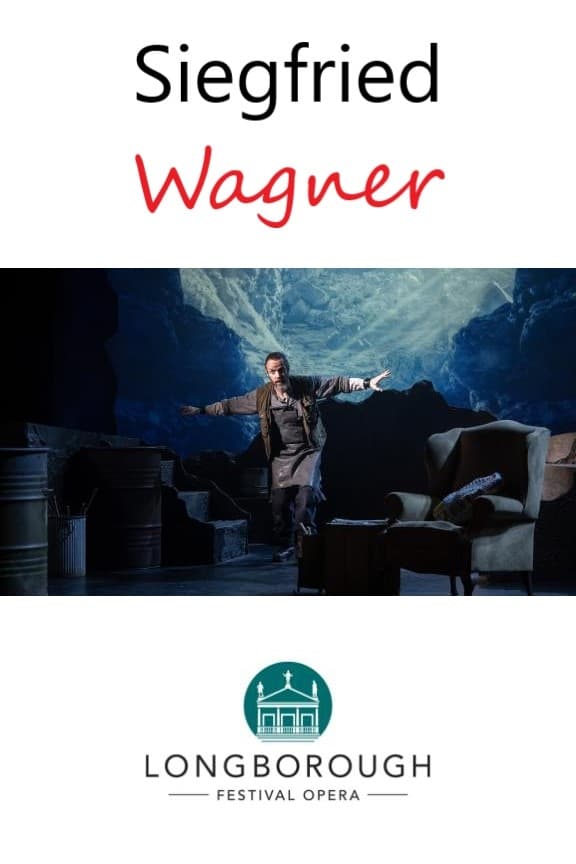
In Siegfried, the “Second Day” or third evening of the Ring Cycle, we meet the pivotal hero of the epic tale. The energetic drive from Die Walküre is pursued here while Siegfried finally recaptures the mighty ring from Fafner the Dragon and awakens Brünnhilde from her penal sleep on the great rock. Lance Ryan, having interpreted this role on the greatest stages of the world including the Bayreuth Festival, portrays the naïve hero. His antagonists are Peter Bronder, great and agile as Mime, Terje Stensvold, an experienced Wanderer and Johannes Martin Kränzle, who continues his mean and deceitful depiction of Alberich. The leading ladies are Nina Stemme, once again unrivalled as Brünnhilde and Anna Larsson, moving as the God-mother Erda.
Premiered in 1787, “Don Giovanni” exposes the timeless theme of a man hovering between vitality and destruction. Neither morality nor the law can stop this serial lover in his quest to conquer all women as he places his own pleasure above all other principles. Today, the rich depth of Mozart’s masterpiece still astonishes audiences with its mix of comedy and seriousness, pleasure and love, entertainment and murder. At the helm of this new Salzburg Festival production, in a near-live broadcast from the Great Festival Hall, director Romeo Castellucci promises to focus on the ambiguity and inner turmoil of this serial lover whose immoral behaviour condemns him to a deadly solitude. The exceptional cast – featuring Italian baritone Davide Luciano (Don Giovanni), Russian soprano Nadezhda Pavlova (Donna Anna) and Finnish bass Mika Kares (the Commendatore) – is accompanied by the chorus and musicians of the musicAeterna ensemble, conducted by Vitaly Polonsky and Teodor Currentzis.
Simon Rattle conducts the Berliner Philharmoniker in Stepháne Braunschweig's production of Richard Wagner's Die Walküre. A Festival d'Aix-en-Provence 2007 production, in coproduction with Osterfestspiele Salzburg. Directed for HDTV and video by Don Kent.
37-year-old Italian-American widow Loretta Castorini believes she is unlucky in love, and so accepts a marriage proposal from her boyfriend Johnny, even though she doesn't love him. When she meets his estranged younger brother Ronny, an emotional and passionate man, she finds herself drawn to him. She tries to resist, but Ronny, who blames his brother for the loss of his hand, has no scruples about aggressively pursuing her while Johnny is out of the country. As Loretta falls for Ronny, she learns that she's not the only one in her family with a secret romance.
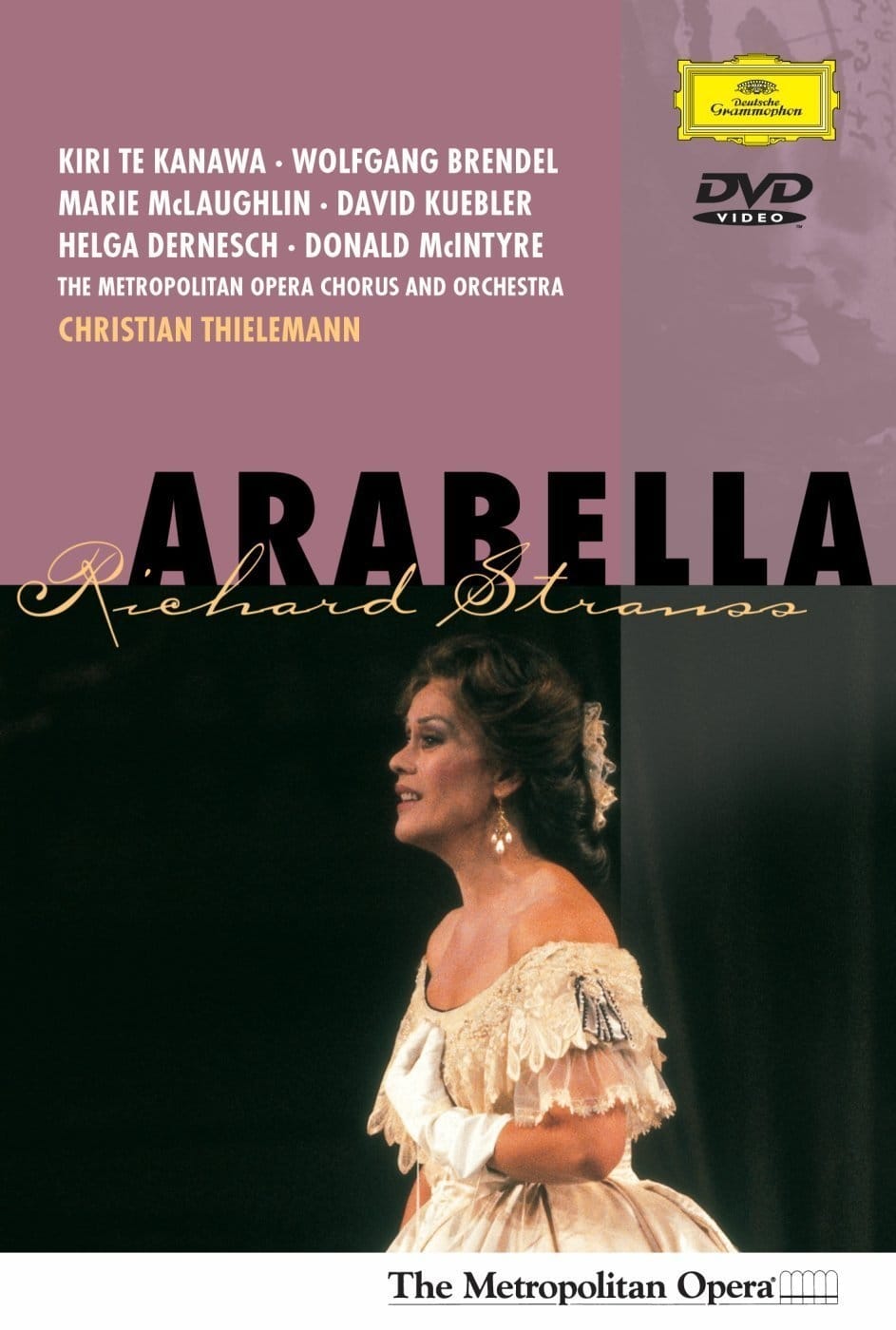
2014 marks a year of celebration recognizing the 150th birthday year of the German late-Romantic orchestral, operatic and lied master composer, Richard Strauss (1864-1949). Arabella (premiered 1933, Dresden) was the last of the half dozen Strauss works to feature a libretto by the great Austrian writer Hugo von Hofmannsthal. This production, from the most recent Salzburg Easter Festival is, after Capriccio, the second of three Richard Strauss operas C Major is releasing in honor of the composers birth, life and work. The star-laden cast includes soprano Renèe Fleming, baritone Thomas Hampson, Albert Dohmen (Covent Garden, Wiener Staatsoper, MET) and Gabriela Beaková (Wiener Staatsoper, Covent Garden). With Christian Thielemann and the Staatskapelle Dresden, the music of Richard Strauss is in the best of hands. (ORF) Thielemann gets the best out of the cast...especially Renée Fleming with her luxurious soprano FAZ
Rarely has a production of Verdi’s Otello been staged in such a prestigious location: the courtyard of the Palazzo Ducale in Venice! This special outdoor “event production” of the Teatro La Fenice takes place amidst genuine late-Gothic and Renaissance architecture highlighted by spectacular projections: “A set of singular fascination” (Il Corriere Musicale). Critics were full of praise for the musical performance, designating conductor Myung-Whun Chung as the “absolutely dominating force” of the performance (GB Opera). The lead role is sung by Gregory Kunde, who successfully interpreted both Verdi’s and Rossini’s Otello in one year, perhaps the first tenor ever to do so. He “reproduces every accent, every colour demanded by Verdi with sensibility and intelligence” (OperaClick).
The deformed Phantom who haunts the Paris Opera House causes murder and mayhem in an attempt to make the woman he loves a star.
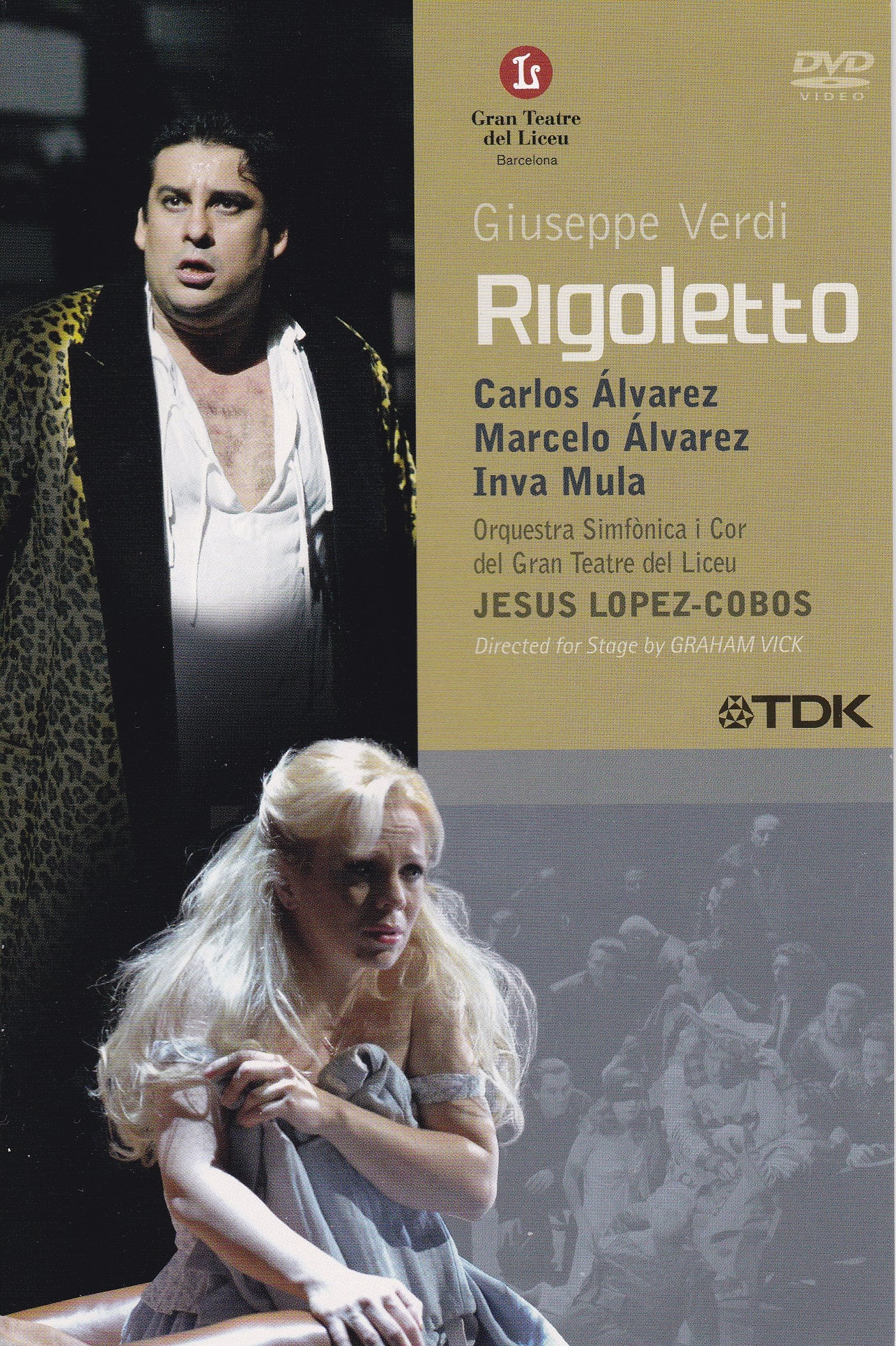
A musical drama based on Giuseppe Verdi's opera Rigoletto.
Besides the landing on the moon by the Apollo 11 mission in 1969, Richard Nixon’s meeting with China’s leader Mao Zedong in February 1972 then represented one of the biggest media spectacles in history. Nixon himself established the reference between the two events: “We came in peace for all mankind” not only marked the lunar module Eagle’s landing spot – Nixon also spoke of it into the microphones just before his departure to China. It was not John Adam’s aim to create a superficial or even a caricaturing representation of Nixon’s visit when composing his opera. He attempted to create a “heroic opera” about the construction of modern myths by using archetypical characters and situations. Director Marco Štorman stages Adams’ minimal music opera as a deconstruction review about the power of images, the politics of staging and the staging of politics.
Erich Wolfgang Korngold's "Die tote Stadt" in a Bayerische Staatsoper production from 2019, directed by Simon Stone. Kirill Petrenko is conducting Jonas Kaufmann and Marlis Petersen.
"Die tote Stadt" is a psychologically layered drama with Hitchcock-like features, about Paul who, after the loss of his beloved Marie, slowly but surely becomes entangled in a dream world of obsessions and delusions. This impressive opera is a passionate as well as a surrealistic plea for mourning. "He who cannot live with death has no life."
"La Bohème" is one of Giacomo Puccini's most popular and timeless works and the second-most performed opera at New York's Metropolitan Opera. This production, directed by the legendary Franco Zeffirelli, features José Carreras, Teresa Stratas, Renata Scotto and Richard Stilwell. The opera is replete with extraordinary visual beauty as it presents the tragic story of young bohemians struggling to make it in the world.