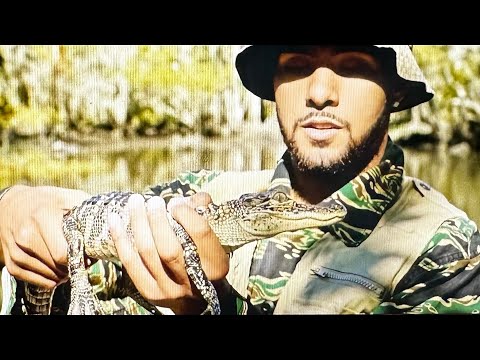
Follow Kelvin Peña across America as he explores the country's natural wonders, meeting interesting individuals and various wildlife along the way.
Social & External
Self
Near the cold Pyrenees of Iberia, surrounded by ancient and dark green forests, lies a strange land where the rain is scarce and the wind is always blowing. The soil is poor, there are no trees and the landscape resembles the moon. Is this what the future of desertification will look like? Incredible creatures with surprising behavior live in this strange landscape. The documentary explores a place with very dry skin but a wet hidden heart where even waterfowl or amphibians can live. Living in such conditions is not easy and only the toughest animals will survive.
In GHOSTS OF THE FOREST daredevil bird and wildlife cinematographer, John Young is embarking on a journey into the rainforest of the tropical north to find those creatures often heard but rarely, if ever, seen.
One of only two living mammals to lay eggs, the platypus has baffled and inspired the scientific community for hundreds of years. Three years in the making, this stunning natural history film takes us down the East Coast of Australia to the many serenely beautiful habitats of the platypus. Technology specially created for this film captures images from inside the nesting chamber of a wild platypus, and records the extraordinary sounds of the mother suckling her offspring. We watch as they grow from newborns to adulthood. Join renowned documentary makers David Parer and Elizabeth Parer-Cook (Dragons of Galapagos, Wolves of the Sea) on this fascinating journey from the rainforests of Queensland to the frozen mountains of Tasmania, as they reveal new insights into this mysterious creature.
The American Southwest is a feature length blue chip natural history film narrated by indigenous environmentalist Quannah Chasinghorse. The movie journeys down the mighty Colorado River, examining the astonishing beauty and biodiversity of the region, while confronting the environmental destruction from dams and the perilous fate of the river. The story is told through never-before-seen wildlife sequences such as beavers building wetlands, condors recovering from the brink, and the potential return of Jaguars to American soil. The film beautifully advocates for better management of the river and increased wildlife conservation efforts in the iconic landscapes of The American Southwest.
Little Monsters presents some of the animal kingdom’s strangest survival strategies: poison dart frogs, chameleons, praying mantises and scorpions, to name but a few. Thanks to 3D visualization, large audiences can experience a chameleon thrusting out its tongue at close range, rattlesnakes striking at their targets to within fractions of an inch, praying mantises hunting and hummingbirds feeding, filmed from inside the flower! And with its ingenious combination of slow-motion 3D and timelapse 3D, “Little Monsters” even improves upon state of the art 3D for greater impact, yielding unbelievable scenes the world has never seen and “felt” before.
Notorious killer whale Tilikum is responsible for the deaths of three individuals, including a top killer whale trainer. Blackfish shows the sometimes devastating consequences of keeping such intelligent and sentient creatures in captivity.
Tracing the Future follows In the Wake exhibition artist Naoya Hatakeyama as he photographs the devastated landscape of his hometown of Rikuzentakada after 3/11. Hatakeyama, who represented Japan in the 2001 Venice Biennale and is renowned for meticulous photographs that explore the relationship between humankind and nature, suffered enormous losses on 3/11: his family home was washed away in the tsunami and his mother lost her life. Tracing the Future delves into the artist’s deeply personal response to the disaster and explores his four-year-long mission of documenting the place of his upbringing.
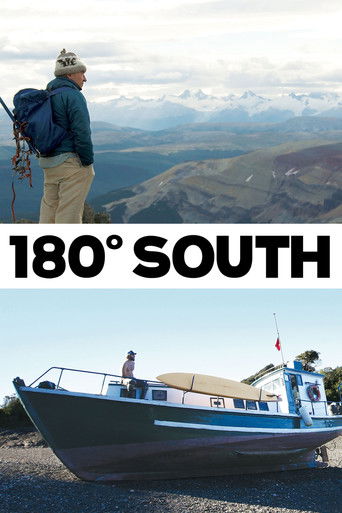
In the Aysén region dwell a population of 90000 isolated souls sharing the harsh landscapes of an area about the size of England. Here where beauty seems to be on first-name terms with fear and danger,in a place where the immensity of nature can never be dominated, the setting hesitates, along the expanses, between sparkling colours and the black and white of the snow and the water. The day-to-day images intermingle with a story of mythological aspect; that of the timeless quest for the Lost City of the Caesars, a city of gold built 500 years ago by the conquerors.
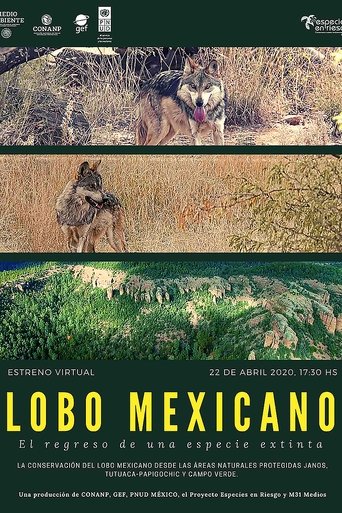
Secret territories still exist in France today. This film is a personal quest, the story of a crazy gamble taken by a passionate dreamer, an anti-hero capable of breaking all barriers to achieve his goal: to meet wild wolves in their natural habitat. After three years in the field, bivouacking in the wilderness in all weathers, the director managed to track down the wolves. Little by little, he observes, gets closer and ends up being accepted by the pack. Against all odds, the magnificent predators offer a little of their intimacy to this strange character. But the film also raises the question of the limits of this intimacy.
"Percy Smith (1880-1944) was world famous as a photographer of plant life. Probably the first British example of time-lapse photography as applied to the growth of plants." Monthly Film Bulletin, November 1955.
Charming animated illustration of one of nature's wonders from Britain's most inventive pioneer of wildlife filmmaking.
An aerial celebration of mountains, rivers, deserts and lakes. One could spend a lifetime searching for a single image that is Idaho, only to realize that the allure of this place lies precisely in its dazzling diversity of altitudes and attitudes. Soar above our state with this spectacular tour of Idaho. Original music by Idahoans.
'The Great Sperm Race' tells the story of human conception as it's never been told before. With 250 million competitors, it is the most extreme race on earth and there can only be one winner.
Documentary following the struggles of five housemates during a pandemic and their communication with the outside world.
A team of international skiers embark on a two-week glacier traverse connecting two remote research stations in Kazakhstan. The Tien Shan's 4000+ meter peaks host an active scientific community, leveraging the rare environmental conditions for groundbreaking research. Established during the Soviet Union's occupation, the high-altitude research stations here are home to some of the longest-standing glacier and cosmic radiation experiments in the world - and are surrounded by deadly alpine terrain.
Sylvie Vartan has had an extraordinary life: a Bulgarian child forced into exile, who became the icon of a youth in the midst of revolution in France. After a career spanning 64 years, with nearly 50 albums recorded and 40 million records sold, she has decided to bow out. During her farewell tour, the singer chose to open up to Augustin Trapenard.
Chris Packham presents, mentioning others that didn't quite make the list, his favorite top ten animal - and plant species from the half million discovered in the first decade of the 21st century. The animals include the most endangered African monkey, a lemur (Madagascar simian), a mouse-size and -resembling relative of the elephant, a Caribean island-adapted sloth, a shark which 'walks coral reefs on an arm', the largest mega-stick, a deep sea jellyfish without tentacles and a jungle gecko mutation happening in Malaysian state Perlis in order to flee serpent predation into caves. Plant species include a giant Venus-flytrap on Palawan (Philipines) and the largest ever orchid from Peru.