Social & External
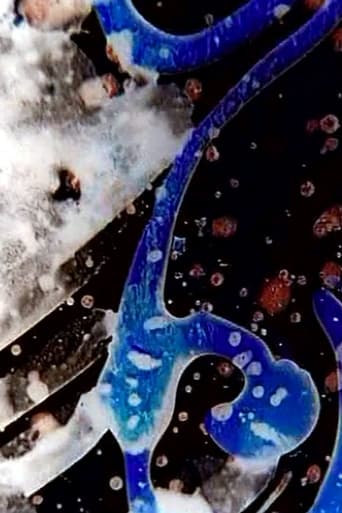
Dilution is an experimental short film that explores the transit between resistance and (di)ssolution, between holding and releasing and a path towards obsessive repetition. They are layers, exposed pores, matter that oscillates between remaining or disappearing. The sound is not a background, but a puncture: friction, tearing, water that drags what still persists. A sensorial testimony of what refuses to vanish completely.
A film about haircuts, clothes and image/sound relationships. - J.S.
Political engagement spawned the wildest of wonderlands for Hong Kong’s creativity – but as a new law annihilates freedom of expression overnight, underground artists and creatives find themselves targets, and their works disappeared. Together we race to preserve the creative uprising amid China’s crackdown.
A film by Paul Clipson.
A musical fantasia on religion and the nature of exploitation.
In the midst of a prayer, a young woman struggles to keep her faith.
A girl approaches a divine entity that comes to the world in the form of a yellow umbrella, and ends up discovering her true self.
On a country road, a couple gone for a ride on a scooter find themselves immobilized after running out of gas. While waiting for their friend Lolo, a philosophical discussion ensues.
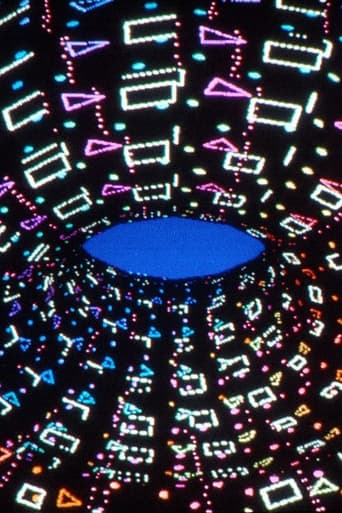
datamatics showed Ikeda at the height of his artistic powers, building on his own unmistakable artistic language. The Wire on Ryoji Ikeda, 2006 datamatics is the latest audiovisual concert in Ikedas datamatics series‚ an art project that explores the potential to perceive the invisible multisubstance of data that permeates our world. Using pure data as a source for sound and visuals, datamatics combines abstract and mimetic presentations of matter, time and space in a powerful and breathtakingly accomplished work. The technical dynamics of the piece, such as its extremely fast frame rates and variable bit depths, continue to challenge and explore the thresholds of our perceptions.
the franklinia flower, now extinct in the wild, appears here as a printed image (a drawing from 1782) pinned against a kitchen wall. hand and figure move disjointedly. the light of day gives way to electricity, to darkness, and to morning. recorded on a video camera built in 2002: an obsolete image tracing some accidental gestures and capturing a form of life existent only in cultivation. some fragments of vermeer, general electric, and chiquita brands international.
This final digital version is based on the performance TABULA SMARAGDINA which I played together with the musician Thomas Köner between 1997 and 2004. For more information look at Performances. - In 2008 I started to digitize the 16 mm originals frame by frame in high definition just to reorganize the materials and give them after all a form for a linear progression. Contents are cristallized salts and dyes wich are changing rhythm and structure constantly between moving images. Inside the chemical elements of the film appears the bizarre richness of its materiality. (Jürgen Reble)
Some documentary material shot in the surroundings of Bonn is superimposed with found footage from Timbuktu. By chemical influences during the developing process the material gets an painterly quality evoking an atmosphere somewhere between dream and reality.
Arktis is a poetic approach to the bizarre landscape of ice, rock, and water; a journey to the arctic ocean and surroundings, with images and sounds. Seventy one-second scenes of the arctic serve as the original material, which is then transformed in its texture, time lapse, color and light qualities to create a material reminiscent of landscape painting. The sound collage uses fragments from sounds of nature and samples from a piece of music for violin and song, which are also transformed in a manner similar to that of the visual pictures. (Jürgen Reble)
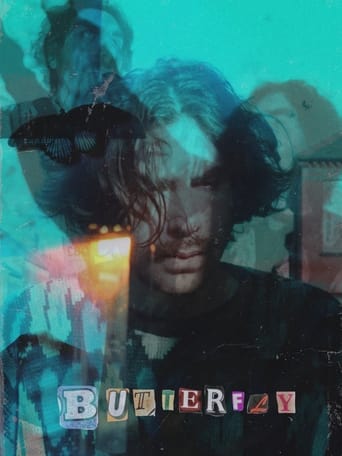
A teenager's obsession with recovering his stolen phone forces him to confront the ghosts of a recent toxic relationship.
A spate of robberies in Southern California schools had an oddly specific target: tubas. In this work of creative nonfiction, d/Deaf first-time feature director Alison O’Daniel presents the impact of these crimes from an unexpected angle. The film unfolds mimicking a game of telephone, where sound’s feeble transmissibility is proven as the story bends and weaves to human interpretation and miscommunication. The result is a stunning contribution to cinematic language. O’Daniel has developed a syntax of deafness that offers a complex, overlaid, surprising new texture, which offers a dimensional experience of deafness and reorients the audience auditorily in an unfamiliar and exhilarating way.
In the town of Xoco, the spirit of an old villager awakens in search of its lost home. Along its journey, the ghost discovers that the town still celebrates its most important festivities, but also learns that the construction of a new commercial complex called Mítikah will threaten the existence of both the traditions and the town itself.
A young woman is forced to look at herself through a camera.