Social & External
Unknown Role
In 2019, the leakage of messages exchanged by authorities in Brazil undermines the credibility of Operation Lava Jato. A group of journalists follows the unfolding of the case, in a sequence of crises that puts Brazilian democracy at risk.
Peter Rice...An Engineer imagines is a cinematic homage to the life and ideas of Peter Rice widely regarded as the most distinguished structural engineer of the late twentieth century. Without Rices’s innovations and collaborations with the leading architects of his time, some of the most recognizable buildings in the world would not have been possible. The film traces Rice’s extraordinary work, from his native Ireland through, London, Sydney and Paris, to his untimely and tragic death in 1992. Through a series of interviews with former colleagues, family and friends, interwoven with stunning time-lapse photography, we unfold the remarkable story of one of the great minds of the twentieth century; how man who pushed the boundaries of art and science to achieve the unimaginable. A genius who stood in the shadow of architectural icons. Until now.
The Ship that Changed the World is a historical drama about the birth of the world's first ocean-going diesel-powered ship Selandia. A groundbreaking invention that changed the world forever. The film shows Selandia and the creators receiving worldwide acclaim. But for two of them success was short-lived. They died under mysterious circumstances shortly after the maiden voyage of Selandia. On the brink of the World War, and with Germany and England showing great interest in this invention, is it too farfetched to believe that these deaths were more than coincidental. - Written by Michael Schmidt-Olsen
During World War II, many Japanese immigrants in Santos, Brazil, were forced to move to another place. Matsubayashi draws attention to the fact that 60% of the immigrants were from Okinawa. Based on testimonies from interviewees, this film reveals the hidden historical relationship between Okinawa and Brazil.
Architect, engineer, geometrician, cartographer, philosopher, futurist, inventor of the famous geodesic dome and one of the most brilliant thinkers of his time. Fuller was renowned for his comprehensive perspective on the world's problems. For more than five decades he developed pioneering solutions reflecting his commitment to the potential of innovative design to create technology that does "more with less" and thereby improve human lives. He spent much of his life traveling the world lecturing and discussing his ideas with thousands of audiences. Now more relevant than ever, this film captures Fuller's ideas and thinking told in his own words.
Built as a letter to JK in his centenary, the film shows what remained in the memory of Brazilians 26 years after his passing in a car accident in August 1976.
This documentary tells of the extraordinary rise of Jair Bolsonaro, from relative obscurity to the ultimate seat of South American power. Told through intimate interviews with some of those closest to him including his eldest son Flávio, former government ministers, as well as his opponents, explore Bolsonaro’s brilliant yet ruthless journey to the presidency, with high-stakes drama, guns and God.
Documentary about the dictatorship and the politician Bolsonaro.
Inbetween fiction and documentary, this film sails through the brasilian street resistance following the parlamentary coup of state.
Narrated by CBS Sports' Jim Nantz. The Seabees on Iwo Jima focuses on the United States Naval Construction Battalions in World War II, which built all the infrastructure for the Allies in Europe and the Pacific in WWII. The Seabees were construction workers by trade but had to fight at times. Their motto was "We Build, We Fight," and their biggest test came in the battle for Iwo Jima in 1945.
Filled with raunchy laughs, this documentary compiles outrageous scenes from sex-comedies that shaped Brazil's "pornochanchada" boom of the 1970s.
The 6 Guarani villages of Jaraguá, in São Paulo, fight for land rights, for human rights and for the preservation of nature. They suffer from the proximity to the city, which brings lack of resources, pollution of rivers and springs, racism, police violence, fires, lack of infrastructure and sanitation, among others. Unable to live like their ancestors, their millenary culture is lost as it merges with the urban culture.
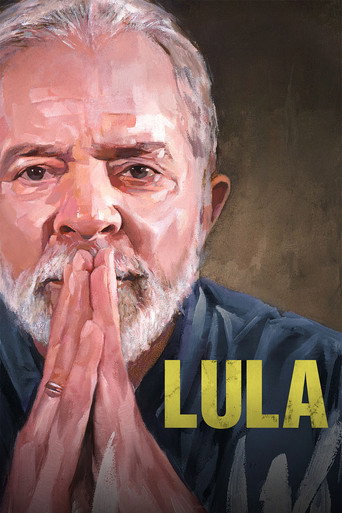
An intimate and revelatory portrait of one of the world’s most influential political figures, Lula explores the rise, fall and triumphant return of beloved Brazilian leader Luiz Inácio “Lula” da Silva, chronicling his extraordinary journey in 2022 to regain the Brazilian presidency after spending nineteen months in prison.
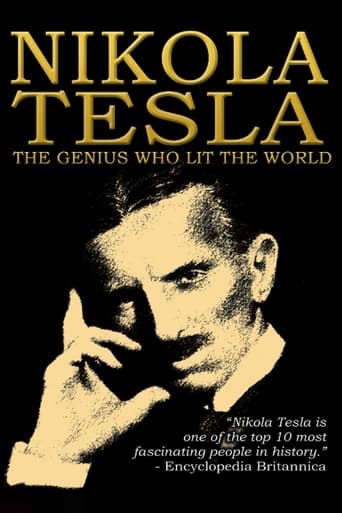
Nikola Tesla is considered the father of our modern technological age and one of the most mysterious and controversial scientists in history.
At a time when the far right is ascending to power around the world, the 2020 Brazilian municipal elections saw a surprising and unprecedented record of LGBT candidates. This film follows four young queer politicians during their electoral campaigns and reveals their struggle to affirm their rights to exist and be heard.
In the 60s, Vadim, a Soviet engineer, is in love with Vera, a researcher in biology. But their romance is suddenly disrupted by a mission entrusted to Vadim: sent to Egypt, he must participate in one of the great utopian ventures initiated by the USSR. Based on unpublished archives, this film is inspired by a true story.
The film begins with the implementation of the Paulo Gustavo Law in São Manuel, a town of 40,000 residents in the countryside of São Paulo, to open a broader conversation: what happens when public funding reaches the cultural sector? And why is there still so much resistance to that? Through interviews with funded artists, cultural managers, policymakers, and spontaneous conversations with local residents, the film reveals a reality that goes beyond the borders of a single town, drawing a wider picture of the relationship between art, public policy, and everyday life. The documentary features historian Célio Turino, creator of the Pontos de Cultura program, and congresswoman Jandira Feghali, rapporteur of the Aldir Blanc Law. The screenplay is co-written by Turino and director bagadefente.