Social & External
Winner of the DOC NYC Audience Award, Director Nick Canfield’s first film follows gospel-rock icon and activist Reverend Vince Anderson. After entering seminary, Vince dropped out to follow his second calling - music. With his band The Love Choir, he has played a now-legendary weekly show for over twenty years. Reconnecting with his faith and using his intense soulful music, he began to preach a type of spirituality that is open to all, meets people where they are, and moves everyone that sees him play. Reverend Vince is also deeply involved in social justice, working with other faith leaders around the country to build inclusive communities. Featuring Questlove and an ensemble of eccentric musicians, The Reverend is a rocking concert film as well as an intimate portrait of Reverend Vince’s inspiring personal and spiritual life.
Seven Asian-Americans discuss their experiences with racism and the spike in Asian-directed hate crimes as a result of COVID-19.
"Jeunesse Rouge" is a documentary exploring young French Communist revolutionaries fighting for a just and equal society. The film follows their organizing and mobilizing, while delving into the history of the Communist movement in France. Archival footage and interviews with activists show their passionate commitment, from protests and strikes to political education. It highlights the power of youth activism and their potential to bring about change in the face of systemic inequality.
Successfully completed your studies - now what? Raffly already has a lucrative job offer from a large German company, but neither an apartment nor a work permit.
In a rapidly changing America where mass inequality and dwindling opportunity have devastated the black working class, three Detroit men must fight to build something lasting for themselves and future generations.
On June 14, 2001, during the ongoing EU summit, the police surrounds Gothenburg political center. This is the prelude to the most violent confrontations between police and protesters in Sweden for decades. The threat to democracy is a film about the events that preceded what is increasingly starting to resemble a major assault on democracy. The film follows the preparation of the extra-parliamentary left for the protests against the summit and reflects thoughts and ideas on how, as an individual and a collective, one can make his voice heard in today's society.
Following fateful scientific reports, protestors pose the argument for a better future against the vested interest of industry. Small to large, individual to collective, where do I fit into this?
Three Croatian activists struggle to change the world. As children, they lived through the violent collapse of Yugoslavia. But now, amid the aftershocks of socialism's failure, they fight in their own way for a new leftism. In the middle of the struggle, a skeptical American is won over by their cause and even goes to jail with them. The activists, whether clashing with police or squatting in an old factory, risk everything to live their politics. But as the setbacks mount, will they give up the fight? The film, shot during years of fieldwork with a Croatian anarchist collective, applies EnMasseFilm's unique blend of observation, direct participation and critical reflection to this misunderstood political movement. Its portrayal of activism is both empathetic and unflinching -- an engaged, elegant meditation on the struggle to re-imagine leftist politics and the power of a country's youth.
Damascus, Oregon, United States. Julie Keith finds a baffling message hidden in a pack of decorative items, a desperate plea for help, written by someone imprisoned in a Chinese labor camp called Masanjia…
Michel Recanati was a militant leader in the May, 1968 riots in Paris, organizing many groups to meet, discuss, and act on leftist principles both before and after the disturbances. He was imprisoned for a short while in 1973. Disillusioned after the failure of the demonstrations and the death of the only woman he had loved, his life seems to have changed from a period of hope and activism to one of bottomless despair. His friend, Romain Goupil wrote and directed this biographical documentary. Death at 30 received the 1982 Cannes Film Festival's Golden Camera Award for "Best First Feature-Length Film."
Travel across four continents, through 19 countries, and into dingy Cambodian karaoke bars, Amsterdam’s infamous red-light district, Moldovan orphanages, legal Nevada brothels, and the street corners and alleyways of metropolises worldwide for more than a glance at the fastest-growing organized crime industry in the world with the groundbreaking, tell-all Nefarious: Merchant of Souls.
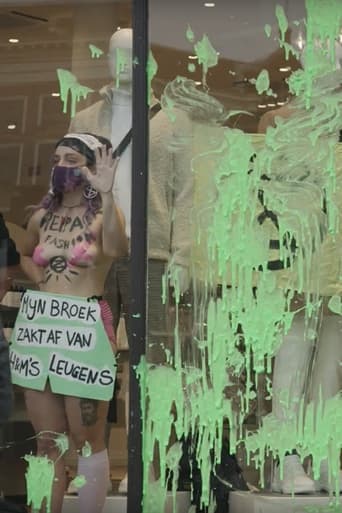
Artist Katinka Simonse, alias Tinkebell, is a controversial, very mediagenic phenomenon. In her universe there is no distinction between life, art and activism; Tinkebell is her own work of art. Everything she encounters on her life path can become part of her story. Filmmaker Judith de Leeuw was given access to all images about Tinkebell, including her entire private archive. She thus constructed an archive film about how as a human being, living on the ruins of the past, you can be a character in your own story. What is the price you can afford if you continue to believe at any cost?
This documentary addresses the legacy of the military dictatorship in Chile by sharing the story of young fighters killed by the Pinochet regime as a backdrop to the history of the military dictatorship and the ongoing social conflict in that area. The larger story unfolds in three shorter parts, which explore the student movement, the history of the towns that became centers of armed resistance against the dictatorship, and the indigenous Mapuche conflict.
Departing from peripheral details of some paintings of the Bilbao Fine Arts Museum, a female narrator unravels several stories related to the economic, social and psychological conditions of past and current artists.
Punk activist collective Positive Force emerged in 1985, rising from the ashes of Revolution Summer. This feature-length film by Robin Bell skillfully mixes rare archival footage (including electrifying live performances from Fugazi, Bikini Kill, Nation of Ulysses, Anti-Flag, and more) with new interviews with key PF activists like co-founder Mark Andersen and supporters such as Ian MacKaye, Ted Leo, and Riot Grrrl co-founder Allison Wolfe. Covering a span of 25 years, More Than A Witness documents PF's Reagan-era origins, the creation of its communal house, FBI harassment, and the rise of a vibrant underground that burst into the mainstream amidst controversy over both the means and the ends of the movement. In the best punk fashion, PF volunteers have applied creative DIY tactics and radical critiques to issues of homelessness, racism, corporate globalization, sexism, and war while struggling to constructively address conflicting dynamics and visions within the group itself.
Frantz Fanon alone embodies all the issues of French colonial history. Martinican resistance fighter, he enlisted, like millions of colonial soldiers, in the Free Army out of loyalty to France and the idea of freedom that it embodies for him. A writer, he participated in the bubbling life of Saint-Germain with Césaire, Senghor and Sartre, debating tirelessly on the destiny of colonized peoples. As a doctor, he revolutionized the practice of psychiatry, seeking in the relations of domination of colonial societies the foundations of the pathologies of his patients in Blida. Activist, he brings together through his action and his history of him, the anger of peoples crushed by centuries of colonial oppression. But beyond this exceptional journey which makes sensitive the permanence of French colonialism in the Lesser Antilles at the gates of the Algerian desert, he leaves an incomparable body of work which has made him today one of the most studied French authors across the Atlantic.
On June 21 2007, the Howard Federal Government launched an intervention into Aboriginal communities in the Northern Territory. It was one of the most dramatic policy shifts in the history of Aboriginal affairs. Relentless media attention focuses on ideological arguments for and against the Intervention, while the voices of those affected by the policy are rarely heard. For this film more than 40 Alice Springs town camp residents were interviewed in depth over the course of eight months to find out the answer to the question - is it working?
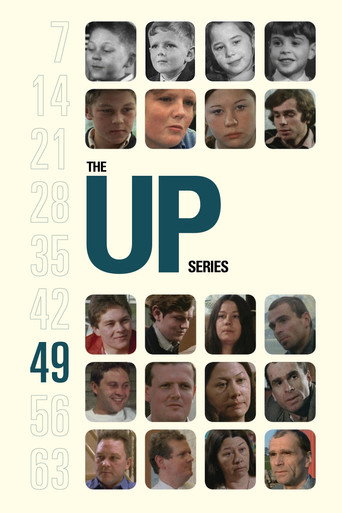
49 Up is the seventh film in a series of landmark documentaries that began 42 years ago when UK-based Granada's World in Action team, inspired by the Jesuit maxim "Give me the child until he is seven and I will give you the man," interviewed a diverse group of seven-year-old children from all over England, asking them about their lives and their dreams for the future. Michael Apted, a researcher for the original film, has returned to interview the "children" every seven years since, at ages 14, 21, 28, 35, 42 and now again at age 49.In this latest chapter, more life-changing decisions are revealed, more shocking announcements made and more of the original group take part than ever before, speaking out on a variety of subjects including love, marriage, career, class and prejudice.
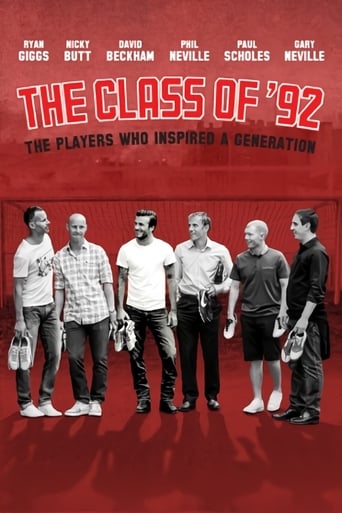
A detailing of the rise to prominence and global sporting superstardom of six supremely talented young Manchester United football players (David Beckham, Nicky Butt, Ryan Giggs, Paul Scholes, Phil and Gary Neville). The film covers the period 1992-1999, culminating in Manchester United's European Cup triumph.
Ross McElwee sets out to make a documentary about the lingering effects of General Sherman's march of destruction through the South during the Civil War, but is continually sidetracked by women who come and go in his life, his recurring dreams of nuclear holocaust, and Burt Reynolds.
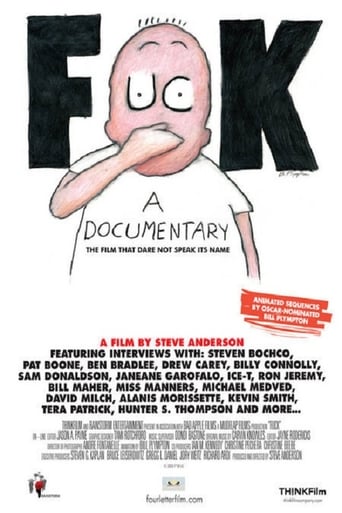
A documentary on the expletive's origin, why it offends some people so deeply, and what can be gained from its use.
An unprecedented and intimate look at the life, work and enduring legacy of British actress Audrey Hepburn (1929-1993).
A visual montage portrait of our contemporary world dominated by globalized technology and violence.
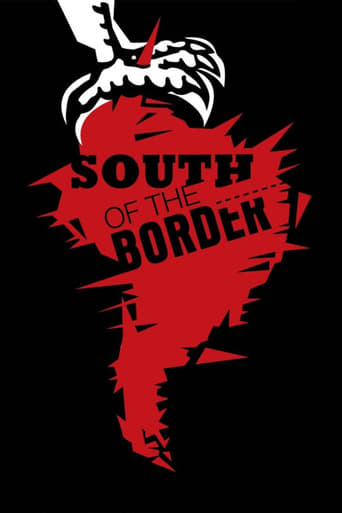
A road trip across five countries to explore the social and political movements as well as the mainstream media's misperception of South America while interviewing seven of its elected presidents.
Lyrical and powerfully personal essay film that reflects on the deaths of her husband Lou Reed, her mother, her beloved dog, and such diverse subjects as family memories, surveillance, and Buddhist teachings.
This documentary follows oceanographer Sylvia Earle's campaign to save the world's oceans from threats such as overfishing and toxic waste.
The film is based on interviews with 2,000 women from 50 countries, and covers the status of women all over the world. The topics covered include forced marriages, sexual assault, female genital mutilation, acid attacks, motherhood, sexuality, menstruation, education and the professional success of women.
A non-narrated documentary following the lovesome lives of four infants from birth to their first birthday. The babies featured are two from rural areas: Ponijao from Opuwo, Namibia, and Bayar from Bayanchandmani, Mongolia, as well as two from urban areas: Mari from Tokyo, Japan, and Hattie from San Francisco, USA.
In this documentary, recovering addict and amputee John Wood finds himself in a stranger-than-fiction battle to reclaim his mummified leg from Southern entrepreneur Shannon Whisnant, who found it in a grill he bought at an auction and believes it therefore to be his rightful property.
The film follows adventurer Jeff Johnson as he retraces the epic 1968 journey of his heroes Yvon Chouinard and Doug Tompkins to Patagonia.
In 1999, Internet entrepreneur Josh Harris recruits dozens of young men and women who agree to live in underground apartments for weeks at a time while their every movement is broadcast online. Soon, Harris and his girlfriend embark on their own subterranean adventure, with cameras streaming live footage of their meals, arguments, bedroom activities, and bathroom habits. This documentary explores the role of technology in our lives, as it charts the fragile nature of dot-com economy.
Wildlife activists and investigators put their lives on the line to battle the illegal African ivory trade, in this suspenseful on-the-ground documentary.
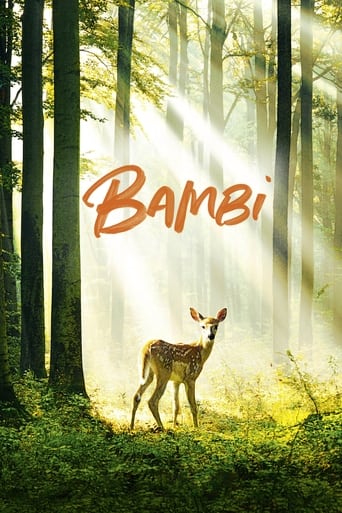
The life of Bambi, a male roe deer, from his birth through childhood, the loss of his mother, the finding of a mate, the lessons he learns from his father, and the experience he gains about the dangers posed by human hunters in the forest.
Martin Scorsese’s portrait of writer and social commentator Fran Lebowitz, celebrated for her sharp wit and observations on modern life. Filmed at New York’s Waverly Inn and intercut with archival footage and interviews, the documentary captures Lebowitz’s distinctive worldview through her spontaneous monologues and public appearances.
Through deeply personal interviews with her siblings and an examination of the photographs, letters, and belongings left behind, Mariska assembles a new portrait of her mother Jayne Mansfield, an extraordinary and complex woman.
Climate is changing. Instead of showing all the worst that can happen, this documentary focuses on the people suggesting solutions and their actions.
A documentary focused on plastic pollution in the world's oceans.