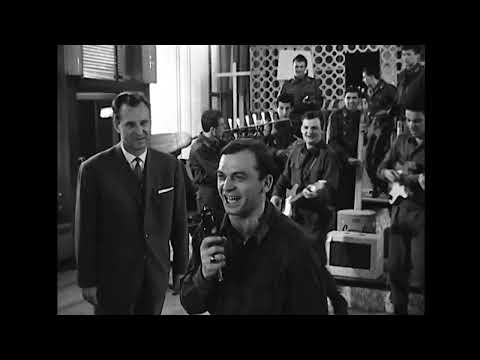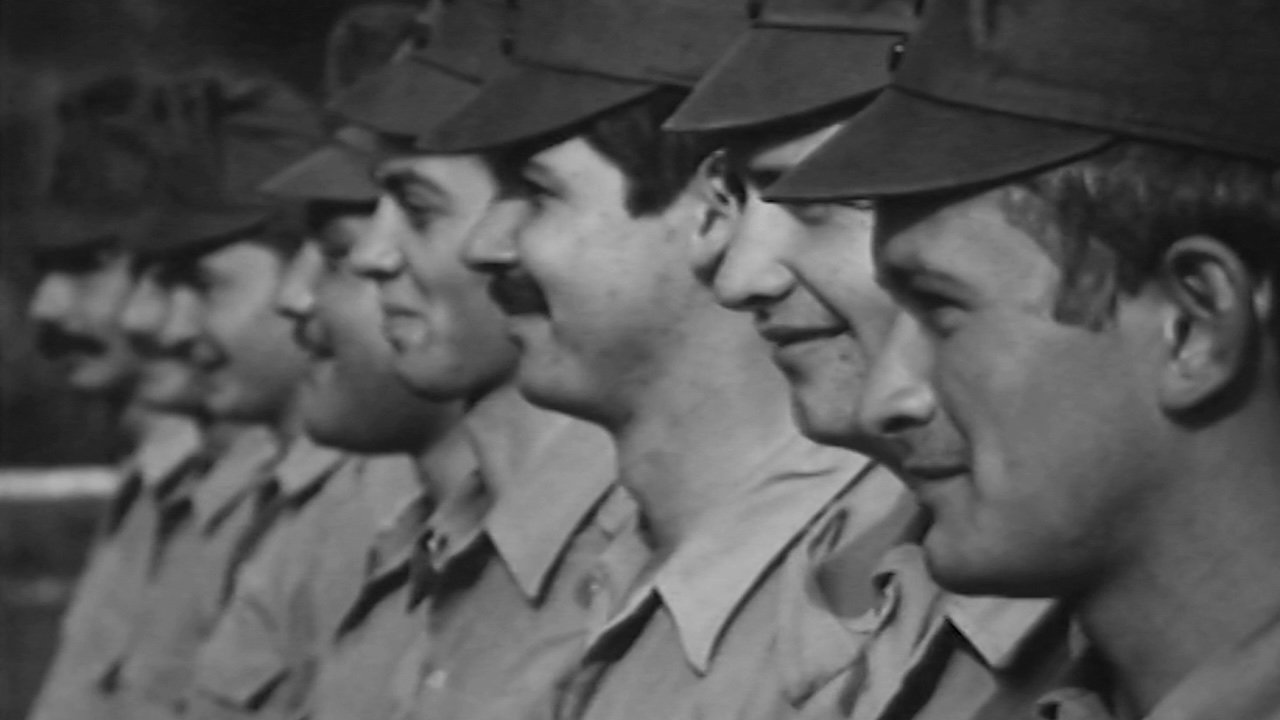
A feature length, lively - montage style - documentary, capturing the essence of what life was like in socialist Hungary's conscript army, using contemporary videos.
Social & External
Narrator
This first co-production between the GDR and Great Britain is intended to contribute to an understanding of the situation and attitudes of millions of working people in opposing social orders. Using the example of shipyard workers, fishermen, the brigade and family of a trade union active cook and unemployed person of various ages and professions in Newcastle on the one hand and a brigade of crane operators of the Warnowwerft and fishermen of the Warnemünde cooperative on the other hand, insights into the way of life and attitudes of people of our time are to be conveyed.
In the summer of 1989 tens of thousands of tourists from communist East Germany came to Hungary. They were deeply disillusioned because they felt they had no future in East Germany. There was no freedom, no choice in the shops, salaries were low and they could not travel except to Eastern Europe. They wanted to go to a prosperous and free West Germany but they could not get passports, so they hoped that by travelling through Hungary, the least suppressed country of the Soviet Block, they could cross the Iron Curtain into Austria and then travel on into West Germany. For them the Hungary of twenty years ago was the new east-west passage. Written by Czes
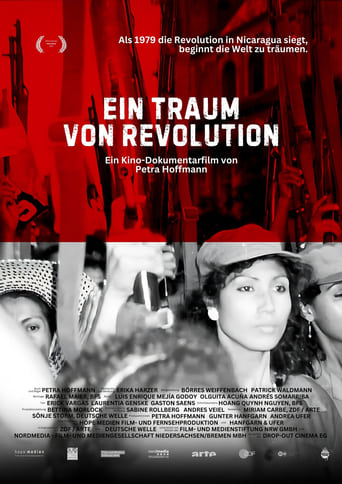
When the revolution in Nicaragua won its victory nearly 40 years ago, the world began to dream. A young generation was taking the reins in a country of grand utopias. From West Germany alone, 15,000 “brigadists” travelled to help rebuild the war-torn country: liberals, greens, unionists, social democrats, leftists and church representatives harvested coffee and cotton, built schools, kindergartens and hospital wards. No movement has mobilised so many people. What became of the hopes and dreams of the revolutionaries and their supporters?
An innovative and charismatic influencer is suddenly exiled from her community of creative partners and colleagues when she states an opinion that she did not know was “unacceptable” in their eyes.
Finnish documentary about Cuba.
In World War II. African-American GIs liberate Germany from Nazi rule while racism prevailed in their own army and home country. Returning home they continue fighting for their own rights in the civil rights movement.
“Binxet – Under the border” is a journey between life and death, dignity and pain, struggle and freedom. It takes place along the 911 km of the turkish-Syrian border. On the one hand the ISIS, in the other Erdogan’s Turkey. In the middle the borders and one hope. This hope is called Rojava, only one point on the chart of a troubled region, a region of resistance and an example of grassroots democracy that speaks about gender equality, self-determination of peoples and peaceful coexistence.
A homeless man living in a encampment in Minneapolis tells his perspective on the ongoing crisis of homelessness.
This Pete Smith Specialty short focuses on the young men who have signed up for the U.S. Army. The film uses the analogy of the speed, accuracy, and teamwork of sports and how these qualities are translated into the weapons training of American soldiers. We watch target practice by Army personnel with shoulder weapons, mortars, and various artillery pieces.
Maria Luiza da Silva is the first transgender in the history of the Brazilian Armed Forces. After 22 years of work in the military, she retired due to disability. The film explores the complex barriers she faced and her path of affirmation as a trans, military and Catholic woman.
Some time after her death, film director Jill Craigie (1911- 99), re-opens an old suitcase, prompting memories of the extraordinary life and loves of this forceful, charismatic woman, whose work has been long neglected. Craigie was one of the first women to direct documentaries. Working outside the British Documentary Movement in the 1940s and early 1950s, her films such as To Be Woman (1951), on equal pay, and Out of Chaos (1944), the first film about artists at work, featuring Henry Moore and Paul Nash, tackled new subjects for the cinema through a unique blend of drama, polemic and humour. Independent Miss Craigie uses the director’s unseen papers, and her films, to reveal her energetic struggles to get her radical projects made and distributed, including her last one, on the Yugoslav conflict, made when she was 83, with her husband, former Labour leader, Michael Foot.
Documentary film with play scenes about the rise and fall of the short-lived Bavarian Soviet Republic in 1919 from the perspective of various well-known poets and writers who experienced the events as contemporary witnesses.
Michael Moore's view on how the Bush administration allegedly used the tragic events on 9/11 to push forward its agenda for unjust wars in Afghanistan and Iraq.
The free, almost naive view from the perspective of a child puts the "68ers" in a new, illuminating light in the anniversary year 2008. The film is a provocative reckoning with the ideological upbringing that seemed so progressive and yet was suffocated by the children's desire to finally grow up. With an ironic eye and a feuilletonistic style, author Richard David Precht and Cologne documentary film director André Schäfer trace a childhood in the West German provinces - and place the major events of those years in completely different, smaller and very private contexts.
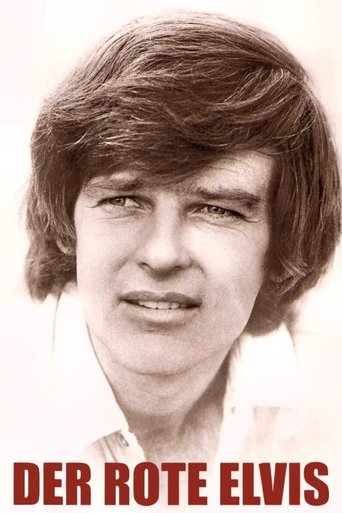
A documentary on the late American entertainer Dean Reed, who became a huge star in East Germany after settling there in 1973.
A documentary about the closure of General Motors' plant at Flint, Michigan, which resulted in the loss of 30,000 jobs. Details the attempts of filmmaker Michael Moore to get an interview with GM CEO Roger Smith.
A presentation of a case for a needed transition out of the current socioeconomic monetary paradigm which governs the entire world society. This subject matter will transcend the issues of cultural relativism and traditional ideology and move to relate the core, empirical 'life ground' attributes of human and social survival, extrapolating those immutable natural laws into a new sustainable social paradigm called a 'Resource-Based Economy'.
Embark on an epic journey through time and faith with 'The Apocalypse of Saint John.' Join the Apostle John in a stunning visual narrative that unravels the visions of the End Times. Experience each vision like never before, with striking visual effects and epic scenes that immerse you in the apocalyptic narrative.
A depiction of life in wartime Britain during the Second World War. Director Humphrey Jennings visits many aspects of civilian life and of the turmoil and privation caused by the war, all without narration.
A documentary that explores the downloading revolution; the kids that created it, the bands and the businesses that were affected by it, and its impact on the world at large.
Shot over three years on the borders between Iraq, Kurdistan, Syria and Lebanon, the film depicts the everyday struggles of people attempting to rebuild their lives amongst the devastating effects of civil wars, dictatorships, foreign invasions, and the deadly presence of ISIS.
The student, Rifle, has managed to seduce his professor's wife, Bomber, an average working guy, has bought a factory and Bullet, the casino lover, is hiding from creditors. They all share a common path and conscription. In the army they teach you that everything must be smart and in order - cockades, straps and all, otherwise you're not fit to call yourself a person, you're a maggot. For a real man, there's no better place than the army.
A real-life undercover thriller about two ordinary men who embark on an outrageously dangerous ten-year mission to penetrate the world's most secretive and brutal dictatorship: North Korea.
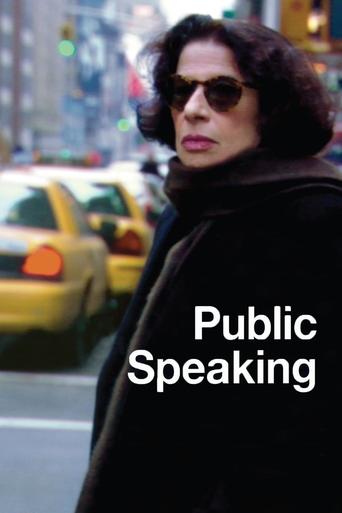
Martin Scorsese’s portrait of writer and social commentator Fran Lebowitz, celebrated for her sharp wit and observations on modern life. Filmed at New York’s Waverly Inn and intercut with archival footage and interviews, the documentary captures Lebowitz’s distinctive worldview through her spontaneous monologues and public appearances.
When Sgt. First Class Brian Eisch is critically wounded in Afghanistan, it sets him and his sons on a journey of love, loss, redemption and legacy.
A documentary about how a dominant cultural and demographic institution both sustains their traditional activities and adapts to the digital revolution.
A searing example of boots-on-the-ground reportage follows the efforts of the internationally recognized White Helmets, an organization consisting of ordinary citizens who are the first to rush towards military strikes and attacks in the hope of saving lives. Incorporating moments of both heart-pounding suspense and improbable beauty, the documentary draws us into the lives of three of its founders — Khaled, Subhi, and Mahmoud — as they grapple with the chaos around them and struggle with an ever-present dilemma: do they flee or stay and fight for their country?
The strange story of John McAfee, who went from millionaire software mogul to yogi, Kurtz-like jungle recluse to potential murderer, and most recently a prospective presidential candidate for the American Libertarian Party.
A close look at the assassin's lifestyle in the film.
When the communist government raises food prices in 1962, the rebellious workers from the small industrial town of Novocherkassk go on strike. The massacre which then ensues is seen through the eyes of a devout party activist.
A depiction of the Wrangelkiez neighbourhood in Berlin. The people portrayed tell their life stories. One woman came to the neighbourhood a decade ago to work in Berlin’s still unfinished Brandenburger Airport, one man reminisces his childhood on a Tobacco farm in Kentucky, another speaks of an exceptional day in an otherwise monotonous workplace. These portraits are interwoven with the story of Elpi, a Greek woman who is waiting for the long overdue visit of an old important friend. The outcome of this mixture is a film which captures the lives and perspectives of some of Wrangelkiez’s most commanding citizens, while at the same time evoking the loss that change and time passing means for places and for people.
This documentary looks at the Danish resistance movement's execution of 400 informers during the Nazi occupation and the ensuing cover-up.
The Making-of James Cameron's Avatar. It shows interesting parts of the work on the set.
If you ever find yourself traveling down Interstate 49 through Missouri, try not to blink—you may miss Rich Hill, population 1,396. Rich Hill is easy to overlook, but its inhabitants are as woven into the fabric of America as those living in any small town in the country. This movie intimately chronicles the turbulent lives of three boys living in said Midwestern town and the fragile family bonds that sustain them.
Lyrical and powerfully personal essay film that reflects on the deaths of her husband Lou Reed, her mother, her beloved dog, and such diverse subjects as family memories, surveillance, and Buddhist teachings.