Social & External
Ompung Putra Boru, a sixties indigenous Batak woman from Humbang Hasundutan, North Sumatra, retraces her life stories through photographs that interweave her past and present as a wife, mother, healer and indigenous land defender in two neighboring villages. Her multi-layered stories are juxtaposed with visual records of everyday life in the two villages, where people’s living space is still increasingly threatened by a giant pulp expansion.
Tony and Ajani, two mushroom foragers based in Minneapolis, spend the day foraging at a local park and musing on the power of nature.
Wisconsin's tribe's ongoing fight to protect Lake Superior for future generations. "Bad River" shows the Bad River Band of Lake Superior Chippewa's long history of activism and resistance in the context of continuing legal battles with Enbridge Energy over its Line 5 oil pipeline. The Line 5 pipeline has been operating on 12 miles of the Bad River Band's land with expired easements for more than a decade. The Band and the Canadian company have been locked in a legal battle over the pipeline since 2019.
A look at the state of the global environment including visionary and practical solutions for restoring the planet's ecosystems. Featuring ongoing dialogues of experts from all over the world, including former Soviet Prime Minister Mikhail Gorbachev, renowned scientist Stephen Hawking, former head of the CIA R. James Woolse
Neurobiology has shown in the recent years that contrary to the traditional boundaries between animal and plants, plants can feel, move and even think. Over the recent years, a small but growing group of researchers from Austria, Germany, Italy, UK, Japan, South Africa and the USA, has developed a new scientific field of research: the neurobiology of plants. Their discoveries question the traditional boundaries set between the animal and the vegetable kingdom: plants are capable to develop the cognitive process claimed by humans and animals. If plants can move, and feel... Could they possibly think ? In a creative and captivating scientific investigation style, through spectacular specialist photography and CGI, and re-creating scientific experiments, this documentary is bound to change your own perception of plants.
Two filmmakers follow a businessman turned eco-activist as he exposes Romania's timber mafia. Their journey takes a dramatic turn when, in the middle of a forest, the three are attacked by a group of 12 angry men. The cameras are destroyed, and all footage is lost. Faced with this harsh reality, each of them tries to manage the situation as best they can, confronting their own doubts and limitations.
A group of friends gathers to celebrate the end of 2023 and the beginning of 2024. Captured through a cellphone camera, the film showcases their various interactions while highlighting the artistic and cultural influences that shape their lives.
Atlantis is filmmaker Luc Besson's celebration of the beauty and wonder of the world beneath the sea, expanding upon themes touched on in his film The Big Blue. Combining stunning underwater cinematography and a hypnotic score by Eric Serra, Besson's singular vision defies dialogue or narrative structure to explore ocean life as you've never seen it before.
Time passes, slips away, dissolves. But what if we could hold it for a moment? "Capturing Memories" is a dive into the essence of the inconsistent, an invitation to reflect on the importance of preserving moments before they are lost in oblivion. Through visual fragments, the documentary reveals how small scenes of everyday life carry echoes of the past and seeds of the future. In a world where everything passes, what really remains? This film is a tribute to the art of immortalizing the moment, to the beauty of seeing beyond the present and to the need to give meaning to what may one day become a memory.
With rising sea levels, land reclamation runs rampant in Singapore. Labrador Park is one such waterfront facing this change, and both the ecosystem and frequent fishermen have often been overlooked. This documentary seeks to explore the park's development from a scientific, economic and sociological perspective, produced in collaboration with SOTA and NUS.
An educational film about the life cycles of various types of pond life.
The documentary presents an overview of Vladimir Carvalho's cinematographic career, from the very beginning, as a co-writer of “Aruanda” (1960), directed by Linduarte Noronha, to the present day. With Vladimir himself as the main narrator and illustrated by scenes from his films, the documentary also features interviews with Gilberto Gil, Orlando Senna, Arnaldo Carillo, Dácia Ibiapina, Fernando Duarte, Sérgio Moriconi, among others.
The documentary explores the curative knowledge and resistance by african-rooted religion leaders in the Amazon, highlighting the connection between humans, nature, and spirituality. In Manaus, forested areas become spaces of healing, while the film fosters a dialogue between traditional knowledge and the need to rethink our relationship with the environment.
Introduction to the oil industry of India in the post-colonial period.
This film tells the story of World War II as experienced by the inhabitants of Baku, the capital of Azerbaijan, at the time a satellite of Moscow. The very rich oil deposits of the region aroused the covetousness of Hitler who needed the oil from Baku to carry out his program of world domination. His entire campaign of 1942-1943 was aimed at seizing them. But the Soviets and the Allies were determined to prevent him from doing so, by all means, including the most radical, even if it meant wiping the city off the map.
In 1928, the city of Curitiba went through a rare snowstorm. To this day, it is the harshest snowstorm to ever take place in the city. Everything was recorded by Alberto Botelho in this short documentary.
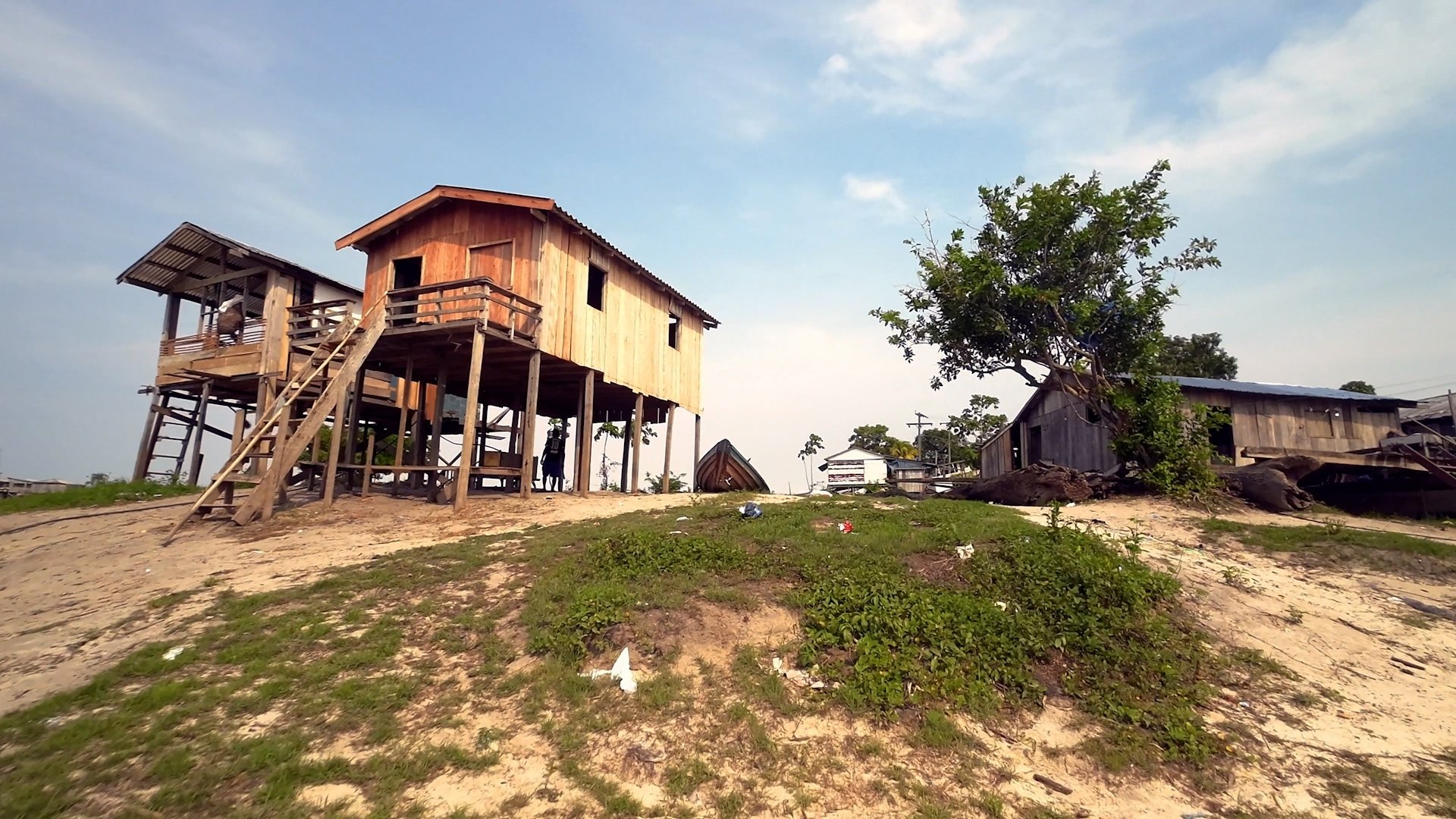
A journey through the Brazilian Amazon, guided by the eyes of Renato, a Carioca turned Amazorioca. A reflection on identity, the legacy of an ancestral territory, and the cost of progress. An ode to the forest and the fragility of what remains.