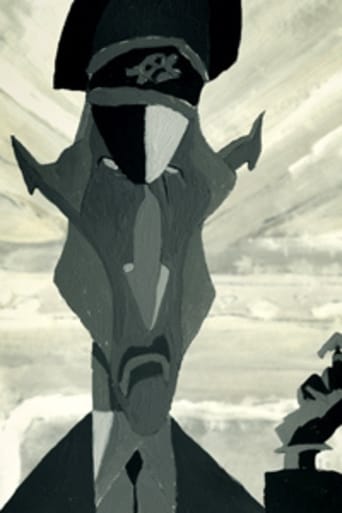
The animated short film tells the moving story of the resistance and bravery of Alfreda Noncia Markowska, a young Roma woman from Poland who saved the lives of around fifty children and young adults during the Second World War.
Social & External
The intricate history of UFA, a film production company founded in 1917 that has survived the Weimar Republic, the Nazi regime, the Adenauer era and the many and tumultuous events of contemporary Germany, and has always been the epicenter of the German film industry.
A documentary about the portrayal of Adolf Hitler in popular culture.
In the 1950's, Jews coming from North Africa and the Middle East settled in the newly constituted State of Israël. The Mizrahim, as their are called, were denied their right to a better life and forced to move to development towns in the Negev Desert. Today, the new generations of Mizrahim still suffer from this policy conducted 70 years ago. Michale Boganim follows the footsteps of her father, who came from Morocco and quickly became a leader of the local Israeli Black Panthers to stand against this discrimination. She embarks on a road trip through Israël's history to meet with three generation of Mizrahims.
Hitler's biography told like never before. Besides brief historical localizations by a narrator, only contemporaries and Hitler himself speak: no interviews, no reenactment, no illustrative graphics and no technical gadgets. The testimonies from diaries, letters, speeches and autobiographies are assembled with new, often unpublished archive material. Hitler's life and work are thus reflected in a unique way in interaction with the image of the society in the years 1889 to 1945.
After the World War I, Mussolini's perspective on life is severely altered; once a willful socialist reformer, now obsessed with the idea of power, he founds the National Fascist Party in 1921 and assumes political power in 1922, becoming the Duce, dictator of Italy. His success encourages Hitler to take power in Germany in 1933, opening the dark road to World War II. (Originally released as a two-part miniseries. Includes colorized archival footage.)
Longitudinal documentary film was shot for past 16 years and the main protagonist is Roman musician and activist Vojta Lavička. Vojta is a master in violin play, who focuses not only on music but also deals with problems of his origin Roman nationality. Vojta is very active in media - he worked in the national radio and television, he worked in the NGO that organize street work for Roman ghettos around the Czech republic, Vojta worked also as a social worker. All together we can watch him struggling with the main topic of his life - his national minority and problems that are caused by living next to Czech majority. Aside this topic films discovers Vojta's private life and his fight for being a good musician and a good man.
A musical, and also a reflection on watching, on trying to escape an anthropocentric gaze and also on watching itself in cinema. Featuring mares and horses: Triana, Víctor K, Bambi Sailor, San Special Solano, Buck Red Skin, Onkaia, Cool Boy, the donkey Agostino, the mule Guapa. And also Alfredo Lagos, Raül Refree, María Marín, Pepe Habichuela, Virgina García del Pino, María García Ruiz, Pilar Monsell, María Pérez Sanz.
7-year-old Sasha has always known that she is a girl. Sasha’s family has recently accepted her gender identity, embracing their daughter for who she truly is while working to confront outdated norms and find affirmation in a small community of rural France.
A little pig from rural P Town goes off to live in the metropolis. But he finds that a small town pig isn't always welcome among the elephants who live in City Ele.
A documentary-essay which shows Costică Axinte's stunning collection of pictures depicting a Romanian small town in the thirties and forties. The narration, composed mostly from excerpts taken from the diary of a Jewish doctor from the same era, tells the rising of the antisemitism and eventually a harrowing depiction of the Romanian Holocaust.
Depicts the controversial double police murder, involving neo-nazism and a theatre project by one of Scandinavia's most celebrated playwrights. The film traces a complex and fascinating chain of events leading up to the fatal climax in the picturesque small town of Malexander, Sweden.
The theatre 7:3 project was conducted at the Tidaholm prison 1998-1999. What started as an artistic experiment, ended up in police killings at Malexander. The process in the prison were filmed during 6 months.
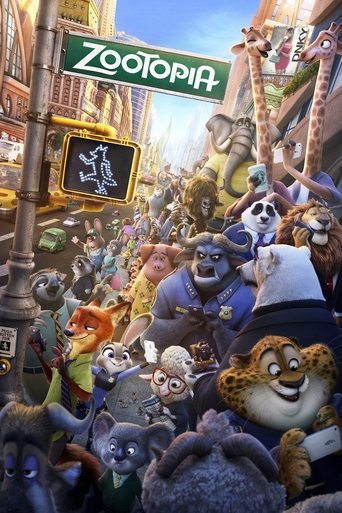
Determined to prove herself, Officer Judy Hopps, the first bunny on Zootopia's police force, jumps at the chance to crack her first case - even if it means partnering with scam-artist fox Nick Wilde to solve the mystery.
13 years ago, director Bob Entrop made the film A piece of blue in the sky, the first film in the Netherlands that depicted the murder of almost 1 million Sinti and Roma during the Second World War. There is a taboo on what happened during the war, you don't talk about it with anyone and certainly not in front of a camera. Requiem for Auschwitz is a sequel, with the most valuable moments from the first film, supplemented with the grandchildren and the creation and performance of the 'Requiem for Auschwitz' by Sinti composer Roger Moreno Rathgeb by the Sinti and Roma Philharmonic from Frankfurt and a Jewish choir in the Berliner Dom in Berlin, during Holocaust Memorial Day. During his visit to Auschwitz in 2020 with four musicians from the Dutch Accompaniment Orchestra, Roger shows them the places that inspired him.
With her slap of the Federal Chancellor Kurt Georg Kiesinger in 1968, Beate Klarsfeld abruptly got known worldwide. The film highlights the significance of this act and its background. Beate Klarsfeld, born in Berlin in 1939 as Beate Künzel, is primarily known to people as "the woman with the slap" and as the Nazi hunter. In 1960 she went to Paris and met her future husband Serge Klarsfeld, whose father was deported to Auschwitz and murdered there. She was confronted with the darkest part of German history, about which she had learned nothing at school. Serge gave her books to read and made her actively deal with them. Since then, she has not let go of dealing with the crimes of the Nazi era. For them, it was always about "responsibility, not guilt".
In Third Reich, the abuse of drugs made commanders and soldiers feel invincible. The Führer himself took them on daily basis. This is the unbelievable story of the D-IX project and of methamphetamines, which, abundantly furnished to soldiers, changed the course of history.
It was a foundational myth of the GDR that it was anti-fascist and free of Nazis. But was that really the case? The film takes a critical look on the actual way the brown heritage was dealt with in the GDR.
Among the millions of victims of the Nazi madness during the Second World War, Pierre Seel was charged with homosexuality and imprisoned in the Schirmeck concentration camp. He survived this terrifying experience of torture and humiliation, and after the war he married, had three children, and tried to live a normal life. In 1982, however, he came to terms with his past and his true nature and decided to publicly reveal what he and thousands of other homosexuals branded with the Pink Triangle had undergone during the Nazi regime. Il Rosa Nudo (Naked Rose), inspired by the true story of Pierre Seel, depicts in a theatrical and evocative way the Homocaust, focusing on the scientific theories of SS Physician Carl Peter Værnet for the treatment of homosexuality, which paved the way for the Nazi persecution of gay men.