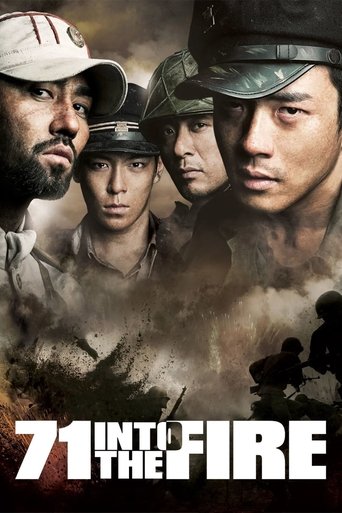
""Shoot me if I retreat!""
Social & External
Self
Paik Sun-yup
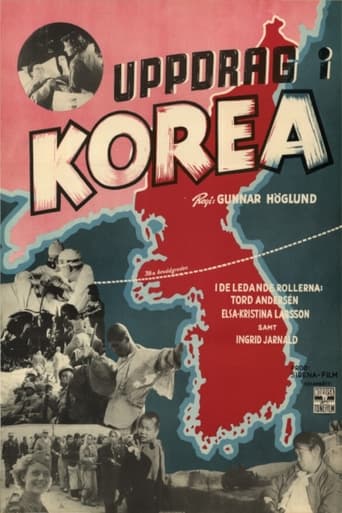
In 1950, amidst the ravages of the Korean War, Sergeant Süleyman stumbles upon a a half-frozen little girl, with no parents and no help in sight and he risks his own life to save her, smuggling her into his army base and out of harm’s way.
A U.S. Navy pilot and his squad are assigned to bomb a group of heavily defended bridges deep behind enemy lines during the Korean War.
Korean War, April 1953. Lieutenant Clemons, leader of the King company of the United States Infantry, is ordered to recapture Pork Chop Hill, occupied by a powerful Chinese Army force, while, just seventy miles away, at nearby the village of Panmunjom, a tense cease-fire conference is celebrated.
With hopes of reuniting with her husband, who left for the Vietnam War without telling her, a young wife joins a traveling band as the lead singer.
The movie focuses on the battle of Cheolwon, where the 63rd Army of the Chinese People's Volunteer Army (CPVA) was ordered to enter the battlefield of Cheolwon in May 1951, just after a month-long battle, to fight against four divisions of the United Nations Army (UNA). The volunteers fought with bloodshed and finally brought the enemy to the negotiation table.
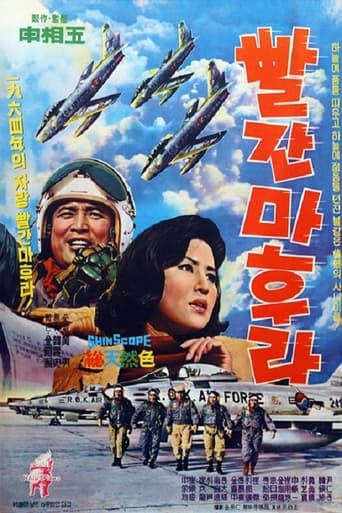
With its electrifying flight sequences and high-powered cast, The Hunters is a mesmerizing film based on the best-selling novel by veteran fighter pilot James Salter. Set during the height of the Korean War, the story centers on Major Cleve Saville (Robert Mitchum), a master of the newly operational F-86 Sabre fighter jets. But adept as he is at flying, Saville¹s personal life takes a nosedive when he falls in love with his wingman¹s (Lee Philips) beautiful wife (May Britt). To make matters worse, Saville must cope with a loud-mouthed rookie (Robert Wagner) in a daring rescue mission that threatens all their lives in this well-crafted war drama.
A ragtag group of American stragglers battles against superior Communist troops in an abandoned Buddhist temple during the Korean War.
They speak the same language, share a similar culture and once belonged to a single nation. When the Korean War ended in 1953, ten million families were torn apart. By the early 90s, as the rest of the world celebrated the end of the Cold War, Koreans remain separated between North and South, fearing the threat of mutual destruction. Beginning with one man's journey to reunite with his sister in North Korea, filmmakers Takagi and Choy reveal the personal, social and political dimensions of one of the last divided nations on earth. The film was also the first US project to get permission to film in both South & North Korea.
Based on the long running play by Jang Jin, the story is set in Korea during the Korean War in 1950. Soldiers from both the North and South, as well as an American pilot, find themselves in a secluded and naively idealistic village, its residents unaware of the outside world, including the war.
Combining a humorous and affectionate family portrait, a historical film and a search for identity, Defectors confronts the impact of the Korean War on different generations. Through encounters with a North Korean defector, Hyun kyung Kim reflects on her separation from her loved ones — such as her whimsical mother, whom she left behind in Korea upon moving to the United States.
The film exposes the atrocities of war through the eyes of two children who are stranded in the DMZ after the end of the Korean War. The DMZ, strewn with abandoned tanks, dead bodies, land mines, and unexploded shells, is an exceedingly dangerous place for children. But what most endangers them in the end are not weapons but people.
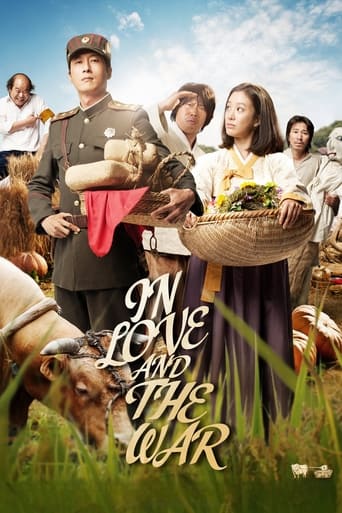
The film depicts a romance set against the backdrop of the Korean War.
A group of women climbs a summer mountain situated in South Korea. They are refugees who have settled into South Korean society after fleeing from North Korea. For them, climbing the mountains has been an unavoidable journey for survival - a matter of life and death.
One of the world's most acclaimed comedies, M*A*S*H focuses on three Korean War Army surgeons brilliantly brought to life by Donald Sutherland, Tom Skerritt and Elliott Gould. Though highly skilled and deeply dedicated, they adopt a hilarious, lunatic lifestyle as an antidote to the tragedies of their Mobile Army Surgical Hospital, and in the process infuriate Army bureaucrats. Robert Duvall, Gary Burghoff and Sally Kellerman co-star as a sanctimonious Major, an other-worldly Corporal, and a self-righteous yet lusty nurse.
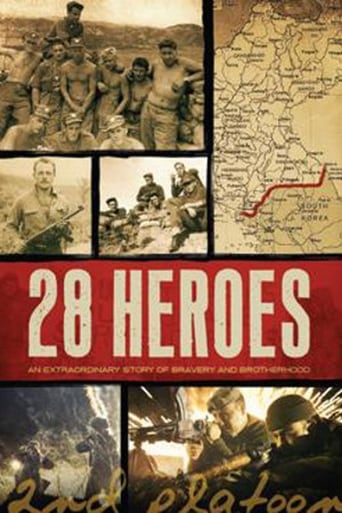
An amazingly harrowing story of the 17 day engagement of bloody combat and heroic survival in subartic temperatures. UN forces largely outnumbered and surrounded, due to a surprise attack led by 120,000 Chinese troops.
The Korean conflict is often called "The Forgotten War," but it has never been forgotten by the men and women who experienced it. These veterans share their thoughts, experiences and memories, highlighting the human and social costs of war.
In July 1951, all the sides to the Korean War sought a ceasefire. For a ceasefire, the Allied and Communist forces began to hold talks at Naebongjang, located northeast of Kaesong. However, they only sharply opposed each other and didn't make progress in the negotiation. In October 1951, the two sides met again in the small village of Neolmun-ri below Gaeseong. They set up tents there to negotiate and named the place Panmunjom. The name Panmunjeom is a combination word of Panmun, meaning Neulmun-ri, and “Jom,” of an inn.
A look at the Korean War through the eyes of a mute boy who was kept as a mascot by a regiment of soldiers near the front lines.
When hijackers seize a Japanese flight and demand to fly to Pyongyang, a mysterious mastermind hatches a zany scheme to reroute the plane to Seoul.
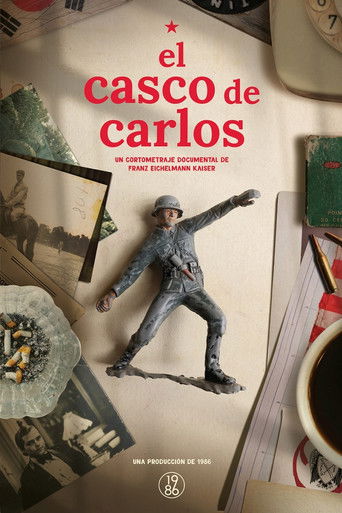
Upon his father's death, a voice explores feelings of loss and pain through an old American military helmet. A mystery is then unfolded on the border between North and South Korea.