Social & External
Self
A courageous pastor uses his underground network to rescue and aid North Korean families as they risk their lives to embrace freedom.
Confronting half of her mother’s life—her mother who had survived the Jeju April 3 Incident—the director tries to scoop out disappearing memories. A tale of family, which carries on from Dear Pyongyang, carving out the cruelty of history, and questioning the precarious existence of the nation-state.
Two young North Korean gymnasts prepare for an unprecedented competition in this documentary that offers a rare look into the communist society and the daily lives of North Korean families. For more than eight months, film crews follow 13-year-old Pak Hyon Sun and 11-year-old Kim Song Yun and their families as the girls train for the Mass Games, a spectacular nationalist celebration.
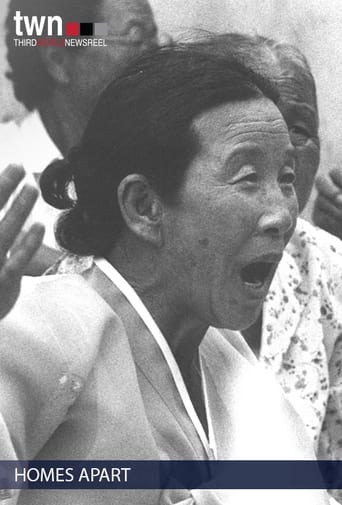
They speak the same language, share a similar culture and once belonged to a single nation. When the Korean War ended in 1953, ten million families were torn apart. By the early 90s, as the rest of the world celebrated the end of the Cold War, Koreans remain separated between North and South, fearing the threat of mutual destruction. Beginning with one man's journey to reunite with his sister in North Korea, filmmakers Takagi and Choy reveal the personal, social and political dimensions of one of the last divided nations on earth. The film was also the first US project to get permission to film in both South & North Korea.
Shrouded in secrecy and notoriously cash-strapped the North Korean regime has resorted to running one of the world's largest slaving operations - exploiting the profits to fulfil their own agenda. These bonded labourers can be found in Russia, China and dozens of other countries around the world including EU member states. Featuring undercover footage and powerful testimonials, we reveal the scale and brutality of the operation and ask what, if anything, is being done to stop it.
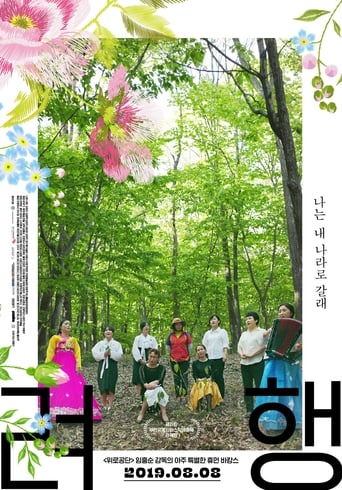
A group of women climbs a summer mountain situated in South Korea. They are refugees who have settled into South Korean society after fleeing from North Korea. For them, climbing the mountains has been an unavoidable journey for survival - a matter of life and death.
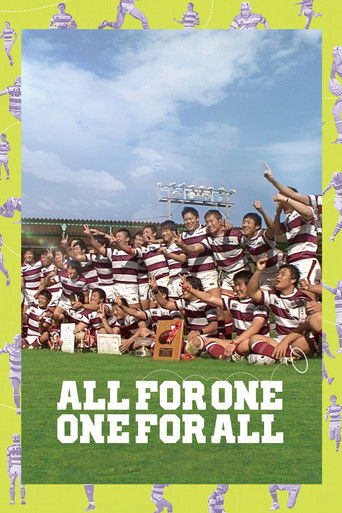
Osaka Korean High School has provided education for the past six decades to the children of pro-North Korean residents in Japan. This school is located only about 20 minutes away from Hanazono Stadium, the mecca of Japan’s high school rugby, but it was not until 1994, 18 years after the foundation of a rugby team at the high school, that the Japanese education ministry approved the team’s entry into the official league. Since then, the team has run in the national league as a representative of the Osaka area and been considered a front-runner ever since. The team has strong players and passionate supporters, but it faces difficulties just before winning the league.
In 1962, a U.S. soldier sent to guard the peace in South Korea deserted his unit, walked across the most heavily fortified area on earth and defected to the Cold War enemy, the communist state of North Korea. He became a star of the North Korean propaganda machine, but then disappeared from the face of the earth. Now, after 45 years, the story of James Dresnok, the last American defector in North Korea, is being told for the first time. Crossing the Line follows Dresnok as he recalls his childhood, desertion, and life in the DPRK.
The escalation of tensions between Pyongyang and Washington continues, plunging the world into fear of a nuclear war. Update on the geopolitical issues of this conflict.
Join National Geographic's Lisa Ling as she captures a rare look inside North Korea - something few Americans have ever been able to do. Posing as an undercover medical coordinator and closely guarded throughout her trip, Lisa moves inside the most isolated nation in the world, encountering a society completely dominated by government and dictatorship. Glimpse life inside North Korea as you've never seen before with personal accounts and powerful footage. Witness first-hand efforts by humanitarians and the challenges they face from the rogue regime.
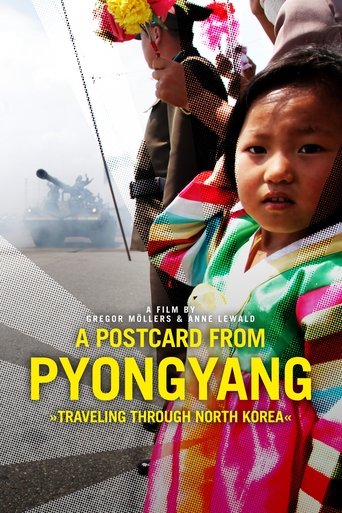
Pyongyang, a city full of happy people and flowers. A city of factories with smiling seamstresses and welders of locomotives. A city of power plants the illuminate department stores offering the fruits of the labour of its workers and peasants. Everybody spends their free time in sports palaces with synchronized swimming and white doves, or in the palace of cultures, where young pioneers play the accordion. Old men and women go on walks and young lovers rent boats by the river, above which arches a rainbow, a symbol of happiness and contentment.
A contemporary history of Korea(s) from a unique point of view that embraces the inner history of both South and North Korea in a single narrative.
If the cityscapes and patriotic anthems of this film seem a far cry from the bleak landscape of Seoul Train, that's no accident. Dutch filmmaker Pieter Fleury, with the full permission and cooperation of the North Korean government, created this propaganda film that gives us a glimpse of a day in the life of one of the world's most enigmatic societies. A Day in the Life, largely dictated by the North Korean film bureau, follows a typical North Korean family through their daily duties, largely dedicated to the pride in the North Korean nation of comrades and the glory of General Kim Jong Il. The film is meant to extol the success of modern North Korea. But does it? With straight footage and a total absence of narration, viewers may interpret Fleury's film in a slightly different manner than intended
The first film to fully expose the humanitarian crisis of North Korea, this stylish, deeply moving documentary is centered around astonishing interviews with survivors of North Korea's vast and largely hidden prison camps, and interspersed with archival footage of North Korean propoganda films and original art performances.
Having been granted special permission to film inside one of the most secretive countries in the world, Britain's fastest snowboarder sets off to experience first hand this country we know so little about.
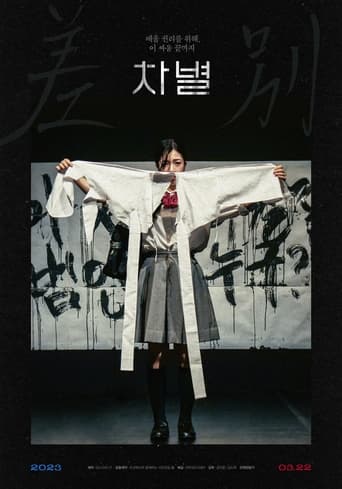
Documentary film about the discrimination against zainichi, directed by Yoshihiko Okamoto.
Dear Pyongyang is a documentary film by Zainichi Korean director Yang Yong-hi (Korean: 양영희, Hanja: 梁英姬) about her own family. It was shot in Osaka Japan (Yang's hometown) and Pyongyang, North Korea, In the 1970s, Yang's father, an ardent communist and leader of the pro-North movement in Japan, sent his three sons from Japan to North Korea under a repatriation campaign sponsored by ethnic activist organisation and de facto North Korean embassy Chongryon; as the only daughter, Yang herself remained in Japan. However, as the economic situation in the North deteriorated, the brothers became increasingly dependent for survival on the care packages sent by their parents. The film shows Yang's visits to her brothers in Pyongyang, as well as conversations with her father about his ideological faith and his regrets over breaking up his family.
Over the course of one year, this film follows the life of an ordinary Pyongyang family whose daughter was chosen to take part in Day of the Shining Star (Kim Jong-il's birthday) celebration. While North Korean government wanted a propaganda film, the director kept on filming between the scripted scenes. The ritualized explosions of color and joy contrast sharply with pale everyday reality, which is not particularly terrible, but rather quite surreal.
A real-life undercover thriller about two ordinary men who embark on an outrageously dangerous ten-year mission to penetrate the world's most secretive and brutal dictatorship: North Korea.