"film produced by H.R. Giger and J.J. Witmer"
1977 film fragment by H.R. Giger and J.J. Witmer
Social & External
A slug climbs small mountains at the peak of Mount Greylock (3,489 ft).
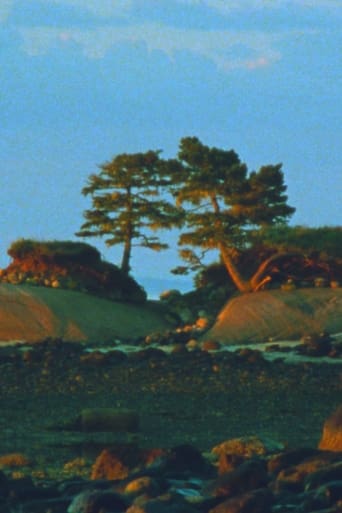
In the early 1900s commercial loggers cut down an old growth spruce tree growing on a small island surrounded by tide pools on the coast of Maine. Out of the trunk of this ancient tree grew two new trees, side by side.
Clouds forming and moving through the summer sky.
A short film featuring a pebble beach and coastal salt marsh in Maine.
A golden sunrise brings light to the foggy hills and meadows of late summer.
A forgotten history of Northern Ireland is unveiled through a journey into Ulster Television’s archives, and the rediscovery of the first locally-produced network drama, Boatman Do Not Tarry.
Photographs present Hermeto Paschoal in the middle of the instruments he plays in the studio in his house. The rehearsals where the sounds are discovered and improvisation sets the tone. Hermeto's testimonies on the self-taught construction of his theoretical knowledge about music and his political position on the market. The musicians who are part of his band talk about the joint process of creation and the admiration they feel for the multi-instrumentalist. The creation of Hermetus from the sounds of bees and next to the frods. The use of unusual objects made of iron and the use of the body itself to generate new sounds.
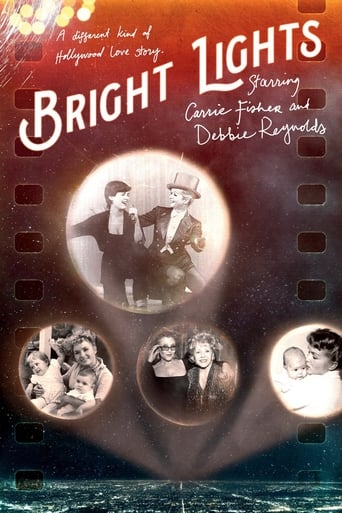
The story of two young single mothers who join forces to make a new kind of family unit for themselves and their children.
She was born in a cave, more than 60 years ago. Now she lives in a village, with many children and grandchildren to look after. Sometimes, she dreams of her dead mother calling her home – to the cave.
This film portrays activity in Grand Central Market in Los Angeles, California. Highlighted are vendors that represent the melting pot that is America, selling their wares to people of all ages and all walks of life. The film was directed by William Hale. Notably, the film also showcases some early work of famous cinematographer, Haskell Wexler.
Gare du Nord station. Everything goes so fast. Except this train, which is already disappearing...
Documentary that captures Tom Petty and the band in 1982-1983 as they finish, promote, and tour around the “Long After Dark” album (their final with legendary producer Jimmy Iovine). It aired only once on MTV in 1983. After the long lost 16mm reels were finally found, a restored version with 19 minutes of extra footage was released in 2024.
70s Butlins documentary, part of a series of films directed by Tony Palmer, which was announced in The Stage [The Stage, 25 July 1974, p.14] "Tony Palmer is directing a new series with Harriet Crawley which will be seen in the HTV area. Tentatively titled Harriet, it will feature Miss Crawley in a number of roles each of which, as it were, puts her on the spot. For example, she will go up (and down) with a group of sky divers, work with an elephant trainer in a circus, become an operatic soprano (she will actually sing in a performance of Carmen), and for a time be a hell's angel's moll. Patrick Dromgoole is the executive producer of this one."
You Should Have Been Here Yesterday combines hundreds of hours of lovingly restored 16mm footage with a salt-infused soundscape by Headland. This cinematic poem tells the story of a wild community who took off up the coast and discovered a whole new way to live. Going back to the never-before-seen camera reels to ask the question – what do we keep and what do we leave behind? Featuring Tim Winton, Wayne Lynch, Bob McTavish, Albe Falzon, Evelyn Rich, Maurice Cole and many more. Inspired by Moonage Daydream and Jen Peedom’s Mountain.
An animated satire on the question of self-image for African American women living in a society where beautiful hair is viewed as hair that blows in the wind and lets you be free. Lively tunes and witty narration accompany a quick-paced inventory of relaxers, gels, and curlers. This short film has become essential for discussions of racism, African American cinema, and empowerment.
Primordial spring is in the air, all is tentative.
An atypical portrait of singer, songwriter, poet Georges Brassens.
"Everything You Ever Wanted in a 16mm Projector" is an RCA promotional film made for the RCA 1600, probably in the mid-1960s. Yes, everything . . . brilliant pictures, superb sound, simple operation, smooth, safe film handling, instant performance, good looks, light weight, ruggedness — even an automatic threader that never touches the film !
A scientific expedition travels to an alternative Earth in hope of finding a new home for humanity, which has destroyed its own planet. But is it even possible to escape old patterns?
Images from 2000s music videos are transferred onto the film strip, torn and abstracted until the visuals convulse and shift—a tactile, poetic exploration of materiality, memory, and medium.
John Shepherd spent 30 years trying to contact extraterrestrials by broadcasting music millions of miles into space. After giving up the search, he makes a different connection here on earth.
Join director Clint Eastwood and his creative team, along with Bradley Cooper and Sienna Miller, as they overcome enormous creative and logistic obstacles to make a film that brings the truth of Navy SEAL Chris Kyle's story to the screen.
During the 1982 Cannes Film Festival, Wim Wenders asked a number of global film directors to, one at a time, go into a hotel room, turn on the camera, and answer a simple question: "What is the future of cinema?"
Amber Heard and Nicole Kidman discuss their characters Mera and Atlanna.
As his life comes to its end, famous Hollywood director Orson Welles puts it all on the line at the chance for renewed success with the film The Other Side of the Wind.
Angelic and demonic serpentine dance from dawn of cinema. Hand-colored frame by frame. Lumière no. 765 or 765.1 (colorized, different dancer?).
One man’s journey to find meaning in Bill Murray’s many unexpected adventures with everyday people, rare and never-before seen footage of the comedic icon participating in stories previously presumed to be urban legend.
A depiction of the Wrangelkiez neighbourhood in Berlin. The people portrayed tell their life stories. One woman came to the neighbourhood a decade ago to work in Berlin’s still unfinished Brandenburger Airport, one man reminisces his childhood on a Tobacco farm in Kentucky, another speaks of an exceptional day in an otherwise monotonous workplace. These portraits are interwoven with the story of Elpi, a Greek woman who is waiting for the long overdue visit of an old important friend. The outcome of this mixture is a film which captures the lives and perspectives of some of Wrangelkiez’s most commanding citizens, while at the same time evoking the loss that change and time passing means for places and for people.
A documentary chronicling Vogue editor-in-chief Anna Wintour's preparations for the 2007 fall-fashion issue.
While in San Francisco for the promotion of her last film in October 1967, Agnès Varda, tipped by her friend Tom Luddy, gets to know a relative she had never heard of before, Jean Varda, nicknamed "Yanco". This hitherto unknown uncle lives on a boat in Sausalito, is a painter, has adopted a hippie lifestyle and loves life. The meeting is a very happy one.
Christmas is a busy, busy time for the residents of Green River, particularly for Grace Long, the third generation of her family to steward the New England town’s signature Christmas Eve parade. This year’s audience for the parade promises to be in the millions, thanks to a national morning show that has chosen Green River as the site of its Christmas Eve day program.
The Killers is a 1956 student film by the Soviet and Russian film director Andrei Tarkovsky and his fellow students Marika Beiku and Aleksandr Gordon. The film is based on the short story "The Killers" by Ernest Hemingway, written in 1927. It was Tarkovsky's first film, produced when he was a student at the State Institute of Cinematography.
A visual montage portrait of our contemporary world dominated by globalized technology and violence.
The subject of the film was the Hauka movement. The Hauka movement consisted of mimicry and dancing to become possessed by French Colonial administrators. The participants performed the same elaborate military ceremonies of their colonial occupiers, but in more of a trance than true recreation.
Witness the never-before-seen footage and true story behind the John Wick phenomenon – from independent film to billion-dollar franchise.
Stars of "The Walking Dead," Andrew Lincoln and Danai Gurira, walk down memory lane and visit iconic locations where pivotal moments between their characters, Rick and Michonne, were filmed.
A purely observational non-fiction film that takes viewers into the ethically murky world of end-of-life decision making in a public hospital.
A film shot during the summer of 1968 in Oakland, California around the meetings organised by the Black Panthers Party to free Huey Newton, one of their leaders, and to turn his trial into a political debate. They tried and succeeded in catching America’s attention.
If you ever find yourself traveling down Interstate 49 through Missouri, try not to blink—you may miss Rich Hill, population 1,396. Rich Hill is easy to overlook, but its inhabitants are as woven into the fabric of America as those living in any small town in the country. This movie intimately chronicles the turbulent lives of three boys living in said Midwestern town and the fragile family bonds that sustain them.
When Allied forces liberated the Nazi concentration camps in 1944-45, their terrible discoveries were recorded by army and newsreel cameramen, revealing for the first time the full horror of what had happened. Making use of British, Soviet and American footage, the Ministry of Information’s Sidney Bernstein (later founder of Granada Television) aimed to create a documentary that would provide lasting, undeniable evidence of the Nazis’ unspeakable crimes. He commissioned a wealth of British talent, including editor Stewart McAllister, writer and future cabinet minister Richard Crossman – and, as treatment advisor, his friend Alfred Hitchcock. Yet, despite initial support from the British and US Governments, the film was shelved, and only now, 70 years on, has it been restored and completed by Imperial War Museums under its original title "German Concentration Camps Factual Survey".