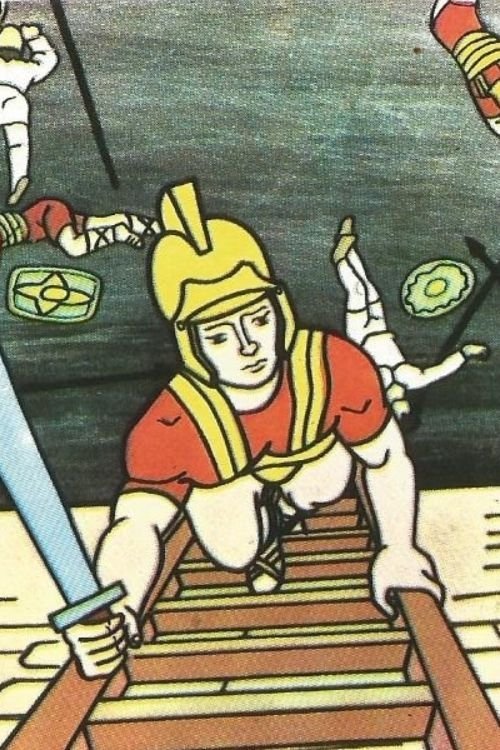
An animated historical short film about Trajan's Dacian Wars.
Social & External
The people behind it
The rebellious Thracian Spartacus, born and raised a slave, is sold to Gladiator trainer Batiatus. After weeks of being trained to kill for the arena, Spartacus turns on his owners and leads the other slaves in rebellion. As the rebels move from town to town, their numbers swell as escaped slaves join their ranks. Under the leadership of Spartacus, they make their way to southern Italy, where they will cross the sea and return to their homes.
Treacherous Roman senator Lucius Quintilius plans a secret journey into Thrace to recover a legendary treasure. He is accompanied by his daughter Livia posing as a Christian slave girl, his cruel henchman Commodio, and Terenzius, an ex-gladiator and Nero look-alike who fools the local Thracians into believing he is the real Emperor. But Lucius's plans are thwarted by Spartacus and his band of rebels who succeed in capturing the treasure for Thrace. When news arrives from Rome that the real Nero has died, local Roman governor Consul Metellus joins forces with Spartacus to defeat the traitors.
The end of Trajan's Dacian Wars (106 AD), when south western Dacia was transformed into a Roman province: Roman Dacia.
In ancient Judea, a Jewish aristocrat opposing Roman occupation of his homeland reunites with his childhood friend, now a Roman commander — setting in motion a saga of betrayal, adventure, tragedy, revenge, and faith.
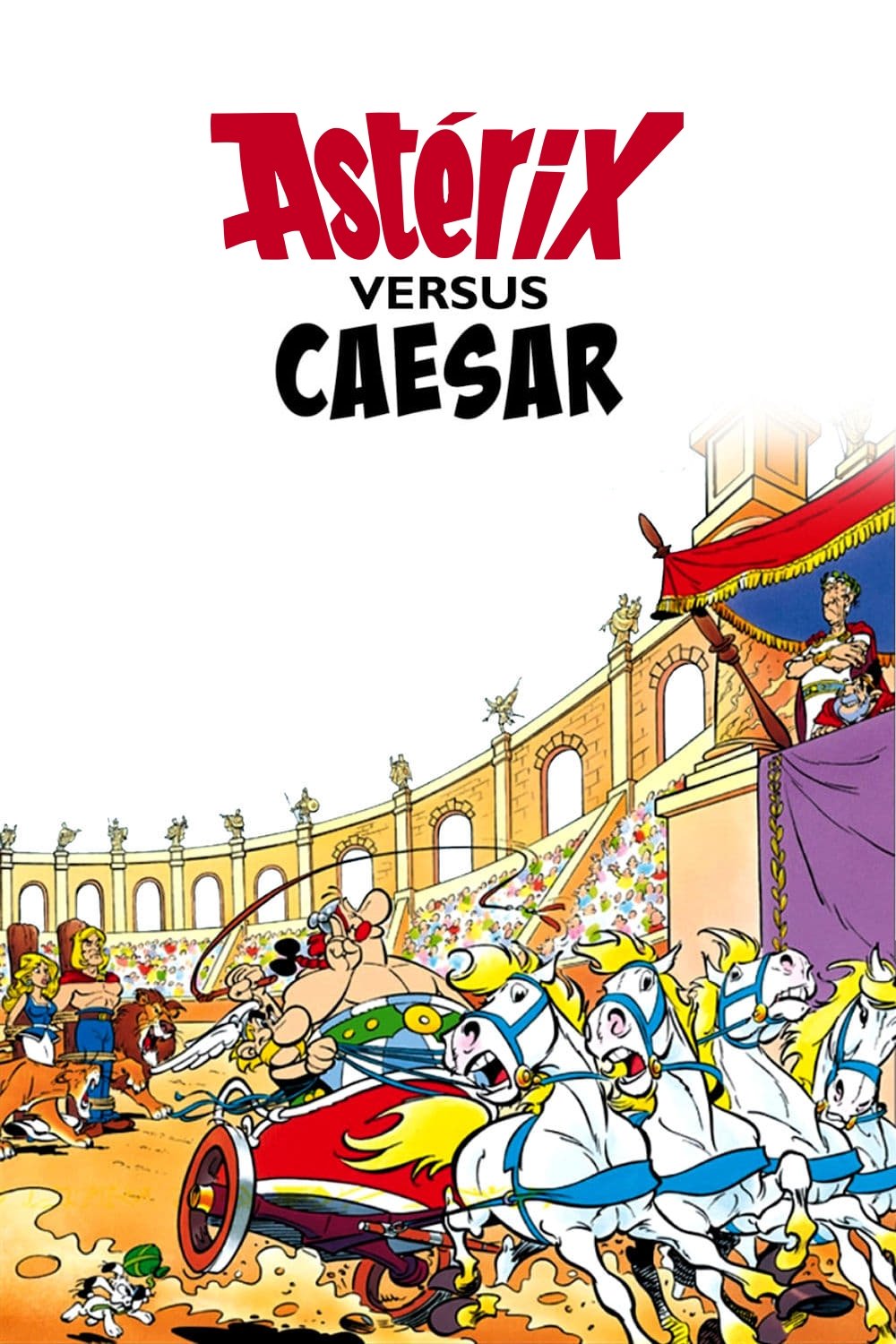
Obelix falls for a new arrival in his home village in Gaul, but is heartbroken when her true love arrives to visit her. However, the lovers are kidnapped by Romans; Asterix and Obelix set out to rescue them on a dangerous journey that will involve gladiators, slavers and beauracracy - and a personal encounter with the Emperor himself, Julius Caesar...
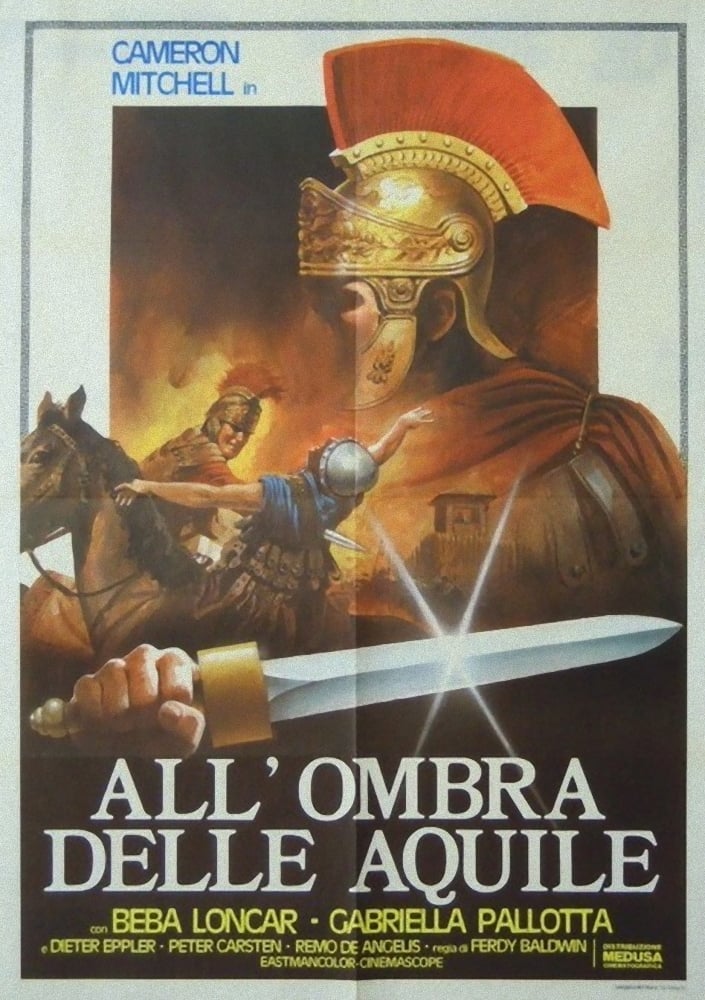
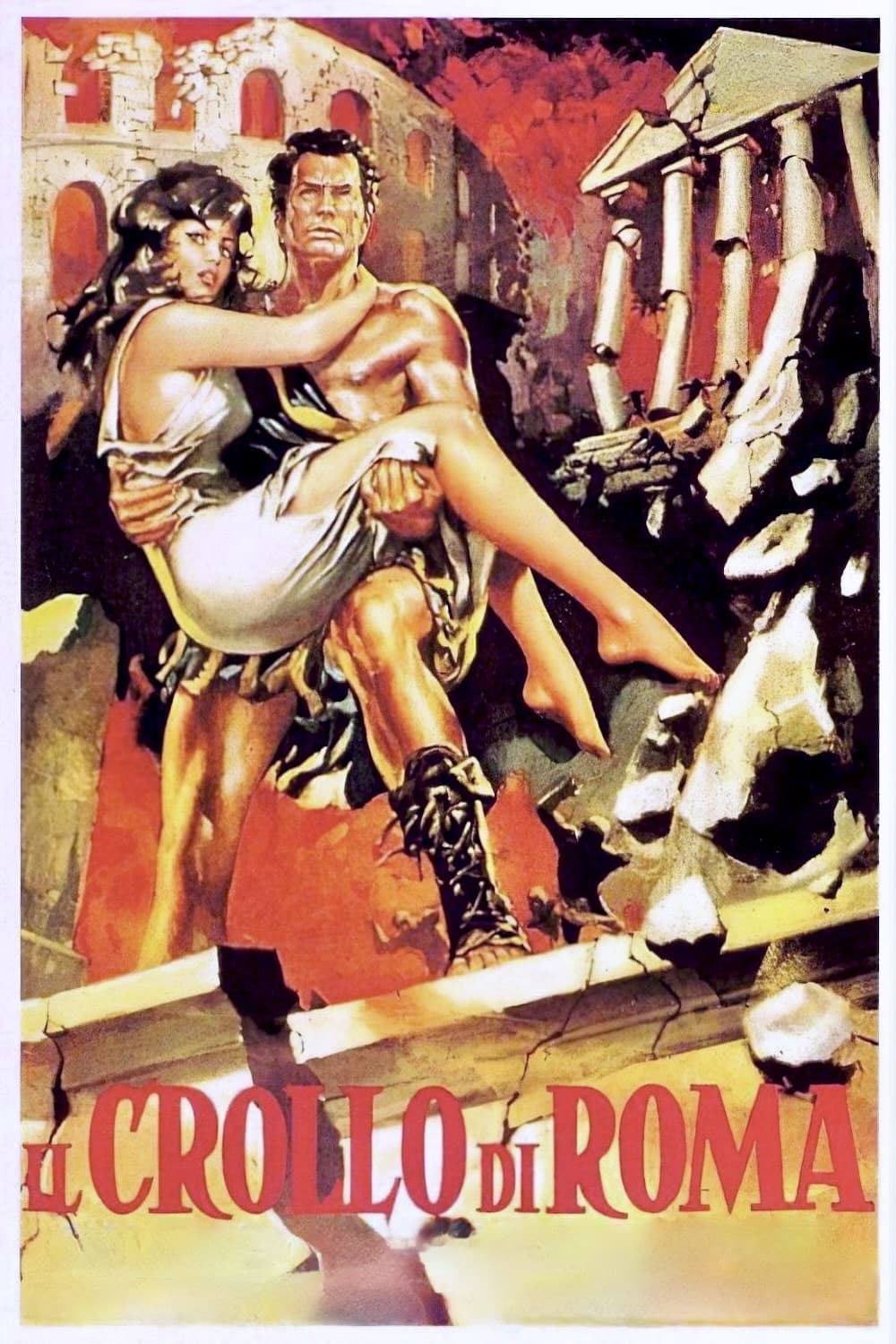
After the death of Octavian, the rebel populations of Illyria and Pannonia pose a grave threat to the Roman Empire. Tribune Marcus Ventidius is sent to subdue the uprising and, after a bitter battle, captures Pannonian chief Magdus together with a number of women hostages. These include Magdus's own daughter Helen, betrothed to cruel Illyrian warrior Batone who has killed many Romans. Julia, daughter of the Roman governor Messala, is in love with Tribune Marcus and, jealous of his sympathy for the barbarian girl, plots an escape by Helen and her father. Pursuing the fugitives, Marcus crosses a mountain pass where Batone has laid a trap.
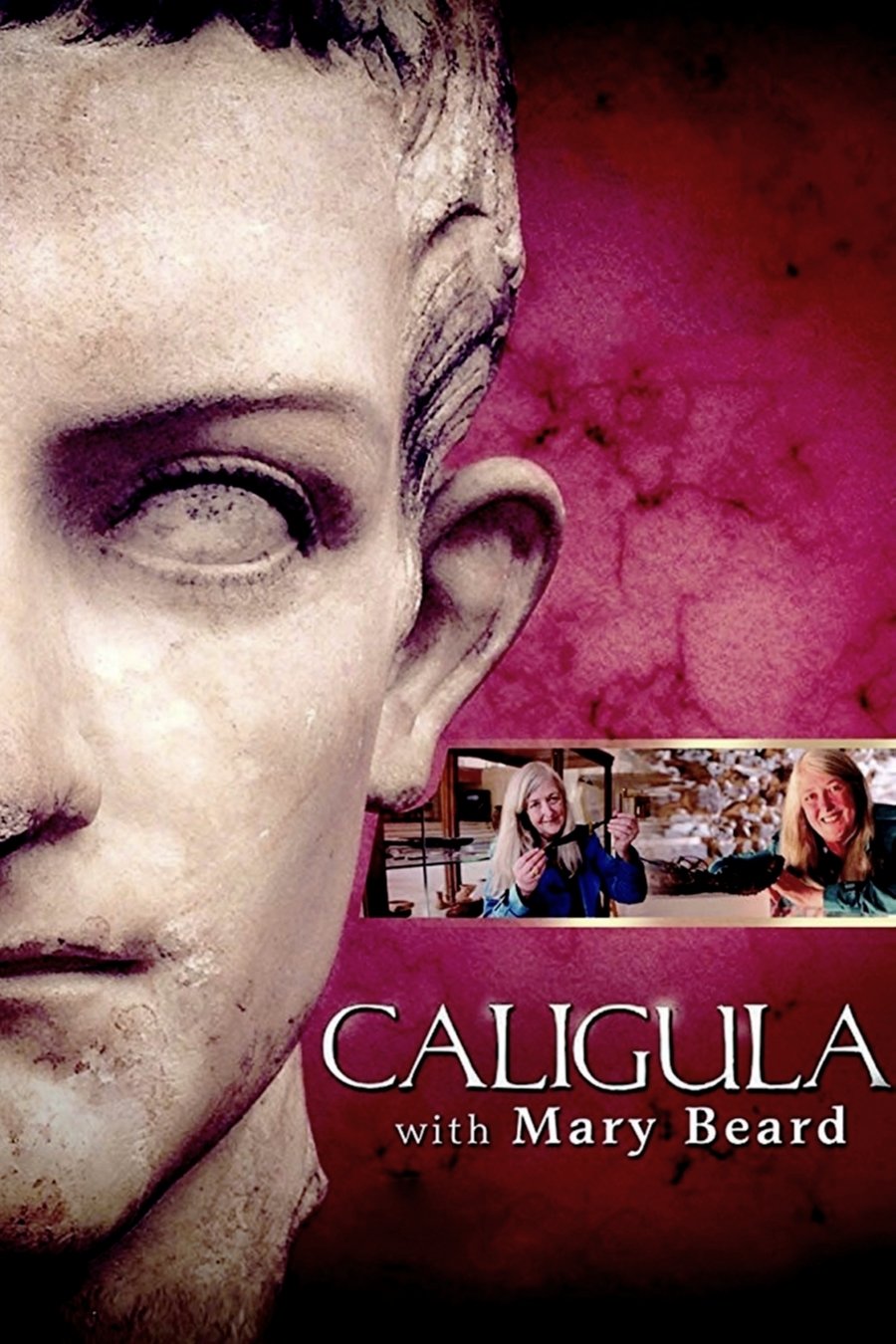
What is true and what is false in the hideous stories spread about the controversial figure of the Roman emperor Gaius Julius Caesar Augustus Germanicus (12-41), nicknamed Caligula? Professor Mary Beard explains what is accurate and what is mythical in the historical accounts that portray him as an unbalanced despot. Was he a sadistic tyrant, as Roman historians have told, or perhaps the truth about him was manipulated because of political interests?
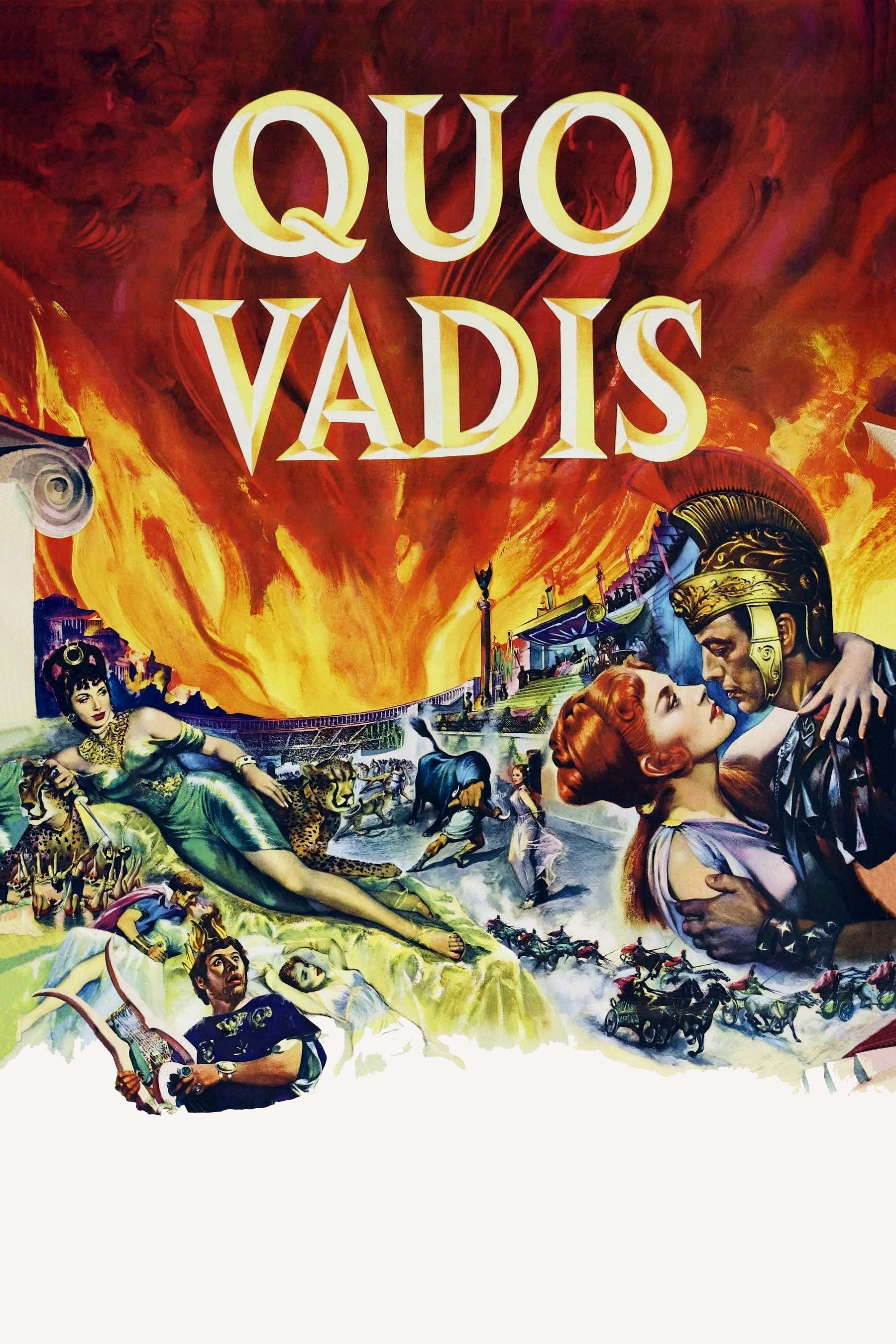
After fierce Roman commander Marcus Vinicius becomes infatuated with beautiful Christian hostage Lygia, he begins to question the tyrannical leadership of the despotic emperor Nero.
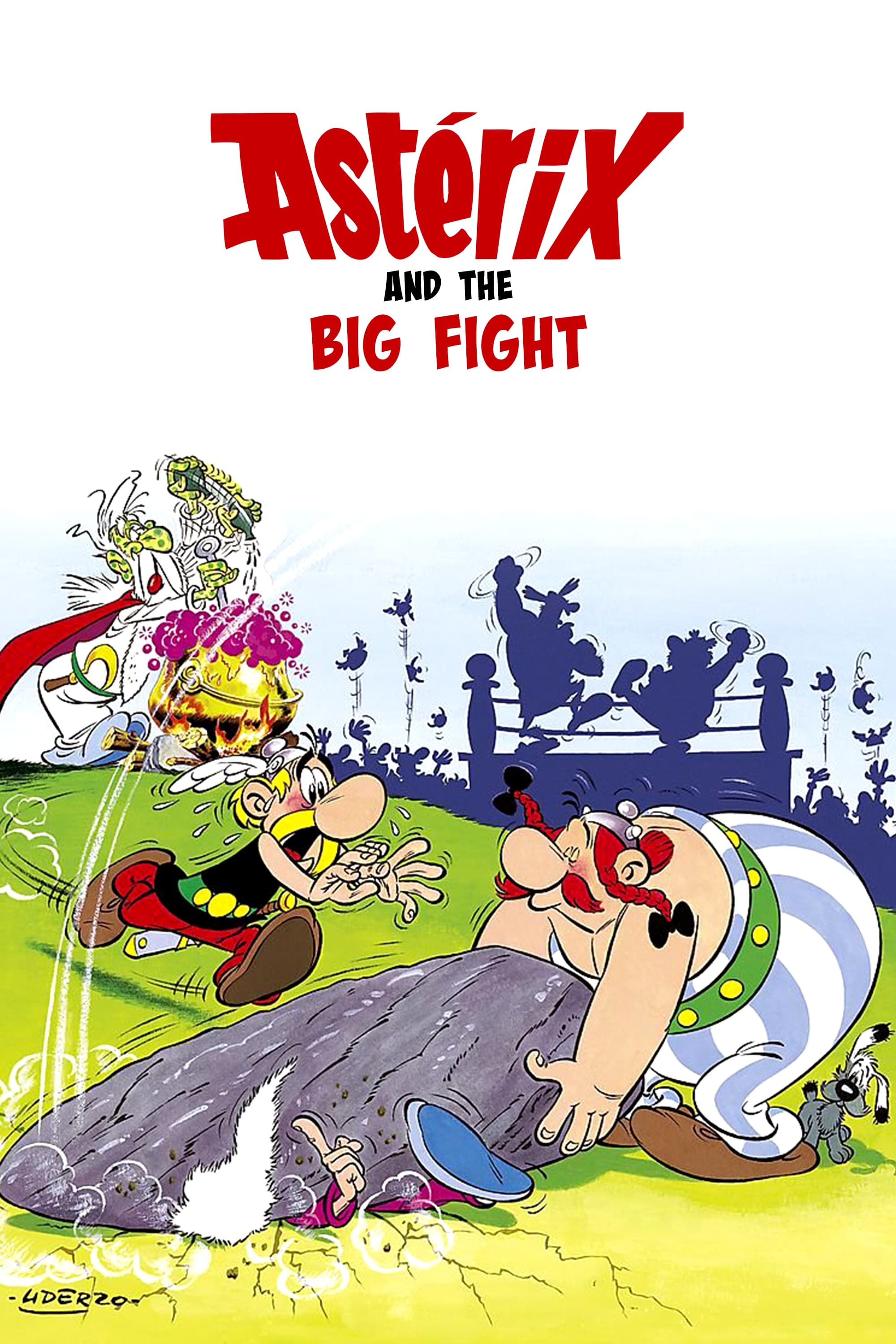
Due to an unfortunate accident involving Obelix throwing a menhir, Getafix the druid not only loses his memory, but goes completely mad. Now deprived of the wisdom of their beloved druid and the protection provided by his magic potion, the Armorican village falls prey to a proclaimed soothsayer who comes with ominous predictions and overweening ambitions. It's up to Asterix to keep his villager friends within reason and hopefully get Getafix to remember the magic potion's recipe before the impending Roman attack.
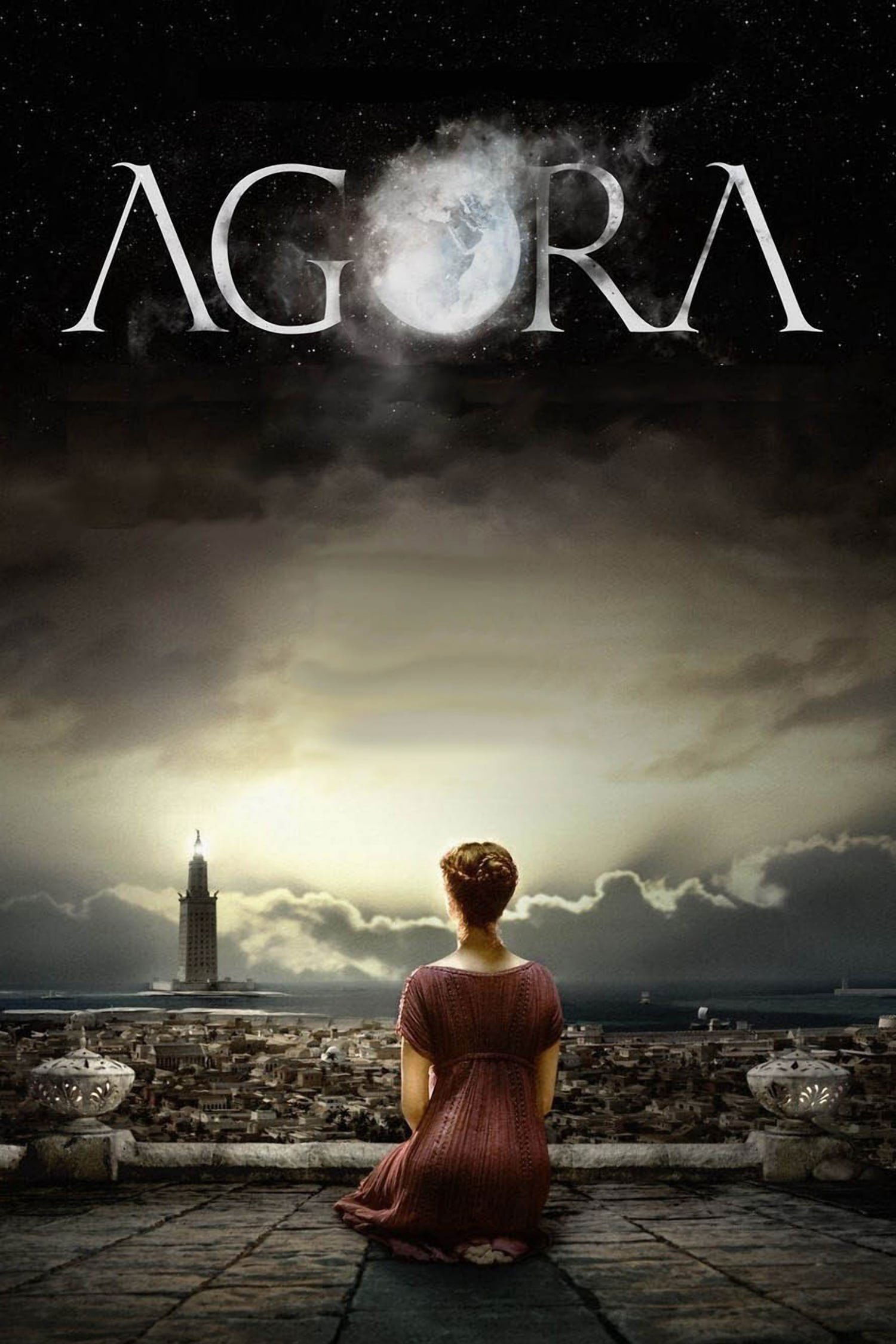
A historical drama set in Roman Egypt, concerning philosopher Hypatia of Alexandria and her relationship with her slave Davus, who is torn between his love for her and the possibility of gaining his freedom by joining the rising tide of Christianity.
Epic account of the thief Barabbas, who was pardoned for his crimes and spared crucifixion when Pilate offered the Israelites a choice to pardon Barabbas or Jesus. Struggling with his spirituality, Barabbas goes through many ordeals leading him to the gladiatorial arena, where he tries to win his freedom and confront his inner demons, ultimately becoming a follower of the man who was crucified in his place.
After the death of Emperor Constantine in Rome, the persecutions of the Christians threaten the centurion Marco forced to become a gladiator.
In the year 180 A.D. Germanic tribes are about to invade the Roman empire from the north. In the midst of this crisis ailing emperor Marcus Aurelius has to make a decision about his successor between his son Commodus, who is obsessed by power, and the loyal general Gaius Livius.
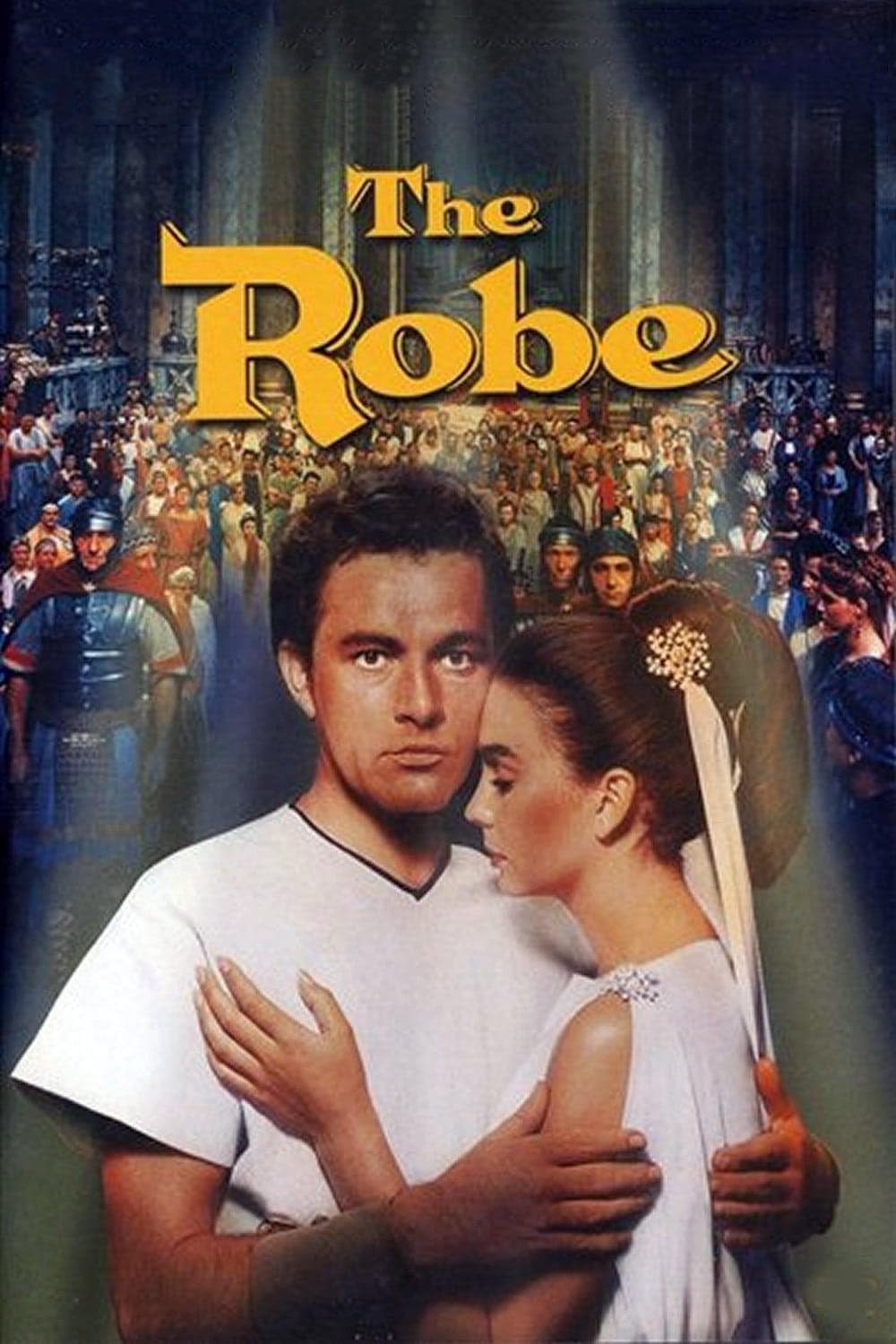
Drunk and disillusioned Roman, Marcellus Gallio, wins Jesus' robe in a dice game after the crucifixion. Marcellus has never been a man of faith like his slave, Demetrius, but when Demetrius escapes with the robe, Marcellus experiences disturbing visions and feels guilty for his actions. Convinced that destroying the robe will cure him, Marcellus sets out to find Demetrius — and discovers his Christian faith along the way.
In 2017, a routine archaeological dig is taking place on the site of a proposed housing development in the village of Fenstanton in the Cambridgeshire Fens. When human remains are found alongside a variety of Roman artefacts, none of the team at Albion Archaeology see anything out of the ordinary. But once the bones are washed back at HQ, something highly unusual is uncovered: a nail through the heelbone of one of the individuals. Could this be evidence of a Roman crucifixion? When they do some research, they find that only one confirmed example has ever been unearthed before, discovered in the 1960s in Jerusalem. To find out more, they call in renowned Osteoarchaeologist Dr Corinne Duhig to investigate.
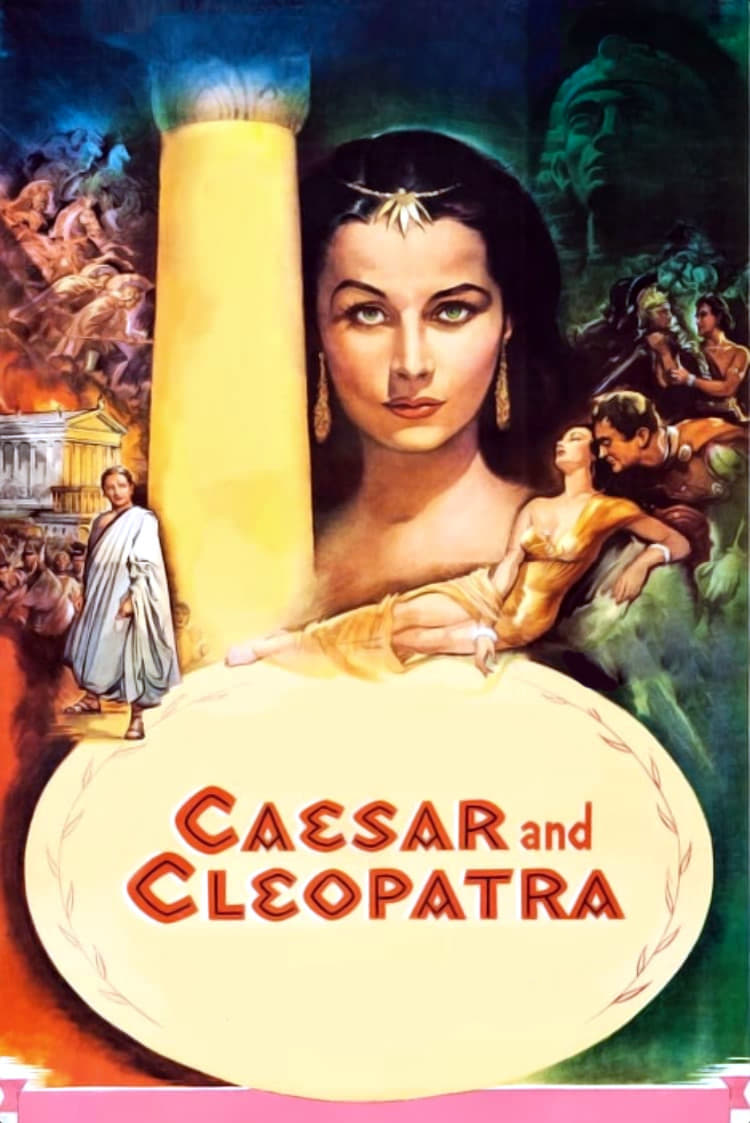
At the height of the Roman Civil War, an aging Julius Caesar finds himself intrigued by the young Egyptian queen Cleopatra, whom he teaches how to rule Egypt.
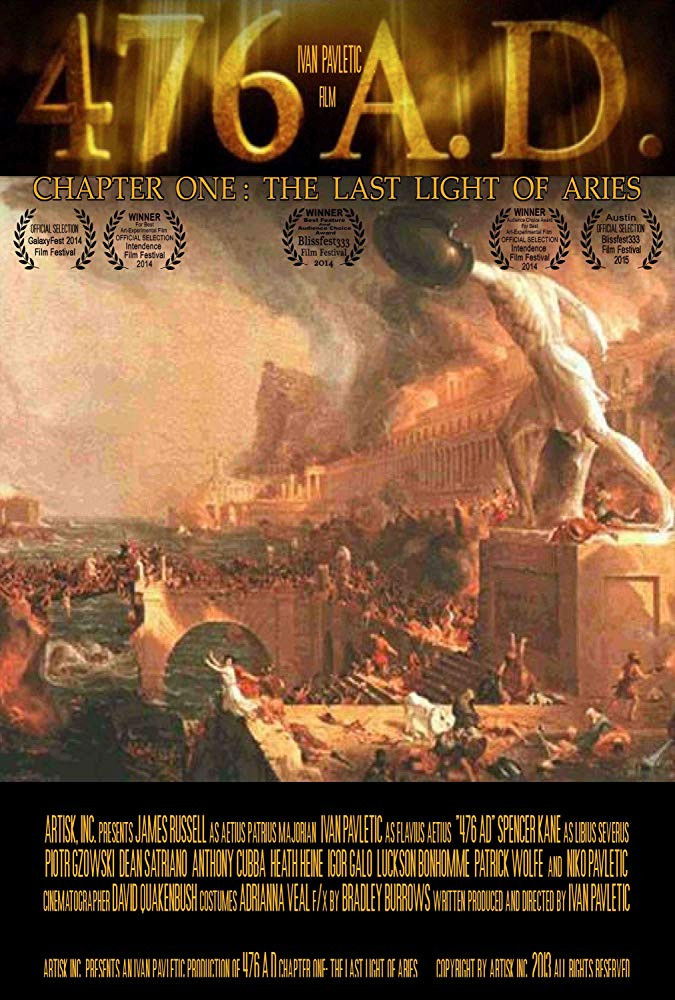
After General Flavius Aetius frees the Roman Empire from the clutches of Attila the Hun, Rome is once again secure. However, this assurance is short-lived, as Attila is no longer a threat, it only brings the Germanic tribes to once again unite against Rome. As the growing power of General Flavius Aetius becomes a threat to the Roman Senate, and the Emperor of Rome, Flavius becomes a victim of assassination to the Roman political hierarchy, which leaves Rome to two decades of corruption and turmoil. This unrest causes an intense decline in its infrastructure, finally brings the Empire to its inevitable demise. Leaving the Barbarians to finally fulfil their 400 years old dream, to destroy Rome once and for all.
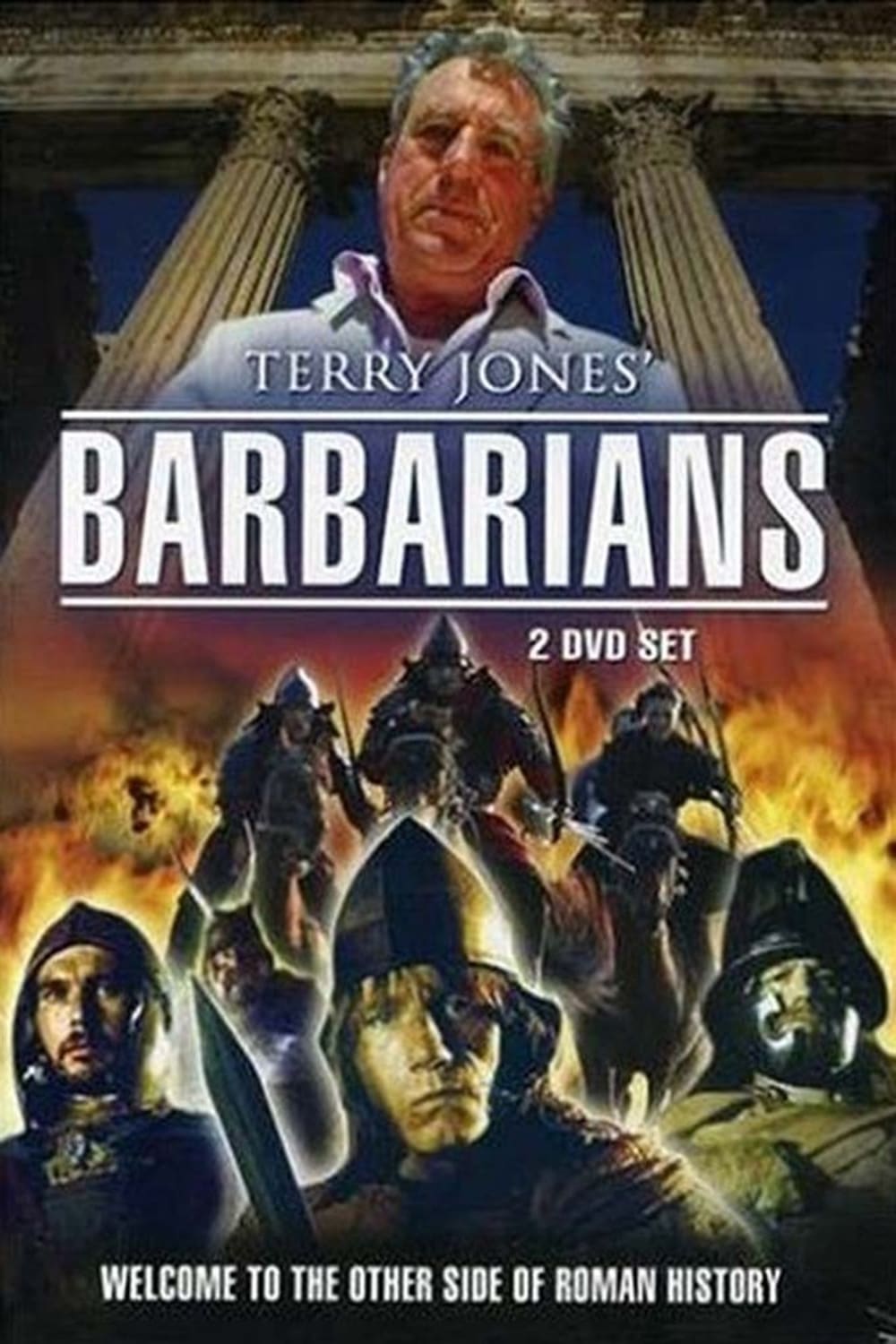
Terry Jones' Barbarians is a 4-part TV documentary series first broadcast on BBC 2 in 2006. It was written and presented by Terry Jones, and it challenges the received Roman and Roman Catholic notion of the barbarian. Professor Barry Cunliffe of the University of Oxford acted as consultant for the series.
A series of bawdy and satirical episodes written during the reign of the emperor Nero and set in imperial Rome. Like the more famous version made by Federico Fellini, an adaptation of Petronius' Satyricon.
In the year 50 BC, Gaul is occupied by the Romans - nearly. But the small village of Asterix and his friends still resists the Roman legions with the aid of their druid's magic potion, which gives superhuman strength. Learning of this potion, a Roman centurion kidnaps the druid to get the secret formula out of him.
The Guardians of Arcadia reunite to battle the nefarious Arcane Order, who've reawakened the primordial Titans.
Across different eras, a poor family, an anxious developer and a fed-up landlady become tied to the same mysterious house in this animated dark comedy.
It's been ten years since the dragons moved to the Hidden World, and even though Toothless doesn't live in New Berk anymore, Hiccup continues the holiday traditions he once shared with his best friend. But the Vikings of New Berk were beginning to forget about their friendship with dragons. Hiccup, Astrid, and Gobber know just what to do to keep the dragons in the villagers' hearts. And across the sea, the dragons have a plan of their own...
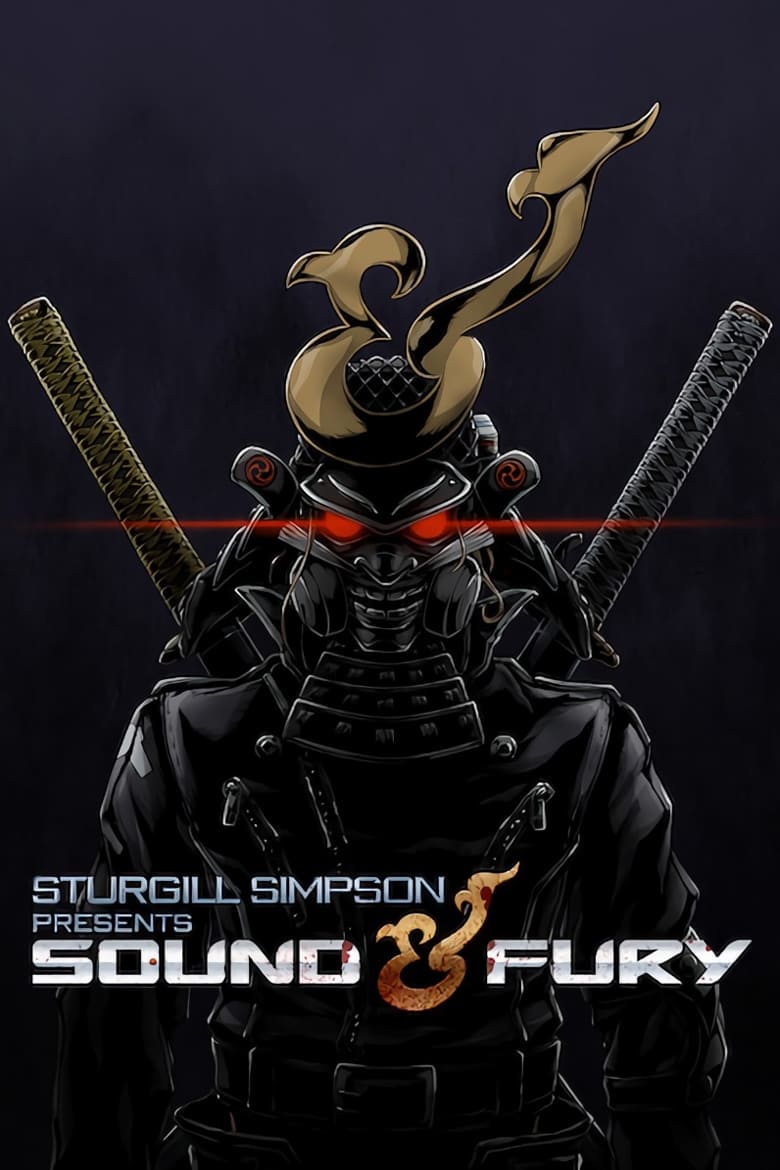
In this anime visual album, a mysterious driver heads deep into a postapocalyptic hellscape toward a ferocious showdown with two monstrous opponents.
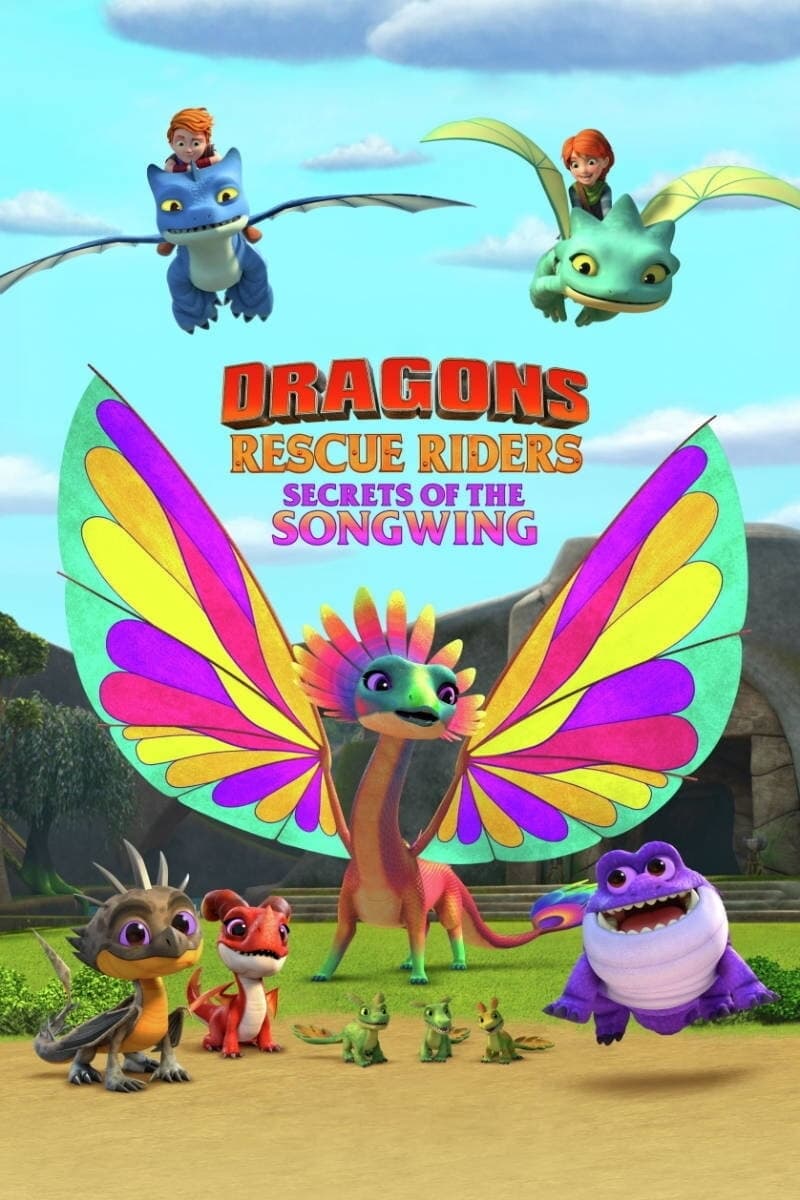
When a musical dragon with a beautiful voice hypnotizes the dragons and people of Huttsgalor, the Rescue Riders have to find a way to break the spell.
GrandPat travels through alternate dimensions and timelines to get home.
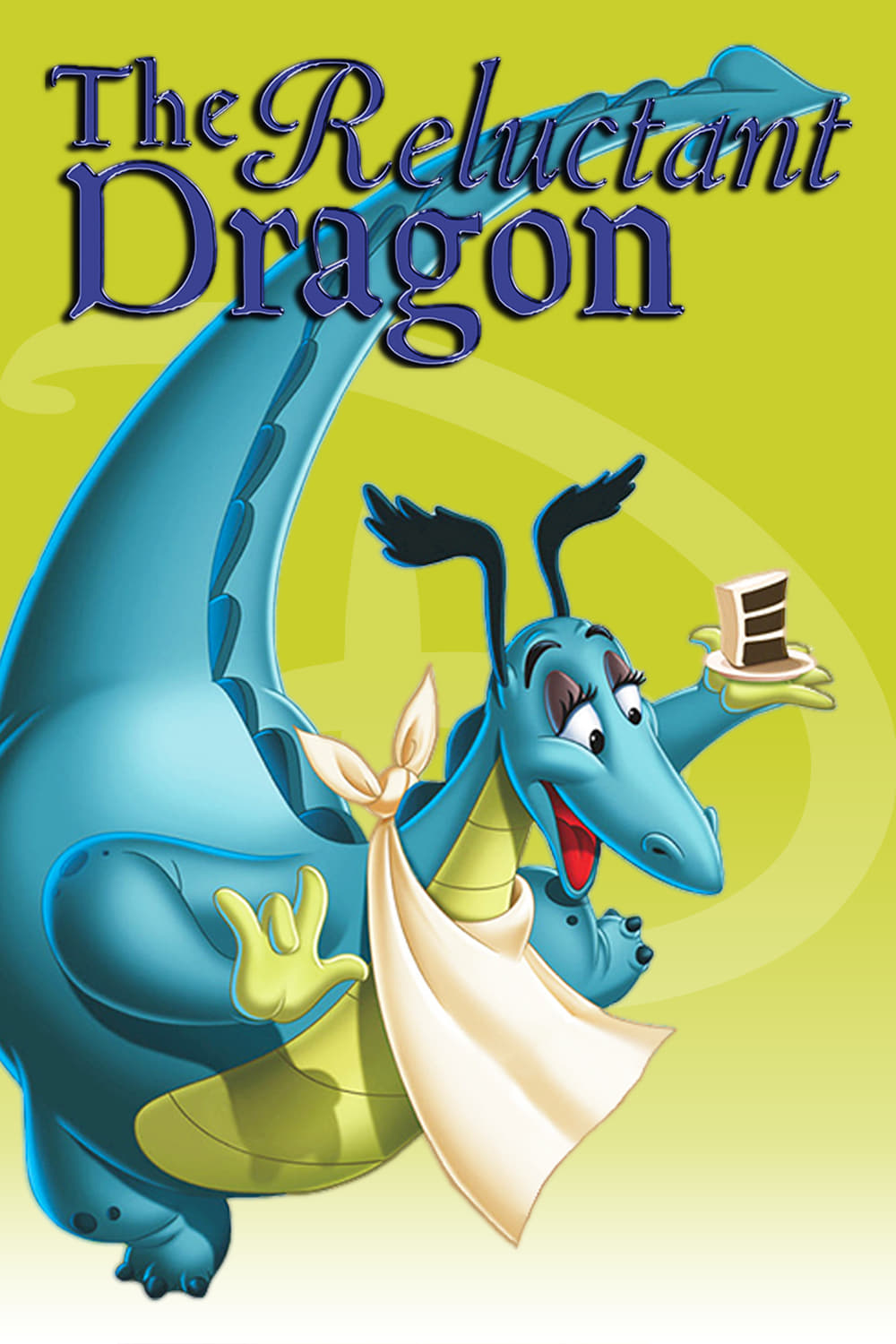
Humorist Robert Benchley attempts to find Walt Disney to ask him to adapt a short story about a gentle dragon who would rather recite poetry than be ferocious. Along the way, he is given a tour of Walt Disney Studios, and learns about the animation process.
The toys throw Ken and Barbie a Hawaiian vacation in Bonnie's room.
This collection of 10 short films produced by Illumination includes: From the "Despicable Me" franchise: Puppy (2013); Minion Scouts (2019); Training Wheels (2013); The Secret Life of Kyle (2017); Santa's Little Helpers (2019). From the "Grinch" franchise: The Dog Days of Winter (2019). From the "Secret Life of Pets" franchise: Norman Television (2016); Weenie (2016). From the "Sing" franchise: Love at First Sight (2017). From the "Lorax" franchise: Forces of Nature (2012).
This collection of 11 short films produced by Illumination includes: From the "Despicable Me" franchise: Mower Minions (2016); Yellow Is the New Black (2018); Competition (2015); Cro Minion (2015); Binky Nelson Unpacified (2015); Panic in the Mailroom (2013). From the "Secret Life of Pets" franchise: Super Gidget (2019). From the "Sing" franchise: Eddie's Life Coach (2017); Gunter Babysits (2017). From the "Lorax" franchise: Serenade (2012); Wagon Ho! (2012).
Tink challenges Gelata to see who can bake the best cake for the queen's party. Plus 10 Disney Fairies Mini-Shorts: - Just Desserts - If The Hue Fits - Dust Up - Scents And Sensibility - Just One Of The Girls - Volleybug - Hide And Tink - Rainbow's Ends - Fawn And Games - Magic Tricks
Po and the Furious Five uncover the legend of three of kung fu's greatest heroes: Master Thundering Rhino, Master Storming Ox, and Master Croc.
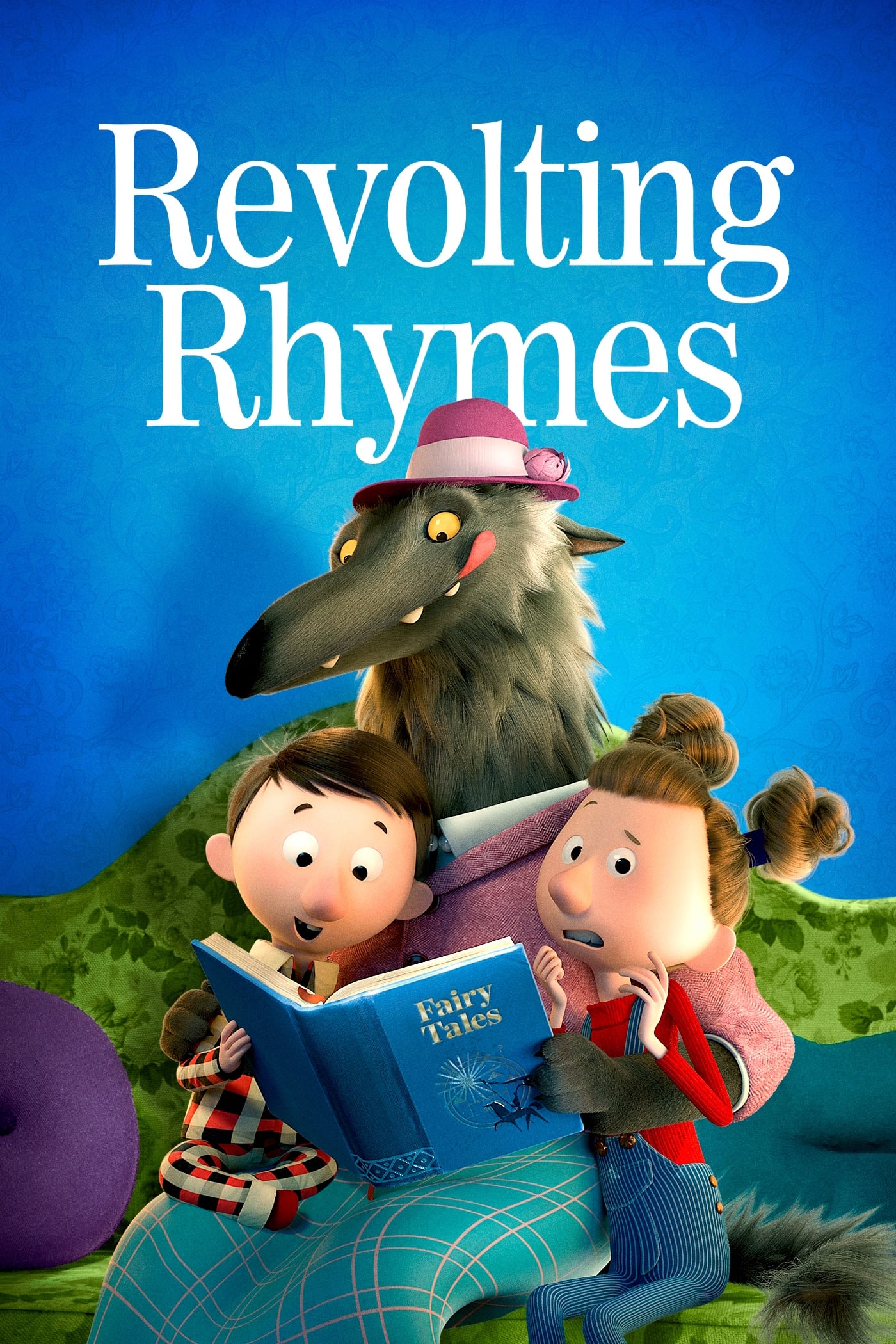
Two half-hour animated films based on the much-loved rhymes written by Roald Dahl and illustrated by Quentin Blake.
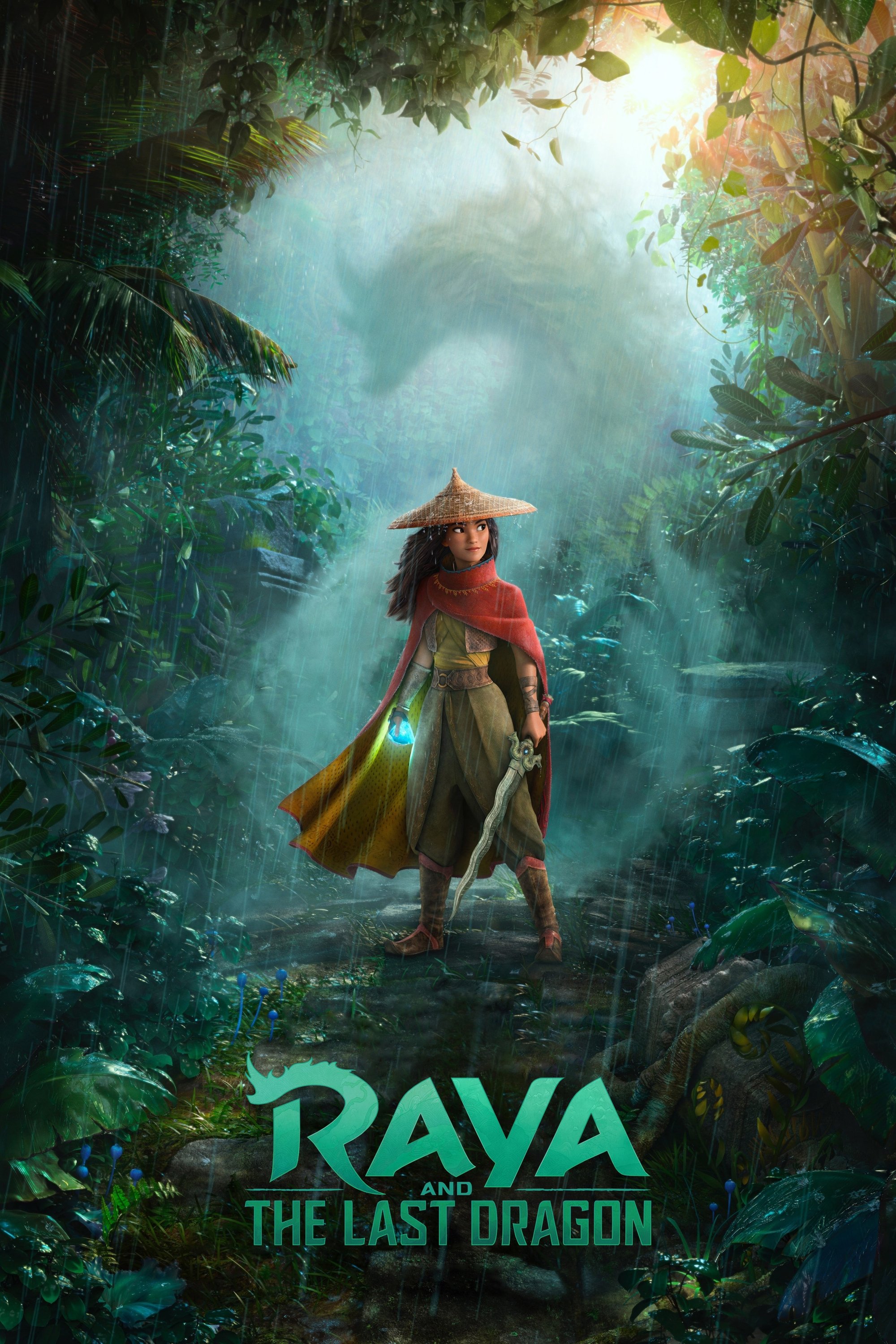
Long ago, in the fantasy world of Kumandra, humans and dragons lived together in harmony. But when an evil force threatened the land, the dragons sacrificed themselves to save humanity. Now, 500 years later, that same evil has returned and it’s up to a lone warrior, Raya, to track down the legendary last dragon to restore the fractured land and its divided people.
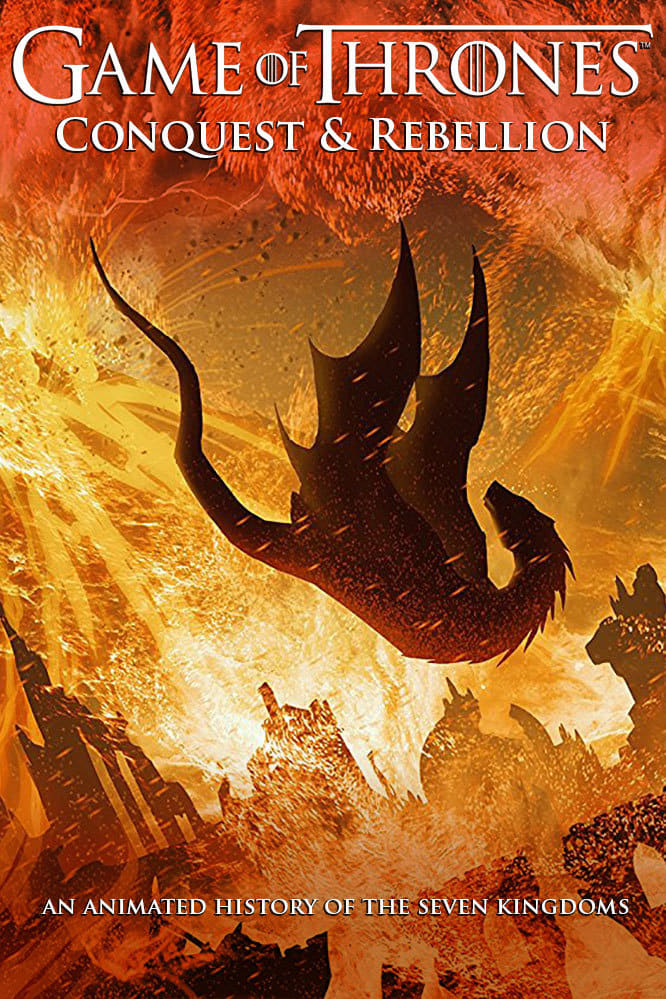
A powerful ruler from House Targaryen begins a campaign to unite a fractured continent ruled by seven competing families. With the aid of formidable dragons, the conquest reshapes the balance of power and leads to the creation of a single throne.
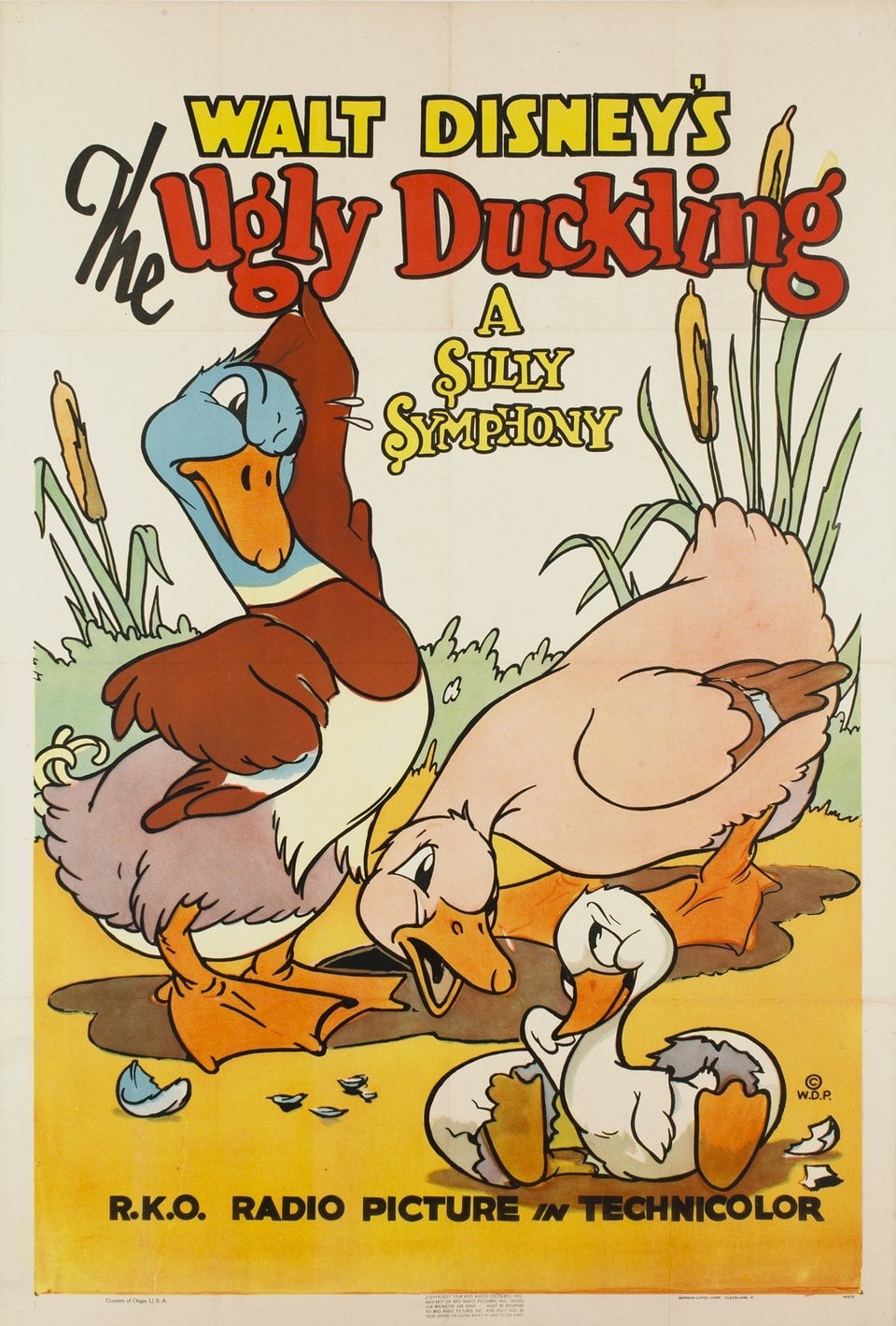
An outcast duckling's search for a family to accept him leads to constant rejection before learning his true identity as a swan.
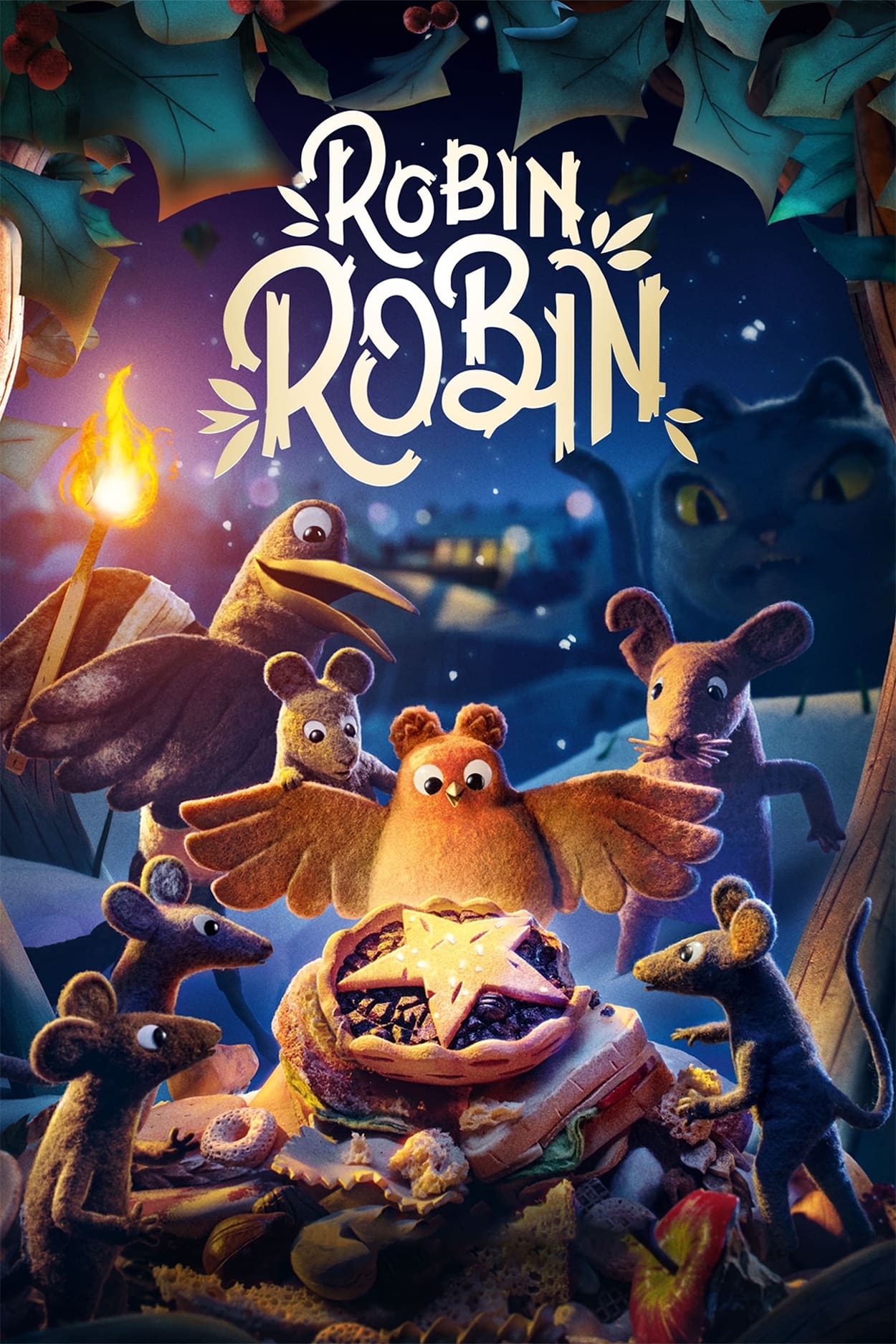
A bird raised by mice begins to question where she belongs and sets off on a daring journey of self-discovery.
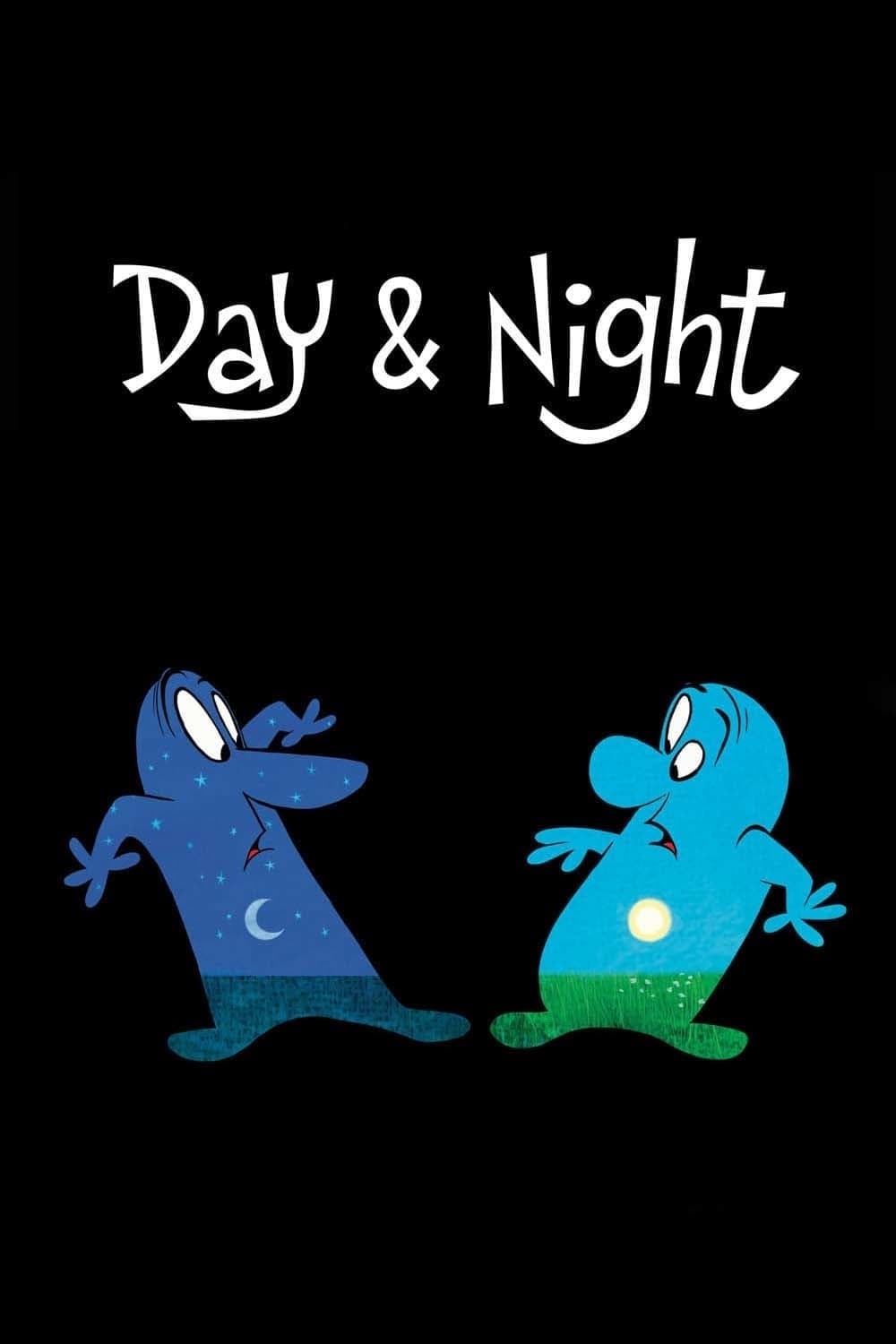
When Day, a sunny fellow, encounters Night, a stranger of distinctly darker moods, sparks fly! Day and Night are frightened and suspicious of each other at first, and quickly get off on the wrong foot. But as they discover each other's unique qualities--and come to realize that each of them offers a different window onto the same world-the friendship helps both to gain a new perspective.
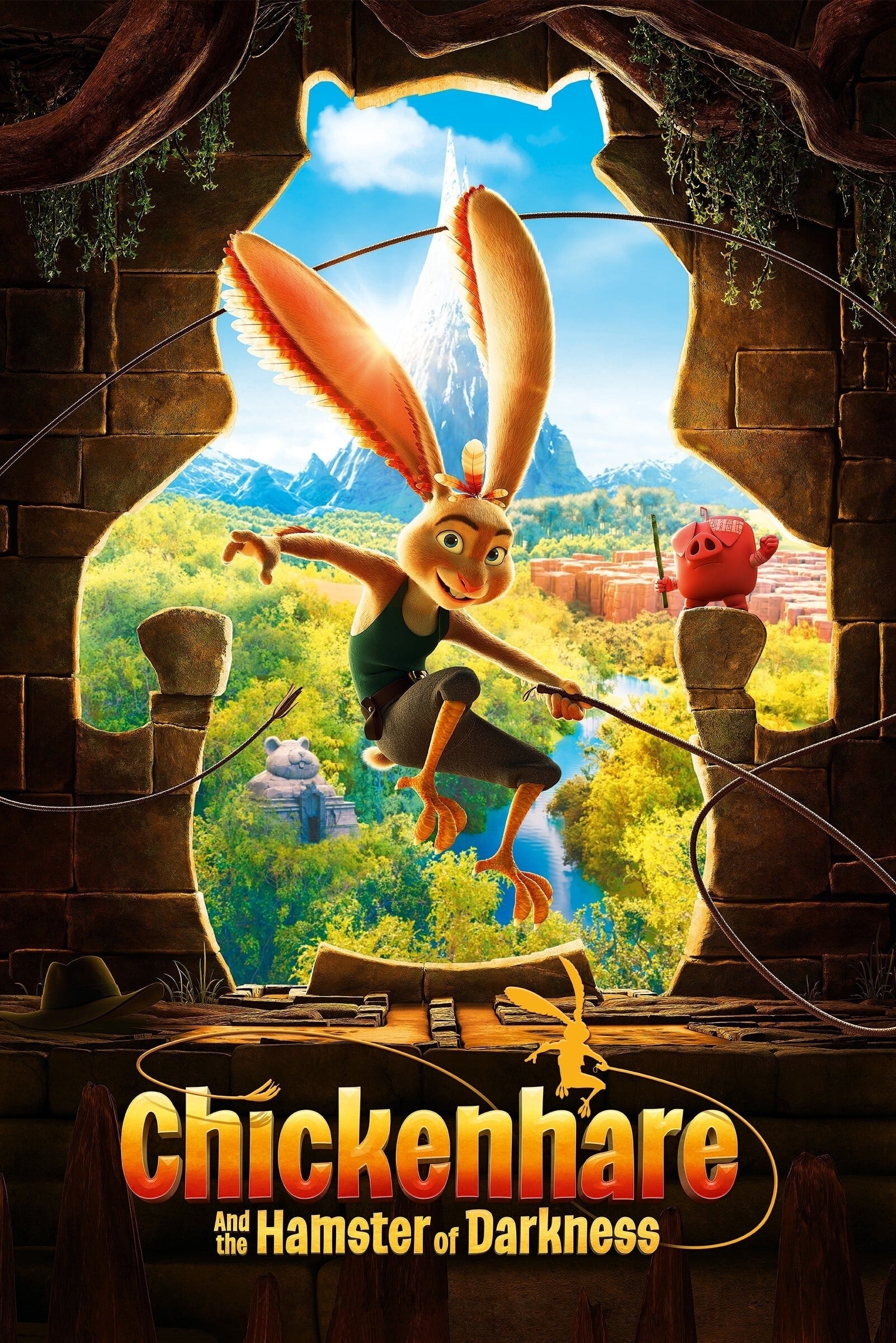
A brave young animal explorer teams up with two trusty friends to find a powerful artifact before his greedy uncle can get his paws on it.
Animals band together to save the day when the evil Otto Von Walrus hatches a sinister scheme to accelerate global warming and melt the Arctic Circle.