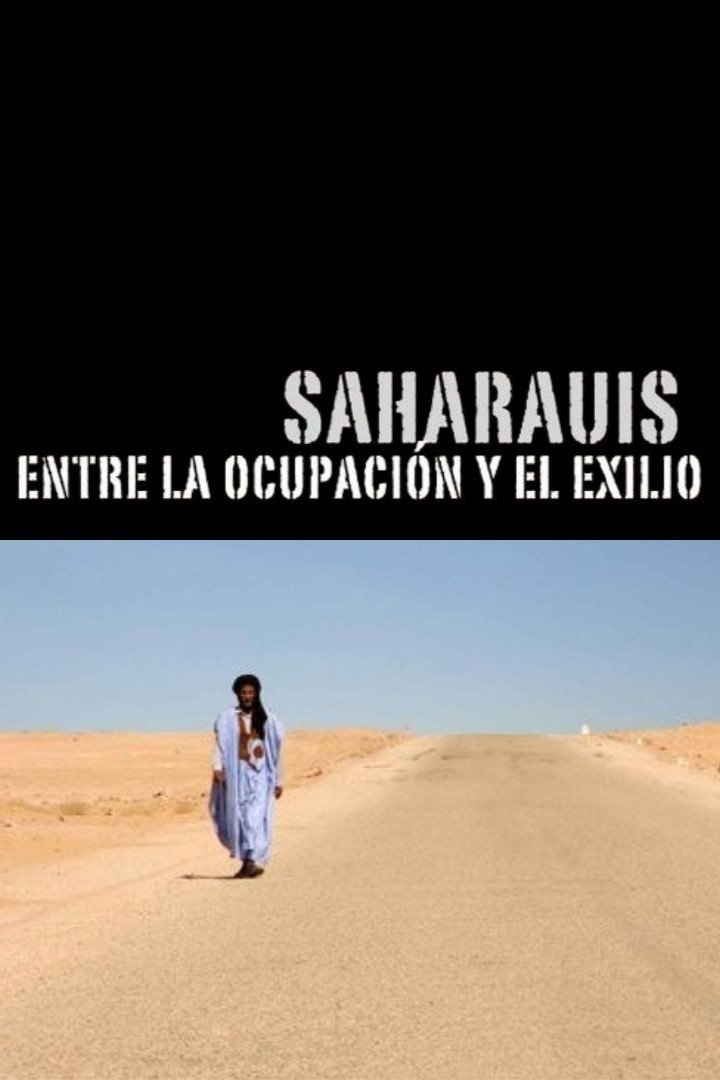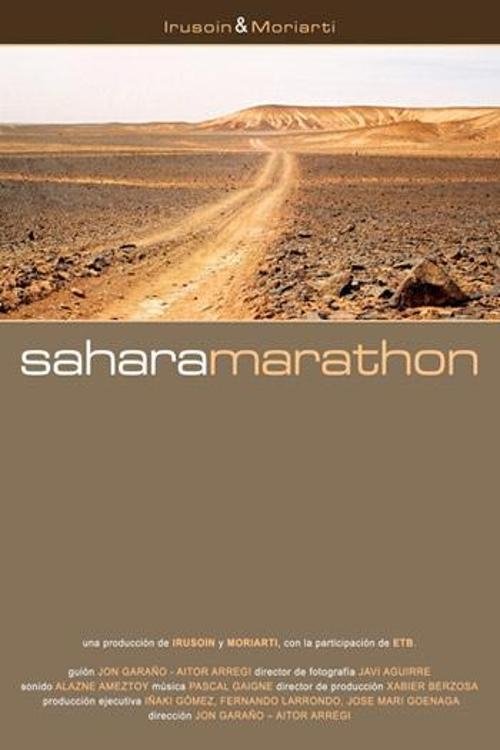
This film offers a picture of the tense situation in which the Sahrawi people have lived for more than 30 years. The yearly celebration of a marathon in the Sahrawi refugee camps serves as the central focus of the story.
Social & External
Blending drama with the explanations of passionate historians and specialists, this enriched historical reconstruction traces 60 years in the life a man who transformed the Middle Ages and laid the foundation of modern Europe, William The Conqueror.
Historic theaters capture the imagination with interesting architecture, lighting, and decorative lobbies. Award-winning videographer/ historian Darrell Jabin toured dozens of theaters, researched opera houses, vaudeville, movie palaces, and neighborhood theaters, and interviewed historians, theater owners and executive directors of community theaters to create a short film covering a unique part of Oregon history.
The Diver is a hymn to diving and the aesthetics of movement. It is a dreamlike collage of movement, music and narration honouring the most beautiful sport there is. Helge Wasenius (b. 1927), The Grand Old Man of divers, is the principal character in the film, a colourful daredevil of the sport.
Thierno Souleymane Diallo sets out with his camera in search of the birth of filmmaking in Guinea. Charming and determined, he traces his country’s film heritage and history and reveals the importance of film archives.
This short documentary produced by the University of Oregon Multimedia Journalism graduate program explores memories of Portland's Japantown – Nihonmachi – and the thriving Japanese American community in Oregon prior to World War II. The film features Chisao Hata, an artist, teacher and activist, and Jean Matsumoto, who was incarcerated at the Portland Assembly Center and in the Minidoka concentration camp as a child.
For both Aboriginal and non-Aboriginal Australians, Captain James Cook is a figure of great historical significance.
However impressive the site is, however bossy the guides are, the visitors of the Musée Napoléon listen only absent-mindedly. Does this young lady really care about the tragic destiny of emperor Napoleon or Europe's changing face or isn't she more interested in her won reflection in a window case? And isn't the camera operator more prone to film the cornet wimples of visiting nuns than the fossilized remains of Napoleon's fallen grandeur...?
The rise and fall of ancient Rome is one of the greatest stories in the history of the world. From a group of settlements huddled along the Tiber in Italy, Rome rose to conquer much of the Mediterranean world and Europe. Produced by One Day University
Explore the tragic truth about the massacre at the 1972 Olympic Games in Germany. Through interviews with key people such as the families of slain Olympians, German investigators and an anonymous perpetrator.
A look at Britain's beloved canal network via a fact-filled cruise along the first superhighways of the Industrial Revolution. In the age before mechanisation, a frenzy of canal-building saw a new army of workers carve out the British landscape, digging out hundreds of miles of waterways using picks, shovels and muscle.
How do you find your place in an ableist world as a person with a disability? Disabled Hugo Schmidt talks to the almost 90 year old Franz-Josef Sauer, who was left with a walking impairment by a tuberculosis infection in his childhood. In the 1990s Sauer received the German Federal Cross of Merit for his achievements in the disabled community. As a public servant in Münster and Düsseldorf he worked on several projects which still benefit his disabled peers. Sauer and Schmidt discover that, although they were born almost 70 years apart, their paths in life are not that different from each other.
"There are things in this world that are yet to be named" centers around Solanum plastisexum - an Australian tomato whose sexual expression is unpredictable and unstable, challenging even the fluid norms of the plant kingdom. Footage of the team of botanists who recently used their Solanum research to explode notions of sexual normativity in any plant or animal is combined with a voiceover of letters sent between science writer Rachel Carson and her lover Dorothy Freeman. "There are things in this world that are yet to be named" is a meditation on erasure, indefinability, and the intersection of queer and environmental histories.
This documentary takes an in-depth look at the witch hunts that swept Europe just a few hundred years ago. False accusations and trials led to massive torture and burnings at the stake and ultimately to the destruction of an organic way of life. The film questions whether the widespread violence against women and the neglect of our environment today can be traced back to those times.
The interview, held on January 4, 2001, was the last given by Professor Milton Santos, who died from cancer on June 24 of the same year. The geographer is gone, but his thoughts remains. Its political and cultural ideals inspire the debate on Brazilian society and the construction of a new world. His statement is a true testimony, a lesson that the world can be better. Based on geography, Milton Santos performs a reading of the contemporary world that reveals the different faces of the phenomenon of globalization. It is in the evidence of contradictions and paradoxes that constitute everyday life that Milton Santos sees the possibilities of building another reality. He innovates when, instead of standing against globalization, proposes and points out ways for another globalization.
Communist, resistance fighter, deportee, Marie-Claude Vaillant-Couturier is one of the great heroines of the 20th century. Nicknamed Maïco, she became a photojournalist and embraced the class struggle at the same time as she fell in love with one of the figures of the Popular Front, Paul Vaillant-Couturier. During World War II, she joined the Resistance and later gave decisive testimony at Nuremberg.
This chilling reflection examines the horrific history of lynchings as cultural events and celebrations that included souvenirs and postcards.
Between 1924 to 1970, Kinchela Boys Home in Kempsey, New South Wales, saw an estimated 400 to 600 Aboriginal children exposed to routine acts of cultural genocide and remains one of Australia’s most notorious institutions of the Stolen Generations. After being stolen from their families, country, and community, children were stripped of their names, given numbers, and subjected to ‘reprogramming’ and strict regimes of manual labour. We Were Just Little Boys is narrated by KBH survivors.
An insight into the life and works of Michel Foucault and how his work on Knowledge and Power still has an impact on daily life. This is applied practically to the real world of SOAS University and the online world of Social Media. Presented by Merle Tschirschnitz, Kiran Thomas and Adam Brocklesby
The Hopperstad stave church is a marvelous, iconic architectural statement from the fjords of Norway. Replicating the "stavkirke's" spiritual power and beauty became a quest for G.D. "Guy" Paulson of Fargo, ND. His Hopperstad Stave Church Replica is a jewel for the city of Moorhead, MN. Paulson's dream captured the imaginations of the experts, craftsmen, artists, and volunteers who helped him. It is a tribute to those who have gone before and an inspiration to those yet to come.