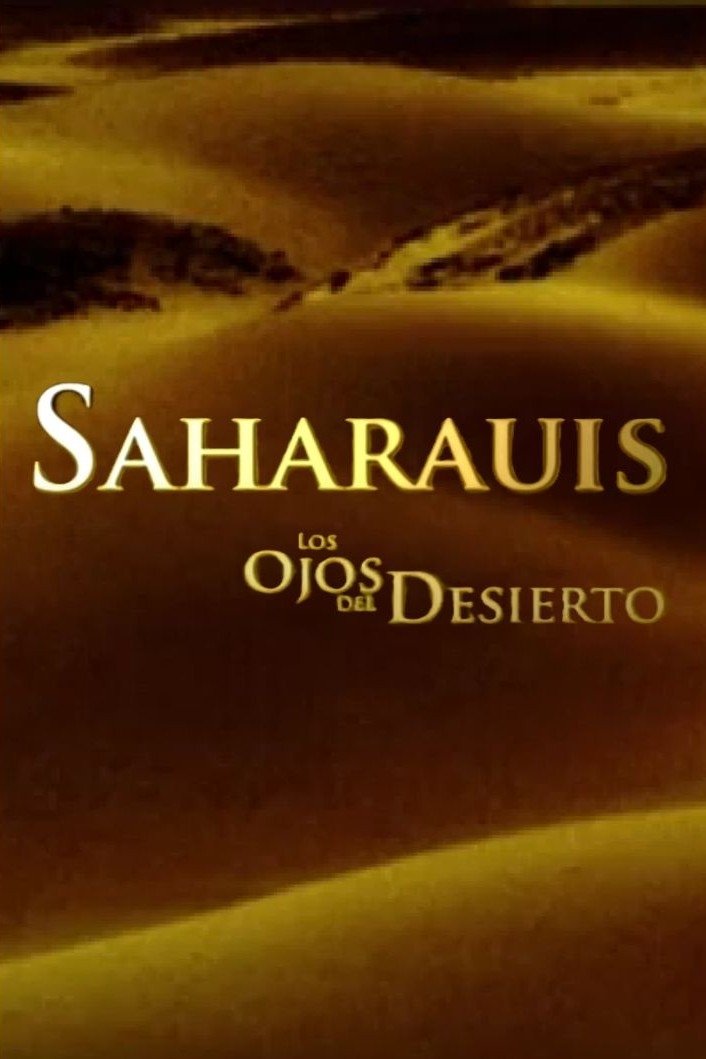
An approach to Sahrawi culture, different aspects of daily life, culture and the struggle of the Sahrawi people in the Sahrawi refugee camps in Tindouf, Algeria, and in the area of the liberated territories of Tifariti.
Social & External

Why did the Roman Empire, which dominated Europe and the Mediterranean for five centuries, inexorably weaken until it disappeared? Archaeologists, specialists in ancient pathologies and climate historians are now accumulating clues converging on the same factors: a powerful cooling and pandemics. A disease, whose symptoms described by the Greek physician Galen are reminiscent of those of smallpox, struck Rome in 167, soon devastating its army. At the same time, a sudden climatic disorder that was underway as far as Eurasia caused agricultural yields to plummet and led to the westward migration of the Huns. Plagued by economic and military difficulties, attacked from all sides by barbarian tribes, the Roman edifice gradually cracked.
On June 11th, 1997, Philippe Kahn created the first camera phone solution to share pictures instantly on public networks. The impetus for this invention was the birth of Kahn's daughter, when he jerry-rigged a mobile phone with a digital camera and sent photos in real time. In 2016 Time Magazine included Kahn's first camera phone photo in their list of the 100 most influential photos of all time.
The horses in Denys Colomb Daunant’s dream poem are the white beasts of the marshlands of the Camargue in South West France. Daunant was haunted by these creatures. His obsession was first visualized when he wrote the autobiographical script for Albert Lamorisse’s award-winning 1953 film White Mane. In this short the beauty of the horses is captured with a variety of film techniques and by Jacques Lasry’s beautiful electronic score.
Filmed in Cordoba, Granada, Seville, and Toledo, this documentary retraces the 800-year period in medieval Spain when Muslims, Christians, and Jews forged a common cultural identity that frequently transcended their religious differences, revealing what made this rare and fruitful collaboration possible, and what ultimately tore it apart.
A documentary that explores the myth behind the truth. Different people around the globe reinterpret the legend of Che Guevara at will: from the rebel living in Hong Kong fighting Chinese domination, to the German neonazi preaching revolution and the Castro-hating Cuban. Their testimonies prove that the Argentinian revolutionary's historical impact reverberates still. But like with all legends, each sees what he will, in often contradictory perspectives.
When two of artist Barbora Kysilkova’s most valuable paintings are stolen from a gallery at Frogner in Oslo, the police are able to find the thief after a few days, but the paintings are nowhere to be found. Barbora goes to the trial in hopes of finding clues, but instead she ends up asking the thief if she can paint a portrait of him. This will be the start of a very unusual friendship. Over three years, the cinematic documentary follows the incredible story of the artist looking for her stolen paintings, while at the same time turning the thief into art.
Offers audiences a unique window into a bygone era when a thrilling new invention, the motion picture camera, first captures a nation on film.
Essence of Healing is a documentary exploring the life journeys of 14 American Indian nurses - their experiences growing up, their experiences in nursing school, and their experiences on the job. They are part of a larger story - a historical line of care and compassion that has run through hundreds of indigenous tribes for thousands of years.
The Sacred City of Caral or Caral-Supe is the capital of the Norte Chico Civilization of Supe located in the Supe Valley, 200 km (124 miles) north of Lima. The Sacred City of Caral is the earliest known civilization in the Americas, it dates to the Late Archaic period. Radiocarbon analysis performed by the Caral-Supe Special Archaeological Project (PEACS) dates its development between 3000 to 1800 B.C.. It is believed that this civilization started by the merging of small villages based on trade of agricultural and fishing products. Its importance rests on the success of techniques of domestication of cotton, beans, potatoes, chilis, squash among other products. Success in agriculture was due to the development of water canals, reservoirs and terraces. They used guano, bird excrement, and anchovies as fertilizer.
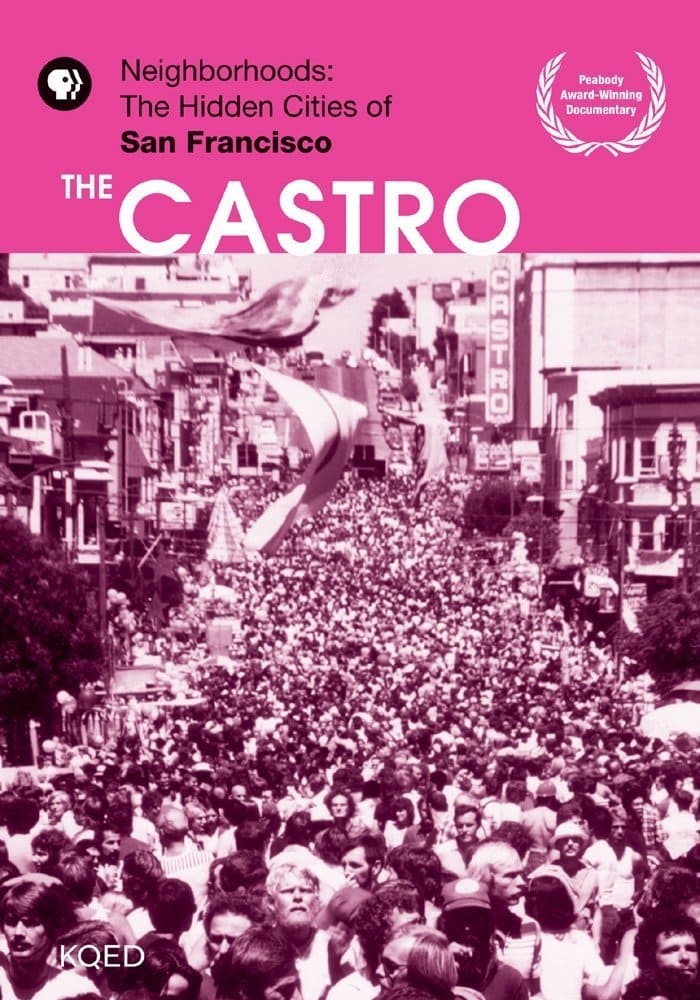
Education Center for disabled children located in the Sahrawi refugee camps in Algeria. Despite the precarious conditions in which this population lives since 40 years ago, the Polisario Front as the representative of the Sahrawi people has promoted inclusion as a way to avoid marginalization and discrimination of one of the most vulnerable populations within these territories: children with special needs. "Castro" is the man who devotes his life to this beautiful project fighting all odds: physical, psychic, social, economic, and even the incomprehensions of his own society. The Sahrawis are living (resisting) in one of the harshest deserts on Earth but Castro has the magic formula to achieve the inclusion of these wonderful beings in his society and in the rest of the world: MUSAWAT, EQUALITY.
Ishq e Qalandar - The Beautiful Sindh is a travel film that takes viewers through one of the most ancient civilizations on Earth called Sindh. Shezan Saleem Jo-G takes a journey of self-realization, the discovery of his roots, and building a connection with people and spirituality in Sindh.
Well known for its exploration of seduction and revenge, the “Dangerous Liaisons” by Choderlos de Laclos caused a scandal from its first publication in 1782. Despite – or because of the scandal – the book was a top-seller. Since then, it stood the test of time. Combining eras, continents and people, the novel is adapted around the world. Marvelous tool for reflection on the female condition, social satire announcing the Revolution, remarkable work on the conflicting nature of love but also of the gender war, consecration of the power of the words, a libertine manual… “Dangerous Liaisons” is all of these at once.
A TV-hour length documentary film depicting the relationship between language, culture, place, music, tradition, and magic on an active volcano, in the Pacific nation of Vanuatu, on the island of Ambrym.
This is the true story of Fetim Salam, a Saharawi refugee falsely portrayed as a slave in the Australian documentary 'Stolen'. Australian filmmakers, Violeta Ayala and Daniel Fallshaw, travel to the Saharawi refugee camps in Tindouf, Algeria in 2007 and claim to discover 20,000 slaves in the camps run by the independence movement Polisario Front. Refugees are outraged for being portrayed as slaves, and humanitarian aid workers are incredulous about these allegations as they know the camps intimately. Filmmaker Carlos Gonzalez retraces their steps in search of the truth and finds a web of lies, misinformation and Moroccan operatives reshaping the truth.
A whimsical blend of live action and animation, "Saludos Amigos" is a colorful kaleidoscope of art, adventure and music set to a toe-tapping samba beat. From high Andes peaks and Argentina's pampas to the sights and sounds of Rio de Janeiro, your international traveling companions are none other than those famous funny friends, Donald Duck and Goofy. They keep things lively as Donald encounters a stubborn llama and "El Gaucho" Goofy tries on the cowboy way of life....South American-style.
The great myths of mankind have captivated us for thousands of years. Inexplicable phenomena, places shrouded in legend and superhuman heroes puzzle us and fire our imagination. But what if the legends are more than pure fiction? Scholars have been sketching dragons since ancient times, and the belief in their existence extends into modern times. Whether with wings or breathing fire, as creator or destroyer - the dragon is one of the oldest myths of mankind.