Social & External
Unknown Role
Well known for its exploration of seduction and revenge, the “Dangerous Liaisons” by Choderlos de Laclos caused a scandal from its first publication in 1782. Despite – or because of the scandal – the book was a top-seller. Since then, it stood the test of time. Combining eras, continents and people, the novel is adapted around the world. Marvelous tool for reflection on the female condition, social satire announcing the Revolution, remarkable work on the conflicting nature of love but also of the gender war, consecration of the power of the words, a libertine manual… “Dangerous Liaisons” is all of these at once.

Thierno Souleymane Diallo sets out with his camera in search of the birth of filmmaking in Guinea. Charming and determined, he traces his country’s film heritage and history and reveals the importance of film archives.
However impressive the site is, however bossy the guides are, the visitors of the Musée Napoléon listen only absent-mindedly. Does this young lady really care about the tragic destiny of emperor Napoleon or Europe's changing face or isn't she more interested in her won reflection in a window case? And isn't the camera operator more prone to film the cornet wimples of visiting nuns than the fossilized remains of Napoleon's fallen grandeur...?
At once a vast expanse of mesmerizing desolation and the crucible of human history, the Sahara Desert has been both the battlefield of empires and the haunted wilderness at the margins of the known world for thousands of years. Shot on location, this exhilarating documentary brings to life the Sahara’s cruel history and the conflicts that still plague its people. THE SAHARA recounts the story of kings who once led caravans of 30,000 people across the desert, bearing riches beyond imagination. It tells of Roman death squads that exterminated the citizens of the Empire’s most bitter rival and how the Foreign Legion crafted a legend out of last stands and lost causes. From the fabled metropolis of Timbuktu to the shores of Tripoli, THE SAHARA is an illuminating exploration of this unforgiving and remote land of myth and mirage.
Produced in 1988, this feature documentary presents a living history of Quebec's last 40 years as seen through the eyes of one couple. Pauline Julien and Gérald Godin, two Quebec artists, share their perspectives on the events that have marked Quebec's evolution. Julien, a singer, and Godin, a poet, express their love and passion for the province (and each other) while providing a unique take on the Quebec nationalist movement.
Filmed in IMAX, a young Mayan boy who lives close to the ruins becomes acquainted with an archaeologist (Guerra) and asks her to tell him about his ancestors. The crew travelled to over 15 locations in Mexico and Guatemala, including Tulum and Chichén Itzá.
2010 documentary film on the Armenian Genocide by the Young Turk government of the Ottoman Empire during World War I. It is based on eyewitness reports by European and American personnel stationed in the Near East at the time, Armenian survivors and other contemporary witnesses which are recited by modern German actors.
How do you find your place in an ableist world as a person with a disability? Disabled Hugo Schmidt talks to the almost 90 year old Franz-Josef Sauer, who was left with a walking impairment by a tuberculosis infection in his childhood. In the 1990s Sauer received the German Federal Cross of Merit for his achievements in the disabled community. As a public servant in Münster and Düsseldorf he worked on several projects which still benefit his disabled peers. Sauer and Schmidt discover that, although they were born almost 70 years apart, their paths in life are not that different from each other.
Who is missing in our history? Hayashi Studio investigates the hidden history of BC, as documented by a Japanese photographer, Senjiro Hayashi.
An extraordinary look at the life of Uri Geller, the man famous for bending spoons and reading minds, told through exclusive interviews with the man himself.
He described his love of art as his greatest inclination from his youth: Johann Joachim Winckelmann as a representative and rediscoverer of Greek and Roman antiquity. He was the father of European art history and was the victim of a robbery-murder in 1768. The documentary tells of his life, his work and his early death.
Heinz Stücke left Germany in 1962 with a bike, a tent and a goal: to see everything in the world. Now for the first time in 50 years, he's come home.
Blending drama with the explanations of passionate historians and specialists, this enriched historical reconstruction traces 60 years in the life a man who transformed the Middle Ages and laid the foundation of modern Europe, William The Conqueror.
From May 10, 1940, France is living one of the worst tragedies of it history. In a few weeks, the country folds, and then collapsed in facing the attack of the Nazi Germany. On June 1940, each day is a tragedy. For the first time, thanks to historic revelations, and to numerous never seen before images and documents and reenacted situations of the time, this film recounts the incredible stories of those men and women trapped in the torment of this great chaos.
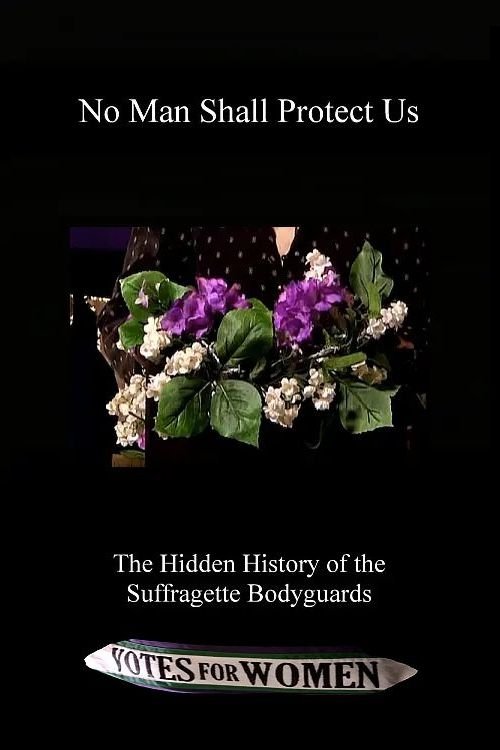
In 1913/14, the most radical women's rights activists in England formed a secret society to protect their sister suffragettes from assault and arrest. They trained in martial arts, carried concealed weapons and used ingenious evasion and deception tactics. These women were known as The Bodyguard, and this is their story.
Explore the tragic truth about the massacre at the 1972 Olympic Games in Germany. Through interviews with key people such as the families of slain Olympians, German investigators and an anonymous perpetrator.
This short documentary produced by the University of Oregon Multimedia Journalism graduate program explores memories of Portland's Japantown – Nihonmachi – and the thriving Japanese American community in Oregon prior to World War II. The film features Chisao Hata, an artist, teacher and activist, and Jean Matsumoto, who was incarcerated at the Portland Assembly Center and in the Minidoka concentration camp as a child.

A look at Britain's beloved canal network via a fact-filled cruise along the first superhighways of the Industrial Revolution. In the age before mechanisation, a frenzy of canal-building saw a new army of workers carve out the British landscape, digging out hundreds of miles of waterways using picks, shovels and muscle.