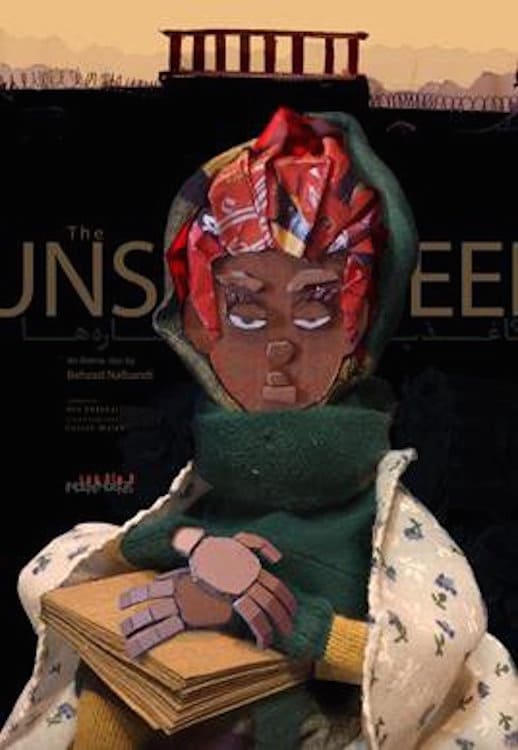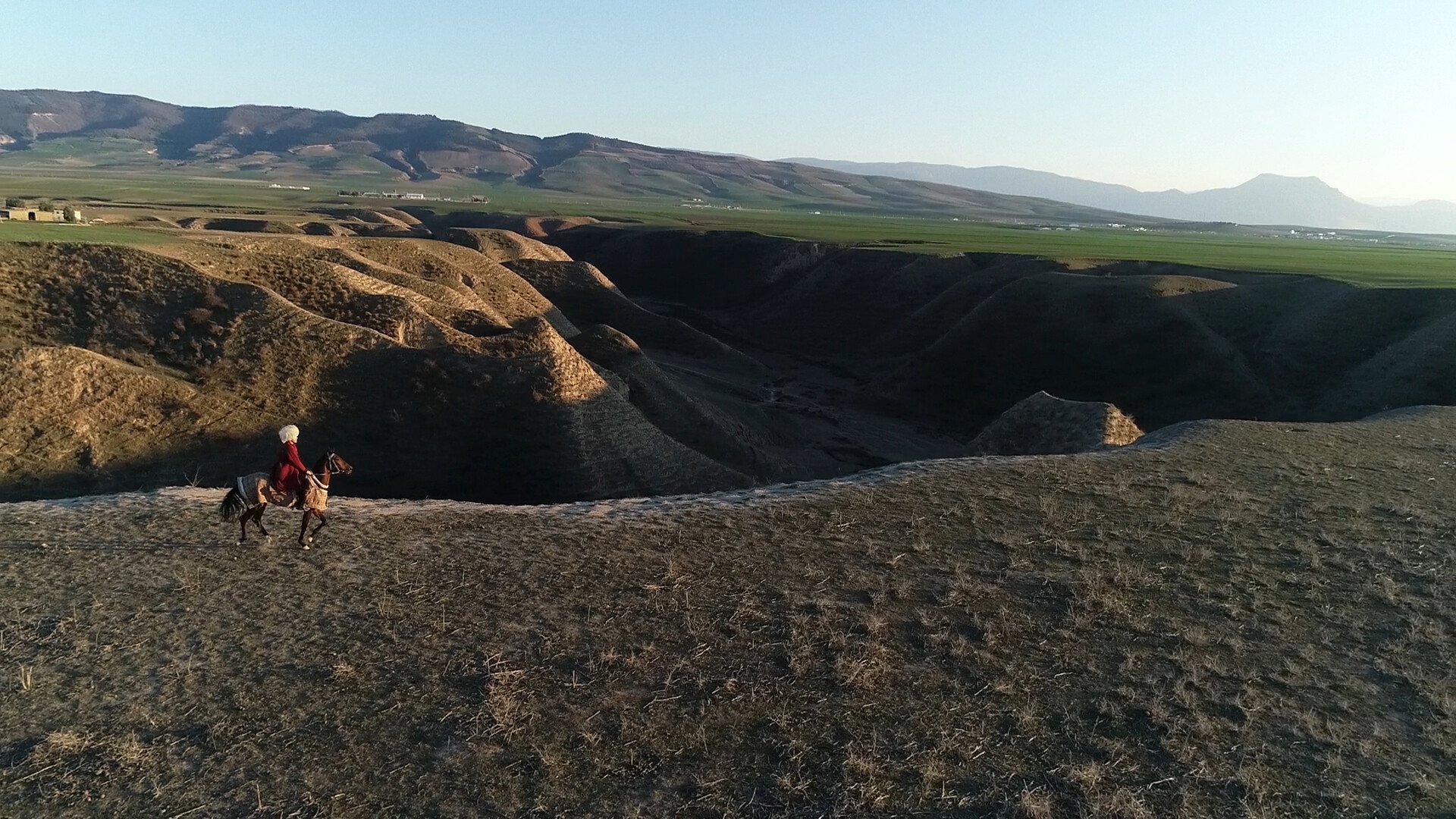
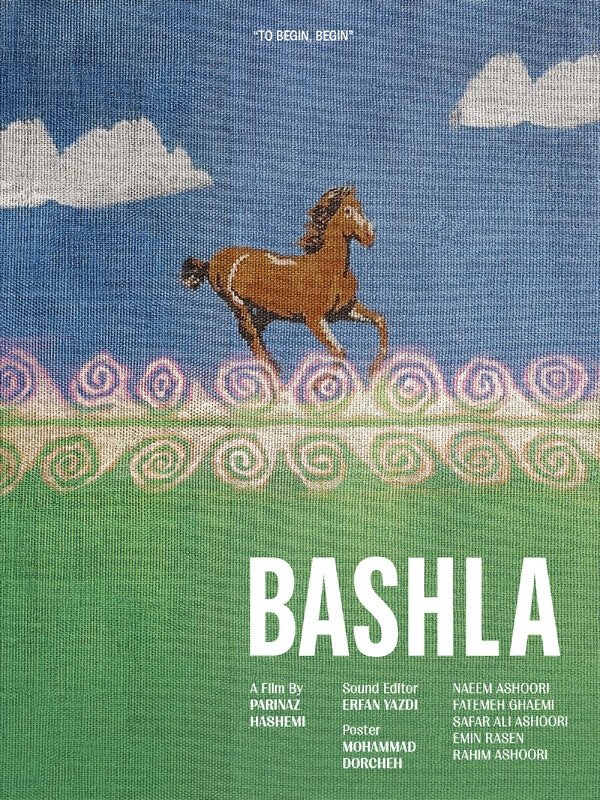
Bashla tells the story of Naeem, a Turkmen man who moves to Tehran but returns to his village. Struggling between tradition and modernity, he becomes an advocate for preserving his people’s heritage.
Social & External

Self
On May 8, 1989, Sports Illustrated ran an article about Ultimate frisbee… about a team with no name hailing from New York City that was about to change the sport forever. From its 1968 New Jersey birth to its unanimous 2015 recognition by the International Olympic Committee, FLATBALL circles the globe to showcase four decades of world-class Ultimate and goes even further: to a set of fields in the Middle East to understand and demystify the unique spirit of the game.
Historian Tom Holland traces the origins of Isis’ barbaric and sadistic violence which it claims is justified by the tenets and scriptures of Islam.
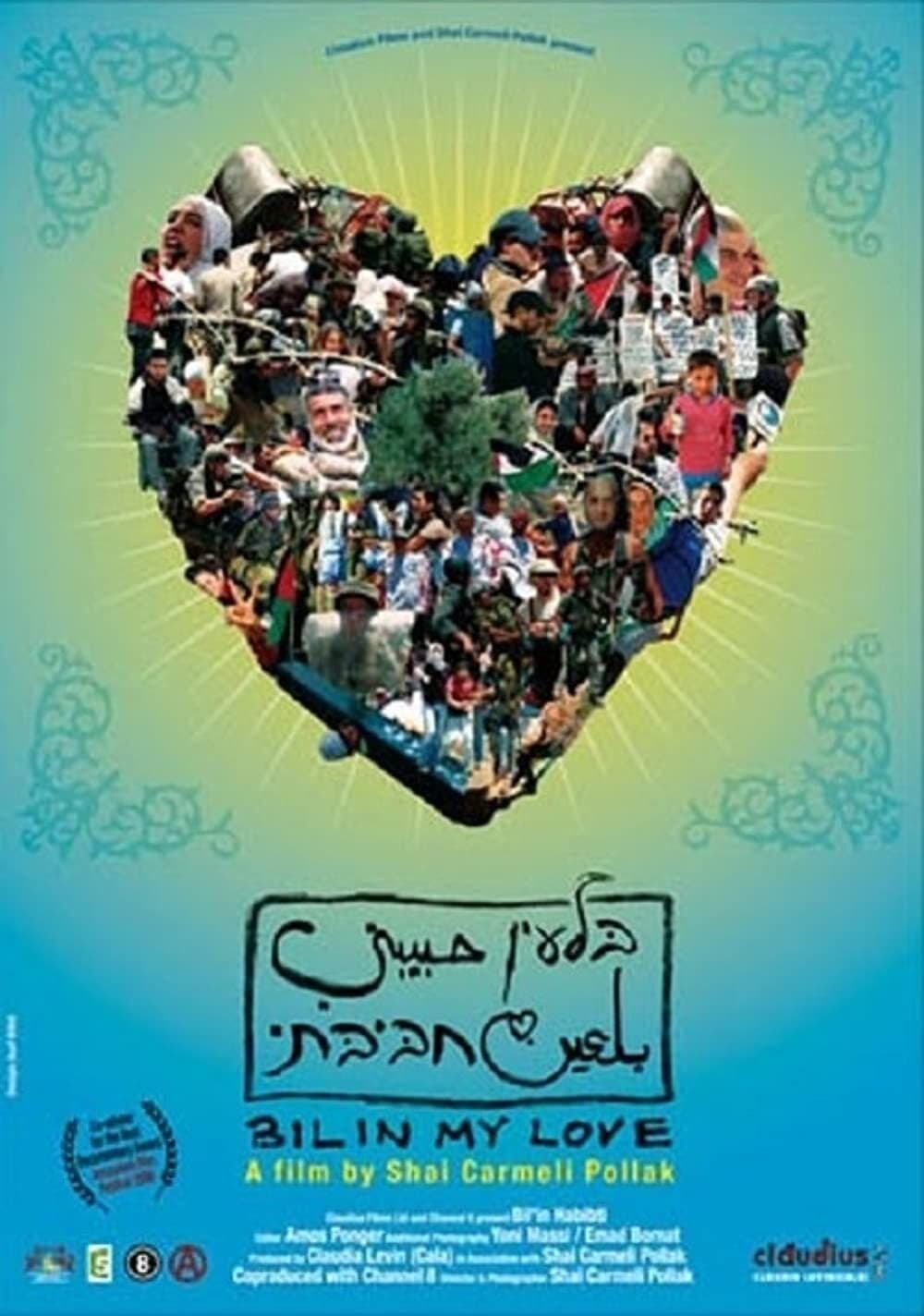
The Israeli filmmaker Shai Corneli Polak records the building of the 'security wall' through Palestinian territory at the village of Bil'in. The villagers protest mostly peacefully, while the Israeli army doesn't react peacefully. By now the Israeli High Court has ruled that the building of the wall was illegal.
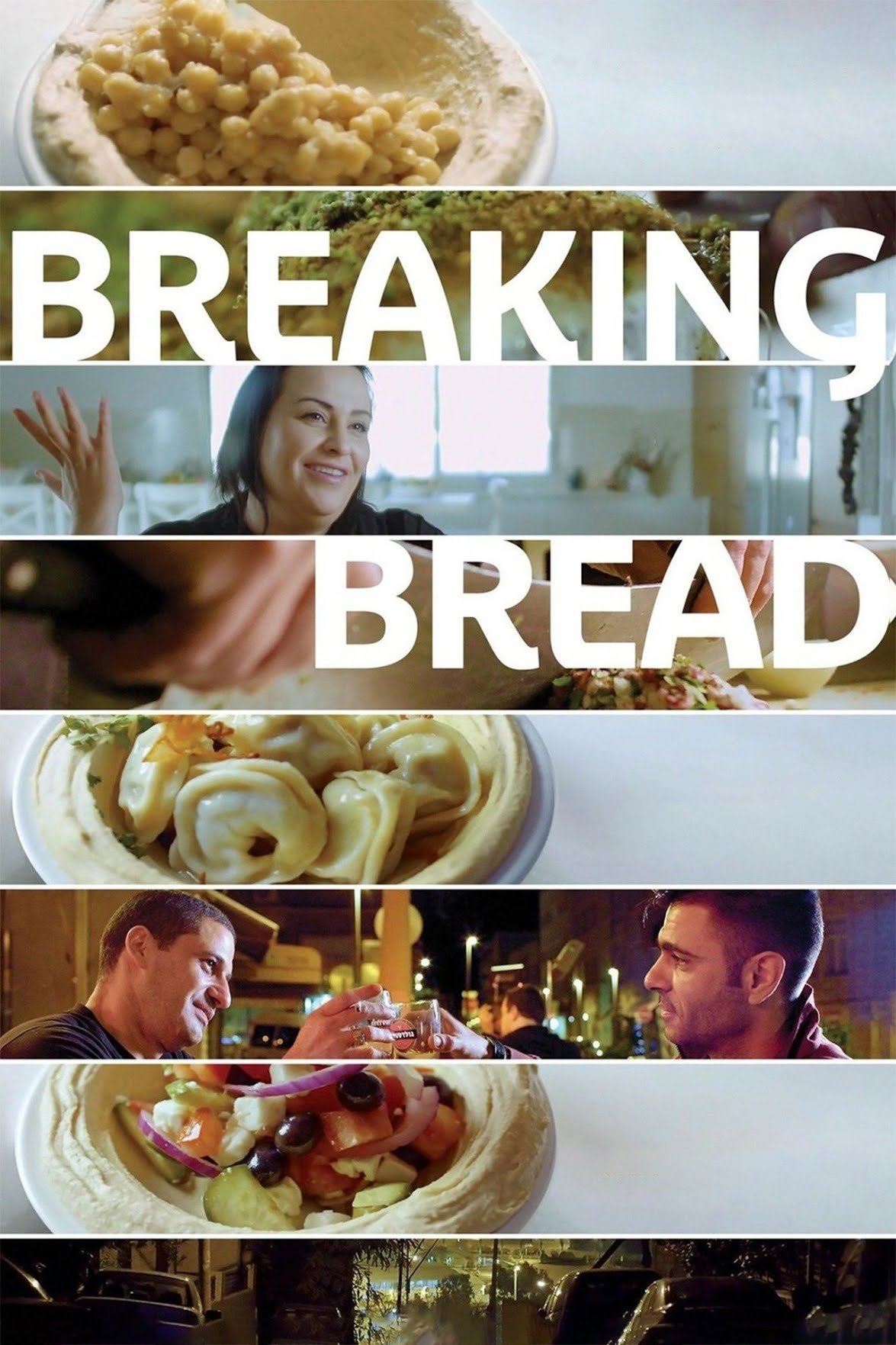
In Breaking Bread, exotic cuisine and a side of politics are on the menu. Dr. Nof Atamna-Ismaeel - the first Muslim Arab to win Israel's MasterChef - is on a quest to make a social change through food. And so, she founded the A-sham Arabic Food Festival in Haifa. There, pairs of Arab and Jewish chefs collaborate on mouthwatering dishes like kishek (a Syrian yogurt soup), and qatayef (a dessert typically served during Ramadan), as we savor the taste of hope and discover the food of their region free from political and religious boundaries.

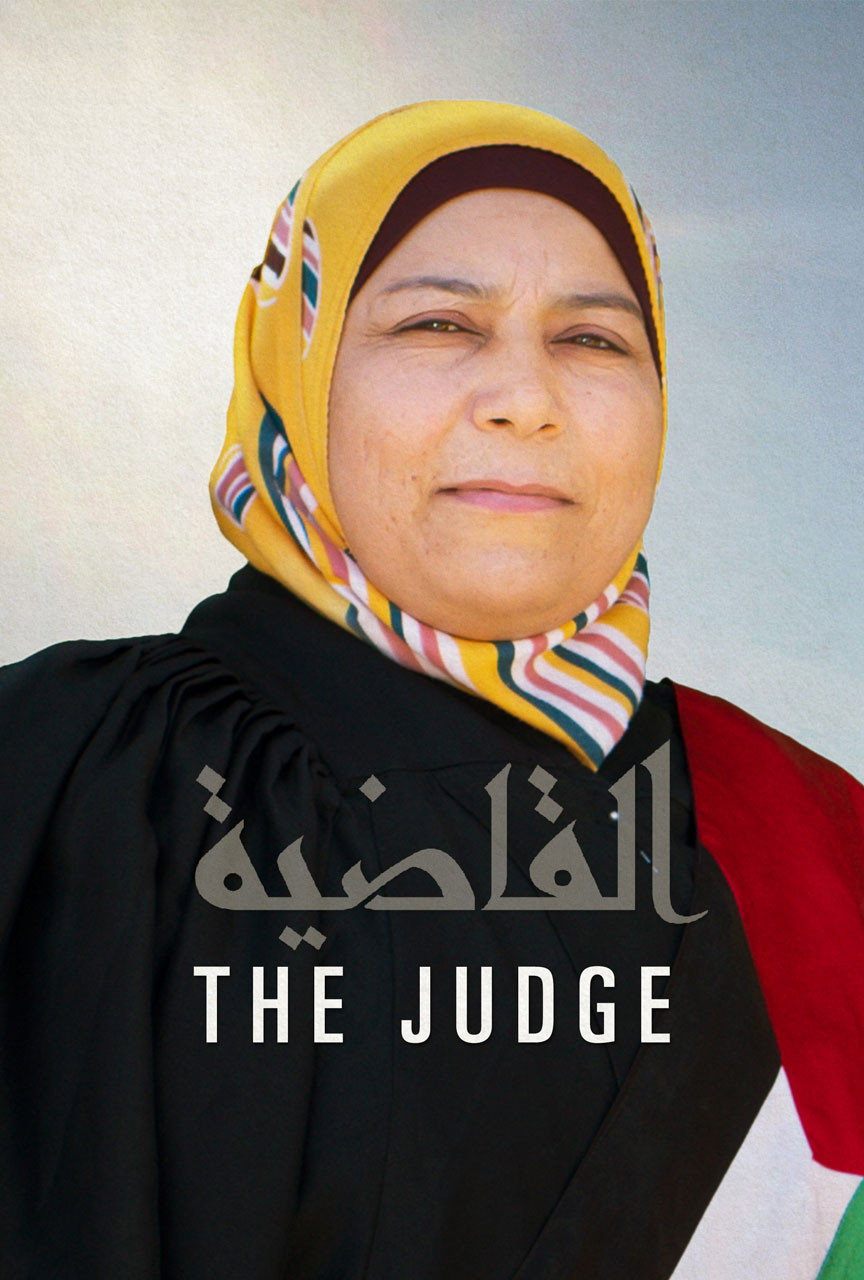
A verité legal drama about Judge Kholoud Al-Faqih, the first woman appointed to a Shari'a court in the Middle East, whose career provides rare insights into both Islamic law and gendered justice.
AMIN portrays Qashqai musician Amin Aghaie, a young modern nomad and his family who despite facing steep financial, cultural and political obstacles are dedicated to their art and culture. Amin travels to remote towns and villages to record the music of the surviving masters whose numbers decline each year. His nomadic family are selling their meager belongings to help support their son's education in performance and ethnomusicology at Tchaikovsky's Conservatory in Kyiv, Ukraine, but it is not enough. Amin, desperate to finish his academic education, sells his violins one at a time just to pay for his tuition.
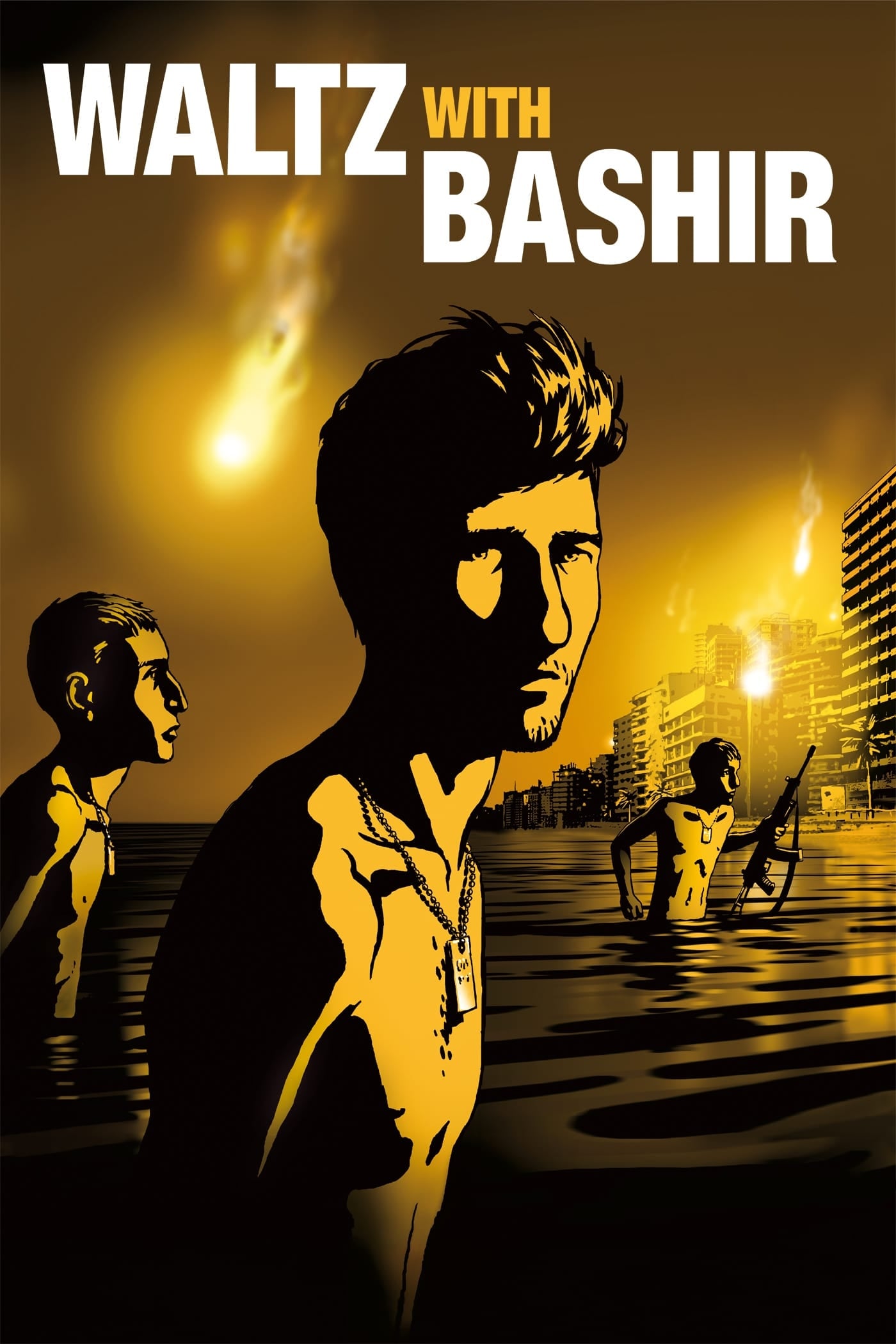
An Israeli film director interviews fellow veterans of the 1982 invasion of Lebanon to reconstruct his own memories of his term of service in that conflict.
Explore an overlooked moment in pre-WWI Palestine when people's identities overlapped, and Jewish, Muslim, and Christian communities intermingled freely. Few could contemplate the conflict that would engulf their region for the next century.
A few years ago, the al-Mahamids fled Bashar al-Assad and Syria to settle in Montreal. A nuanced portrayal of a courageous family coping with a seemingly interminable war, thousands of kilometres away, that continues to affect their lives.
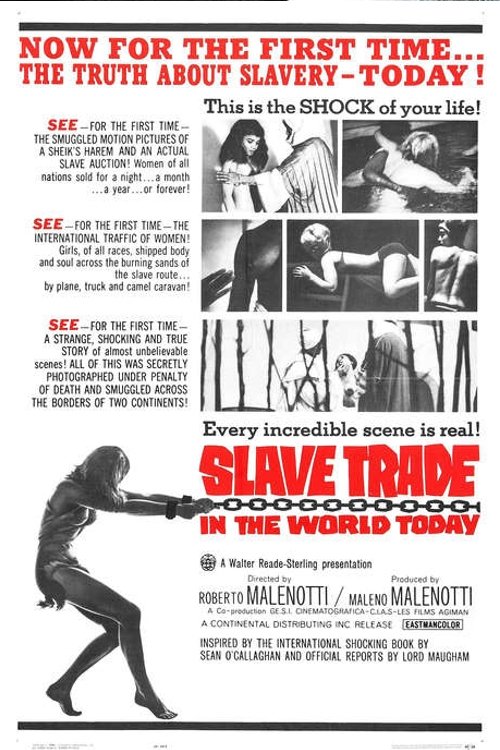
The film documents modern slave trade through a number of African countries, under dictatorship rule. The filming was conducted both in public places, and sometimes with the use of hidden cameras, for high impact scenes of nudity, sex, and violence - and a few surprises, as slaves made out of peregrins to Asia, and slave traders paid in traveller checks.
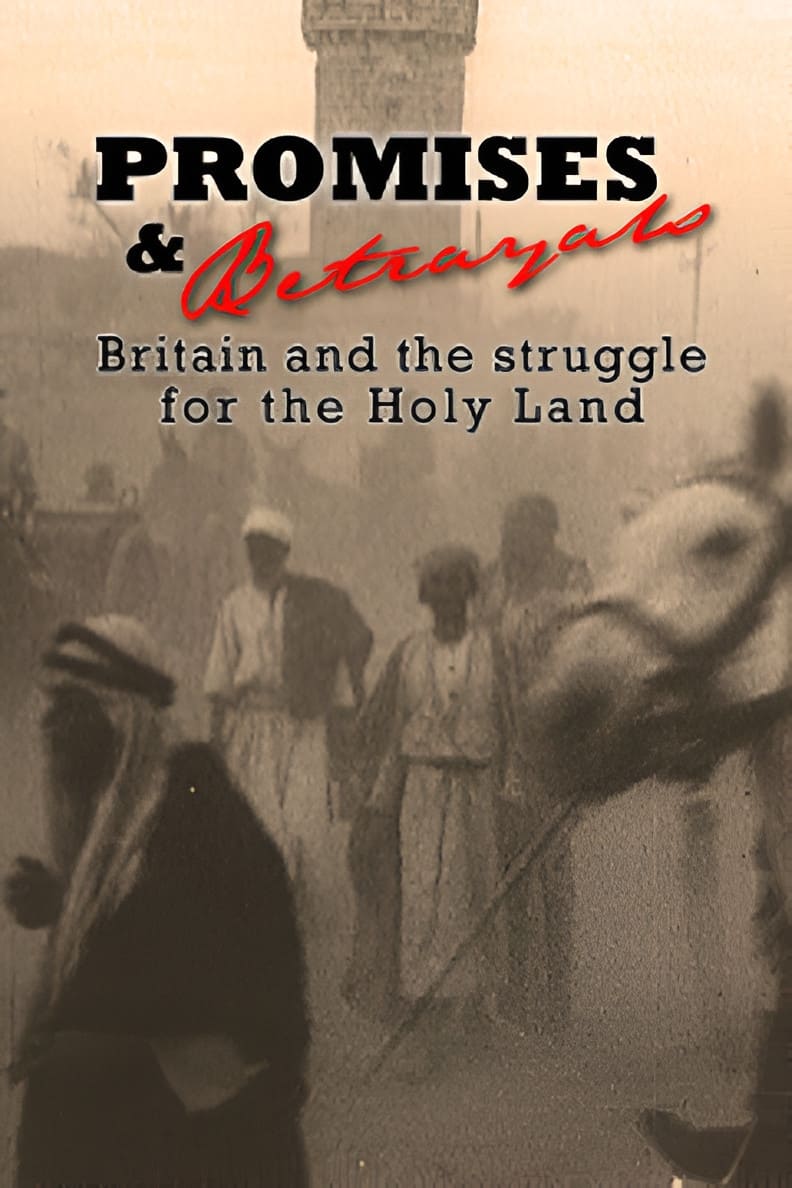
A documentary on how British double-dealing during the First World War ignited the conflict between Arab and Jew in the Middle East. The bitter struggle between Arab and Jew for control of the Holy Land has caused untold suffering in the Middle East for generations. It is often claimed that the crisis originated with Jewish emigration to Palestine and the foundation of the state of Israel. Yet the roots of the conflict are to be found much earlier – in British double-dealing during the First World War. This is a story of intrigue among rival empires; of misguided strategies; and of how conflicting promises to Arab and Jew created a legacy of bloodshed which determined the fate of the Middle East.
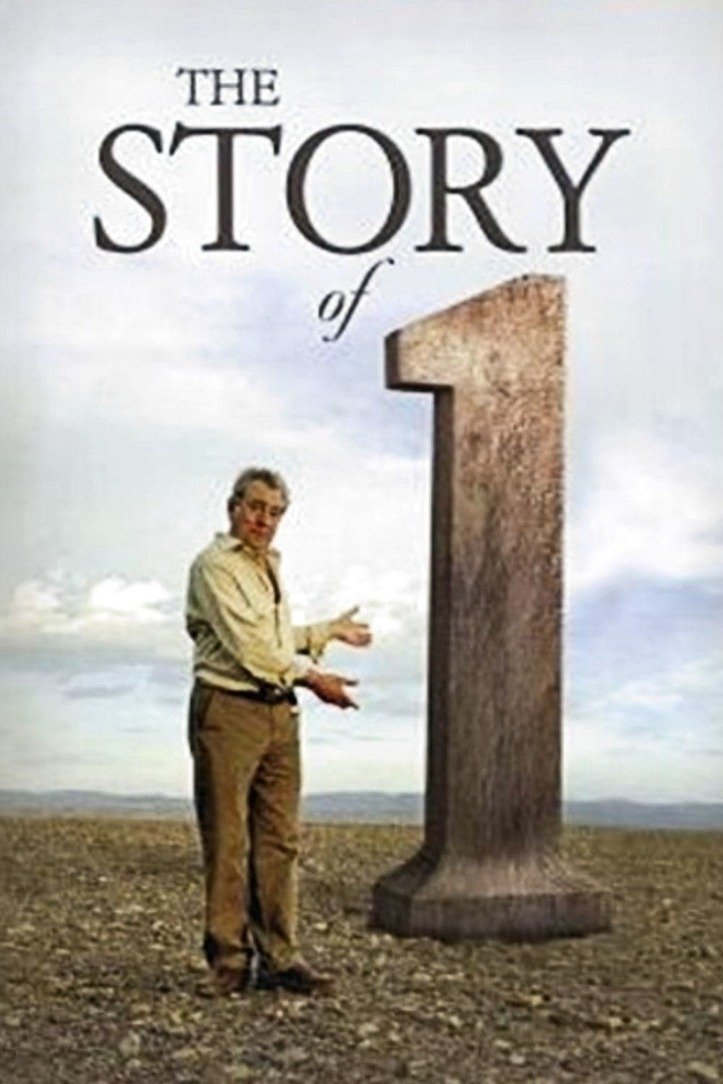
A humor-inflected history of the of the number one, covering military applications in ancient Rome, the measurement of distances in India, and the decimal system created by Leibnitz.
Relentless: The Struggle for Peace in the Middle East was produced by the pro-Israel media watchdog group HonestReporting [sic]. The concentrates on the causes of the Second Intifada through an examination of compliance the Oslo Accords, by Israel and the Palestinian Authority. It pays particular attention to the failure of the Palestinian Authority to "educate for peace". The documentary shows interviews with Itamar Marcus, director of Palestinian Media Watch, S. El-Herfi, Raanan Gissin, Caroline Glick, John Loftus, Sherri Mandel, Yariv Oppenheim, Daniel Pipes, Tashbih Sayyed and Natan Sharansky.
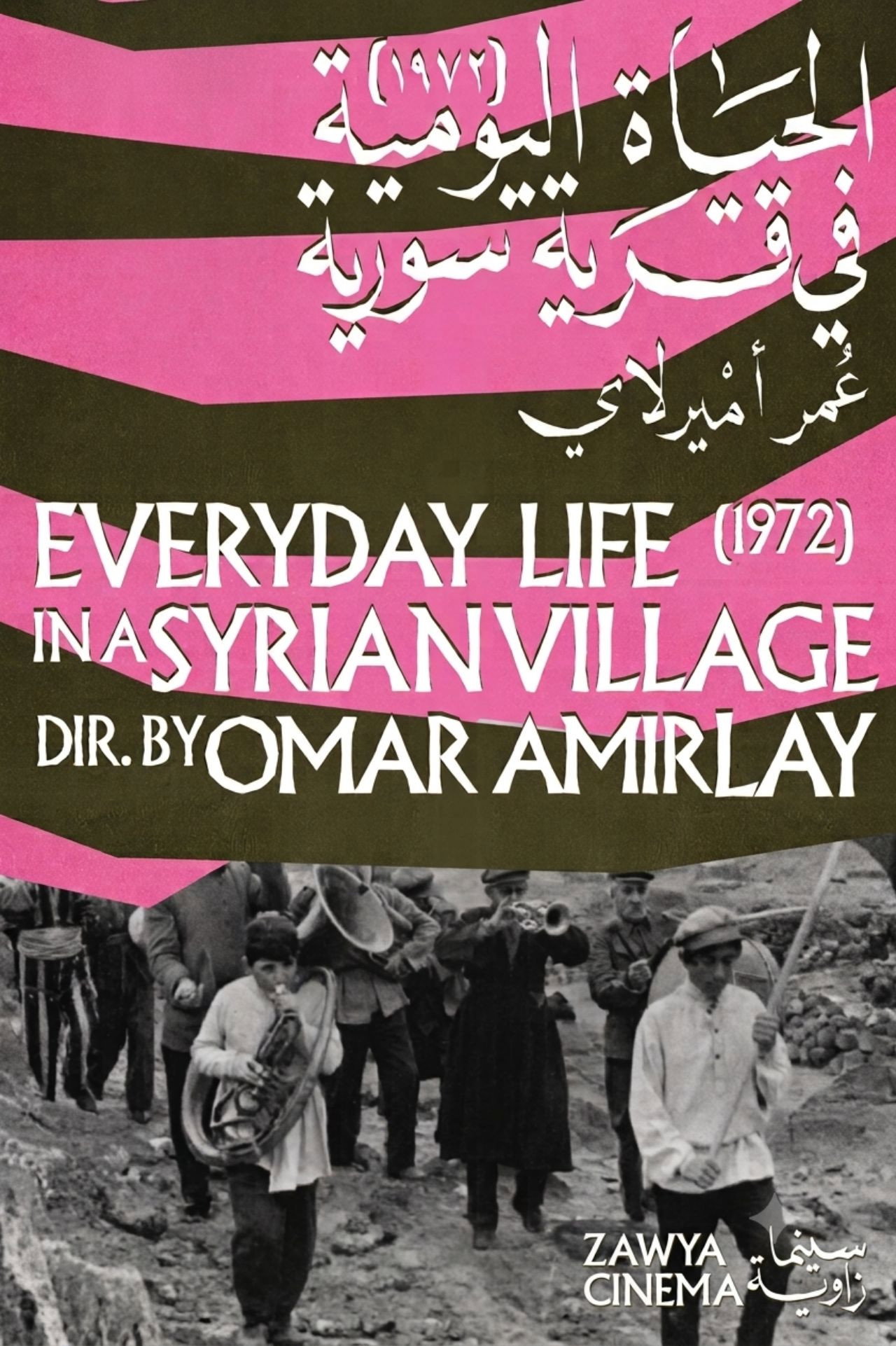
The first documentary to present an unabashed critique of the impact of the Syrian government’s agricultural and land reforms, Everyday Life in a Syrian Village delivers a powerful jab at the state’s conceit of redressing social and economic inequities.
Follows the repercussions of the Israeli Security Wall and Settlement expansion in the engulfed/annexed Palestinian farming communities of the West Bank and the Gaza Strip, examining the grassroots resistance movement that sprang up against it. An interminable road trip across hard and liquid borders, across a terrain that is being erased as it is being traversed.
What is the reality of daily life in Gaza, along the border of Israel? Can the religious organization of Hamas, rivals to the PLO, move from international pariah to meaningful political player with citizens' interests at heart? Developed over two years and with unprecedented access to this 'terrorist' organization, this documentary uncovers the deeper issues defining life in Gaza under Hamas.
Iranian people’s water requirements are mostly depending on groundwater, though these sources are swiftly ending and the farmers are overusing millions of cubic meters of water annually. This documentary shows the tragedy of progressive depletion of groundwater resources in Iran in the past 50 years. While analyzing the water managements in past decades, we will see the environmental and social losses of such plunder, like land subsidence and migration of more than 11 million Iranians to suburbs of megacities.
Light Upon Light: A Documentary on Hijab is an intimate and deeply personal exploration of the diverse, raw, and untold stories of hijabi women. Through open and vulnerable conversations with 7 women, the film dismantles stereotypes, highlights the challenges imposed by society, and celebrates the profound beauty of the hijab beyond a mere clothing choice. It captures the individuality of each woman’s story—how they came to wear the hijab, the struggles they’ve faced, and the strength they’ve found in it. More than just fabric, the hijab is a journey, often misunderstood, and influenced by the way the world perceives it. By amplifying voices that are often unheard, the documentary creates a space for empathy, challenges misconceptions, and invites a deeper understanding of what it truly means to wear the hijab; inspiring everyone to see hijab in a new light.
After the insurrection erupted in Libya in the spring of 2012, more than a million people flocked to neighboring Tunisia in search of a safe haven from the escalating violence. When a massive refugee camp was hastily constructed near the Ras Jdir border checkpoint in Tunisia, a trio of filmmakers carried their cameras in and began filming with no agenda. This on-the-fly chronicle of the camp's installation, operation, and dismantling captures a postmodern Babel complete with a multinational population of displaced folk, a regime of humanitarian aid workers, and international media that broadcasts its “image” to the world. Visually stunning and refreshingly undogmatic, Babylon reveals a rarely seen aspect of the Arab Spring.