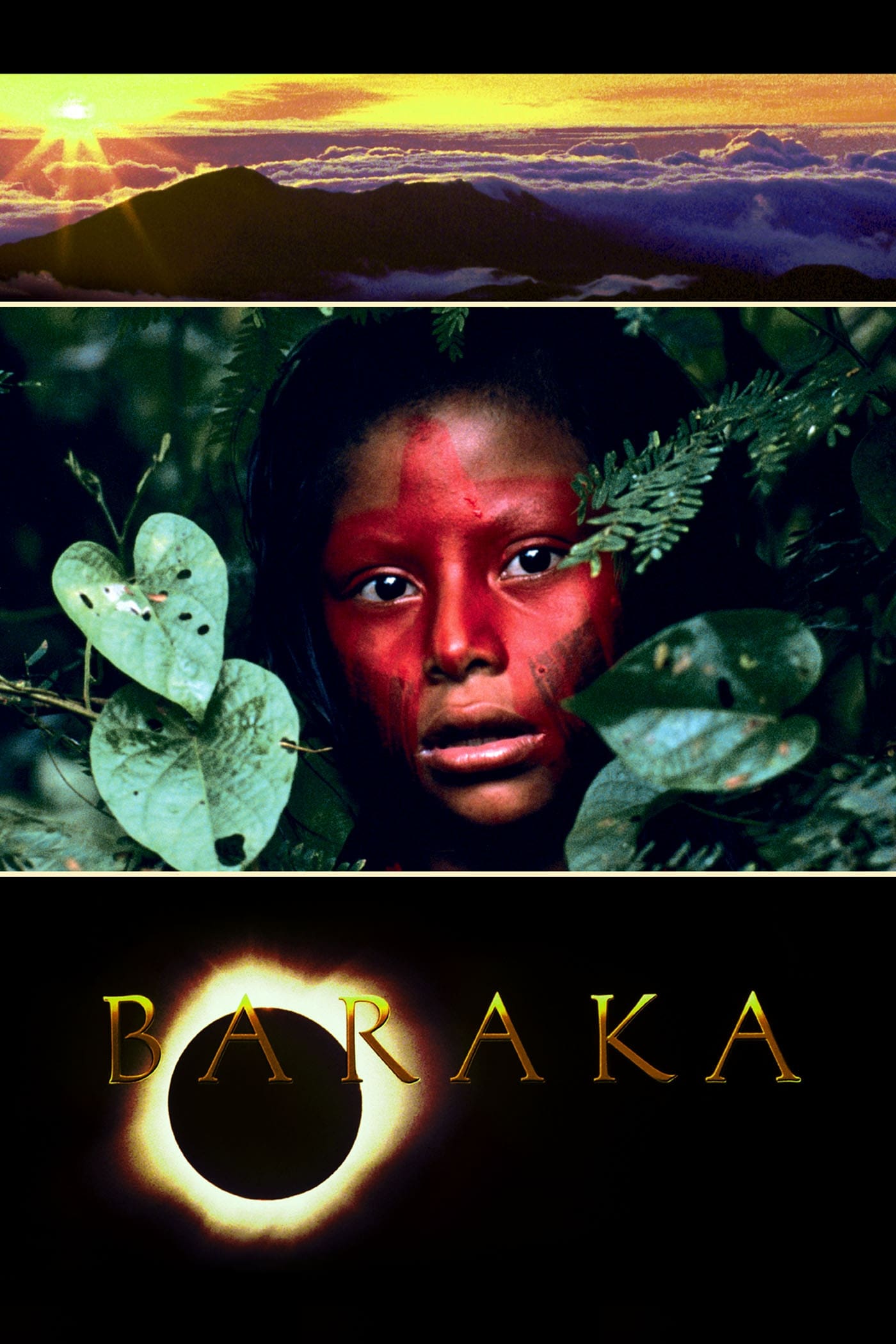
Documentary about the life of the indigenous people in the Andes and in the slums of Lima, and of their religiosity.
Social & External

The cultural roots of coal continue to permeate the rituals of daily life in Appalachia even as its economic power wanes. The journey of a coal miner’s daughter exploring the region’s dreams and myths, untangling the pain and beauty, as her community sits on the brink of massive change.
This poignant documentary from directors Judith Leonard, Catherine Ryan and Gary Weimberg explores the rich complexity of mother-daughter relationships as told by women themselves in scores of candid interviews. Honoring the sometimes close, sometimes fractious, but always vital link moms share with their girls, this film celebrates how these relationships evolve in stages from birth through adulthood to the end of life.
Robert De Niro, Sr., was a celebrated painter obscured by the pop-art movement. His life and career are chronicled in the artist's own words by his contemporaries and, movingly, by his son, the actor Robert De Niro.
A method soldier boys have for amusing themselves in their leisure moments. New comrades are frequently initiated by the old-fashioned sport of tossing in a blanket. The newly arrived recruit, who is the victim of their sport, enjoys himself, perhaps, less than the other participants.
The film does not have a plot per se; it mixes documentary footage, along with standard movie scenes, to give the audience the mood of Germany during the late 1970s. The movie covers the two-month time period during 1977 when a businessman was kidnapped and later murdered by the left-wing terrorists known as the RAF-Rote Armee Fraktion (Red Army Fraction). The businessman had been kidnapped in an effort to secure the release of the original leaders of the RAF, also known as the Baader-Meinhof gang. When the kidnapping effort and a plane hijacking effort failed, the three most prominent leaders of the RAF, Andreas Baader, Gudrun Ensslin, and Jan-Carl Raspe, all committed suicide in prison. It has become an article of faith within the left-wing community that these three were actually murdered by the state.
Documentary short about the disastrous dangers of aging, ailing dams.
A story about my sister, Dr. Lindsay Eisenhour, one of the lead veterinarians at Neel Veterinary Hospital in Oklahoma City, battles the reality of her profession and of pet care.
Steyerl’s film traces the impact of an influx of transnational companies on the city dwellers of Berlin in post-reunification Germany. The effect of the changing economy and politics on the city and its inhabitants is echoed through their physical relocation to its outer edges. In 1990, squatters proclaim a socialist republic on the death strip. Eight years later, the new headquarters of Mercedes Benz are built in the same location. The film makes use of slow super-impositions to uncover a journey across changing architectural and cultural boundaries. "The Empty Centre" tries to give a voice and a history to those who continue to be marginalised by the simultaneous dismantling and reconstruction of the borders which they are trying to cross.
While serving with the African Union, former Marine Capt. Brian Steidle documents the brutal ethnic cleansing occuring in Darfur. Determined that the Western public should know about the atrocities he is witnessing, Steidle contacts New York Times reporter Nicholas Kristof, who publishes some of Steidle's photographic evidence.
If your bedroom has become too small a stage for your air guitar antics, take inspiration from the competitors featured here as they battle their way from the inaugural U.S. Air Guitar Championship to the world championship in Oulu, Finland. Along the way, filmmaker Alexandra Lipsitz documents the fierce rivalries that develop as would-be rock legends vie for top honors in technical accuracy, stage presence and "airness."
"The Free Orchestra" is a group of young people who have various careers, and get together in their free time to make music. Improvisation and original hand made instruments mark the group's style. The individual members of the band are filmed at their daily work life and at one of their concerts. A collage of sounds arises, which conveys their life feelings and experiences, in a satirical and grotesque language.
Suellyn thought the Department of Community Services (DOCS) would only remove children in extreme cases, until her own grandchildren were taken in the middle of the night. Hazel decided to take on the DOCS system after her fourth grandchild was taken into state care. Jen Swan expected to continue to care for her grandchildren but DOCS deemed her unsuitable, a shock not just to her but to her sister, Deb, who was, at the time, a DOCS worker. The rate of Indigenous child removal has actually increased since Prime Minister Kevin Rudd delivered the apology to the ‘stolen generations’ in 2008. These four grandmothers find each other and start a national movement to place extended families as a key solution to the rising number of Aboriginal children in out-of-home care. They are not only taking on the system; they are changing it…
A documentary exploring social life in Yaffa before 1948 through a miniature portrait of a Palestinian couple, Wadee’a Aghabi and Naim Azar, constructed through the oral histories presented by their daughters and relatives.
LA CASA DELLE VEDOVE portrays a group of widows who, he thinks, lived in a constant ‘dialogue‘ with death. In the house where they all lived ‘every colour was saturated with that special reddish shade that you see everywhere in Rome, and furthermore the rooms were filled with a stale, musty smell.‘
Intimate views of the movie stars of the Silent Era, at work and play; featuring Sessue Hayakawa, Lillian Gish and others.
In 1963 Aerojet-General built a rocket manufacturing plant in the middle of the Everglades. They were hoping to build rockets for the Apollo moon mission. The rockets were built and tested in a 150 ft. deep silo, the deepest hole ever dug in Florida.
Cherry Pop was no ordinary cat. Beloved by her wealthy socialite owners, she lived life in the lap of luxury. Her taste for filet mignon and the comfort of Rolls-Royces made Cherry Pop a celebrity before her death in 1995. This delightful story will tickle your funny bone and touch your heart.
Starting with a long and lyrical overture, evoking the origins of the Olympic Games in ancient Greece, Riefenstahl covers twenty-one athletic events in the first half of this two-part love letter to the human body and spirit, culminating with the marathon, where Jesse Owens became the first track and field athlete to win four gold medals in a single Olympics.
Part two of Leni Riefenstahl's monumental examination of the 1938 Olympic Games, the cameras leave the main stadium and venture into the many halls and fields deployed for such sports as fencing, polo, cycling, and the modern pentathlon, which was won by American Glenn Morris.