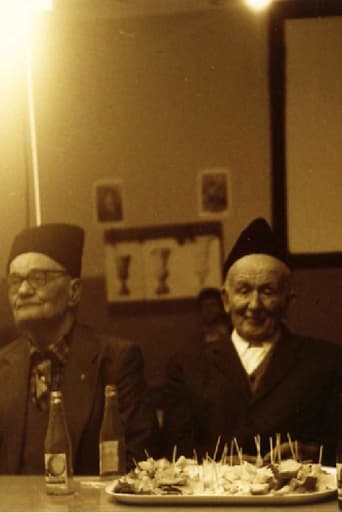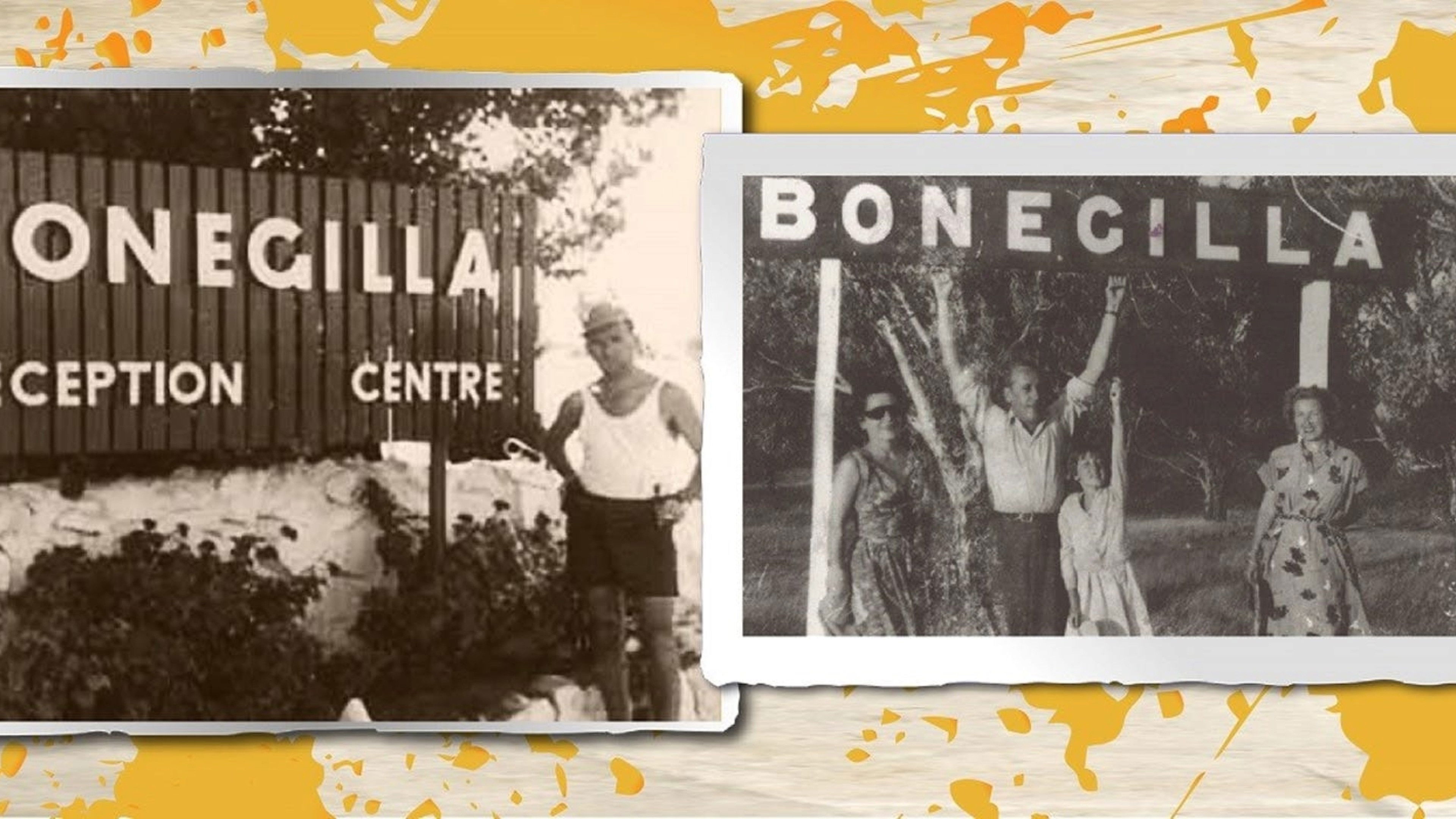
Nine post war migrants are interviewed in their houses and explain their survival in World War 2, migration to Australia. Travel on ships. Arrival in Australia. Life in migrant camps. Assimilation into Australian society.
Social & External
A film crew crisscrosses England trying to unravel the mystery surrounding a record released 30 years earlier, 'Spirit of Eden', that defined the passage from light to shadow of its makers, the band Talk Talk and its lead singer Mark Hollis. From overwhelming obstacles to unpredictable encounters, their journey soon turns into an organic quest. With silence as a horizon line. And punk as a philosophy, thinking that music is accessible to all and that the human spirit is above the technique.
Filmmaker Diego Gutiérrez knows that he is soon to lose two loved ones: his mother Gina Coppe and his best friend Danniel Danniel. Both ask him to film them during this final phase of their lives—Gina in her apartment in Mexico City, Danniel in a Dutch restaurant where he feels at home. What stories do they want to leave behind?
Missionary Father LaForgue travels to the New World in hopes of converting Algonquin Indians to Catholicism. Accepted, though warily, by the Indians, LaForgue travels with the Indians using his strict Catholic rules and ideals to try and impose his religion.
Obāchan is Japanese. She left her native archipelago in 1941 to marry one of her compatriots, 17 years older, settled in Mexico. Through fragments of family films, manga and sequences that she has shot, Nicolasa Ruiz sculpts a complex and delicate memory landscape between the two shores of the Pacific.
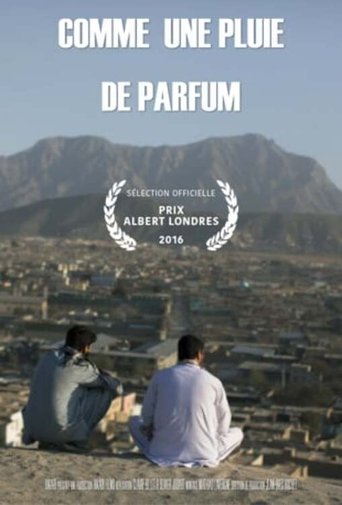
Through a child's lens, The Honest Poet reveals a rarely seen side of Afghanistan, following 11-year-old Raheem on a journey through his country and into the homes and hearts of his people.
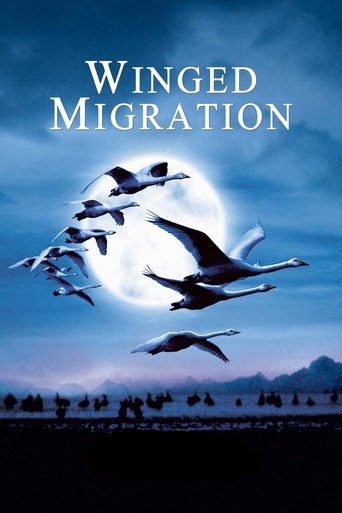
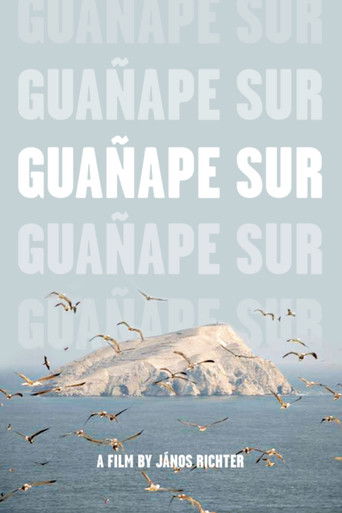
This documentary follows various migratory bird species on their long journeys from their summer homes to the equator and back, covering thousands of miles and navigating by the stars. These arduous treks are crucial for survival, seeking hospitable climates and food sources. Birds face numerous challenges, including crossing oceans and evading predators, illness, and injury. Although migrations are undertaken as a community, birds disperse into family units once they reach their destinations, and every continent is affected by these migrations, hosting migratory bird species at least part of the year.
KÖY (Turkish for village) is about the longing for home, for belonging and the freedom of the self. Three women from three generations are united by their Kurdish roots.
An unnamed passer-by is forced to trace a circular route inside an abandoned tram station, facing loss and time. The broken walls act as a channel, transmitting fragmentary, blurred and analogical memories.
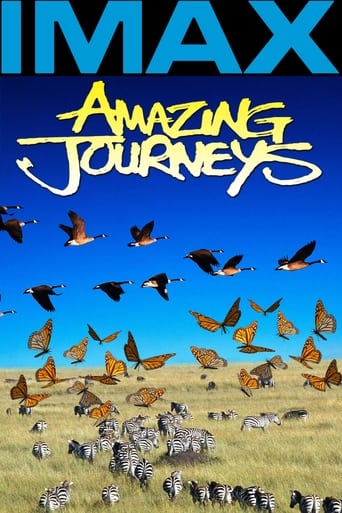
By land, by air, and by sea, viewers can now experience the struggle that millions of creatures endure in the name of migration as wildlife photographers show just how deeply survival instincts have become ingrained into to the animals of planet Earth. From the monarch butterflies that swarm the highlands of Mexico to the birds who navigate by the stars and the millions of red crabs who make the perilous land journey across Christmas Island, this release offers a look at animal instinct in it's purest form.
A short documentary on the River Ouse, following it downstream from Lewes to Newhaven, meditating on the surrounding area.
This film begins, so to speak, where ‘Vol spécial’ left off. The reality of migration bears its teeth: Following a scuffle, 20-year-old Koumba from France is sent back to the place where she was raised – Senegal. She returns to the lost village of her ancestors hysterical, argumentative and unproductively rebellious. Now the mother of a toddler, she continues to come to terms with the two cultures; the outcome is unforeseeable, as is the outcome of this cinematic long-term observation. The risk of its failure due to its protagonist is palpable. But Koumba’s fascinating metamorphosis is also obvious, her body and character have taken on a more harmonious nature. All hope is not lost.
At the beginning of the 60's, thousands of Portuguese turned up in France through the underground. They were fleeing misery, war and repression. Left to unscrupulous smugglers, they had to cross the Iberian Peninsula tracked by the Portuguese and Spanish police. For many, the voyage towards France turned into a disaster. As a child in a shantytown, the author remembers having heard about these terrible odysseys. Thirty years later, he goes in search of the stories of his childhood and seeks to understand what sparked this unprecedented emigration known as the "plebiscite by foot" against Salazar. Between childhood memories and historical investigation, he looks for the images of this exodus, the largest in post-war Europe.
Karl and Kristina Nilsson work on a farm in a cold and desolate area of 19th century rural Sweden. Growing privations, combined with increasing social and religious persecution, motivate the Nilssons and many of their neighbors to strike out for the United States. Following a treacherous ocean crossing and an equally grueling land passage, the emigrants find themselves in seemingly idyllic Minnesota.
The inhabitants of the canyon of river Kupa, located on the border between Croatia and Slovenia, have historically been united due to their harsh living conditions, but this peaceful cohabitation between members of different cultures is threatened by the construction of iron fences to prevent the transit of refugees from Bosnia.
The Chola kingdom is under threat from forces both internal and external, and with crown prince Aaditha Karikalan, his younger brother Arunmozhi Varman and the emperor, Sundara Cholar separated by situations, it is up to a messenger to ensure the safety of the kingdom. Can he succeed in his mission, especially with Karikalan's former girlfriend, Nandhini, plotting to bring down the entire Chola empire?
A Sense of Justice, immerses us In a law firm in this same city. There, we can find Christine Mengus and Nohra Boukara, specialized in the rights of foreigners, supported by Audrey Scarinoff and their co-workers.. Stories from their sad, appalling or tragicomic cases alternate with their daily legal work. And as we hear snatches of consultations involving illegal entry or departure, deportation orders, the right to reside or medical assistance, we become witnesses to predictable tragedies, to the administrative or social precariousness induced by such predicaments, and to whole lives depending on court rulings.
Every year, on the steppes of the Serengeti, the most spectacular migration of animals on our planet: Around two million wildebeest, Burchell's zebra and Thomson's gazelles begin their tour of nearly 2,000 miles across the almost treeless savannah. For the first time, a documentary captures stunning footage in the midst of this demanding journey. The documentary starts at the beginning of the year, when more than two million animals gather in the shadow of the volcanoes on the southern edge of the Serengeti in order to birth their offspring. In just two weeks, the animal herd's population has increased by one third, and after only two days, the calves can already run as fast as the adults The young wildebeest in this phase of their life are the most vulnerable to attacks by lions, cheetahs, leopards or hyenas. The film then follows the survivors of these attacks through the next three months on their incredible journey, a trip so long that 200,000 wildebeest will not reach the end.
The parallel stories of four Pakistani immigrants in Greece become the trigger for the director to explore the story of his father, a worker in the Perama Shipyard. The background unfolds a most deadly shipwreck, Libyan immigrants found in limbo, as well as a (possibly racist) crime, which was committed during the shooting of this film.