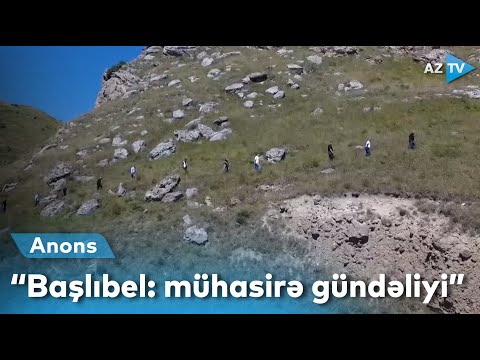
"Bashlibel : Diary of a Siege"
The months of struggle people of Bashlibel had to overcome to live during the first Karabakh war and their escape into safety.
Social & External
The people behind it
Ələsgər Kazımov
Nargiz Amraliyeva
Zeynab Allahverdiyeva
Tacira Alasgarova
Sevil Ahmadova
Lalazar Asgarova
Hacar Asgarova
Salim Mehdiyev
Mushviq Asgarov
Elxan Salahov
The film consists of three novels: the first novel about Gobustan, an ancient human settlement. The second novel deals with the theme of the East and women. The third novel tells about January 20, 1990 and the Khojaly tragedy.
Life story of two women who earn money by baking bread on one of the streets of Baku.
A couple returns to Aghdam, the city they once fled 32 years ago due to the war. It's a story about memory held in people, and about the small, powerful ways the past resurfaces when you finally face it.
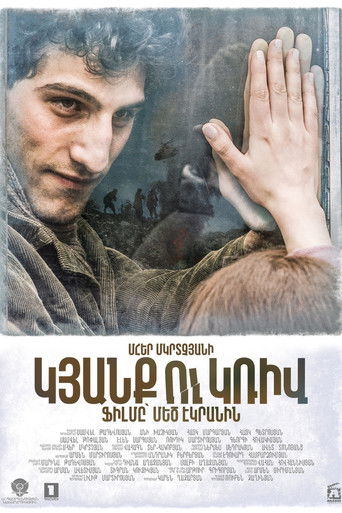
Taking place in 1991, Tigran, who teaches math at a village school to avoid the army, loses the girl he loves. Consumed by abject wretchedness, he decides to enlist as a volunteer in the Nagorno‑Karabakh war to give meaning to his hollow life.
Though both the historical and modern-day persecution of Armenians and other Christians is relatively uncovered in the mainstream media and not on the radar of many average Americans, it is a subject that has gotten far more attention in recent years.
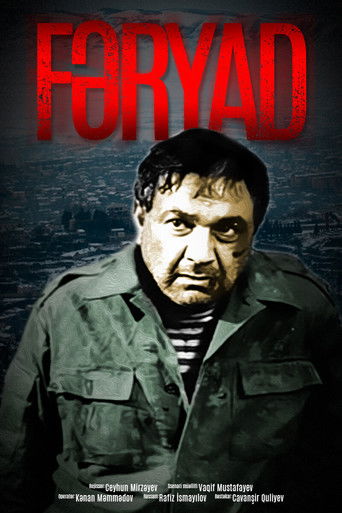
The feature film reflects the terrible days of the tragedy and the suffering experienced through the example of Durdana Aghayeva and her brother Elshad Aghayev, who witnessed the Khojaly genocide and were subjected to severe torture for 8 days in Armenian captivity.
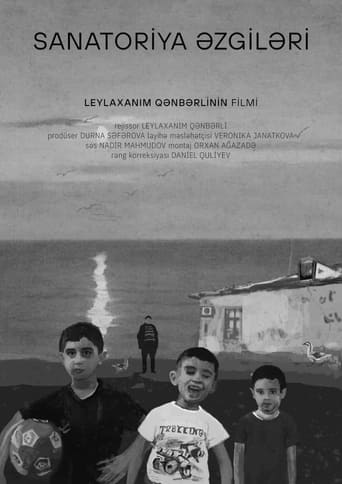
For thirty years now, a dilapidated house has been providing essential asylum to war refugees from Nagorno-Karabakh. Three generations, including the children and grandchildren of people made to leave their homes, struggle to scratch an existence on the outskirts of Baku. They are faced with common problems: loss of home, outrooting, sadness and illnesses.
He is Khagani Aliyev, a resident of Saricali village of Aghdam. On July 23, 1993, Khagani Aliyev, who heard about another Armenian attack on Aghdam, went home to take his parents who had not left the village to a temporary safe area...
Using unpublished photos taken by Italian war photographer Enrico Sarsini, and the reconstruction of key events, this film examines the battle for a strategically-located church that was defended by Azerbaijani teenager Natig Gasimov. After his surrender and interrogation by Armenian forces, he was never heard of again. This film finds out what happened to Natig and who may be responsible. Filmed over a period of three years, filmmaker Karan Singh spoke to witnesses in Armenia, Azerbaijan, Italy and Russia in his search for the truth.
In October, during the tense days of the Nagorno-Karabakh war, the director takes his camera to the village of Ashagi Nuvedi in Lankaran. The film follows the daily lives of fishermen — Sakhavat, Ramesh, Rza and Tehran — living in the shadow of the war. They go out to sea every morning amid news from the front, fearing empty nets, and hoping for a miracle — a goldfish in difficult days.
The events in the film are based on the life of the Scholler family of German origin, who lived in Azerbaijan since the 1940s.
The film is about Azerbaijan.
The film "Last Autumn", written and directed by Rustam Babazadeh, is a comedy genre with elements of grotesque and satire.
Faced with the wreckage of a failed film project and the turmoil of his troubled youth, a young filmmaker, urged by his friends, seeks refuge in therapy. Each session becomes a battleground where he confronts his deepest fears and darkest nightmares. As his life unfolds in the therapist's office, a glimmer of hope emerges amidst the chaos. Yet the journey is fraught with peril, forcing him to confront painful memories and insecurities. Through unwavering determination, he triumphs over his nightmares, emerging from the shadows reborn and renewed. This film is a testament to the power of the human spirit, offering hope even in the darkest of times.
As a result of the second Karabakh war, a village should be ceded to Azerbaijan since a new highway is built through the Lachin corridor. The family of Narine, like many other Armenian families, needs to find a new place.
A feature documentary presented and directed by former Royal Marines Commando Emile Ghessen. The documentary tells the story of the 2020 war between Armenia and Azerbaijan over the disputed region of Nagorno Karabakh. In the fall of 2020, Armenia and Azerbaijan fought a brutal bloody war. Azerbaijan won, decisively. The feature documentary 45 Days: The Fight for a Nation tells the story of this conflict, from the Armenian perspective, focusing on the human cost of war and its impact on the large Armenian diaspora.
The film is dedicated to the ethnogenesis of a small people, preserving their traditions and language, the Udi people
The film based on Agil Abbas's novel about Nagorno-Karabakh War. The film tells about the heroism of the sons of Azerbaijan, who fought for the Motherland to the last drop of blood in spite of everything in the Karabakh war.
Simple Countryside Living in Azerbaijan, by Amalia Hajieva "Don't let the length of the video fool you, for it has been years of memories in the making ♥︎ going through my videos and finding all these special moments has brought the biggest smiles to my face"
A documentary about World War I with never-before-seen footage to commemorate the centennial of Armistice Day, and the end of the war.
“The Soviet Story” is a story of an Allied power, which helped the Nazis to fight Jews and which slaughtered its own people on an industrial scale. Assisted by the West, this power triumphed on May 9th, 1945. Its crimes were made taboo, and the complete story of Europe’s most murderous regime has never been told. Until now...
Amid the failing counteroffensive, a journalist follows a Ukrainian platoon on their mission to traverse one mile of heavily fortified forest and liberate a strategic village from Russian occupation. But the farther they advance through their destroyed homeland, the more they realize that this war may never end.
A love letter from a young mother to her daughter, the film tells the story of Waad al-Kateab’s life through five years of the uprising in Aleppo, Syria as she falls in love, gets married and gives birth to Sama, all while cataclysmic conflict rises around her. Her camera captures incredible stories of loss, laughter and survival as Waad wrestles with an impossible choice– whether or not to flee the city to protect her daughter’s life, when leaving means abandoning the struggle for freedom for which she has already sacrificed so much.
Prelude to War was the first film of Frank Capra's Why We Fight propaganda film series, commissioned by the Pentagon and George C. Marshall. It was made to convince American troops of the necessity of combating the Axis Powers during World War II. This film examines the differences between democratic and fascist states.
Documentary about the art of film editing. Clips are shown from many groundbreaking films with innovative editing styles.
An unprecedented and intimate look at the life, work and enduring legacy of British actress Audrey Hepburn (1929-1993).
When Sgt. First Class Brian Eisch is critically wounded in Afghanistan, it sets him and his sons on a journey of love, loss, redemption and legacy.
The history of cinematic sound, told by legendary sound designers and visionary filmmakers.
In 1975, Ryszard Kapuściński, a veteran Polish journalist, embarked on a seemingly suicidal road trip into the heart of the Angola's civil war. There, he witnessed once again the dirty reality of war and discovered a sense of helplessness previously unknown to him. Angola changed him forever: it was a reporter who left Poland, but it was a writer who returned…
With unprecedented access, this documentary follows the extraordinary journey of “Raqqa is Being Slaughtered Silently”—a group of anonymous citizen journalists who banded together after their homeland was overtaken by ISIS—as they risk their lives to stand up against one of the greatest evils in the world today.
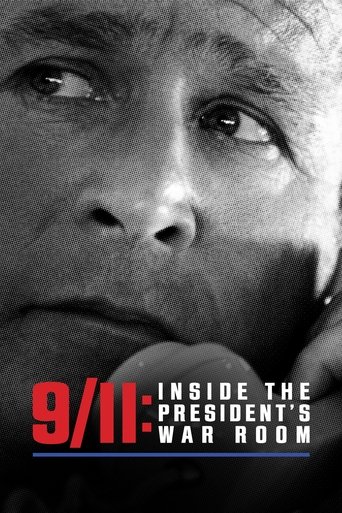
Experience the events of September 11, 2001 through the eyes of President Bush and his closest advisors as they personally detail the crucial hours and key decisions from that historic day.
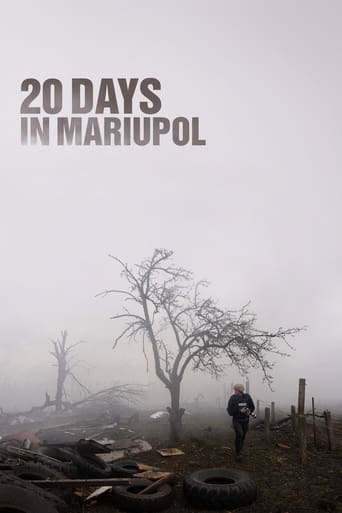
As the Russian invasion begins, a team of Ukrainian journalists trapped in the besieged city of Mariupol struggle to continue their work documenting the war's atrocities.
Korengal picks up where Restrepo left off; the same men, the same valley, the same commanders, but a very different look at the experience of war.
Five broken cameras – and each one has a powerful tale to tell. Embedded in the bullet-ridden remains of digital technology is the story of Emad Burnat, a farmer from the Palestinian village of Bil’in, which famously chose nonviolent resistance when the Israeli army encroached upon its land to make room for Jewish colonists. Emad buys his first camera in 2005 to document the birth of his fourth son, Gibreel. Over the course of the film, he becomes the peaceful archivist of an escalating struggle as olive trees are bulldozed, lives are lost, and a wall is built to segregate burgeoning Israeli settlements.
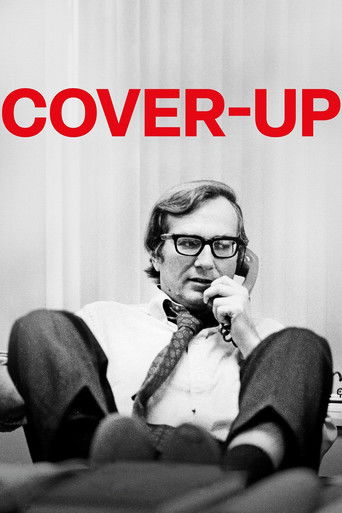
He's devoted his career to uncovering stories the powerful want buried. From My Lai to Abu Ghraib, dig into the life's work of journalist Seymour Hersh.
Set both in Latin America and the United States, the film explores the historic and current relationship of Washington with countries such as Venezuela, Bolivia and Chile. Pilger says that the film "...tells a universal story... analysing and revealing, through vivid testimony, the story of great power behind its venerable myths. It allows us to understand the true nature of the so-called "war on terror". According to Pilger, the film’s message is that the greed and power of empire is not invincible and that people power is always the "seed beneath the snow".
Cameramen and women discuss the craft and art of cinematography and of the "DP" (the director of photography), illustrating their points with clips from 100 films, from Birth of a Nation to Do the Right Thing. Themes: the DP tells people where to look; changes in movies (the arrival of sound, color, and wide screens) required creative responses from DPs; and, these artisans constantly invent new equipment and try new things, with wonderful results. The narration takes us through the identifiable studio styles of the 30s, the emergence of noir, the New York look, and the impact of Europeans. Citizen Kane, The Conformist, and Gordon Willis get special attention.
Pete Postlethwaite stars as a man living alone in the devastated future world of 2055, looking at old footage from 2008 and asking: why didn’t we stop climate change when we had the chance?
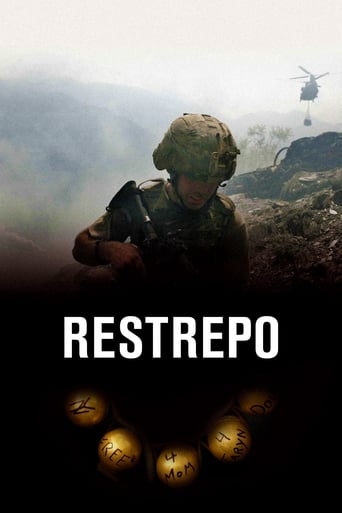
Directors Hetherington and Junger spend a year with the 2nd Battalion of the United States Army located in one of Afghanistan's most dangerous valleys. The documentary provides insight and empathy on how to win the battle through hard work, deadly gunfights and mutual friendships while the unit must push back the Taliban.