Social & External
Unknown Role
AN OUTRAGE is a documentary film about lynching in the American South. Filmed on-location at lynching sites in six states and bolstered by the memories and perspectives of descendants, community activists, and scholars, this unusual historical documentary seeks to educate even as it serves as a hub for action to remember and reflect upon a long-hidden past.
At a critical moment in the history of the written word, as humanity’s archives migrate to the cloud, one filmmaker goes on a journey around the globe to better understand how she can preserve her own Romanian and Armenian heritage, as well as our collective memory. Blending the intellectual with the poetic, she embarks on a personal quest with universal resonance, navigating the continuum between paper and digital—and reminding us that human knowledge is above all an affair of the soul and the spirit.
In this unprecedented primetime program, 50 volunteers take part in experiments without knowing that the aim of the program is to understand the unconscious mechanisms that can lead us to discriminatory behavior. Because if they knew, it would bias the results of the experiments.
Despite the perceived progress the world has made over the years, it's become increasingly clear that racism continues to run through our culture. This is abundantly apparent on the streets of London. This difficult documentary explores racism in today's climate through stories from people of various races.
Using two separate filmmaking teams (an all-white crew filming white residents and an all-black camera crew filming black residents), TWO TOWNS OF JASPER captures very different racial views by townsfolk in Jasper, Texas, the location for a racially motivated murder of an African American man in 1998.
African American filmmaker David A. Wilson decided to look into his family's history during the slave era. The result is this documentary, which provides a unique perspective on the long shadow cast by slavery in America. Wilson travels to North Carolina to visit the plantation where his ancestors once toiled and to meet its current owner -- a white man named David Wilson, whose slave-owning ancestors originally occupied the property.
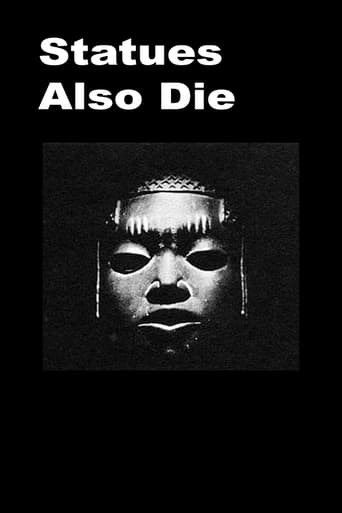
Commissioned by the journal Présence Africaine, this short documentary examines how African art is devalued and alienated through colonial and museum contexts. Beginning with the question of why African works are confined to ethnographic displays while Greek or Egyptian art is celebrated, the film became a landmark of anti-colonial cinema and was banned in France for eight years.
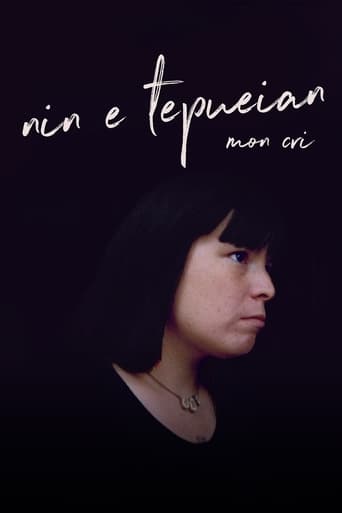
NIN E TEPUEIAN - MY CRY is a documentary tracks the journey of Innu poet, actress and activist, Natasha Kanapé Fontaine, at a pivotal time in her career as a committed artist. Santiago Bertolino's camera follows a young Innu poet over the course of a year. A voice rises, inspiration builds; another star finds its place amongst the constellation of contemporary Indigenous literature. A voice of prominent magnitude illuminates the road towards healing and renewal: Natasha Kanapé Fontaine.
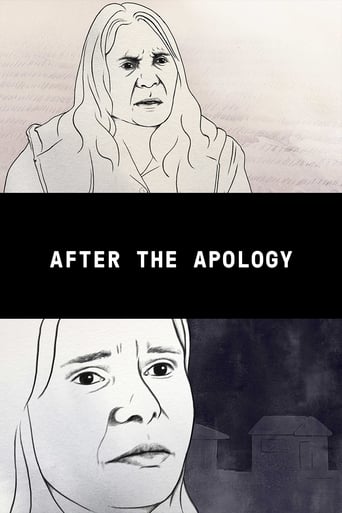
Suellyn thought the Department of Community Services (DOCS) would only remove children in extreme cases, until her own grandchildren were taken in the middle of the night. Hazel decided to take on the DOCS system after her fourth grandchild was taken into state care. Jen Swan expected to continue to care for her grandchildren but DOCS deemed her unsuitable, a shock not just to her but to her sister, Deb, who was, at the time, a DOCS worker. The rate of Indigenous child removal has actually increased since Prime Minister Kevin Rudd delivered the apology to the ‘stolen generations’ in 2008. These four grandmothers find each other and start a national movement to place extended families as a key solution to the rising number of Aboriginal children in out-of-home care. They are not only taking on the system; they are changing it…
This film sheds light on the little-known history of plantations and the enslaved in North Florida. It seeks to advance a sense of place and identity for thousands of African-Americans by exploring the invisible history of slavery in Leon County.
The director explores the birth origins of actress Merle Oberon, traveling to Tasmania and India in search of the truth, but her quest ultimately results in probably more questions than it answers.
The film looks at men and women of color in the U.S. Merchant Marine from 1938-1975. Through chronicling the lives of these men and women who, with a median age of 82, are beset with a host of life-threatening illnesses, the movie tells how they navigated issues of racism, disparities in the workplace, gender and familial relations.
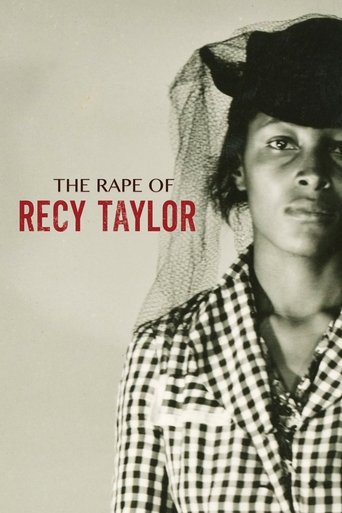
Recy Taylor, a 24-year-old black mother and sharecropper, was gang raped by six white boys in 1944 Alabama. Common in Jim Crow South, few women spoke up in fear for their lives. Not Recy Taylor, who bravely identified her rapists. The NAACP sent its chief rape investigator Rosa Parks, who rallied support and triggered an unprecedented outcry for justice. The film exposes a legacy of physical abuse of black women and reveals Rosa Parks’ intimate role in Recy Taylor’s story.
An examination of the connection between relentless government intervention since colonisation to the trauma and disadvantage experiences by Indigenous Australians - the two key drivers of incarceration.
Cassius X puts a period of often-overlooked history into the spotlight – the period when Cassius Clay fought his way to achieving his lifelong dream of becoming World Heavyweight Champion while embarking on a secret spiritual journey.
Paul Grignon's 47-minute animated presentation of "Money as Debt" tells in very simple and effective graphic terms what money is and how it is being created
A 38 minute documentary that investigates why antisemitism exploded in Bay Area High Schools after Hamas attacked Israel on October 7. This comes after years of anti-Asian hate and anti-white hate.
In 1936, Victor H. Green (1892-1960) published The Negro Motorist Green Book, a book that was both a travel guide and a survival manual, to help African-Americans navigate safe those regions of the United States where segregation and Jim Crow laws were disgracefully applied.
An in-depth look at the prison system in the United States and how it reveals the nation's history of racial inequality.
This film made by a Palestinian-Israeli collective shows the destruction of the occupied West Bank's Masafer Yatta by Israeli soldiers and the alliance which develops between the Palestinian activist Basel and Israeli journalist Yuval.
Rachel Dolezal became infamous when she was unmasked as a white woman passing for black so thoroughly that she had become the head of her local N.A.A.C.P. chapter. This portrait cuts through the very public controversy to reveal Dolezal’s motivations.
Those who knew iconic funnyman John Candy best share his story, in their own words, through never-before-seen archival footage, imagery, and interviews.
Against the darkening backdrop of New Delhi's apocalyptic air and escalating violence, two brothers devote their lives to protecting one casualty of the turbulent times: the bird known as the black kite.
Oprah Winfrey talks with the exonerated men once known as the Central Park Five, plus the cast and producers who tell their story in "When They See Us."
Ahead of the release of upcoming fantasy film ‘Black Adam’, sit down with Dwayne Johnson as he discusses his starring role as the eponymous superhero.
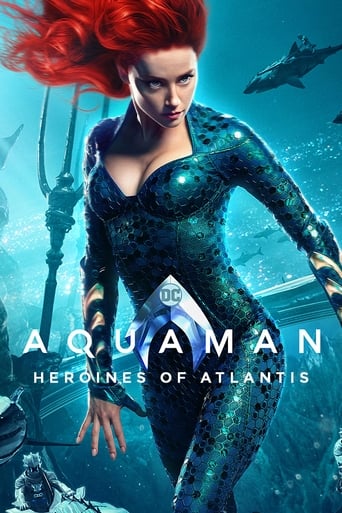
Amber Heard and Nicole Kidman discuss their characters Mera and Atlanna.
Alexander McQueen's rags-to-riches story is a modern-day fairy tale, laced with the gothic. Mirroring the savage beauty, boldness and vivacity of his design, this documentary is an intimate revelation of McQueen's own world, both tortured and inspired, which celebrates a radical and mesmerizing genius of profound influence.
Martin Scorsese, Robert De Niro, Joe Pesci, and Al Pacino in conversation about The Irishman.
The life and career of one of comedy's most inimitable modern voices, Mr. Gilbert Gottfried.
Capturing life on the Italian island of Lampedusa, a frontline in the European migrant crisis.
Shot over three years on the borders between Iraq, Kurdistan, Syria and Lebanon, the film depicts the everyday struggles of people attempting to rebuild their lives amongst the devastating effects of civil wars, dictatorships, foreign invasions, and the deadly presence of ISIS.
A documentary about how a dominant cultural and demographic institution both sustains their traditional activities and adapts to the digital revolution.
When a 5-year-old girl falls from her father's apartment, her mother embarks on a quest for justice — and is put under the national spotlight.
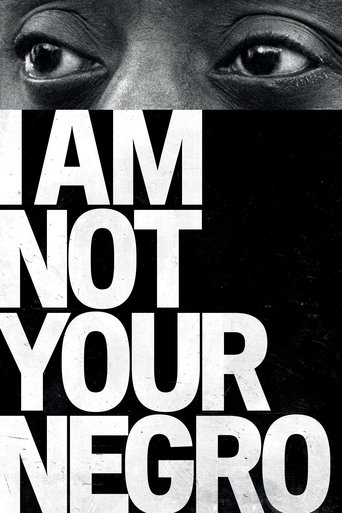
Working from the text of James Baldwin’s unfinished final novel, director Raoul Peck creates a meditation on what it means to be Black in the United States.
A collection of stories about and images of our world, offering an immersion to the core of what it means to be human. Through these stories full of love and happiness, as well as hatred and violence, it brings us face to face with the Other, making us reflect on our lives. From stories of everyday experiences to accounts of the most unbelievable lives, these poignant encounters share a rare sincerity and underline who we are – our darker side, but also what is most noble in us, and what is universal. Our Earth is shown at its most sublime through never-before-seen aerial images accompanied by soaring music, resulting in an ode to the beauty of the world, providing a moment to draw breath and for introspection. This film is a politically engaged work which allows us to embrace the human condition and to reflect on the meaning of our existence.
"Behind every strong man is a strong woman!", Mumine shouts as her husband is arrested. She has 4 children, she's in her mid-30s, and she's the wife of a Crimean Tatar political prisoner. Muslim Crimean Tatars have been oppressed for a long time. They were deported under Stalin, allowed to return under Gorbachev, and since the occupation of Crimea in 2014 under Putin, they are being persecuted again. "Return" is a portrait of Mumine and Maye, two strong women struggling with the consequences of oppression. Their traditional understanding of their role as women does not stand in the way of their dedication. They possess strength, beauty and dignity. Only in their most intimate moments, they are overwhelmed by desperate helplessness.
Naples, Trajan's district. Initially it was intended for the inhabitants of the shantytowns on the seafront of Naples, who were homeless after the war. But it soon became a kind of ghetto. Alessandro and Pietro are two teenagers who film with an iPhone to tell their difficult neighborhood, their daily life, the friendship that binds them.