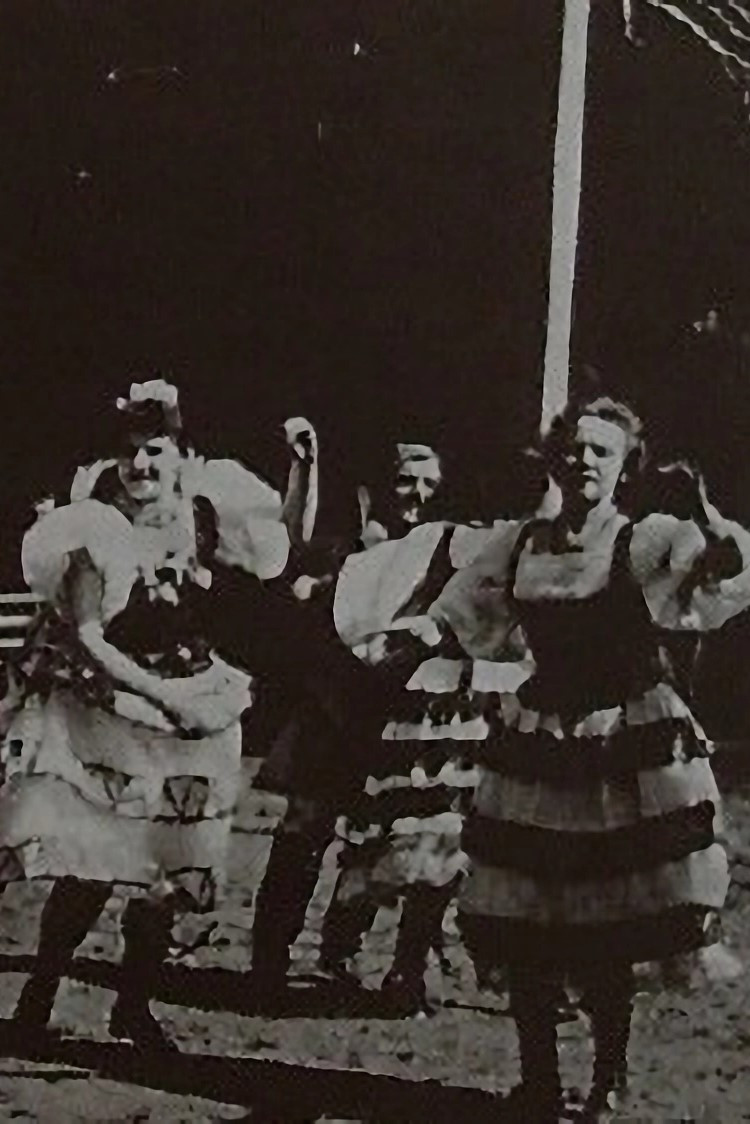
A woman in a white gown performs a skirt dance, using her arms to produce circles and other patterns within the folds of her costume. Her legs and feet appear to be bare. (Library of Congress)
Social & External
Herself
As a visual narrative it is reminiscent of a pile of postcards from a journey, which indeed is what the film is. It consists of a series of lengthy shots of a tableau nature, each appearing to be a more or less random cross section of American reality, but which in total invoke a highly emblematic picture of the USA.
A look at post-9/11 America by the Danish documentarian.
What does it mean to be an IBMer? Every employee experiences the company in different ways, but the global impact IBM has made on business and society over the last 100 years gives us all a common framework. "They Were There" is told by first-hand witnesses—current and retired employees and clients—who were there when IBM helped to change the way world works.
A loving look at one of the most cherished and controversial figures in children's literature, Maurice Sendak. In this deeply moving tribute, spend time with the man who spoke to children through his stories and illustrations in a way no one else could.
THE S FROM HELL is a short documentary-cum-horror film about the scariest corporate symbol in history - The 1964 Screen Gems logo, aka ‘The S From Hell.’ Built around interviews with survivors still traumatized from their childhood exposure to the logo after shows like Bewitched or The Monkees, the film brings their stories to life with animation, found footage, and dramatic reenactments.
In Jerusalem the temple was the Holy Place, a place that King David’s son had built for worship. The enemy of the Jews had destroyed this temple and the Greeks had begun to attack and ruin the sacred treasures previously used in temple ceremonies. The spirit of the faithful Jews was broken as they saw their world falling about them.
This film illustrates the history of the St. Lawrence river. From prehistoric times on, it has been a magnificent source of life. The film covers the impact of humanity beginning with the careful relationship with the Native Americans. This soon changes with the arrival of Europeans who begin the insatiable exploitation that would led to the river's damage, creating a situation that we must resolve for all our sakes.
A journey into the lives of a mother polar bear and her two seven-month-old cubs as they navigate the changing Arctic wilderness they call home.
See Yellowstone National Park: Grizzlies, geysers, rivers, canyons and, of course, moose. The history of Yellowstone National Park is vividly portrayed in this memorable film, from the Tukudika Tribe, the earliest known inhabitants, to the early explorers including John Colter, a member of the Lewis & Clark party. Also portrayed are Wilson Hunt, who deemed the west unfit for habitation, Father Francis Kuppens, a Jesuit priest in pursuit of native souls, and the Washburn Expedition, instrumental in establishing Yellowstone as America’s first national park.
This film explores an elephant clan's search for food and water as seen through the eyes of one old bull.
With the cameraman atop a moving train car the viewer is given a one minute glimpse of a French urban area.
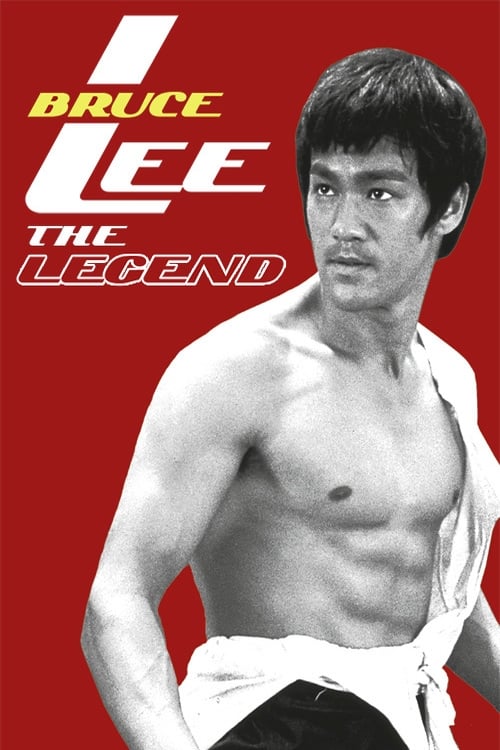
Chao-Li Chi shadow boxes indoors and practices with a sword outdoors. Theoretically, the film describes in a single continuous movement three degrees of traditional Chinese boxing, Wu-tang, Shao-lin, and Shao-lin with a sword. A long sequence of the ballet-like, sinuous Wu-tang becomes the more erratic Shao-lin; in the middle, there is an abrupt change to leaping sword movements, in the center of which, at the apogee of the leap, there is a long held freeze-frame.
This short film is Godard’s message to the people of Lausanne, specifically journalist and critic Freddy Buache, addressing his reasons why he will not make a film about their town’s 500th anniversary. Rather than cynical or defensive, Godard's bemused narration of the footage of Lausanne is imaginative and even playful, a rumination on cinema's possibilities.
Godard returned to Paris briefly before getting a job as a construction worker on a dam project in Switzerland. With the money from the job, he made a short film about the building of the dam called Opération béton (Operation Concrete).
Three friends are playing cards in a beer garden. One of them orders drinks. The waitress comes back with a bottle of wine and three glasses on a tray. The man serves his friends. They clink glasses and drink. Then the man asks for a newspaper. He reads a funny story in it and the three friends burst out laughing while the waitress merely smiles.
Divers go to work on a wrecked ship (the battleship Maine that was blown up in Havana harbour during the Spanish-American War), surrounded by curiously disproportionate fish.
This short film assembles still photographs from Ingmar Bergman’s personal family albums, concentrating on portraits of his mother, Karin, from childhood through adulthood. The images are arranged in chronological order and set to a piano score by Käbi Laretei, with no spoken narration.
New York City's Monterey is a residence hotel, whose inhabitants are older and primarily live alone. The camera, usually stationery, observes the lobby. No score, the lobby is clean with granite floors, men wear hats, people enter and exit an elevator, the camera looks out from within the elevator as doors open and close. People sit alone and motionless in their apartments. There are long shots of empty halls. Paint peels. The flooring on upper levels is linoleum. Hall lights are florescent. Doors open a crack then close.
How a community was betrayed by greed, political hypocrisy, and good intentions gone astray.
A father, a mother and a baby are sitting at a table, on a patio outside. Dad is feeding Baby her lunch, while Mum is serving tea.
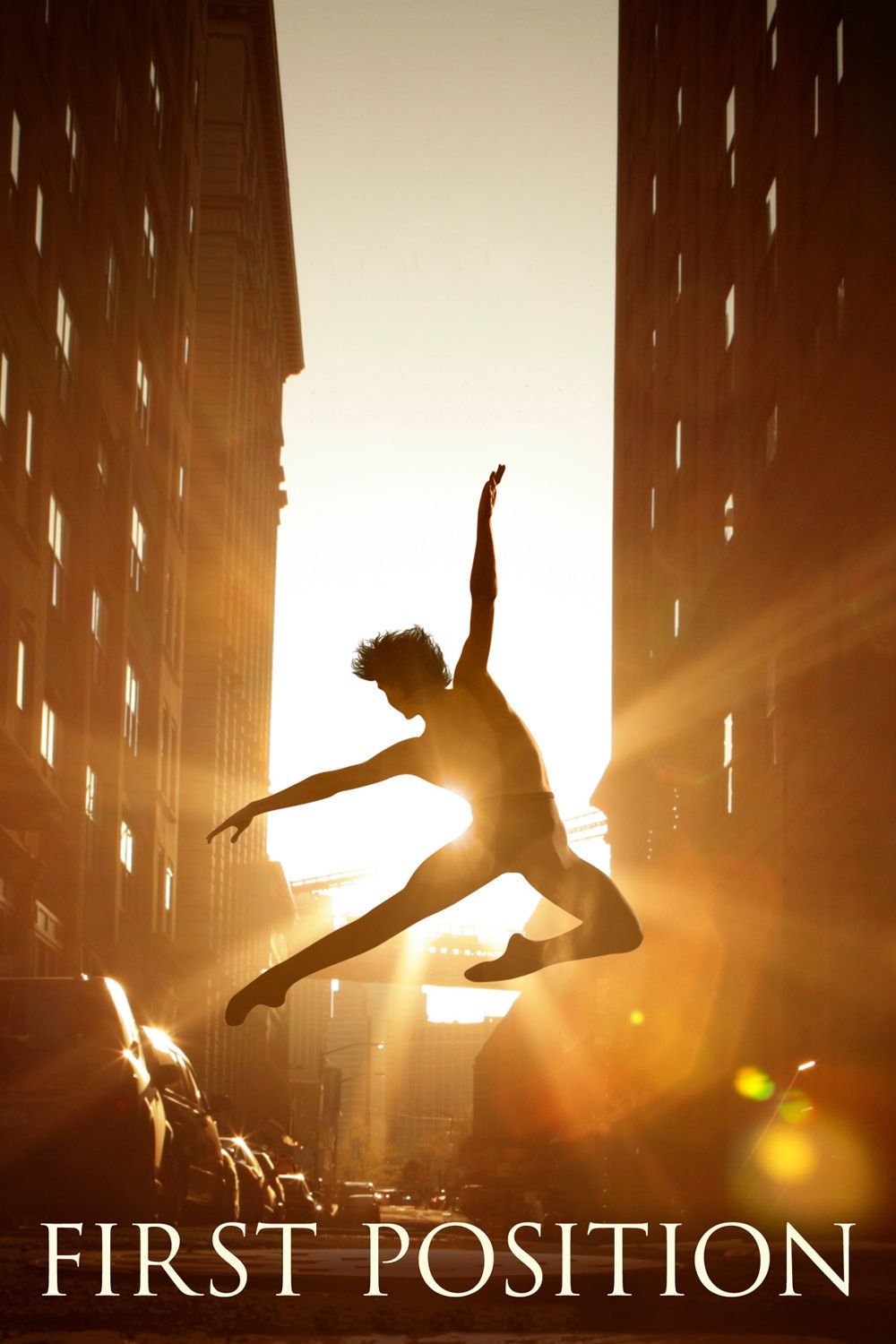
Alex Owens, a young woman juggling between two odd jobs, aspires to become a successful ballet dancer. Nick, who is her boss and lover, supports and encourages her to fulfil her dream.
After a dreadful incident coupled with an ungovernable paroxysm of violence, a butcher will fall into a downward spiral that will burn to the ground whatever dignity still remained in him.
Un Chien Andalou is an European avant-garde surrealist film, a collaboration between director Luis Buñuel and Salvador Dali.
John Shepherd spent 30 years trying to contact extraterrestrials by broadcasting music millions of miles into space. After giving up the search, he makes a different connection here on earth.
In a long, diaphanous skirt, held out by her hands with arms extended, Broadway dancer Annabelle Moore performs. Her dance emphasizes the movement of the flowing cloth. She moves to her right and left across an unadorned stage. Many of the prints were distributed in hand-tinted color.
Angelic and demonic serpentine dance from dawn of cinema. Hand-colored frame by frame. Lumière no. 765 or 765.1 (colorized, different dancer?).
Maya Deren’s shortest, two-minute A Study in Choreography for Camera seems like an exercise piece to capture a dancer’s movement on celluloid, which later on developed into her masterpieces such as Ritual in Transfigured Time and Meditation on Violence.
Two ballet dancers perform a dance enhanced with surreal after-image visuals.
A social event choreographed in the manner of a dance, illuminated by concepts drawn from Greek legend; one of filmmaker Maya Deren's most intriguing works.
This short burlesque film presents an anthropomorphic pig in elegant dress flirting and dancing with a woman, before being humiliated and compelled to perform for her amusement. The film is a screen adaptation of "Le cochon mondain," a successful Paris music-hall act, likely performed by its creator Odéo using the same custom-designed costume.
A skeleton dances joyously, often collapsing into a heap of bones and quickly putting itself back together.
On a whim, a greedy tycoon decides to corner the world market in wheat. This doubles the price of bread, forcing grain producers into charity lines and others further into poverty. The film contrasts the differences between the lives of those who work to grow the wheat and the life of the man who dabbles in its sale for profit.
A man attempts to evade observation by an all-seeing eye.
A stranded carnival dancer takes on a corrupt political boss when she marries into small-town society.
A weary traveler stops at an inn along the way to get a good night's sleep, but his rest is interrupted by odd happenings when he gets to his room--beds vanishing and re-appearing, candles exploding, pants flying through the air and his shoes walking away by themselves.
A young prostitute, who is trying to give her infant son a good start in life, must contend with a coercive pimp and the prejudices of others.
A Soviet woman is caught between her husband and son, who find themselves on opposing sides of the Russian Revolution.
The subject of the film was the Hauka movement. The Hauka movement consisted of mimicry and dancing to become possessed by French Colonial administrators. The participants performed the same elaborate military ceremonies of their colonial occupiers, but in more of a trance than true recreation.
A spiral design spins. It's replaced by a spinning disk. These two continue in perfect alternation until the end: a spiral design, a disk. Each disk is labelled and can be read as it rotates. The messages, in French, feature puns and whimsical rhymes and alliteration. The final message comments on the spiral motif itself.
Buster and a woman are mistakenly married and her initially unfriendly family begins to treat him nicely when they come to believe he has a large inheritance awaiting him.