1895 is a picture about the life of brothers Auguste and Louis Lumiere, who have immortalized their names as inventors of cinematography. What inspired them?
Social & External
Narrator (voice)
Nothing in the world can make Garfield get involved in anything besides eating, until the muscular super cat Garzooka comes crashing into Cartoon World from the Comic Book universe with terrifying news. Garfield summons up the willpower to join his superhero Garzooka in a fight to save their worlds.
Wallace rents out Gromit's former bedroom to a penguin, who takes up an interest in the techno trousers created by Wallace. However, Gromit later learns that the penguin is a wanted criminal.
Wallace's whirlwind romance with the proprietor of the local wool shop puts his head in a spin, and Gromit is framed for sheep-rustling in a fiendish criminal plot.
When 17-year-old Makoto Konno gains the ability to 'leap' backwards through time, she immediately sets about improving her grades and preventing personal mishaps. However, she soon realises that changing the past isn't as simple as it seems, and eventually, will have to rely on her new powers to shape the future of herself and her friends.
On the planet Gandahar where peace reigns and poverty is unknown, this utopian lifestyle is upset by reports of people at the outlying frontiers being turned to stone. Sylvain is sent to investigate this mysterious threat.
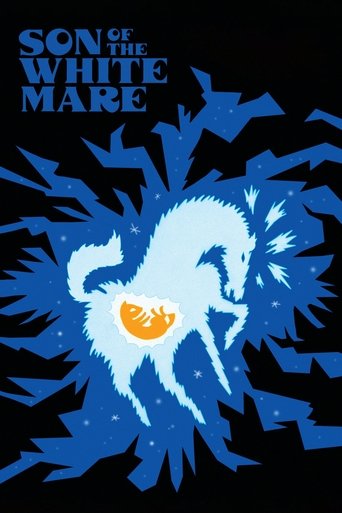
A horse goddess gives birth to three powerful brothers who set out into the Underworld to save three princesses from three evil dragons and reclaim their ancestors' lost kingdom.
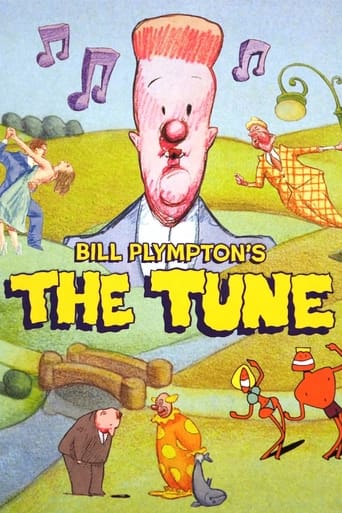
Del is a song writer for the obnoxious Mr. Mega, and in love with Didi, Mega's secretary. His quest to write a hit tune brings him to the wacky world of Flooby Nooby, where he just might learn to write songs from the heart.
Eric Leiser displays his boundless creativity in this short collection; A stunning compilation of works presented with a mixture of live action, stop motion animation, puppetry and pixilation techniques, produced between 2001 and 2006.
Based on two poems by Rafael Alberti, Garabatos (“Scribbles”) is a reflection on childhood, education and the demise of innocence. Music by Pierre Henry, Pierre Schaeffer and Edgard Varèse.
Douglas and Business Cat find a baby that ruins their business.
Follow Bob as he desperately tries to woo a girlfriend while his loyal, yet deranged pet, Rocket Dog, presents new challenges at every turn. Bob's bumbling hipster lifestyle may be a warning, or an invitation, as you see fit.
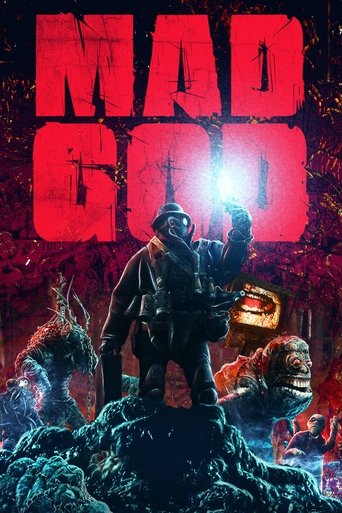
Washed up space adventurer and sidekick crash land on a planet of dicks.
The Internet is haunted at Morningwood Road, they must appease the ghost before she makes a meme of them all.
The bizarre adventures of the cartoon character Foska, drawn by 22 animators working in collaboration. Each animator worked on his or her own sequence only and did not know what action preceded or followed his or her sequence, except that the first drawing of a sequence is the last drawing from the previous sequence. Preserved by the Academy Film Archive in 2010.
A boy walks down the street and as he goes along his strides increase. Eventually he leaps over towns, forests, and oceans, seeing many things and surprising many people along the way.
Bill struggles to put together his shattered psyche.
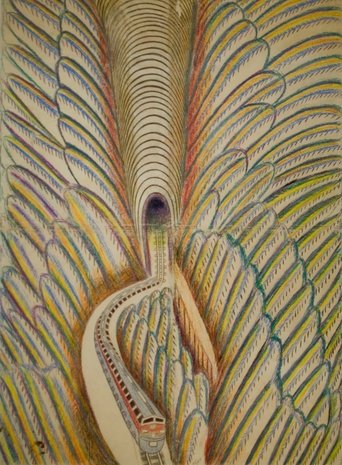
Giovanni currently lives a dreary life of near non-stop work. At school, his peers ridicule him incessantly, and his employer at work is distant and cold. As his isolation from society becomes unbearable, he suddenly finds himself on a train heading far away from his miserable home. Accompanied by Campanella, an acquaintance from school, Giovanni embarks on a journey that will define the rest of his life.
Children are lured to Metropolis only to find that the renowned, mythical city may not be the happy-go-lucky utopia they'd thought it would be.
Short film to a song of love lost and rediscovered, a woman sees and undergoes surreal transformations. Her lover's face melts off, she dons a dress from the shadow of a bell and becomes a dandelion, ants crawl out of a hand and become Frenchmen riding bicycles. Not to mention the turtles with faces on their backs that collide to form a ballerina, or the bizarre baseball game.
A heroic version of Lex Luthor from an alternate universe appears to recruit the Justice League to help save his Earth from the Crime Syndicate, an evil version of the League. What ensues is the ultimate battle of good versus evil in a war that threatens both planets and, through a devious plan launched by Batman's counterpart Owlman, puts the balance of all existence in peril.
Un Chien Andalou is an European avant-garde surrealist film, a collaboration between director Luis Buñuel and Salvador Dali.
Working men and women leave through the main gate of the Lumière factory in Lyon, France. Filmed on 22 March 1895, it is often referred to as the first real motion picture ever made, although Louis Le Prince's 1888 Roundhay Garden Scene pre-dated it by seven years. Three separate versions of this film exist, which differ from one another in numerous ways. The first version features a carriage drawn by one horse, while in the second version the carriage is drawn by two horses, and there is no carriage at all in the third version. The clothing style is also different between the three versions, demonstrating the different seasons in which each was filmed. This film was made in the 35 mm format with an aspect ratio of 1.33:1, and at a speed of 16 frames per second. At that rate, the 17 meters of film length provided a duration of 46 seconds, holding a total of 800 frames.
Hans Richter, noted for his abstract shorts, has everyday objects rebelling against their daily routine.
A grizzled, hard-of-hearing cowboy, Slim, and his two friends, Dusty and Pete, capture a mysterious, well-dressed Frenchman.
To escape neglect and abuse from his parents, a young boy plants some strange seeds and they grow into a grandmother.
A static camera observes a room as it slowly fills with thirty-six characters from different stages of life, looping further through an absurd dance of social disconnection as each character moves in.
A collection of restored prints from the Lumière Brothers.
Short animation of a Russian folk tale, made in 1981. A parody of the fable by Ivan Krylov "The Crow and the Fox".
This is a hand-painted film which has been photographically step-printed to achieve various effects of brief fades and fluidity-of-motion, and makes partial use of painted frames in repetition (for "close-up" of textures). The tone of the film is primarily dark blue, and the paint is composed (and rephotographed microscopically) to suggest galactic forms in a space of stars.
Three surreal depictions of failures of communication that occur on all levels of human society.
A creation myth realized in light, patterns, images superimposed, rapid cutting, and silence. A black screen, then streaks of light, then an explosion of color and squiggles and happenstance. Next, images of small circles emerge then of the Sun. Images of our Earth appear, woods, a part of a body, a nude woman perhaps giving birth. Imagery evokes movement across time. Part of the Dog Star Man series of experimental films.
All alone, Yellow Guy tries to stop a lamp from teaching him about dreams. While Red Guy finds out the truth about the puppets' existence.
Stop-motion photography blends with extreme slow-motion in Clair's first and most 'dada' film, composed of a series of zany, interconnected scenes. We witness a rooftop chess match between Marcel Duchamp and Man Ray, a hearse pulled by a camel (and chased by its pallbearers) and a dizzying roller coaster finale. A film of contradictions and agreements.
The trials and tribulations of putting a feature film together.
As a visually radical memoir, CAMERAPERSON draws on the remarkable footage that filmmaker Kirsten Johnson has shot and reframes it in ways that illuminate moments and situations that have personally affected her. What emerges is an elegant meditation on the relationship between truth and the camera frame, as Johnson transforms scenes that have been presented on Festival screens as one kind of truth into another kind of story—one about personal journey, craft, and direct human connection.
A visual representation, in four parts, of one man's internalization of "The Divine Comedy." Hell is a series of multicolored brush strokes against a white background; the speed of the changing images varies. "Hell Spit Flexion," or springing out of Hell, is on smaller film stock, taking the center of the frame. Montages of color move rapidly with a star and the edge of a lighted moon briefly visible. Purgation is back to full frame; blurs of color occasionally slow down then freeze. From time to time, an image, such as a window or a face, is distinguishable for a moment. In "existence is song," colors swirl then flash in and out of view. Behind the vivid colors are momentary glimpses of volcanic activity.
A man prepares and goes to work in a bizarre world, where the meaning of human workforce is taken to another level.
A factory worker in a dark, gray world assembles devices that promise happiness. In his spare time he tinkers to create something better, and finally succeeds in perfecting his invention, which allows people to see life through rose-colored glasses, but he has to pay a price for his success.