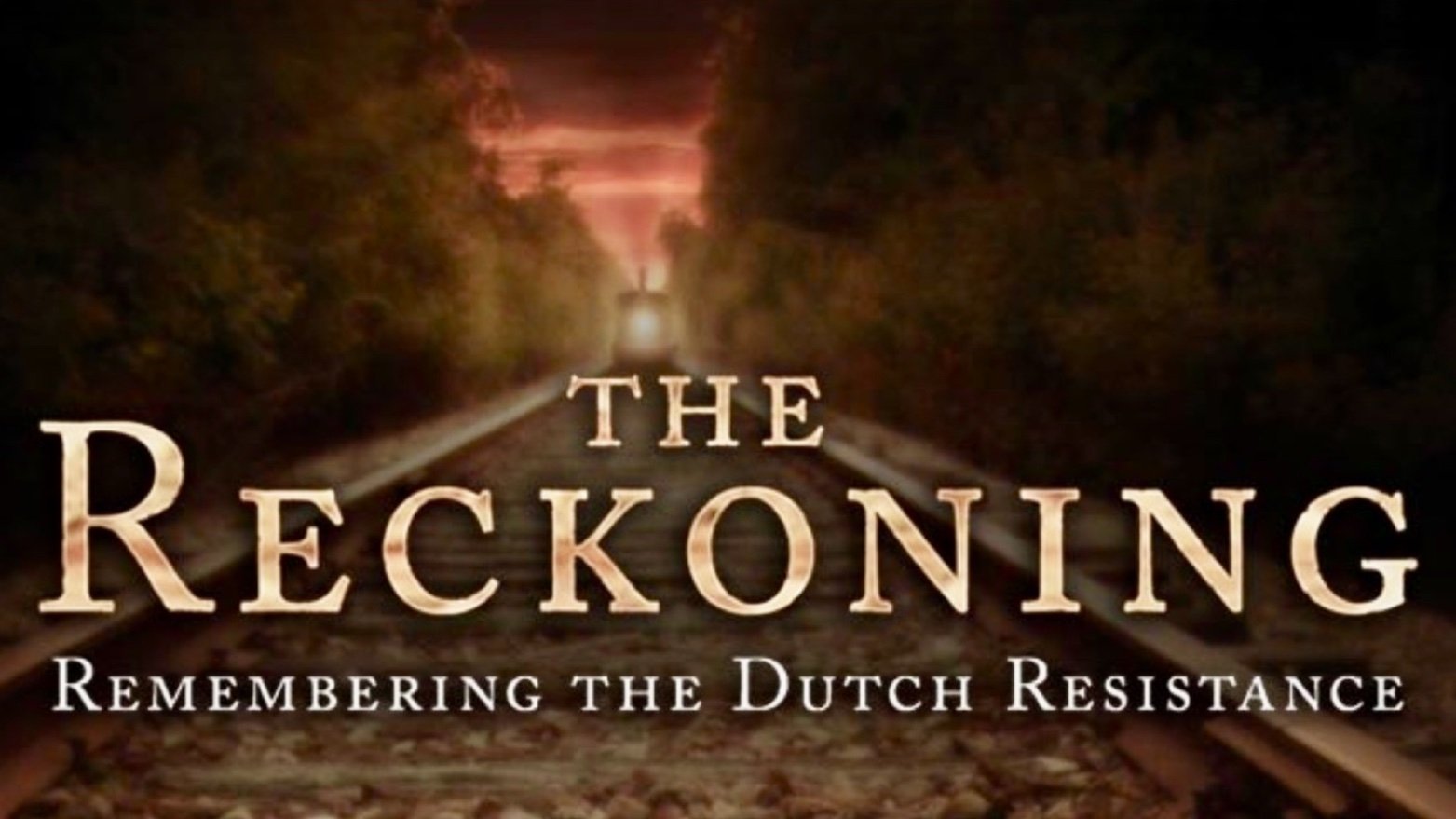
Documentary - The Reckoning: Remembering the Dutch Resistance is the international award-winning documentary that captures the compelling story and eyewitness account of six survivors in war-torn Netherlands during World War II. - Diet Eman
Social & External
In 1945 a group of victorious American officers discover a stash of German jewels and try to fence them in New York.
Captain Eric 'Winkle' Brown recounts his flying experiences, encounters with the Nazis and other adventures leading up to and during the Second World War. Illustrated with archive footage and Captain Brown's own photos.
World War II propaganda short which focuses on the dangers of inadvertent dispersal of military information.
It's 1947 and the borderlines between India and Pakistan are being drawn. A young girl bears witnesses to tragedy as her ayah is caught between the love of two men and the rising tide of political and religious violence.
May 1944, a group of French servicewomen and resistance fighters are enlisted into the British Special Operations Executive commando group under the command of Louise Desfontaines and her brother Pierre. Their mission, to rescue a British army geologist caught reconnoitering the beaches at Normandy.
The lives of two French sisters are torn apart by the onset of World War II.
Five Guamanians interviewed in the early 2000s recall the Japanese bombing of Guam on 7 December 1941, and the years of food shortages, abuses, and other hardships that followed. They describe their childhood lives before, during, and after the island's occupation by Japanese soldiers.
During the Spanish Civil War (1936-1939) and the Second World War (1939-1945), around three thousand people managed to elude their pursuers, and probably also avoided being killed, thanks to the heroic and very efficient efforts of the Ponzán Team, a brave group of people — mountain guides, forgers, safe house keepers and many others —, led by Francisco Ponzán Vidal, who managed to save their lives, both on one side and the other of the border between Spain and France.
In 1911, a willful and determined man from peasant stock named Charles Saganne enlists in the military and is assigned to the Sahara Desert under the aristocratic Colonel Dubreuilh.
Actual footage by the United States Signal Corps of the landing and attack on Arawe Beach, Cape Glouster, New Britain island in 1943 in the South Pacific theatre of World War Two, and the handicaps of the wild jungle in addition to the Japanese snipers and pill-box emplacements.
B-17 Flying Legend examines the importance of World War II's most famous airplane, and raises awareness about the importance of keeping the remaining B-17s flying for generations to come. This documentary covers the history of the airplane, from early designs to the outbreak of war, and the stories of bravery behind the faces of the men who flew them. It contrasts the past by also focusing on today's struggles to keep these flying museums in operation. Unless awareness is created to help with this preservation, in the near future B-17s will only be found in static displays. Almost 13,000 B-17s were built during the war. Sixty years later only 13 still fly. It is important to capture the history of the men behind these flying machines while they are still alive. It is also important to capture images of these machines while they still exist.
The greatest secret of the Second World War has remained a mystery for the last 80 years: a Jewish Communist, Sandor Rado, led a spy network that proved essential to the victory of Allied Forces. Rado received details of strictly confidential strategies from the highest echelons of the Nazi State through Rudolf Roessler, a dedicated anti-Nazi he'd only known as code name "Lucy." Aided by key German industry leaders, Roessler transmitted timely information from high-ranking collaborators within the German army headquarters. Despite their achievement, Rado, Roessler and their sources remained unacknowledged heroes until today. Thanks to the recent declassification of secret archives, we are now able to step behind the scenes of this incredible story.
The drama stars Beat Takeshi as General Hideki Tojo, who served as Prime Minister of Japan during World War II and was later executed as a war criminal. The story's theme is said to be a look at how the Pacific War began, focusing mostly on the three month period between the Imperial Conference (Gozen Kaigi) on September 6, 1941, and the attack on Pearl Harbor on December 7, 1941.
In 1943, while the Allies are bombing Berlin and the Gestapo is purging the capital of Jews, a dangerous love affair blossoms between two women – one a Jewish member of the underground, the other an exemplar of Nazi motherhood.
Two 17-year-olds, Werner Holt and Gilbert Wolzow, are pulled out of school and into Hitler's army. Gilbert becomes a fanatical soldier; but at the front, Werner begins to understand the senselessness of war.
In 1944 Poland, a Jewish shop keeper named Jakob is summoned to ghetto headquarters after being caught out after curfew. While waiting for the German Kommondant, Jakob overhears a German radio broadcast about Russian troop movements. Returned to the ghetto, the shopkeeper shares his information with a friend and then rumors fly that there is a secret radio within the ghetto.
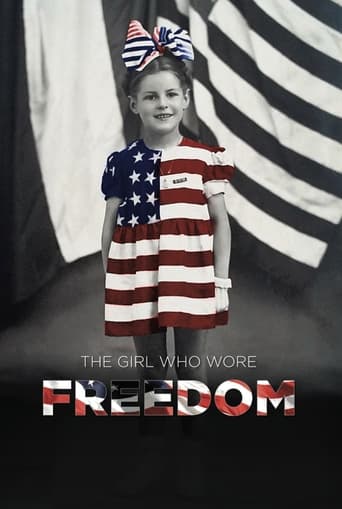
Discover the untold stories of D-Day from the men, women and children who lived through German occupation and Allied liberation of Normandy, France. Powerful and deeply personal, THE GIRL WHO WORE FREEDOM tells the stories of an America that lived its values, instilling pride in a country that's in danger of becoming a relic of the past.
Danish social democratic propaganda film. During the Occupation, the young freedom fighter Søren had a good working relationship with a comrade in the resistance movement, despite the fact that Søren was a social democrat and his comrade a communist. After the liberation in May 1945, the differences that had been less important during the war begin to stand in Søren's way. Both his friendship with his comrade and his relationship with the wealthy Inger fall apart in the summer of liberation. But through his work in the Social Democratic Party, Søren experiences a renewed enthusiasm and resumes his relationship with Inger. Together, they actively engage in the party's work and both see it as an extension of the struggle for freedom during the occupation. Denmark's entry into NATO is particularly important.
Between June 1940 and March 1943, the 1,200 kilometer long demarcation line broke France in two. For almost three years she controlled the daily newspaper of 40 million French people. In the north the zone occupied by Hitler's soldiers, in the south the zone administered by Marshal Pétain's Vichy regime. This film lifts the veil in this theater on the shameful mistakes of the collaboration, but also on the most courageous and noble deeds. Archive images and film recordings at places where the border used to be crossed are alternated with interviews with the last witnesses of this time.
The life and career of the hailed Hollywood movie star and underappreciated genius inventor, Hedy Lamarr.