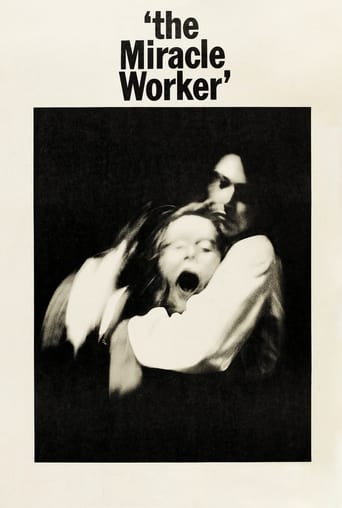
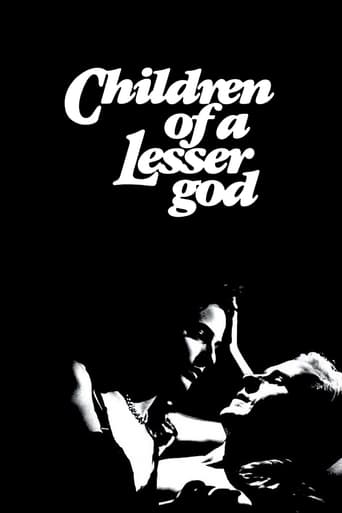
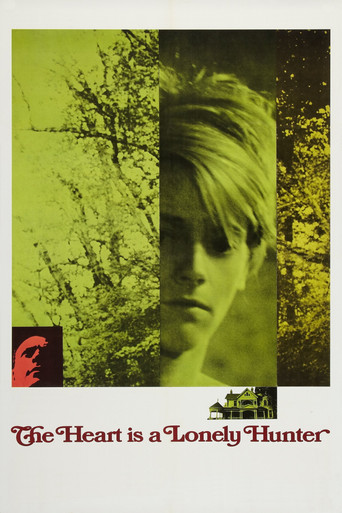
Two deaf and dumb children. She is the daughter of an American Oil engineer. He is the son of an Algerian farmer. They meet and manage to communicate, transcending all the cultural barriers that separate them.
Social & External
Unknown Role
At the outbreak of the Second World War, two friends, Mokrane and Menach, abruptly interrupt their studies and return to their remote native Kabylian village of Tagsa. While waiting to be drafted into the French Army they have time to woo. Mokrane falls for beautiful Aazi and soon marries her only to find out that she can bear no child. Menach, on his part, is stongly attracted to Davda, but the latter is already married to a rich merchant...Happiness does not seem to be in store for the two former students...
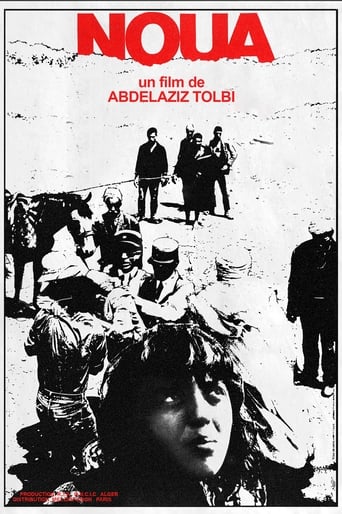
In Kabylie, rude mountain region in the north of Algeria. Arezki finds the young Larbi exhausted, buried under the snow. He takes him in and nurses him until he's recovered. The host seduces Arezki's daughter. She is pregnant. This is an unsupportable shame to the father of the female sinner. Arezki claims vengeance. He leaves his house and takes the oath not to come back before having killed Larbi who betrayed him under his own roof.
Film describes the miserable existence of a charcoal-burner who is barely able to feed his family. His search for work in town ends in failure and he is forced to return to his village.
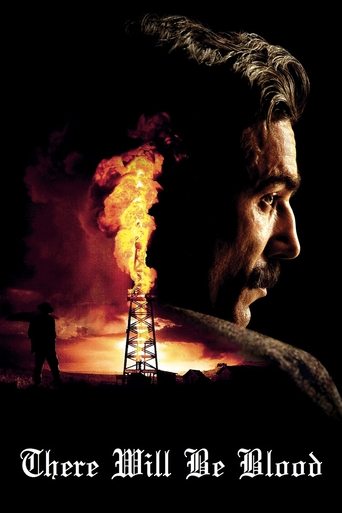
Ruthless silver miner, turned oil prospector, Daniel Plainview, moves to oil-rich California. Using his son to project a trustworthy, family-man image, Plainview cons local landowners into selling him their valuable properties for a pittance. However, local preacher Eli Sunday suspects Plainview's motives and intentions, starting a slow-burning feud that threatens both their lives.
Despite having lived in the East German countryside for several months, teenager Lars and his dad, Henrik, are still treated as unwelcome guests. Henrik is building a “marriage barn,” a proposed bed-and-breakfast for newlywed Berliners.
Néfissa, a student in Algiers, returns to her village in the south in the summer. Her father wants her to marry the mayor but she wants to continue her studies. Confronting her father and the opinion of the villagers who do not understand her, she decides to flee to Algiers. The shepherd Rabah discovering her wounded and lost in the mountains, has her treated by her mother. In contact with Nefissa, Rabat becomes aware of his exploited condition and discovers the possibilities offered to him by the cooperatives of the agrarian revolution. The two young people will go through the decisive stage together which will allow them to escape obscurantism and exploitation. Based on the novel "Le vent du sud" by Abdelhamid Benahouga
A stubborn director who wants to rediscover the Algiers of his childhood comes up against the “Hollywood” fantasies of his characters, non-professionals all hoping to be able to become “someone else”, at least for the duration of a film… Mise en abyme for a journey into megalomania…
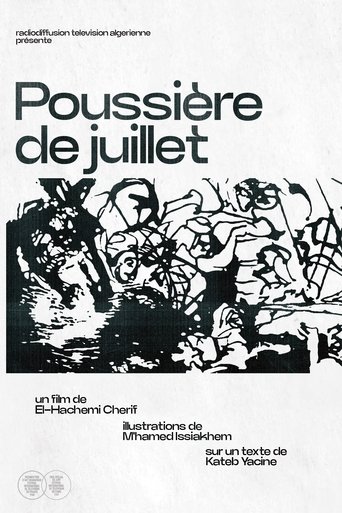
“Poussières de Juillet”, produced in 1967 by Hachemi El-Chérif, is taken from a poem by Kateb Yacine. "We made a film on the return of the ashes of Emir Abdelkader, to Algeria. It was the opportunity to make a film on the ancestors with M'hamed Issiakhem. He designed glass plates on the basis of my texts. Then we had actors collaborate. It was a film which cost us a total of 300 dinars, proof that we could do work for television without too much money. We won two first international prizes at the Belgrade festival. We left the original of the film with the Egyptians in Alexandria and they lost it. We kept a copy but over time I wonder what happened to it, because there is no not even had a screening, they say it still exists, but I don't know in what state." Kateb Yacine, July 28, 1986, interview with Arlette Casas.
Djamila, a young Algerian woman living with her brother Hadi and her uncle Mustafa in the Casbah district of Algiers under the French occupation of Algeria, sees the full extent of injustice, tyranny and cruelty on his compatriots by French soldiers. Jamila's nationalist spirit will be strengthened when French forces invade her university to arrest her classmate Amina who commits suicide by ingesting poison. Shortly after the prominent Algerian guerrilla leader Youssef takes refuge with her, she realizes that her uncle Mustafa is part of this network of anti-colonial rebel fighters. Her uncle linked her to the National Liberation Front (FLN). A series of events illustrate Jamila's participation in resistance operations against the occupier before she was finally captured and tortured. Finally, despite the efforts of her French lawyer, Jamila is sentenced to death...
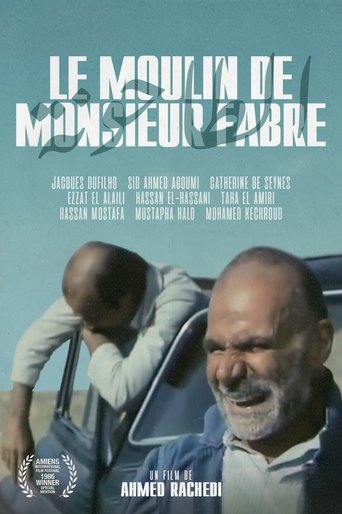
A French teacher in a small Algerian village during the Algerian War forms an unexpected bond with a dissident who is ordered to be turned in to the authorities.
Nina, an OB-GYN, faces accusations after a newborn's death. Her life undergoes scrutiny during investigation. She persists in her medical duties, determined to provide care others hesitate to offer, despite the risks.
A young American soldier, rendered in pseudocoma from an artillery shell from WWI, recalls his life leading up to that point.
The story of Soorya whose life changed when she was kidnapped by Harit Rangsiman, a landowner who mistakes her for her cousin who caused his brother's death. Humiliated and forced to work, Soorya strikes up a friendship with a deaf and dumb man who was also a victim of Harit's cruelty. Harit realizes his mistake and releases Soorya, but only to allow him to spy on her cousin, which leads to her downfall.
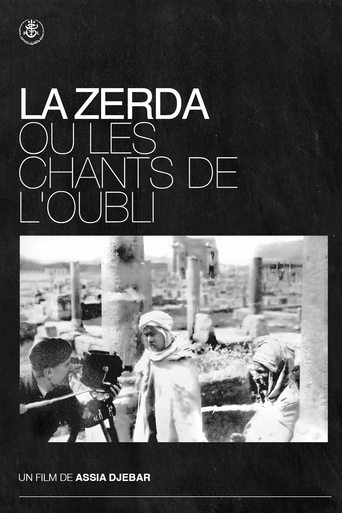
“La Zerda and the songs of oblivion” (1982) is one of only two films made by the Algerian novelist Assia Djebar, with “La Nouba des femmes du mont Chenoua” (1977). Powerful poetic essay based on archives, in which Assia Djebar – in collaboration with the poet Malek Alloula and the composer Ahmed Essyad – deconstructs the French colonial propaganda of the Pathé-Gaumont newsreels from 1912 to 1942, to reveal the signs of revolt among the subjugated North African population. Through the reassembly of these propaganda images, Djebar recovers the history of the Zerda ceremonies, suggesting that the power and mysticism of this tradition were obliterated and erased by the predatory voyeurism of the colonial gaze. This very gaze is thus subverted and a hidden tradition of resistance and struggle is revealed, against any exoticizing and orientalist temptation.
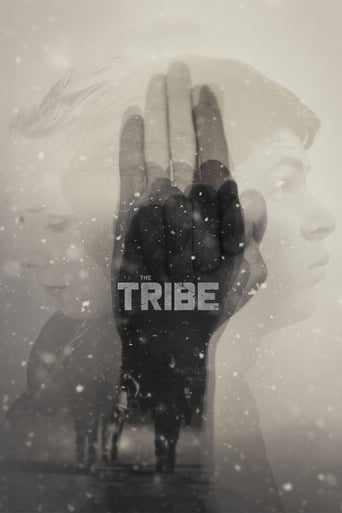
Suddenly laid off from a factory staffed by deaf-mute people, Sveta’s house loan pushes her into a highly unethical line of work.
"Gerboise bleue", the first French atomic test carried out on February 13, 1960 in the Algerian Sahara, is the starting point of France's nuclear power. These are powerful radioactive aerial shots carried out in areas belonging to the French army. Underground tests will follow, even after the independence of Algeria. From 1960 to 1978, 30,000 people were exposed in the Sahara. The French army was recognized recognized nine irradiations. No complaint against the army or the Atomic Energy Commission has resulted. Three requests for a commission of inquiry were rejected by the National Defense Commission. For the first time, the last survivors bear witness to their fight for the recognition of their illnesses, and revealed to themselves in what conditions the shootings took place. The director goes to the zero point of "Gerboise Bleue", forbidden access for 47 years by the Algerian authorities
In a single static shot a man is threatened with death at another's gunpoint.
Parisian authorities clash with the Front de Libération Nationale (FLN) in director Alain Tasma’s recounting of one of the darkest moments of the Algerian War of Independence. As the war wound to a close and violence persisted in the streets of Paris, the FLN and its supporters adopted the tactic of murdering French policemen in hopes of forcing a withdrawal. When French law enforcement retaliated by brutalizing Algerians and imposing a strict curfew, the FLN organizes a peaceful demonstration that drew over 11,000 supporters, resulting in an order from the Paris police chief to take brutal countermeasures. Told through the eyes of both French policemen as well as Algerian protestors, Tasma’s film attempts to get to the root of the tragedy by presenting both sides of the story.
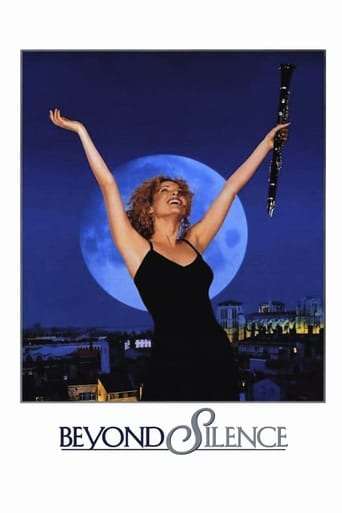
A deaf 4-year-old girl named Libby lives in a world of silence until a caring social worker teaches her to use sign language to communicate.
Henia will give anything to mend her broken past and find her mother, from whom she has been separated since the conflict between Morocco and Algeria during the Black Demonstration of 1975. After being given an opportunity to assist an elderly blind man, she accepts the offer and eventually finds herself agreeing to marry him. For Henia, this is a chance to get the necessary papers for her return to Algeria. For the old man, it’s a chance to start over. For his son, it is a disgrace.
Anton and Erika started out as friends for five years and got into a romantic relationship for seven years. Anton is a commercial director while Erika is a former band member and becomes his stay-at-home partner. The day finally comes when he asks her to marry him.
A short film based on the S.T.A.L.K.E.R. fictional universe, combining the “Picnic to the curb” of the Strugatsky brothers, “Stalker” by Andrei Tarkovsky and the “Exclusion Zone” location around the Chernobyl NPP. According to the scenario, an agent of the peacekeeping forces, nicknamed "The Photographer", arrives in the Zone to prevent a global scale catastrophe, which could be caused by an experiment that went out of control at a scientific lab.
Don Poli, the patriarch of a family embedded in politics, faces the change of party in his state - after a hundred years in power - losing all his privileges. Humiliated and angry, he threatens to disinherit his family and leave to rebuild his life. This forces his children (Kippy, Ramses and Belén) to take extreme measures to ensure their future, causing everything that could go wrong to turn out worse.
In the middle of a broadcast about Typhoon Yolanda's initial impact, reporter Jiggy Manicad was faced with the reality that he no longer had communication with his station. They were, for all intents and purposes, stranded in Tacloban. With little option, and his crew started the six hour walk to Alto, where the closest broadcast antenna was to be found. Letting the world know what was happening to was a priority, but they were driven by the need to let their families and friends know they were all still alive. Along the way, they encountered residents and victims of the massive typhoon, and with each step it became increasingly clear just how devastating this storm was. This was a storm that was going to change lives.
Ava, an award-winning chef at a big-city restaurant, has lost her spark. Her boss sends her out to find herself to save her menu and her job. She returns home and finds little to inspire her, but when she reunites with her childhood friend Logan, Ava has to get her head out of the clouds and her foot out of her mouth to rediscover her passion for food.
The Year of Return is an initiative of the government of Ghana that is intended to encourage African diasporans to come to Africa to settle and invest in the continent. This film documents one diasporan family as they return to Africa.
Suggested by Mama Watta, a legendary water goddess who seduces men into captivity, the film depicts the symbolic encounter of a man and a woman one night on the beach. The two share dreams on the sand but with daylight comes disorientation and death.
Munro, a soldier turned lay preacher, comes to New Zealand to minister to the first British colonists, but he is converted by the powerful chief Maianui to serve a different purpose.
Hüseyin Al Baldawi arrives in Brussels in August 2015. He has traveled thousands of kilometers until he got there from Iraq. A year after his arrival, he receives his residence permit and decides to go to Greece. This journey from Brussels to Athens involves the viewers on the difficulties faced by Hüseyin and thousands of other immigrants. While the story of Hüseyin is taking shape through the countries he travels, the forgotten people he meets and the selfish society of Europe give us many messages, as well.
After blowing his professional ballet career, John's only way to redeem himself is to concoct the demise of his former partner, Leah, who he blames for his downfall; he rehearses his salvation in his mind in the way that he rehearses a dance, but being able to break from the routine will be the key to his success.
I Can't Seem To Wake Up 2017 Festival Tour -- Live from Panorama NYC.
A hitman is tasked to take out ex-mobsters when he suddenly hears a voice that questions his morality.
Walking on the road to death, seeing some distractions.
After drinking all night, Monty and his friend try to get home, but it turns out to be not easy. The next day, Monty tries to win the heart of a theater actress.
This DVD set have all The Ultraman pre-release lost films, recorded in 8mm, and release officialy in 2005 with a photobook.
An old Finnish athlete travels alone through eastern Europe with his van.
Due to a rental mistake, three families are forced to share a house in the Canary Islands, leading to chaotic and humorous situations as they try to live together.
After a family tragedy, Chuck Wilson hopes to start a new life in Ashland Falls with his wife Maria and little sister Elizabeth, but he quickly discovers that the town has a dark history of being haunted by a ghostly woman who drives residents to suicide.
At the height of the Oyo Empire, the ferocious Bashorun Ga'a became more powerful than the kings he enthroned, only to be undone by his own blood.
When the simple fisherman Ahmed thinks about enrolling his son in school, as he realizes that he doesn't have an ID and that his son doesn't have a birth certificate. Matters become complicated in a series of comic events when he decides to register his children in the official records.