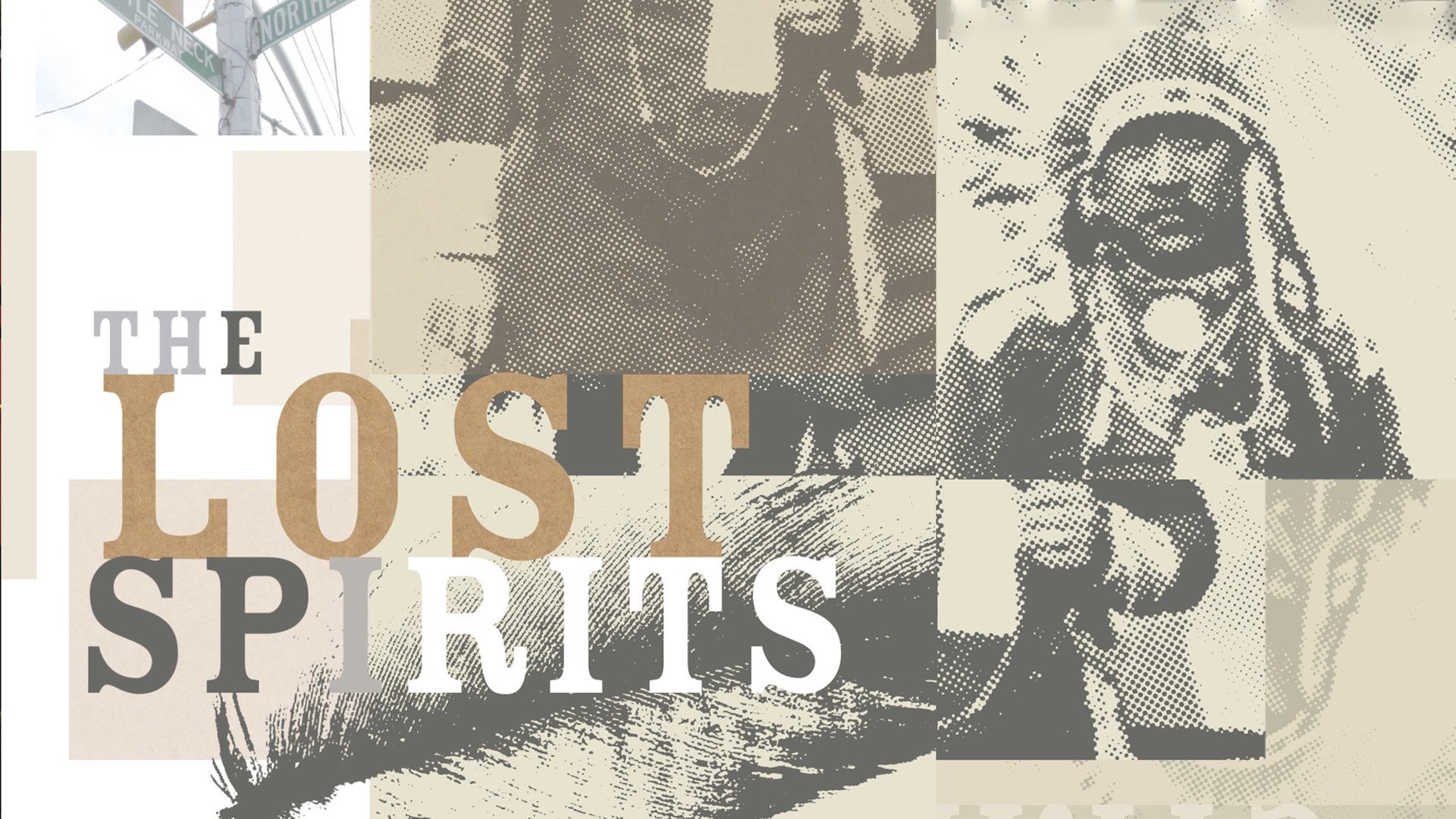
The last surviving Native Americans on Long Island are the focus of The Lost Spirits. The film chronicles their struggles as an indigenous people to maintain their identity amidst relentless modernization and a heartless bureaucracy.
Social & External
This documentary offers a deep, candid, and historical look at the Christian experience of America's largest and best-known tribes: the Dakota and Lakota. Its exploration into Native American history also takes a hard and detailed look at President Ulysses S. Grant's Peace Policy of 1873, which was, in effect, a "convert to Episcopalianism or starve" edict put forth by the American government in direct violation of its Constitution. The devastation it had on the values of the people affected were dramatic and extremely long-lasting. Grant's policy was finally ended over 100 years later by the Freedom of American Indian Religions Act in 1978. Interlaced with extraordinarily candid interviews, this documentary presents an insider's perspective of how the Dakota and Lakota were estranged from their religious beliefs and their long-standing traditions.
Professional, native and antiquarian researchers combine to investigate the archaeological history and modern legacy of Eastern Native civilization near Turners Falls, Massachusetts. They uncover possible evidence of a vast astronomical construct that covered a large area of what is now the northeastern United States.
The story of the Yuma Crossing, the place where centuries of travelers crossed the Colorado River as told in a series of reenacted vignettes by colorful characters from the Quechan tribe, the conquistadores, Father Kino, Olive Oatman and others up until the first bridge was built in the 1920's.
Docudrama about the debate surrounding New York State's ratification of the United States Constitution. Historical figures wear modern dress and use familiar language to help today's audience understand firsthand the forces that shaped this country two hundred years ago. The argument, characters, passions and debating points are historically accurate, but the language and the medium of the debate is modern in form. Present day newscasters and commentators play themselves, reporting on the events of the 1780s as though they were occurring now.
Writer producer Donick Cary (The Simpsons, Parks and Recreation, Have a Good Trip, etc.) has been a huge fan of the Washington D.C. pro football team since before he could walk. Passed down from his dad, he was excited to pass the tradition onto his kids. Donick never questioned the team name and or Native American logo until one day, while watching a game, his 9-year-old son, Otis, asked him if it was racist. When Otis suggests they ask Native Americans how they feel, it sends the two on a cross-country journey full of unexpected surprises.
In this evocative meditation, a disturbing link is made between the resource extraction industries’ exploitation of the land and violence inflicted on Indigenous women and girls. Or, as one young woman testifies, “Just as the land is being used, these women are being used.”
With exclusive access to the lives of 8 women, ranging in age from 10 to 98, explore powerful testimonials of loss and survival and gain insight into the experience of a modern Indigenous American living on a reservation. Gripping historical accounts and startling timely statistics guide viewers down the path that has led to these present day conditions.
The Cherokee language is deeply tied to Cherokee identity; yet generations of assimilation efforts by the U.S. government and anti-Indigenous stigmas have forced the Tri-Council of Cherokee tribes to declare a State of Emergency for the language in 2019. While there are 430,000 Cherokee citizens in the three federally recognized tribes, fewer than an estimated 2,000 fluent speakers remain—the majority of whom are elderly. The covid pandemic has unfortunately hastened the course. Language activists, artists, and the youth must now lead the charge of urgent radical revitalization efforts to help save the language from the brink of extinction.
A chronicle of legendary Native American poet/activist John Trudell's travels, spoken word performances, and politics.
A Castiglioni Brothers mondo film about the practices and rites of several native African tribes.
Nóouhàh-Toka’na, known as swift fox in English, once roamed the North American Great Plains from Canada to Texas. Like bison, pronghorn and other plains animals, Nóouhàh-Toka’na held cultural significance for the Native Americans who lived alongside them. But predator control programs in the mid-1900s reduced the foxes to just 10 percent of their native range. At the Fort Belknap Indian Community in Montana, members of the Aaniiih and Nakoda tribes are working with the Smithsonian’s National Zoo and Conservation Biology Institute and other conservation partners to restore biodiversity and return Nóouhàh-Toka’na to the land.
The 73 minute film, MOUNTAIN RIVER, follows the Esopus Creek, from its headwaters on Slide Mountain in New York’s Catskill Mountains, to the Ashokan Reservoir, and on to the Hudson River at Saugerties - a fascinating journey of 65 miles. The story begins with the ancient geologic forces that formed the Catskills and goes on to explore the Native American and colonial settlements along the Esopus. The documentary covers the history of New York City’s Ashokan Reservoir, the development of water-power on the stream, and the innovative beginnings of the American Industrial Revolution along the Esopus in Saugerties. The film celebrates the Upper Esopus as a world class trout fishery, a recreational resource and a critical source of clean, unfiltered water for millions of New Yorkers. Below the Ashokan Reservoir, the Lower Esopus flows through steep gorges, rich agricultural lands and several towns on its way to the Hudson River.
The 45-minute documentary celebrates the history of the Catskill Water System with rare archival film footage and historic photographs. Deep Water tells the story of the building of the Ashokan Reservoir, Shandaken Tunnel, Schoharie Reservoir, and the Catskill Aqueduct. Narrated by Robb Webb (the voice of "60 Minutes II"), Deep Water documents how several Catskill Mountain towns were destroyed and flooded, how immigrant workers built the dams and tunnels, and how brilliant engineering and political maneuvering allowed the system to be built.
RAILS TO THE CATSKILLS is a history of the dynamic railroad industry in the Catskills of New York State. Catskill railroads have roots in the canals of the 1820's and the post Civil War railroad boom.
In the Gilded Age and beyond, high fashion decreed that violets were the flower of choice for Valentine's Day, Easter, and a fragrant corsage. At its height, in the years before World War I, Rhinebeck, New York, growers shipped millions of sweet violets (viola odorata) to New York City, Philadelphia, Boston, Chicago and beyond.
There isn't much left of the once-grand Catskill Mountain House. The lavish resort hotel was perched on a precarious ledge in Greene County for over a century. During its 19th-century heyday, the hotel embodied the peak of luxury for a generation of the rich and famous. But like many resort hotels of the Catskills' glittering past, the Mountain House fell into disuse in the 20th century and was finally destroyed by the state of New York in 1963 to return its scenic overlook to wilderness. The Catskill Mountain House and The World Around was given the Gold Remi Award by the 44th WorldFest Houston International Film Festival!
Three children living in a displacement camp in northern Uganda compete in their country's national music and dance festival.
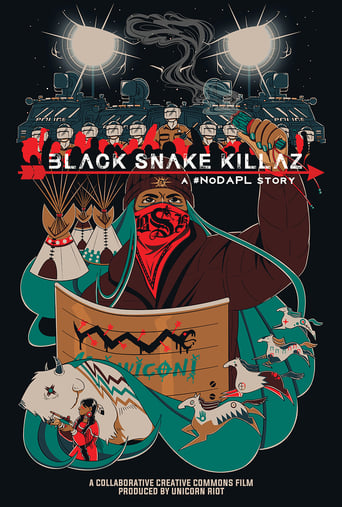
Black Snake Killaz is a feature-length documentary film about the resistance to the Dakota Access Pipeline. This film explores actions taken by water protectors to stop the construction of the oil pipeline and highlights actions taken by law enforcement, military, and corporate mercenaries to quell the months-long protest. Black Snake Killaz timelines the historical events that unfolded in Standing Rock throughout 2016 and brings you the raw experience from many frontline actions to protect the water. Although the Dakota Access Pipeline is completed, the impact of the movement will be long-lasting. As fossil fuel extraction projects continue to impact some of the most vulnerable communities throughout the United States of America, the importance of the water protectors story grows.
In the spring of 2005, Jim Miller, a Native spiritual leader and Vietnam veteran, found himself in a dream riding on horseback across the great plains of South Dakota. Just before he awoke, he arrived at a riverbank in Minnesota and saw 38 of his Dakota ancestors hanged. At the time, Jim knew nothing of the largest mass execution in United States history, ordered by Abraham Lincoln on December 26, 1862. Now, four years later, embracing the message of the dream, Jim and a group of riders retrace the 330-mile route of his dream on horseback from Lower Brule, South Dakota to Mankato, Minnesota to arrive at the hanging site on the anniversary of the execution. This is the story of their journey - the blizzards they endure, the Native and Non-Native communities that house and feed them along the way, and the dark history they are beginning to wipe away.
A Chippewa prophecy foretells a time called the 7th Fire when lost traditions will be recovered. Native American filmmaker Sandra Sunrising Osawa examines how the Chippewa Indians of Northern Wisconsin have struggled to restore the centuries-old tradition of spearfishing — and the heated opposition they have encountered.