
Follow the shocking, yet humorous, journey of an aspiring environmentalist, as he daringly seeks to find the real solution to the most pressing environmental issues and true path to sustainability.
Stream
Social & External
Self
Documentary about the work of Claude Lorius, who began studying Antarctic ice in 1957, and, in 1965, was the first scientist to be concerned about global warming.
How can we best meet every earth citizens need for healthy food facing our limited resources? Regarding the almost 10 billion humans living on earth by 2050, we have to decide now how we want to shape the future of agriculture.
Vast, wild, yet extremely fragile. The coldest place on our planet is also one of the most affected by global warming and needs to be protected. The expedition focuses on exploring, documenting, and surfing in the South Shetland Islands and the Antarctic Peninsula, in the area known as Domain 1, which is being pushed for Marine Protected Area (MPA) status. Protected areas are very important for mitigating climate change and, in this case, also for regulating human activities such as concentrated fishing. This film helps us understand the importance of this area and the threats affecting it.
Wiebo Ludwig is the leader of a Christian group who brought his family to live in Alberta, Canada, 25 years ago in order live a life according to scripture. They built a small, self-sufficient community in a place that they did not realize was one of the largest undeveloped natural gas fields in North America. Unlike others who lived in the area, Wiebo and his family refused to sell their land and move, and now Wiebo is the prime suspect in a series of pipeline bombings and other acts of sabotage against the local oil industry.
How safe is the future of the world’s food? This documentary explores a growing crisis in world agriculture. Plant breeding has created today’s crops, which are high yielding but vulnerable to disease and insects. To keep crops healthy, breeders tap all the genetic diversity of the world’s food plants. But that rich resource is quickly being wiped out. (NFB)
Explores the challenges of converting to a vegan diet. It "follows three meat-and-cheese-loving New Yorkers who agree to adopt a vegan diet for six weeks.
A chronicle of Frieda Caplan's rise from being the first woman entrepreneur on the L.A. Wholesale Produce Market in the 1960s, to transforming American cuisine by introducing over 200 exotic fruits and vegetables to U.S. supermarkets. Still an inspiration at 91, Frieda's daughters and granddaughter carry on the business legacy.
After years of overproduction, the Reagan administration unloads over 500 million pounds of surplus cheese on the American public in the 1980s. The pungent dairy product comes to be known as 'Government Cheese.'
Right on our doorstep there is something that feeds us all: living soil. But this precious resource is under threat – from us humans! Our planet needs more than 2000 years to form ten centimetres of fertile soil. What does this mean for the future?
Sixty years ago, the Canary Islands were the first in Europe to adopt desalination of ocean water to produce drinking water. Often considered a miracle solution, is this technique compatible with sustainable development?
In the heart of the Boreal forest lives a family renowned as much for their gourmet forest pickings as for their life of self-sufficiency.
Filmmaker Jennifer Abbott explores the emotional and psychological dimensions of the climate crisis and the relationship between grief and hope in times of personal and planetary change.
Born in London in 1934, Jane Goodall spent decades in Tanzania’s Gombe Stream National Park, studying the social and family structures of chimpanzees and helping to bring their ecological vulnerability into the public consciousness. She also founded and remains integral to the Jane Goodall Institute, which encourages environmental activism and stewardship among young people. In this program, the famous scientist reflects on her many years spent observing and learning about our primate cousins.
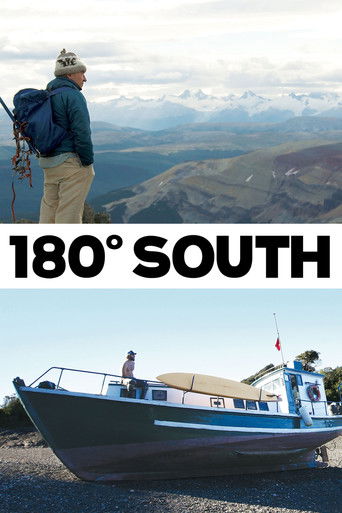
The vessel is Infinity, a 120-foot hand-built sailboat, crewed by a band of miscreants. The journey, an 8,000 mile Pacific crossing from New Zealand to Patagonia, with a stop in Antarctica. Unlike all the other boats heading to the Southern Ocean, Infinity is no ice-reinforced super-yacht crewed by professional sailors; rather, Infinity lives in the moment and sails on a whim. What can be found in abundance on board is blood, sweat, enthusiasm, risk tolerance, disdain for authority, and an ample supply of alcohol – all in all a mad voyage of reckless adventure just for the sheer joy of it. Along the way the crew will battle a hurricane of ice in the Ross Sea, assist the radical environmental group Sea Shepherd in their fight with illegal whalers, and tear every sail they have. At the heart of their journey is a quest for awe and a sense of wonder with the raw power of the natural world.
At a time when the public is more concerned than ever about the health and environmental problems associated with large-scale factory farming, Peaceable Kingdom explores another angle of this unfolding story: the interconnected life journeys of farm animals, former farmers, and animal rescuers struggling against an out of control industrial system. Breaking generations of silence in the farm community, Peaceable Kingdom weaves together themes of respect, forgiveness, commitment, and healing, offering a vision of a more peaceful world that is well within our reach.
Art has always investigated nature and man's connection with the world. Several contemporary artists have questioned the issues of climate change and environmental sustainability and have tried to amplify our ecological consciousness. Through the testimonies of artists of different generations such as Olafur Eliasson, Christo, Michelangelo Pistoletto and the gaze of critics such as Germano Celant and Carolyn Christov-Bakargiev, we retrace some of the most significant works.
Every km of ocean now contains an average of 74,000 pieces of plastic. A 'plastic soup' of waste, killing hundreds of thousands of animals every year and leaching chemicals slowly up the food chain. In Holland, scientists found plastic in the stomachs of 95% of all fulmar birds. In Germany, plastic has been found to affect the reproductive systems of animals, while in the US, conservationists are seeing increasing numbers of dolphins die in agony, their guts blocked with rubbish. What will be the long term impact of this 'plastic pollution'? Can anything be done to clean up our oceans?
Co-directed by filmmaker Morag McKinnon and composer Jim Sutherland, is a thought-provoking meditation on the climate crisis and humanity's relationship with nature. With a focus on Scotland's Flow Country, it blends art and science to reflect on present-day eco-emergencies within the context of geological deep time.
This may be the one of the most important Horizon films of recent years. Climate scientists have just discovered a phenomenon that threatens to disrupt our world. It may already have contributed to the deaths of hundreds of thousands through drought and famine. Unchecked, it will strike again. The good news is that there is a cure. The bad news is that the cure may be worse than the disease. If they are right, then in tackling the one problem, we may unleash a climate catastrophe on our planet. This is a film about stark choices and about the dawning realisation that all our predictions about the world's climate may be completely wrong. At its heart is something that scientists are calling "global dimming".
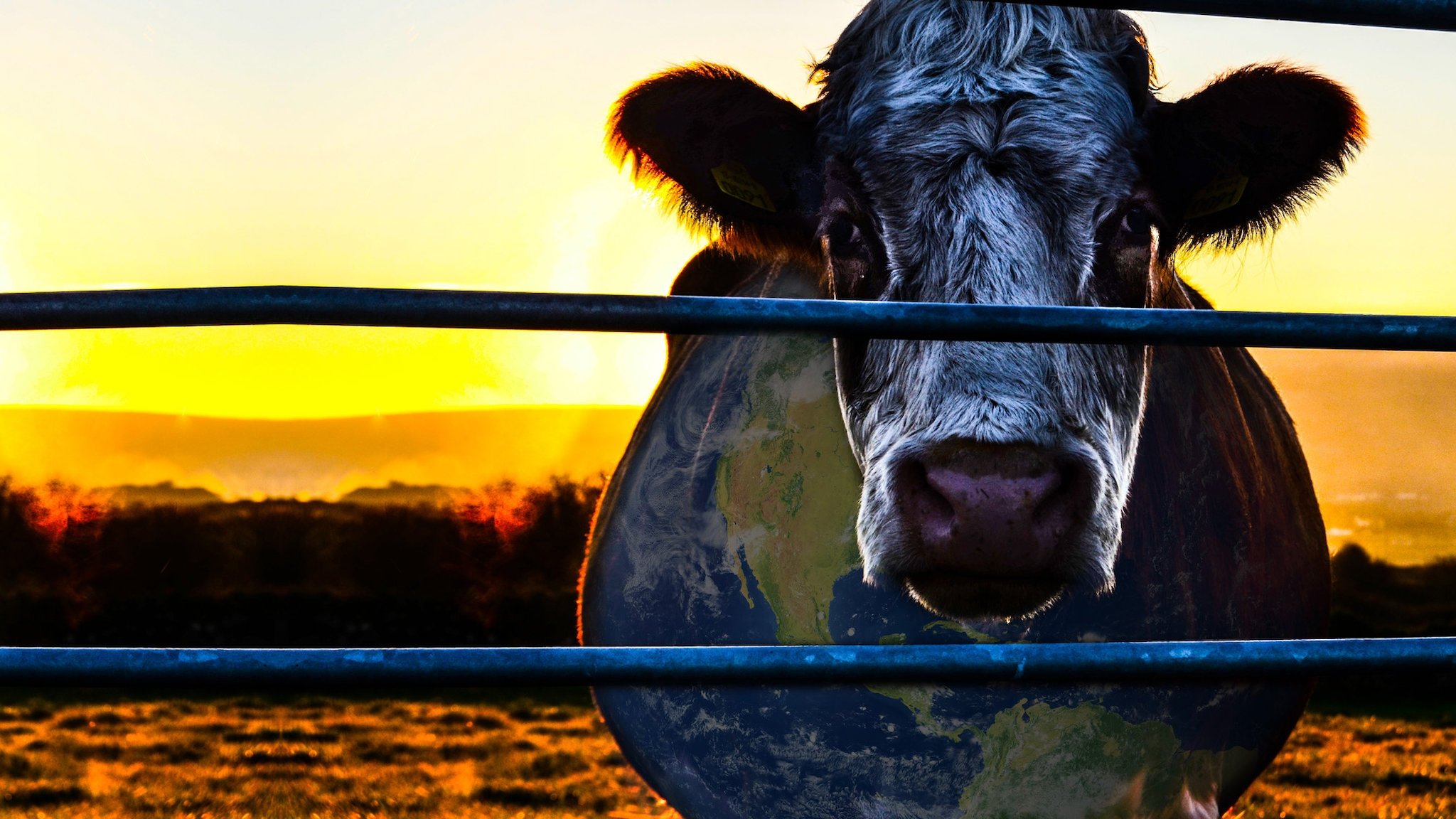
A beef farmer struggles with his conscience every time he takes his cows to slaughter, and so sets about doing something extraordinary.
Filmmaker Kip Andersen uncovers the secret to preventing and even reversing chronic diseases, and he investigates why the nation's leading health organizations doesn't want people to know about it.
Examines the profound claim that most; if not all; of the degenerative diseases that afflict us can be controlled; or even reversed; by rejecting our present menu of animal-based and processed foods. The idea of food as medicine is put to the test. Cameras follow "reality patients" who have chronic conditions from heart disease to diabetes. Doctors teach these patients how to adopt a whole-foods, plant-based diet as the primary approach to treat their ailments - while the challenges and triumphs of their journeys are revealed.
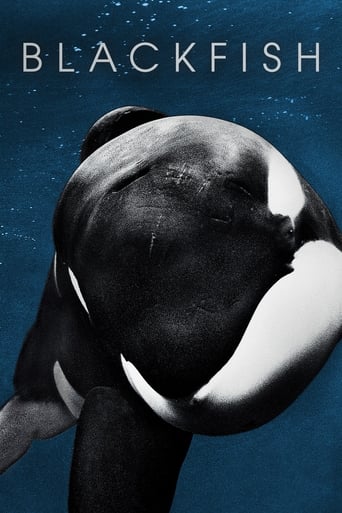
Passionate about ocean life, a filmmaker sets out to document the harm that humans do to marine species — and uncovers an alarming global conspiracy.
It's 2067, the UK is vegan, but older generations are suffering the guilt of their carnivorous past. Simon Amstell asks us to forgive them for the horrors of what they swallowed.
Poor farmer's son Tom Little may be small, but what he lacks in brawn, he more than makes up for in brains and bravery. When a magic mirror shows him that the love of his life is no less than the beautiful princess, he's determined to win her heart. Meanwhile, a revengeful witch has conjured up a giant tree that covers the royal palace and destroys the court's fountain. Having heard that the King is offering his daughter's hand and half the kingdom to whoever manages to free the palace from this spell, Tom tries his luck against all odds.
This film weaves together expert analysis of America's food and farming system with a powerful narrative of one extraordinary farmer who is determined to create a sustainable future for his community.
The biggest tech revolution of the 21st century isn’t digital, it’s biological. A breakthrough called CRISPR gives us unprecedented control over the basic building blocks of life. It opens the door to curing disease, reshaping the biosphere, and designing our own children. This documentary is a provocative exploration of CRISPR’s far-reaching implications, through the eyes of the scientists who discovered it, the families it’s affecting, and the genetic engineers who are testing its limits.
Two girls from nuclear towns in Israel and Iran spill their countries most valuable secrets on Facebook while trying to prevent a nuclear crisis.
The concept of an elevator to space is not new. In the world of Arthur C. Clarke, it is a natural progression. What most people don't know is that men and women around the world are working hard to build it right this moment. Some want to solve the energy crisis, some want easier access to raw materials in the solar system, and some just want to travel to space and gaze upon their home planet. For all of them though, the elevator is more than just a science fiction plot, it is a way of life. Discover what happens when egos and passions collide in a quest to build the impossible.
Follow filmmaker Michal Siewierski in his journey into the controversial world of weight loss and dieting, as he uncovers several shocking facts and confronts common misconceptions, and misleading information propagated by the industry over the last several decades. Showing the often-devastating effects that obesity has on people's lives and exposing new disruptive ideas and science based evidence that could potentially lead to long term sustainable weight loss and improved health.
Deep in the Amazon, the population of the indigenous pink river dolphin is dwindling. Docile and easy to catch, this near-mythical animal is being hunted to extinction and used as bait for scavenger fish. But two activists are each working tirelessly to raise awareness and protect the species. On the one hand a marine biologist and on the other a famous TV star, each has their own very different approach to their one common goal.
On the 48th anniversary of the assassination of President John F. Kennedy, Errol Morris explores the story behind the one man seen standing under an open black umbrella at the site.
Seven policemen, seven deadly sins, a murder case, secrets and the filth of everyday police work: Traffic Department transports the viewer into the darkest Warsaw streets.
In 1997, rap superstars Tupac Shakur and Christopher Wallace (aka Biggie Smalls, The Notorious B.I.G.) were gunned down in separate incidents, the apparent victims of hip hop's infamous east-west rivalry. Nick Broomfield's film introduces Russell Poole, an ex-cop with damning evidence that suggests the LAPD deliberately fumbled the case to conceal connections between the police, LA gangs and Death Row Records, the label run by feared rap mogul Marion "Suge" Knight.
Forget all you have heard about how “Renewable Energy” is our salvation. It is all a myth that is very lucrative for some. Feel-good stuff like electric cars, etc. Such vehicles are actually powered by coal, natural gas… or dead salmon in the Northwest.
How might your life be better with less? The popular simple-living duo The Minimalists examines the many flavors of minimalism by taking the audience inside the lives of minimalists from various walks of life.
At the end of the 22nd century Alisa Seleznyova, her father Professor Seleznyov and pilot Zelyony go on a space expedition to find rare animals for Moscow Zoo. On the way they seem to encounter a mysterious conspiracy led by Doctor Verhovtsev against legendary Two Captains Kim and Buran. The only clue is a talking bird Сhatterer [Govorun] that our heroes accidentally took possession of.
Using hidden cameras and never-before-seen footage, Earthlings chronicles the day-to-day practices of the largest industries in the world, all of which rely entirely on animals for profit.
The film exposes the links between Agrifood and politics. With a pool of international experts it analyses the many problems related to factory farming: water pollution, migrants exploitation, biodiversity loss and antibiotic resistance.
Sheds light on an alternative approach to farming called “regenerative agriculture” that could balance our climate, replenish our vast water supplies, and feed the world.